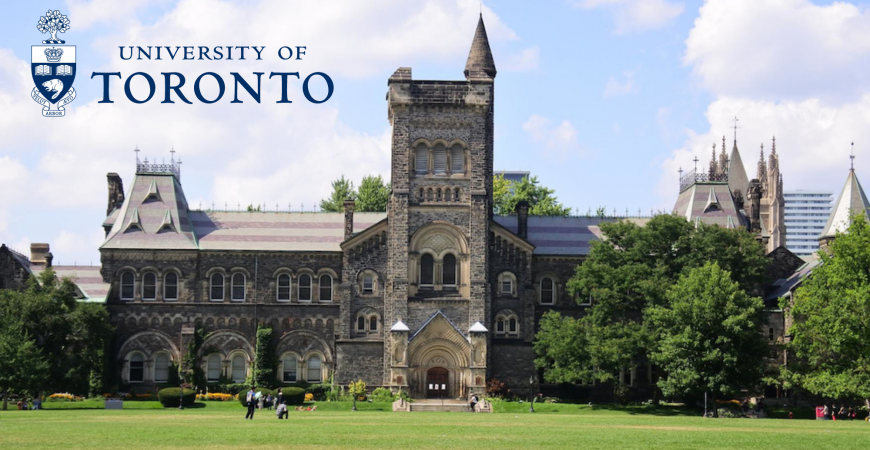
A step-by-step guide to the OVC application for the Ontario Veterinary College DVM program at the University of Guelph: 2026 to 2027 deadlines, requirements, how applicants are ranked, and what to prepare.

| TLDR The OVC application is how you apply to the Ontario Veterinary College’s four-year Doctor of Veterinary Medicine (DVM) program at the University of Guelph. [1] For fall 2027 entry, domestic applicants submit their application and fees by December 1, 2026, the Background Information Form (BIF) by January 15, 2027, a Casper 2 score by February 1, 2027, and references and transcripts by March 1, 2027. [1] You need at least four full-time university semesters, eight prerequisite courses and a minimum 75% (3.2 GPA) average. Applicants are ranked on grades and Casper, then a file review, then a virtual interview in May, with decisions in mid-June. [1] |
What is the OVC application?
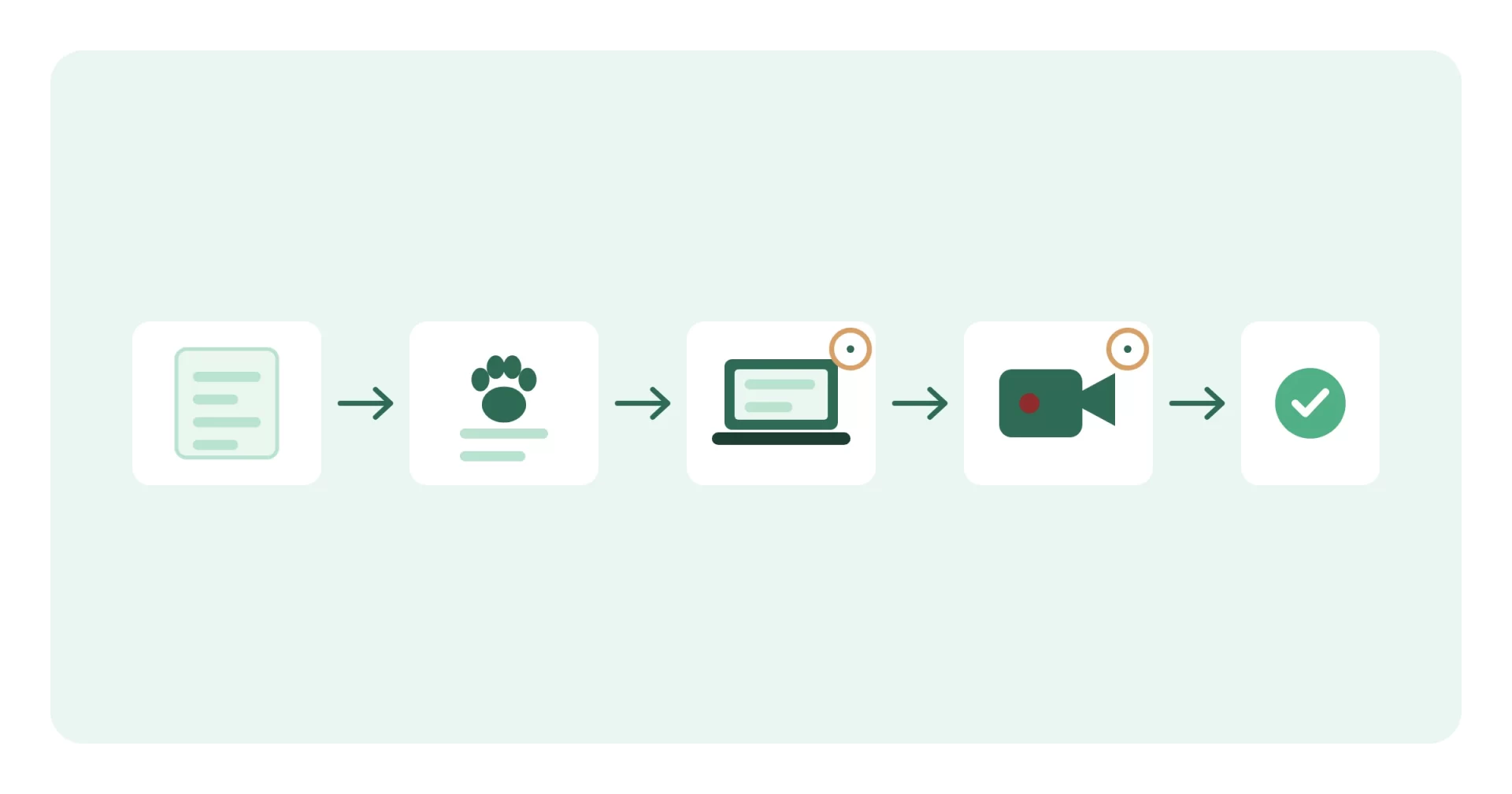
The OVC application is the admissions process for the Doctor of Veterinary Medicine (DVM) program at the Ontario Veterinary College (OVC), part of the University of Guelph. It is a four-year professional degree. [4] Canadian applicants must be Ontario residents, and roughly 140 seats are offered each year across four applicant cohorts. [1]
Unlike medical school, the OVC application does not use OMSAS or the MCAT. Most domestic applicants apply through the Ontario Universities’ Application Centre (OUAC), complete a Background Information Form, write Casper 2 and, if invited, attend a virtual interview. [1]
OVC Application Deadlines (2026 to 2027 Cycle)
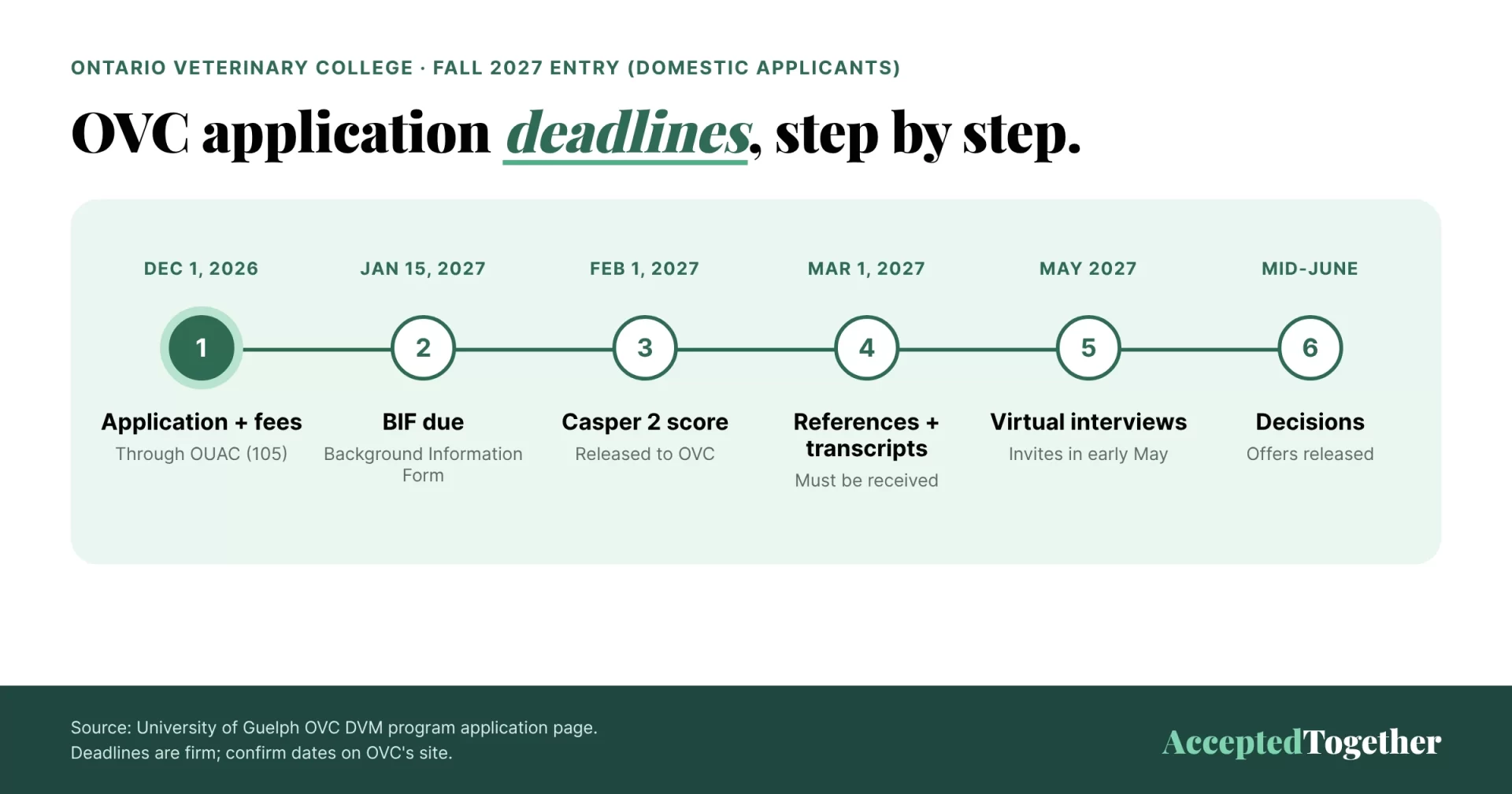
OVC deadlines are firm, and late materials are not considered. [1] Here are the key dates for domestic applicants (Domestic Undergraduate, Northern Ontario and Graduate cohorts) applying for fall 2027 entry:
| What is due | Deadline |
|---|---|
| Application forms and fees | December 1, 2026 (11:59 p.m. ET) |
| Background Information Form (BIF) | January 15, 2027 (4:30 p.m. ET) |
| Casper 2 score released to OVC | February 1, 2027 (4:30 p.m. ET) |
| Referee assessments and official transcripts | March 1, 2027 (4:30 p.m. ET), must be received |
| Interview invitations | Early May 2027 (interviews in May) |
| Admission decisions | Mid-June 2027 |
International applicants follow an earlier timeline: the VMCAS application is due September 15, 2026, supporting documents and Casper by November 1, 2026, with interviews in January. [1]
Who Can Apply? OVC Cohorts and Residency
You apply through one cohort per cycle. Canadian citizens, permanent residents and protected persons must meet Ontario residency: at least 12 consecutive months living in Ontario, not counting time spent in post-secondary study. [1]
| Cohort | Approximate seats | Who it is for |
|---|---|---|
| Domestic Undergraduate | 100 | Ontario residents |
| Northern Ontario Undergraduate | 20 | Residents of Northern Ontario (12 consecutive months) |
| Domestic Graduate | 5 | Ontario residents who have completed, or are enrolled in, a graduate program |
| International | 15 | Applicants who are not Canadian citizens or permanent residents, including US students |
OVC Academic Requirements
To be eligible, you need at least four full-time undergraduate semesters (two years) at an accredited institution, with a minimum of 2.0 credits per semester. You must have a prerequisite average of at least 75% (3.2 on a 4.0 scale) and at least 75% across your last four full-time semesters. [1]
Your Academic Average is calculated as 50% from your last four full-time semesters and 50% from your eight prerequisite courses. [1] Domestic applicants must finish prerequisites by December 31 of the year before entry. [1]
OVC prerequisite courses
| Subject | Required credit |
|---|---|
| Biological sciences (animal biology recommended) | 1.00 credit |
| Cell biology | 0.50 credit |
| Genetics | 0.50 credit |
| Biochemistry | 0.50 credit |
| Statistics | 0.50 credit |
| Humanities or social sciences | 1.00 credit |
Prerequisites need a number or letter grade (pass/fail is not accepted), and one course cannot count toward two prerequisites. [1]
How OVC Ranks Applicants: The 3-Stage Selection Process
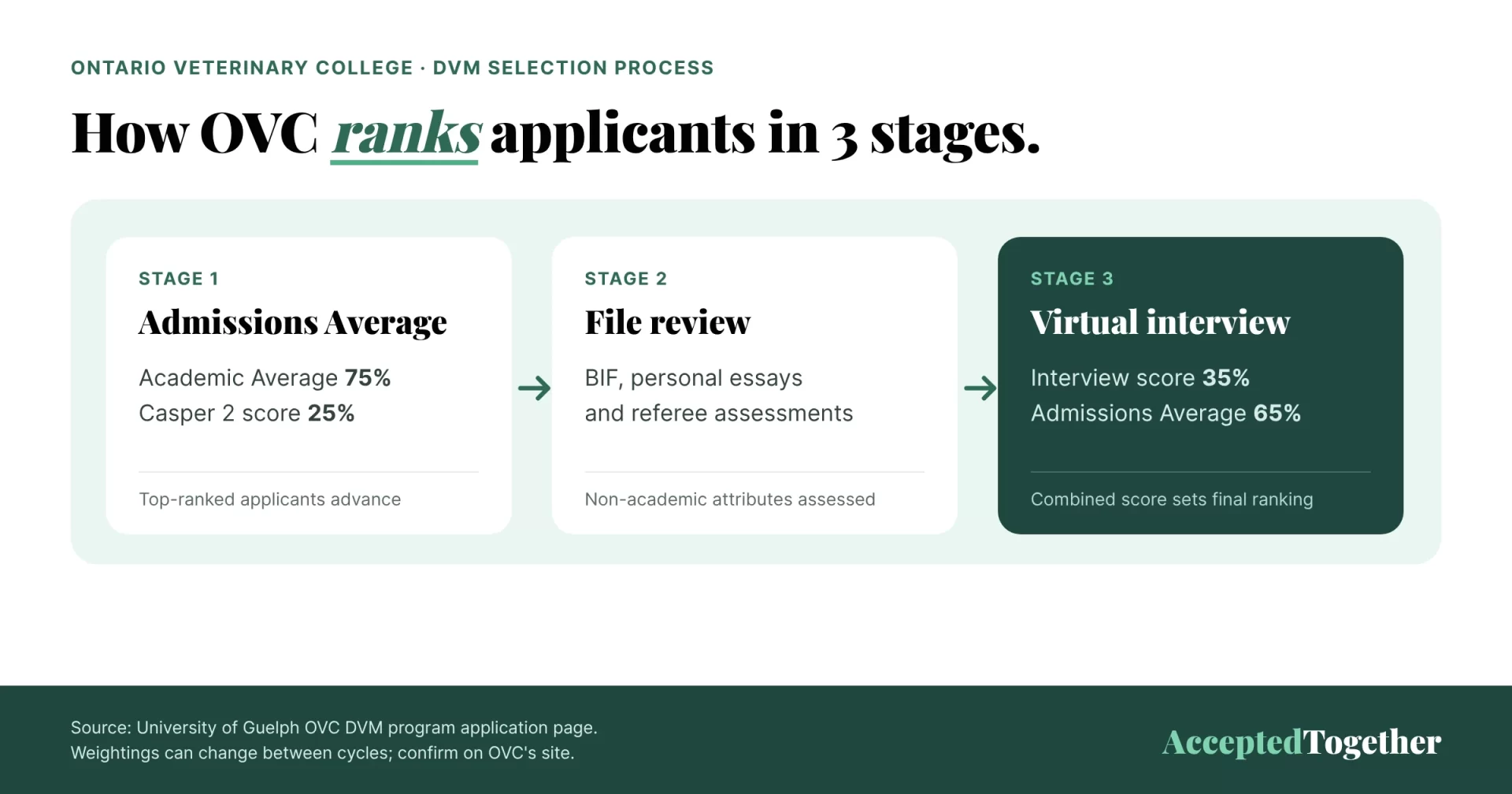
OVC uses a three-stage process. Knowing how each stage is weighted helps you decide where to spend your preparation time. [1]
| Stage | What is assessed | Weighting |
|---|---|---|
| 1. Admissions Average | Academic Average and Casper score | Academic Average 75%, Casper 25% |
| 2. File review | BIF (or VMCAS form), personal essays and referee assessments | Non-academic attributes reviewed; top applicants move forward |
| 3. Interview | Virtual interview scored with a standardized rubric | Interview 35%, Admissions Average 65% |
Non-Academic Requirements: BIF, Experience and References

The Background Information Form (BIF) is where you describe your experience and answer OVC’s essay questions. It is completed in WebAdvisor and can only be submitted once, so finish it carefully before the January 15 deadline. [2] OVC looks at three kinds of experience: [1]
- Veterinary experience: no minimum hours, but it must involve working directly with a supervising veterinarian (for example shadowing or assisting), not only reception or admin work. North American experience is recommended.
- Animal experience (non-veterinary): no minimum hours. Pet ownership and animal courses do not count.
- Extracurricular experience: no minimum hours, but you must have been actively involved, not just attending.
Who should write your OVC references?
Undergraduate applicants need three referees: one veterinarian who directly supervised your veterinary experience, and two others who supervised you in a professional setting. Family members, long-standing friends and employers of paid positions are not accepted. [1]
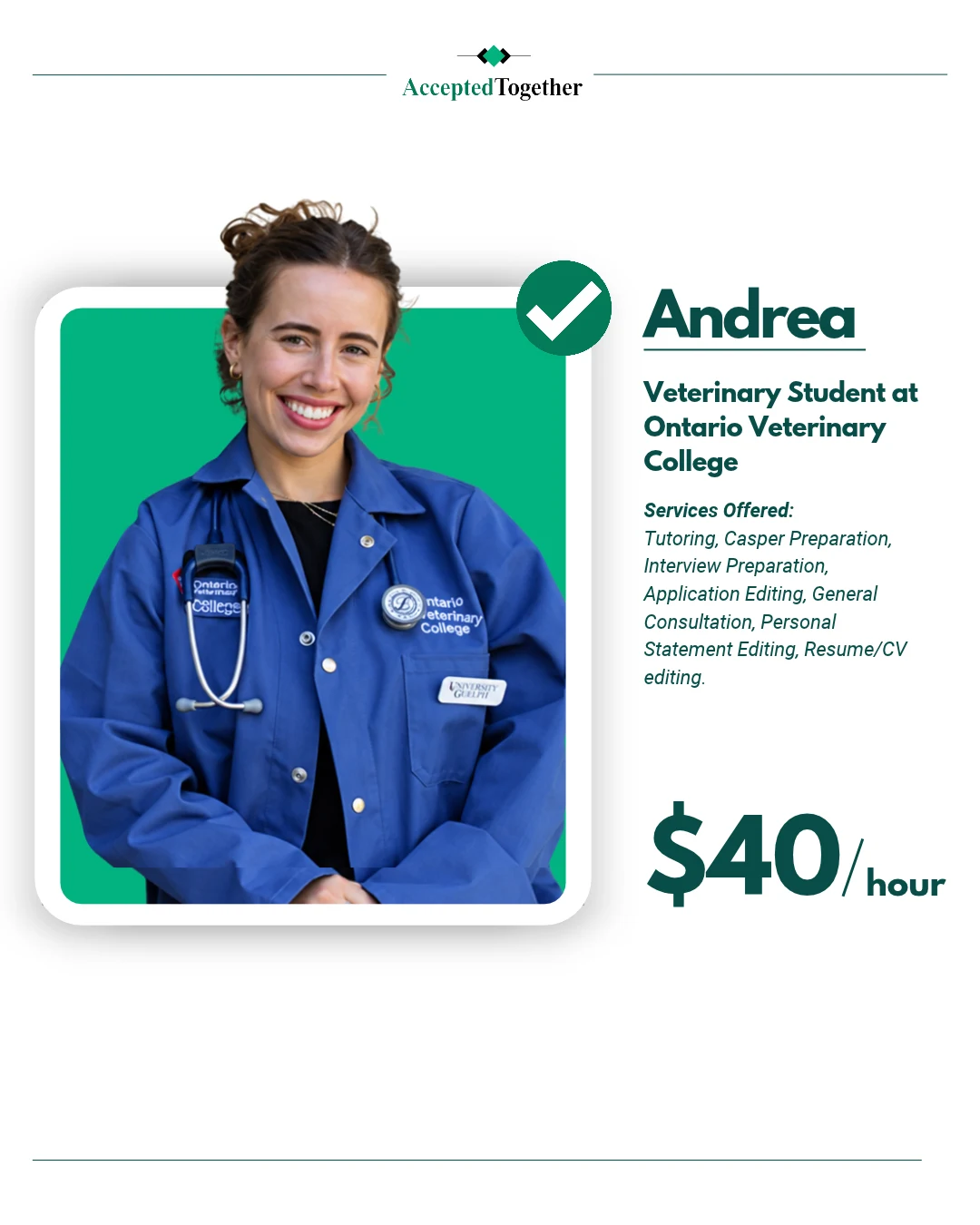
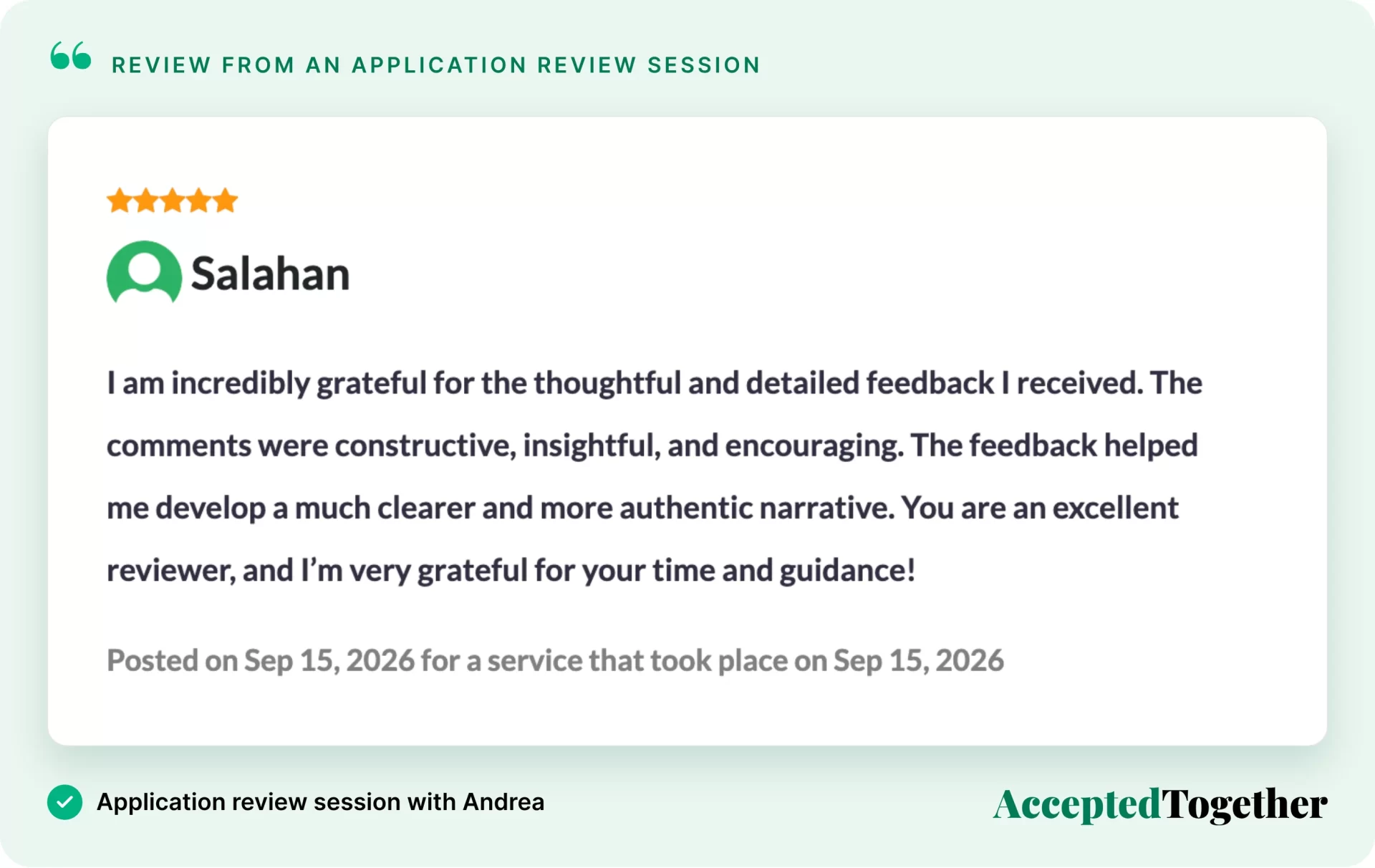
Your BIF essays are where your experiences turn into a story, so it helps to get feedback from someone who knows what OVC looks for. Andrea is a current veterinary student at the Ontario Veterinary College who offers application editing, personal statement editing, Casper prep and interview prep. One applicant shared this after an application review with her:
Casper for OVC

OVC requires Casper 2 (CSP-10211), English version, taken in the current cycle. It is a 65 to 85 minute online situational judgement test, and your score must be released to OVC by February 1, 2027. A score from a different Casper version will not count. [1] For format and practice tips, see our Casper test preparation guide.
The OVC Interview
If you are invited, the OVC interview is held virtually and scored with a standardized rubric. Domestic invitations go out in early May for interviews later that month, and you must accept your invitation by the stated deadline or lose your spot. [1] The interview counts for 35% of your final score, so it is worth preparing for seriously.
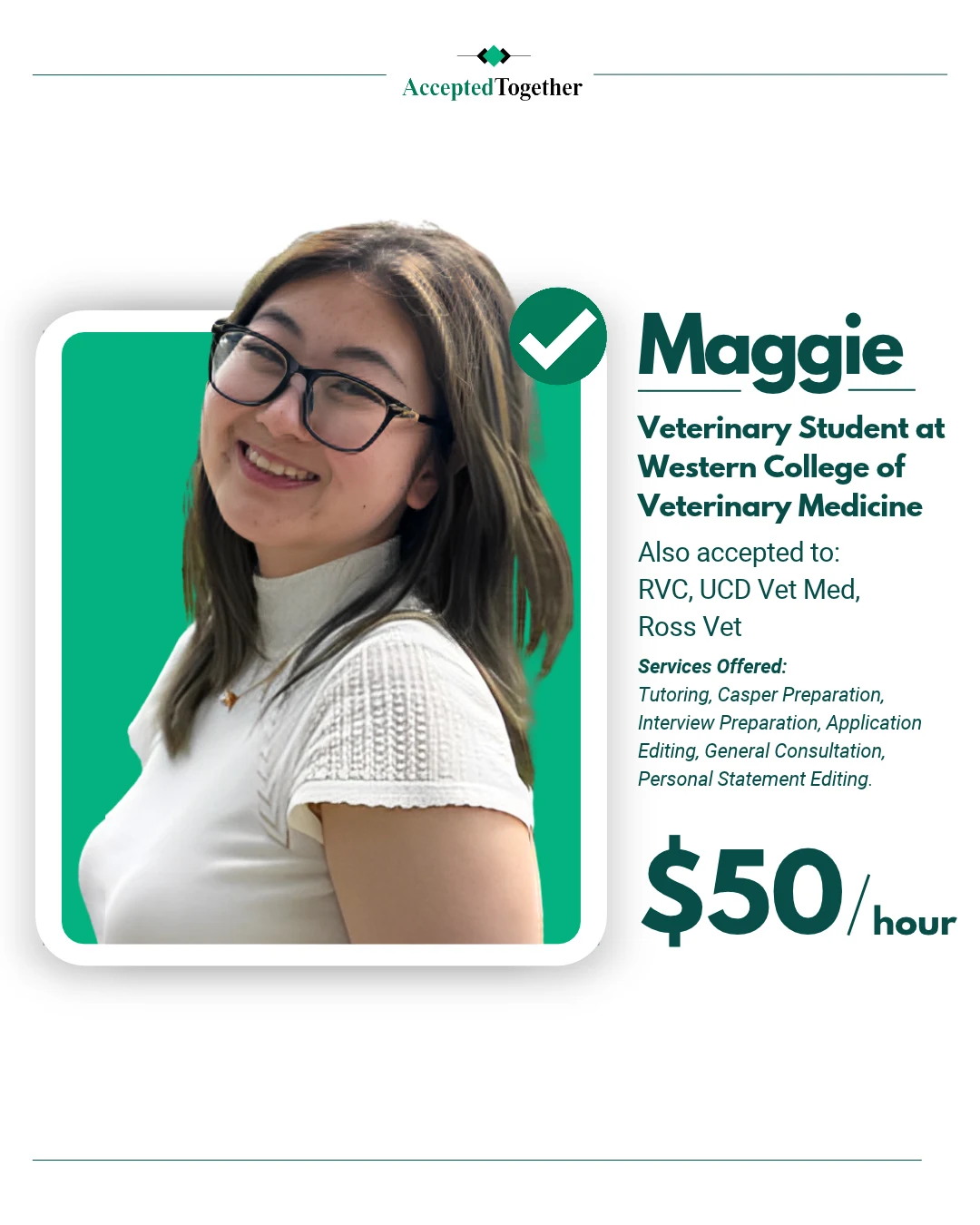
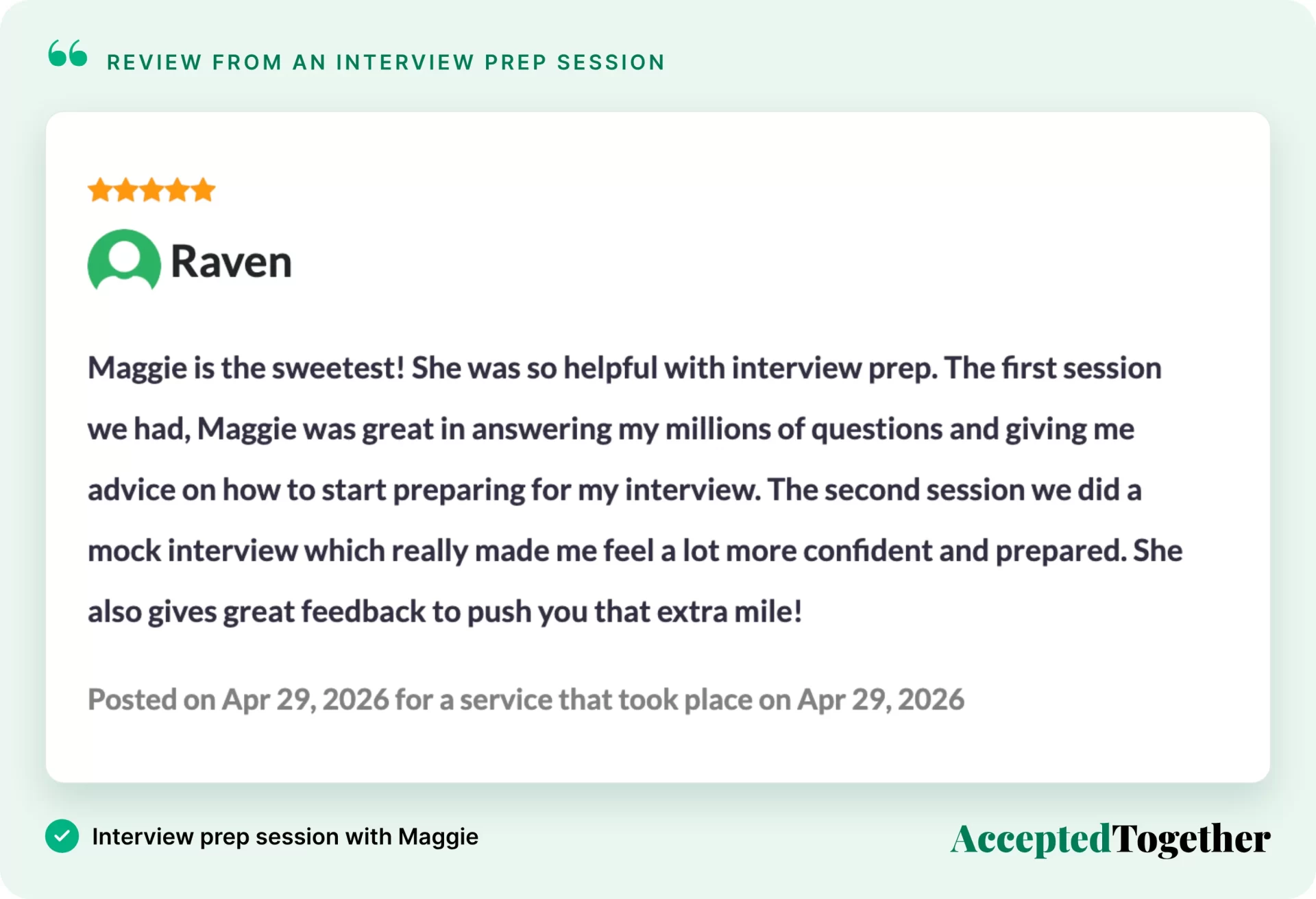
Practising with someone who has recently been through a vet school interview can help you get comfortable with the format. Maggie, for example, is a veterinary student at the Western College of Veterinary Medicine who was also accepted to RVC, UCD Vet Med and Ross Vet, and she offers interview and Casper preparation. Here is what one applicant said after a mock interview with her:
How Much Does the OVC Application Cost?
| Fee | Amount |
|---|---|
| OUAC 105 base fee (first 3 choices) | $159 |
| University of Guelph DVM document evaluation fee | $150 |
| Casper 2 test and distribution | See Acuity Insights |
| International: VMCAS fee plus Guelph supplemental fee | VMCAS fee + CAD $150 |
Figures are from OUAC and the University of Guelph and can change each cycle, so confirm them before you apply. [2, 3]
Common OVC Application Mistakes to Avoid
- Repeating or out-of-sequence courses: repeating a course you already passed makes that whole semester inadmissible.
- Writing the wrong Casper: only Casper 2 (CSP-10211) in English counts.
- Missing a firm deadline: late BIFs, references or transcripts are not considered.
- Choosing the wrong referees: family, close friends and paid employers are not accepted.
- Thin veterinary experience: reception-only work does not count as veterinary experience.
How to Strengthen Your OVC Application
Start your BIF early, get specific about what you learned from your veterinary and animal experience, and line up a veterinarian referee who knows your work well. Practice Casper and interview-style questions out loud before the real thing.
If you want feedback from someone who has been through it, AcceptedTogether lets you choose a consultant who was recently admitted to veterinary school, such as Andrea or Emily from OVC, and set your own budget. The trade-off with any consultant is that you still need to do the work, and no one can guarantee an interview or offer.
Frequently
Asked Questions
For domestic applicants, the application and fees are due December 1, 2026. The Background Information Form is due January 15, 2027, your Casper 2 score by February 1, 2027, and references and official transcripts by March 1, 2027. [1]
The minimum is a 75% average (3.2 on a 4.0 scale) in your prerequisites and in your last four full-time semesters. Meeting the minimum makes you eligible, but applicants are ranked, so a higher average is more competitive. [1]
No. OVC does not require the MCAT. It requires Casper 2 (CSP-10211) in English, taken in the current application cycle. [1]
OVC sets no minimum number of hours. Your veterinary experience must involve working directly with a supervising veterinarian, and the quality of what you did and learned matters more than a total. [1]
Canadian applicants must meet Ontario residency (12 consecutive months, not counting post-secondary study). The International cohort is only for applicants who are not Canadian citizens or permanent residents, including US students. [1]
It is a virtual interview scored with a standardized rubric. Domestic applicants are invited in early May for May interviews, and the interview makes up 35% of the final score. [1]
Domestic applicants pay the OUAC 105 base fee ($159 for three choices) plus the University of Guelph DVM document evaluation fee ($150), as well as Casper fees. International applicants pay the VMCAS fee plus a CAD $150 supplemental fee. [2] [3]
Sources
Information below is drawn from the following official sources, current as of October 2026. Requirements and fees can change between cycles, so verify directly with OVC before applying.
1. University of Guelph, Ontario Veterinary College: DVM program application, https://www.uoguelph.ca/ovc/dvm-program-application
2. University of Guelph Admission: DVM next steps, https://www.uoguelph.ca/admission/undergraduate/next-steps/dvm
3. OUAC: 105 application fees, https://ouac.on.ca/guide/105-fees
4. Ontario Universities Info: Doctor of Veterinary Medicine, https://ouinfo.ca/fr/programmes-professionnels/29017
About AcceptedTogether: AcceptedTogether is a marketplace connecting premed and professional-school applicants directly with verified consultants (students and graduates recently admitted to medical, dental, or veterinary school), with packages starting as low as $35 and a budget you set yourself.