
Last updated on January 9th, 2026 at 06:32 am
Program Overview & Institution Identity
Johns Hopkins University School of Medicine is one of the most prestigious medical schools in the United States, located in Baltimore, Maryland. As a private institution with an urban campus, Johns Hopkins School of Medicine has been at the forefront of medical education and research for over a century.
Official Program Details
- Official Program Name: Johns Hopkins University School of Medicine
- Program Duration: 4-year MD program following the innovative “Genes to Society” curriculum
- Location: Baltimore, Maryland – Urban Campus
- Institution Type: Private Research University
- Accreditation Status: LCME (Liaison Committee on Medical Education) accredited
- Class Size: 120 students per entering class (Class of 2027: 120 matriculated students)
- Combined Degree Options: MD/PhD, MD/MBA programs available
Rankings and Recognition
Johns Hopkins consistently ranks among the top medical schools nationally, with particular recognition for its research programs and clinical training. The school is renowned for its contributions to medical research and its position as a leader in medical education innovation.
Campus and Location
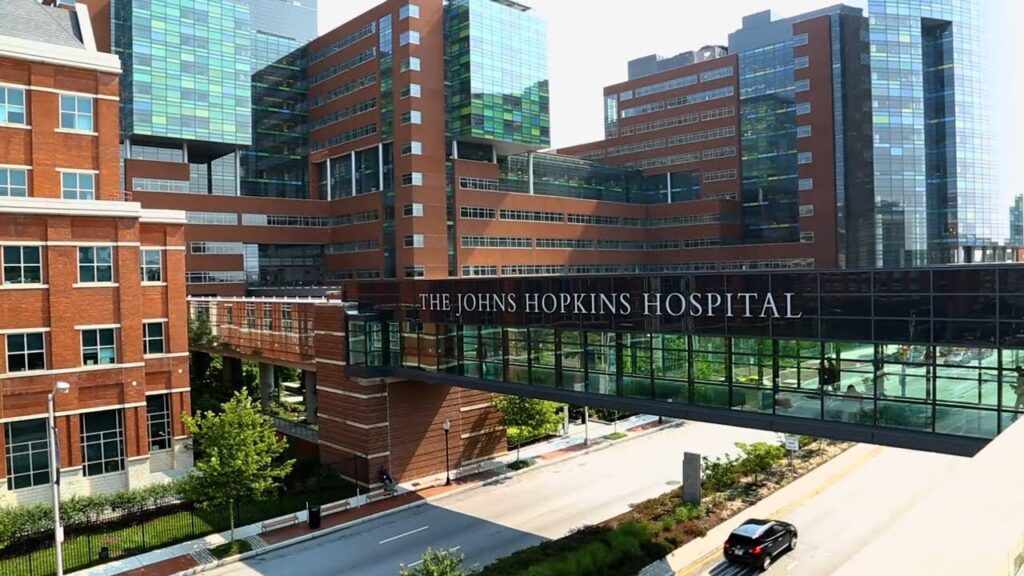
Located in Baltimore’s East Baltimore, the Johns Hopkins medical campus is integrated with The Johns Hopkins Hospital, providing students with unparalleled access to clinical experiences. Baltimore offers students a vibrant urban experience with cultural attractions, affordable living, and proximity to Washington, D.C.
Admission Requirements
Academic Prerequisites
Minimum Degree Requirements: Applicants must hold a bachelor’s degree from an accredited institution listed in “Accredited Institutions of Postsecondary Education,” authorized and published by the American Council on Education.
Required Coursework: Johns Hopkins School of Medicine requires specific prerequisite courses that must be completed before matriculation:
- Biology with laboratory
- Chemistry with laboratory (general and organic chemistry)
- Physics with laboratory
- Mathematics (including statistics)
- Biochemistry (3-credit course accepted)
- English composition and literature
Community College Coursework: Johns Hopkins accepts prerequisites completed at community colleges, though the admissions committee encourages prospective applicants to take advanced courses in related areas when possible.
GPA Requirements
- Median GPA of Admitted Students: 3.97 (Class of 2027: 3.92)
- Johns Hopkins uses a holistic review process, considering the rigor of coursework alongside GPA
- While no minimum GPA is published, competitive applicants typically have GPAs well above 3.5
Standardized Testing
MCAT Requirements:
- Median MCAT Score: 521 (Class of 2027: 521)
- MCAT Validity: Must be taken within four years of intended matriculation
- For Fall 2026 entry, the oldest acceptable MCAT is from August 1, 2022
- Latest acceptable test date: September 30, 2025, for Fall 2026 admission
- No minimum MCAT score is published, but successful applicants typically score in the 95th percentile or higher
Additional Testing:
- TOEFL: Required for students whose undergraduate instruction was conducted primarily in a language other than English
- No CASPer test required
- GMAT not required for MD/MBA applicants (MCAT sufficient)
Extracurricular Activities & Experience Requirements
Johns Hopkins employs a holistic review process evaluating multiple factors beyond academic metrics:
Key Evaluation Factors:
- Clinical exposure and healthcare experience
- Research experience (both basic science and clinical research valued)
- Leadership experience
- Community service and volunteer work
- Diversity of experiences and perspectives
- Personal characteristics demonstrating:
- Ability to work in teams
- Academic excellence
- Leadership potential
- Service, compassion, and humanism
No Specific Hour Requirements: Johns Hopkins does not specify minimum clinical or research hours, focusing instead on the quality and impact of experiences.
Application Process & Timeline
Application System
Johns Hopkins School of Medicine participates in AMCAS (American Medical College Application Service) for primary applications.
Key Deadlines
- AMCAS Primary Application Deadline: October 15, 2025
- Secondary Application Deadline:
- MD Program: October 22, 2025
- MD/PhD Program: November 1, 2025
- Latest MCAT Date: September 30, 2025
Required Documents
Letters of Recommendation:
- Committee Letter (preferred) OR
- Three individual letters if no committee letter available:
- Two letters from science faculty
- One letter from non-science faculty
- MD/PhD Applicants: Minimum of five total letters (includes two additional research letters)
Secondary Application: All applicants receive a secondary application after AMCAS verification. The secondary includes Johns Hopkins-specific essay questions and must be completed by the October 22 deadline.
Interview Process
- Interview Invitations: Approximately 591 candidates interviewed for Class of 2027
- Interview Format: Traditional interview format with faculty members
- Virtual Options: Available as needed
- Timeline: Interview invites typically sent in fall, with interviews conducted through winter months
Financial Information
Application Fees:
- AMCAS application fee (varies annually)
- Johns Hopkins secondary application fee
- Fee Waivers: Available for students with AMCAS fee waiver approval
Admission Statistics & Success Rates
Overall Competitiveness (Class of 2027)
- Total Applicants: 4,213
- Interviews Offered: 591 (14.0% interview rate)
- Acceptances: 266
- Matriculated Students: 120
- Overall Acceptance Rate: 6.3% (highly competitive)
Demographics of Admitted Students
- Gender Distribution: 58% women, 42% men
- Ethnic Diversity:
- Asian: 53%
- Caucasian: 27%
- Underrepresented in Medicine: 18%
- Other/Not Specified: 2%
- Geographic Representation: 28 US states and 2 countries represented
- Undergraduate Institutions: 49 different undergraduate institutions
Academic Statistics (Class of 2027)
- Average GPA: 3.92
- Average MCAT: 521
- Science Majors: 84% of students
- Non-Science Majors: 16% of students
Waitlist Information
While specific waitlist statistics aren’t published, Johns Hopkins does maintain a waitlist and encourages waitlisted candidates to submit updates on academic and extracurricular achievements.
Tuition & Financial Information
Current Tuition Rates (2025-2026)
- Annual Tuition: $66,580 (same for all students regardless of residency)
- Health Insurance Premium: $3,570 (first year), $3,292 (subsequent years)
- Additional Fees:
- University Health Service Fee: $900
- Student Activity Fee: $250
- Matriculation Fee: $740 (first year only)
- Imaging Fee: $200 (first two years)
- Dental Insurance: $200-208
Total Cost of Attendance
- Year 1: $105,788
- Year 2: $111,910
- Year 3: $111,710
- Year 4: $101,328
- Total 4-Year Program: Approximately $430,536
Living Expenses (Baltimore)
- Housing: $17,610-21,132 annually
- Food: $6,610-7,932 annually
- Transportation: $5,090-6,108 annually
- Personal Expenses: $3,030-3,636 annually
Financial Aid Options
- Financial Aid Recipients: Approximately 85% of students receive some form of financial assistance
- Total Aid Administered: $40 million annually
- Need-Based Aid: All financial aid based on demonstrated financial need
- Merit Scholarships: Limited merit-based scholarships available
- International Student Aid: Johns Hopkins Medicine International Scholarship Program available for non-US residents
- Federal Loans: Available for US citizens and eligible non-citizens
- Private Loans: ELM Select loans available for international students
Click To See Hundreds Of Consultants Who Can Mentor You:

Curriculum & Program Structure
Program Duration and Philosophy
Johns Hopkins School of Medicine follows a 4-year MD program using the innovative “Genes to Society” curriculum. This curriculum is highly integrated both vertically and horizontally across all four years, incorporating insights from the Human Genome Project and emphasizing social and behavioral sciences alongside traditional medical sciences.
Educational Approach
- Curriculum Philosophy: Genes to Society approach integrating genomics, social determinants of health, and traditional medical sciences
- Teaching Methods: Combination of lectures, small group sessions, problem-based learning, and clinical experiences
- Technology Integration: State-of-the-art simulation labs and educational technology
Year-by-Year Breakdown
Year 1 (Pre-Clinical):
- Duration: August to June
- Foundations Courses:
- Foundations of Human Anatomy
- Scientific Foundations of Medicine
- Clinical Foundations of Medicine
- Foundations in Public Health
- Organ Systems: Beginning in January, covering nervous system, dermatology, neoplasia, infectious diseases, hematology, pulmonary, and renal systems
- Clinical Experience: Longitudinal Ambulatory Clerkship (half-day weekly)
- Special Programs: Topics in Interdisciplinary Medicine (TIME) courses
Year 2 (Pre-Clinical):
- Continuation of organ systems approach
- Transition to Wards: Preparation for clinical years
- Advanced coursework in pathophysiology and clinical correlation
Years 3-4 (Clinical):
- Clinical Rotations: 9-week blocks (5 rotations per year)
- Core Clerkships:
- Internal Medicine
- Surgery
- Pediatrics
- Psychiatry
- Emergency Medicine
- Neurology
- Women’s Health
- Elective Opportunities: Extensive elective options in fourth year
- Research Requirements: Scholarly project required
Assessment Methods
- Pre-Clinical Years: Pass/Fail grading system
- Clinical Years: Honors/High Pass/Pass/Fail system
- Board Examinations: USMLE Step 1, Step 2 CK, and Step 2 CS preparation integrated
Special Programs
Combined Degree Options:
- MD/PhD Program: For students interested in physician-scientist careers
- MD/MBA Program: Partnership with Carey Business School
- Can be completed between Years 2-3 or Years 3-4
- 36 MBA credits required (18 credits accepted from MD program)
- No GMAT required
Research Opportunities:
- Summer research programs
- Year-long research opportunities
- International research experiences
- Both basic science and clinical research options
Clinical Training Sites
- Primary Hospital: The Johns Hopkins Hospital (consistently ranked among top hospitals nationally)
- Additional Sites: Johns Hopkins Bayview Medical Center and community-based clinical sites
- Specialty Services: Access to all medical specialties and subspecialties
- Patient Population: Diverse patient population providing comprehensive clinical experience
Residency Preparation and Outcomes
While specific residency match data for Johns Hopkins isn’t detailed in current sources, the school’s reputation and rigorous training typically result in high match rates and placements at competitive residency programs nationwide. Students receive comprehensive support for:
- USMLE preparation and achievement
- Residency application guidance
- Interview preparation
- Specialty exploration and mentoring
Pre-Medical Preparation
Undergraduate Program Recommendations
- Major Flexibility: Johns Hopkins values academic diversity – 16% of students have non-science majors
- Science Foundation: Strong preparation in required prerequisites essential
- Advanced Coursework: Encouraged beyond minimum requirements
Clinical Experience Planning
- Quality Over Quantity: Focus on meaningful healthcare exposure rather than specific hour minimums
- Diverse Experiences: Direct patient care, clinical research, global health, and healthcare policy all valued
- Leadership Roles: Demonstration of leadership in healthcare settings particularly valuable
Research Experience
- Not Required But Valued: Research experience highly regarded but not mandatory
- Type Flexibility: Basic science, clinical, translational, public health, and social sciences research all valued
- Publications: Not required but can strengthen applications
- Long-term Commitment: Sustained research involvement more valuable than brief experiences
Extracurricular Development
- Community Service: Demonstration of service commitment important
- Leadership: Evidence of leadership potential in various contexts
- Diversity: Breadth of interests and experiences valued
- Personal Growth: Evidence of self-reflection and personal development
Standardized Test Preparation
- MCAT Preparation: Plan for extensive preparation given high median score (521)
- Timing: Take MCAT when fully prepared rather than rushing to meet deadlines
- Retakes: School considers highest MCAT score
- Preparation Resources: Variety of commercial and academic resources available
Application Timeline Planning
- Junior Year: Begin MCAT preparation, finalize prerequisites
- Senior Year: Complete applications, maintain strong academic performance
- Gap Years: Can be beneficial for strengthening applications and gaining experience
Frequently Asked Questions
Does Johns Hopkins School of Medicine look at extracurriculars?
Yes, Johns Hopkins uses a holistic review process that considers extracurricular activities, clinical experience, research, leadership, and service as important factors alongside academic metrics.
What is Johns Hopkins School of Medicine’s average GPA and MCAT score?
The median GPA for admitted students is 3.97, and the median MCAT score is 521 (Class of 2027 statistics).
How competitive is Johns Hopkins School of Medicine compared to other medical schools?
Johns Hopkins is among the most competitive medical schools in the US, with a 6.3% acceptance rate and median MCAT score in the 99th percentile.
Does Johns Hopkins School of Medicine prefer in-state applicants?
As a private institution, Johns Hopkins doesn’t give preference to Maryland residents. The Class of 2027 represents 28 states and 2 countries.
What makes Johns Hopkins School of Medicine different from other medical schools?
Johns Hopkins is distinguished by its “Genes to Society” curriculum, world-renowned research opportunities, integration with top-ranked Johns Hopkins Hospital, and emphasis on training physician-leaders.
When should I apply to Johns Hopkins School of Medicine?
Submit your AMCAS application by October 15, complete the secondary application by October 22, and take the MCAT by September 30 for Fall 2026 admission.
Does Johns Hopkins School of Medicine accept international students?
Yes, Johns Hopkins accepts Canadian and international students and provides financial aid through the JHM International Scholarship Program.
What clinical experience do I need for Johns Hopkins School of Medicine?
No specific hour requirements exist, but meaningful healthcare exposure demonstrating commitment to medicine is essential.
Does Johns Hopkins School of Medicine require research experience?
Research experience is not required but is highly valued. The school appreciates both basic science and clinical research backgrounds.
How many letters of recommendation does Johns Hopkins School of Medicine require?
A committee letter is preferred, or three individual letters (two from science faculty, one from non-science faculty). MD/PhD applicants need five total letters.
What is Johns Hopkins School of Medicine’s curriculum like?
The “Genes to Society” curriculum is a 4-year program integrating genomics, social sciences, and traditional medical sciences with early clinical exposure and extensive research opportunities.
Where do Johns Hopkins School of Medicine graduates match for residency?
Johns Hopkins graduates typically match at highly competitive residency programs nationwide, though specific match data varies by year and specialty.
How much does Johns Hopkins School of Medicine cost?
Total cost of attendance ranges from $101,328-$111,910 per year, with a 4-year total of approximately $430,536.
What financial aid is available at Johns Hopkins School of Medicine?
About 85% of students receive financial aid. Options include federal loans, need-based institutional aid, merit scholarships, and international student scholarships.
Does Johns Hopkins School of Medicine offer interviews to all qualified applicants?
No, only about 14% of applicants (591 out of 4,213 for Class of 2027) receive interview invitations based on holistic review of applications.
Johns Hopkins University School of Medicine continues to set the standard for medical education through its innovative curriculum, world-class research opportunities, and commitment to training the next generation of physician-leaders. With its highly competitive admissions process and comprehensive support systems, Johns Hopkins offers an unparalleled medical education experience in the heart of Baltimore, Maryland.