

Last updated on January 9th, 2026 at 06:26 am
Program Overview & Institution Identity
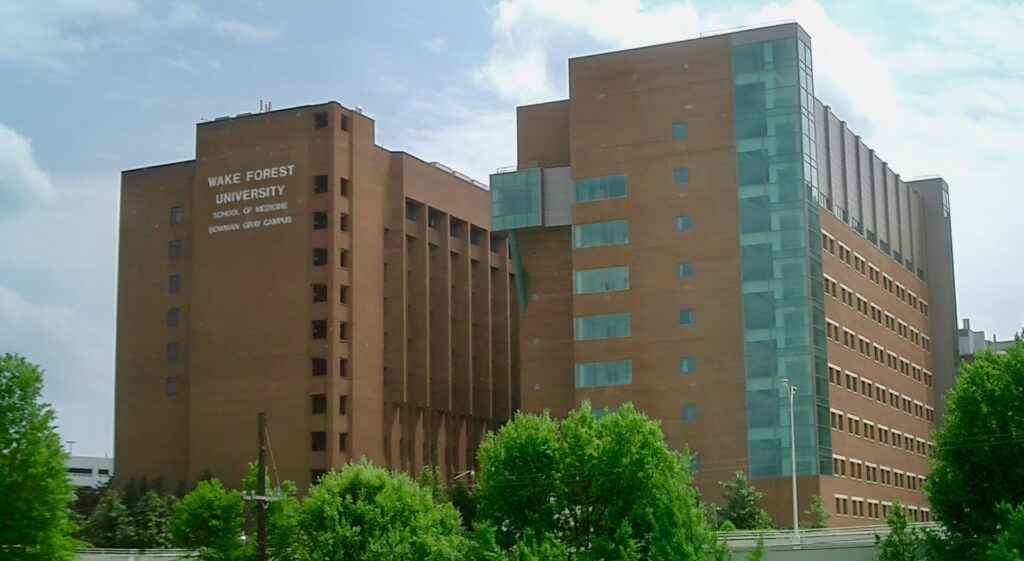
Wake Forest University School of Medicine stands as one of North Carolina’s premier medical education institutions, located in Winston-Salem, North Carolina. This private medical school operates as part of the Atrium Health Wake Forest Baptist Medical Center, maintaining a distinguished reputation for academic excellence and innovative medical training since its founding in 1902.
Program Duration and Structure
The Wake Forest School of Medicine offers a 4-year MD program featuring the innovative “Wake Ready!” curriculum. This forward-thinking approach moves beyond the traditional two-year pre-clinical and two-year clinical model, offering students a more personalized and flexible medical education experience.
Location and Campus Details
The primary campus is located in Winston-Salem, NC, housed in the state-of-the-art Bowman Gray Center for Medical Education, a $50 million facility in downtown Winston-Salem’s Innovation Quarter. Wake Forest also operates a Charlotte campus at the Atrium Health Carolinas Medical Center, providing students with diverse training opportunities across both urban environments.
Accreditation Status
Wake Forest University School of Medicine is fully accredited by the Liaison Committee on Medical Education (LCME). The school successfully completed its LCME re-accreditation site visit in February 2024, demonstrating continued compliance with established medical education standards that ensure graduates are prepared for residency training and lifelong medical practice.
Rankings and Recognition
- U.S. News & World Report Rankings: #48 in Research, #80 in Primary Care (2024)
- Ranked #56 in Best Medical Schools overall
- #13 in Lowest Acceptance Rate nationally
- Strong NIH funding ranking, placing in the top third of medical schools for research funding
Admission Requirements
Academic Prerequisites
Minimum Degree Requirements: Wake Forest requires at least 90 hours of college coursework to apply, with a bachelor’s degree required at the time of matriculation. Advanced placement (AP) credits, pass/fail courses, and other credits are acceptable.
Required Minimum Standards:
- Minimum BCPM (Biology/Chemistry/Physics/Math) GPA: 3.2 with at least 15 BCPM credit hours
- Minimum MCAT Score: 500 total score
- Applicants who don’t meet the 3.2 BCPM GPA but have completed post-baccalaureate or graduate BCPM coursework with a 3.2+ GPA will be reviewed by the Dean of Admissions
Strongly Recommended Courses:
- Biology: Introductory biology, molecular/cell biology, genetics, anatomy, physiology, neuroscience
- Chemistry: Biochemistry, inorganic chemistry, organic chemistry
- Physics: Introductory physics
- Mathematics: Algebra, statistics
- Psychology: Introductory psychology, behavioral psychology, abnormal psychology
- Sociology: Introductory sociology, coursework emphasizing health disparities
- Humanities: Foreign language (especially Spanish), philosophy (especially medical ethics), literature
GPA Requirements
- Median GPA of Admitted Students: 3.88
- Minimum BCPM GPA: 3.2 (required to receive secondary application)
- Wake Forest uses a holistic evaluation approach, considering both science and overall GPA
- The school accepts online coursework and has accommodated pandemic-related pass/fail grading
Standardized Testing
MCAT Requirements:
- Median MCAT Score: 511
- Minimum MCAT Score: 500 (required to receive secondary application)
- Valid MCAT Dates: For 2026 admissions, MCAT scores from January 2022 onwards are accepted
- Retake Policy: The highest MCAT score is considered if multiple attempts are made
- Latest MCAT Dates: September 14, 2024, for regular decision; July 13, 2024, for Early Decision
CASPer Test:
Required for all MD program applicants. The CASPer (Computer-Based Assessment for Sampling Personal Characteristics) evaluates personal and professional characteristics crucial for medical practice.
- Early Decision Deadline: July 31, 2024
- Regular Decision Deadline: November 14, 2024
Extracurricular Activities & Experience Requirements
Wake Forest values a holistic approach to applicant evaluation, considering:
- Research Experience: Not explicitly required but valued
- Clinical Exposure: Important for demonstrating commitment to medicine
- Community Service: Emphasis on community engagement aligns with school values
- Leadership Experience: Valued as part of comprehensive evaluation
- Diverse Experiences: School seeks students from varied backgrounds who can contribute to class diversity
Application Process & Timeline
Application System
Wake Forest University School of Medicine uses the AMCAS (American Medical College Application Service) for primary applications, followed by a school-specific secondary application.
Key Deadlines (2025 Cycle)
- AMCAS Application Opens: May 28, 2024
- AMCAS Application Deadline: October 15, 2025
- Secondary Application Deadline: November 30, 2024
- Letters of Evaluation Due: November 30, 2024
- Early Decision Deadline: August 1, 2024
Required Documents
- Primary AMCAS Application with transcripts
- Secondary Application ($125 fee, fully waived for FAP recipients)
- Letters of Evaluation/Recommendation (requirements specified in secondary)
- CASPer Test Results
- MCAT Scores
Secondary Application
- Fee: $125 (fully waived for Fee Assistance Program recipients)
- Essays Required: Multiple short essays (200 words each) covering topics such as:
- Experience enhancing ability to understand diverse populations
- Non-academic challenges overcome
- Most formative meaningful experience from AMCAS
- Collaboration experience
- Future goals and how past experiences will shape them
Interview Process
- Interview Season: August 2024 – February 2025
- Interview Format: Information indicates traditional interview format
- Virtual/In-Person: Both options typically available
- Wake Forest does not screen applications before sending secondary applications
Admission Statistics & Success Rates
Overall Acceptance Rate
Wake Forest University School of Medicine has an acceptance rate of approximately 1.19%, making it one of the most competitive medical schools in the nation. This places it at #13 in Lowest Acceptance Rate nationally.
Application Volume and Class Size
- 2024-2025 Cycle: 12,138 total applicants
- First-Year Class Size: 145 students
- Historical Trend: Application numbers have increased from 10,863 in 2021-2022 to 12,138 in 2024-2025
Academic Statistics of Admitted Students
- Median MCAT: 511
- Median GPA: 3.88
- Average Incoming Age: 24 years old
Demographics of Admitted Students (2024-2025)
Gender Distribution:
- Male Students: 58 (40.0%)
- Female Students: 87 (60.0%)
Geographic Distribution:
- North Carolina Residents: 47 (32.4%)
- Out-of-State Students: 98 (67.6%)
- Wake Forest accepts out-of-state and Canadian students on a case-by-case basis
Residency Match Statistics
- 2025 Match Rate: 99.3% of Wake Forest Match Day participants successfully matched into residency programs
- Graduates consistently match into competitive specialties and top residency programs nationwide
Comparison with National Averages
- Wake Forest’s acceptance rate (1.19%) is significantly lower than the national average (4.02%)
- MCAT scores are competitive with national averages (national average: 512)
- GPA expectations align with top-tier medical schools nationally
Tuition & Financial Information
Current Tuition Rates
2024-2025 Tuition: $64,947 (same for all students regardless of residency status)
- Wake Forest is a private institution, so tuition is identical for in-state, out-of-state, and international students
- 2025-2026 tuition remains at $64,947 (no increase from previous year)
Total Cost of Attendance
First-Year Students (10 months):
- Tuition: $64,947
- Books: $1,700
- Laptop: $1,222
- Health Insurance: $5,310
- Housing: $18,000
- Food: $4,800
- Transportation: $4,750
- Utilities: $2,950
- Miscellaneous: $1,920
- Loan Fees: $3,110
- Total First-Year COA: $108,709
Four-Year Total Program Cost: Approximately $435,000-$450,000 depending on campus location and individual choices.
Additional Fees
- Secondary Application Fee: $130
- Visiting Student Tuition Fee: $225
- Technology and equipment costs included in estimates
Financial Aid Options
Merit-Based Scholarships:
- Dean’s Medical Excellence Scholarship: Recognizes academic achievement and cultural diversity; renewable annually with satisfactory academic progress
- All accepted students automatically considered with secondary application submission
Need-Based Scholarships:
- Approximately 250 scholarships awarded annually from endowed resources
- Application Deadline: March 15th annually
- Requires completed FAFSA and CSS Profile
Federal Loan Programs:
- Students eligible for federal loans up to full cost of attendance
- Graduate PLUS loans available to cover remaining costs after Stafford loan limits
Special Programs:
- National Health Service Corps loan forgiveness opportunities
- Public Service Loan Forgiveness programs
- Military Health Professions Scholarship Program (HPSP)
Living Expenses in Winston-Salem
Winston-Salem offers a relatively affordable cost of living compared to major metropolitan areas, with estimated annual living expenses of approximately $30,000-$35,000 including housing, food, transportation, and personal expenses.
Click To See Hundreds Of Consultants Who Can Mentor You:

Curriculum & Program Structure
Program Duration and Structure
Wake Forest’s “Wake Ready!” curriculum represents one of the most advanced curricula in medical education, featuring a 4-year program structured in three distinct phases rather than the traditional 2+2 model.
Educational Philosophy
The curriculum emphasizes:
- Personalized learning approaches
- Early patient exposure
- Seamless integration of basic, clinical, and health systems science
- Advanced training in bedside and point-of-care ultrasound
- Problem-solving skills and critical thinking development
Phase 1 – Foundations (18 months)
Pre-Clinical Education covering:
- Anatomy, Biochemistry, Embryology, Histology
- Microbiology, Immunology, Pathology, Pharmacology
- Physiology and Public Health Sciences
- Clinical skills development and bioethics
- Two Learning Approaches:
- Winston-Salem Campus: Integrated instruction with large-group didactics and small-group case-based learning
- Charlotte Campus: Problem-based learning (PBL) approach with small-group instruction
Phase 2 – Immersion (12 months)
Core Clinical Rotations including:
- Emergency Medicine
- Family Medicine
- Internal Medicine
- OB-GYN
- Psychiatry
- Neurology
- Pediatrics
Students develop competencies in Core Entrustable Professional Activities (EPAs) essential for residency preparation.
Phase 3 – Individualization (13 months)
Advanced Clinical Training featuring:
- Required selectives: Acting Internships and Critical Care
- Extensive electives allowing specialty exploration
- Diverse rotation opportunities across both Winston-Salem and Charlotte campuses
- Residency preparation and career planning support
Special Programs and Opportunities
- MD/PhD, MD/MS, and MD/MA combined degree options
- International rotation opportunities
- Research electives and scholarly project requirements
- Regenerative medicine expertise and exposure
- Advanced ultrasound training throughout curriculum
Clinical Training Sites
- Atrium Health Wake Forest Baptist Medical Center (Winston-Salem)
- Atrium Health Carolinas Medical Center (Charlotte)
- Multiple affiliated hospitals and clinical sites throughout North Carolina
Pre-Medical Preparation
Undergraduate Program Recommendations
Wake Forest welcomes students from all academic majors, with successful applicants representing diverse educational backgrounds. While no specific major is required, students should:
- Complete strong foundation in sciences while maintaining breadth in liberal arts
- Demonstrate competence in MCAT subject areas through coursework
- Non-science majors are strongly encouraged to complete variety of science coursework for competitiveness
Academic Planning Strategy
Optimal Course Sequencing:
- Begin prerequisite courses early to allow time for MCAT preparation
- Include recommended courses in psychology, sociology, and humanities
- Consider advanced science courses beyond minimums
- Maintain strong GPA throughout undergraduate career
Clinical Experience Requirements
While Wake Forest doesn’t specify minimum clinical hours, competitive applicants typically have:
- Diverse clinical exposure through volunteering, shadowing, or employment
- Quality over quantity — meaningful experiences with reflection on medical career commitment
- Patient interaction experience demonstrating compassion and communication skills
Research Experience
- Not explicitly required but valued in holistic evaluation
- Basic science, clinical, or public health research all considered valuable
- Publications not required but can strengthen application
- Quality and learning outcomes more important than quantity of experiences
Extracurricular Planning
Recommended Activities:
- Community service demonstrating commitment to helping others
- Leadership roles in organizations or initiatives
- Diverse interests showing well-rounded character
- Long-term commitments preferred over numerous brief activities
Standardized Test Preparation
MCAT Preparation:
- Recommended Timeline: 3–6 months of dedicated study
- Target Score: 511+ to be competitive (median admitted score)
- Retake Considerations: Wake Forest considers highest score
- Latest Test Dates: September for regular decision, July for Early Decision
CASPer Preparation:
- Required for all applicants
- Practice scenarios available through CASPer website
- No specific preparation required — assesses natural responses to ethical situations
Gap Year Considerations
Wake Forest values diverse experiences and does not penalize non-traditional timelines. Productive gap year activities include:
- Research positions or clinical work
- Service programs like AmeriCorps or Peace Corps
- Graduate coursework to strengthen academic record
- Work experience providing life skills and perspective
Frequently Asked Questions
Does Wake Forest School of Medicine look at extracurriculars?
Yes, absolutely. Wake Forest uses a holistic evaluation process that heavily weighs extracurricular activities, research experience, clinical exposure, community service, and leadership. The school’s values emphasize community engagement, compassion, and teamwork, making extracurricular demonstration of these qualities essential for competitive candidacy.
What is Wake Forest School of Medicine’s average GPA and MCAT score?
Median GPA: 3.88
Median MCAT: 511
These represent the middle 50% of admitted students. Competitive applicants typically exceed these medians, though Wake Forest’s holistic approach means strong candidates with slightly lower statistics may still be admitted with exceptional extracurricular profiles.
How competitive is Wake Forest School of Medicine compared to other medical schools?
Wake Forest is extremely competitive with a 1.19% acceptance rate, ranking it #13 nationally in lowest acceptance rate. It’s significantly more competitive than the national average acceptance rate of 4.02%, placing it among the most selective medical schools in the United States.
Does Wake Forest School of Medicine prefer in-state applicants?
Wake Forest shows moderate preference for North Carolina residents. While 67.6% of matriculants are out-of-state, North Carolina residents have a 4.78% acceptance rate compared to 0.88% for out-of-state applicants. However, as a private institution, Wake Forest is more accessible to out-of-state students than most public medical schools.
What makes Wake Forest School of Medicine different from other medical schools?
Key Distinguishing Features:
“Wake Ready!” curriculum with flexible, personalized approach
Dual-campus training in Winston-Salem and Charlotte
Advanced ultrasound training integrated throughout curriculum
Early patient exposure and clinical integration
Strong regenerative medicine research opportunities
High residency match rates (99.3% in 2025)
Innovative medical education facility in downtown Winston-Salem