Last updated on January 9th, 2026 at 06:26 am
Program Overview & Institution Identity
Official Program Name and Institution
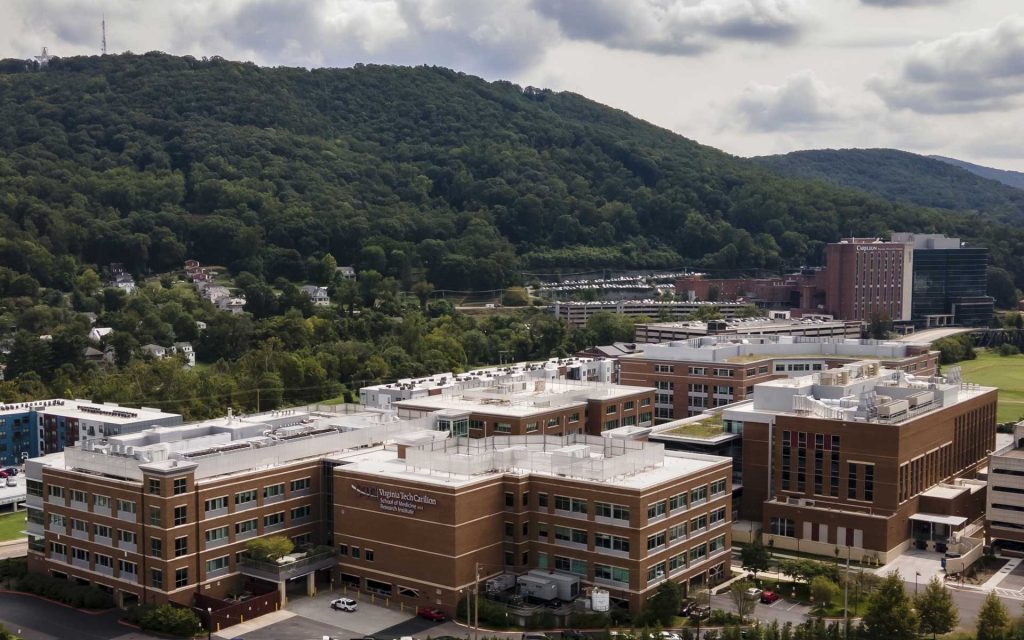
Virginia Tech Carilion School of Medicine (VTCSOM) is a public medical school located in Roanoke, Virginia. As the ninth college of Virginia Tech, the school combines the resources of a major research university with the intimate learning environment of a smaller medical school. The institution operates in partnership with Carilion Clinic, providing students with extensive clinical training opportunities.
Program Duration and Structure
VTCSOM offers a traditional 4-year MD program designed around an innovative curriculum organized into four value domains: Clinical Science, Research, Health Systems Science, and Interprofessional Practice. The program structure includes:
- Phase I (Years 1-2): Pre-clinical foundation years with early clinical exposure
- Phase II (Years 3-4): Clinical clerkships and electives with continued research integration
Location and Campus Details
The medical school is situated in Roanoke, Virginia, an urban campus in the scenic Blue Ridge Mountains. This location provides students with:
- Access to diverse patient populations at Carilion Clinic
- Training at a Level 1 Trauma Center
- Outdoor recreational opportunities in the surrounding mountains
- Affordable cost of living compared to major metropolitan areas
Accreditation Status
VTCSOM is accredited by the Liaison Committee on Medical Education (LCME), the recognized accrediting body for medical education programs in the United States and Canada. LCME accreditation ensures that graduates are eligible to:
- Take the United States Medical Licensing Examination (USMLE)
- Apply for residency programs accredited by the Accreditation Council for Graduate Medical Education (ACGME)
- Receive federal financial aid and professional education services
- Obtain medical licenses in most states
The school undergoes LCME reaccreditation every 8 years to maintain its accredited status.
Ranking and Recognition
According to various medical school rankings, VTCSOM is recognized for its innovative curriculum and research emphasis:
- Ranked #68 in Best Medical Schools by College Evaluator
- #4 in Lowest Acceptance Rate
- #31 in Public Medical Schools
- Notable for being one of the few medical schools requiring research participation throughout all four years
Admission Requirements
Academic Prerequisites
Minimum Degree Requirements
All students must receive an earned baccalaureate degree from an accredited institution in the United States or Canada before matriculation. Alternatively, students may hold an earned combined master’s or doctoral degree that satisfies the granting university’s baccalaureate requirements.
Required Courses
VTCSOM requires the following prerequisite coursework:
Science Requirements:
- General Biology with laboratory: 2 semesters
- General Inorganic Chemistry with laboratory: 2 semesters
- Organic Chemistry with laboratory: 2 semesters OR 1 Organic Chemistry with lab and 1 Biochemistry with lab
- Physics with laboratory: 2 semesters
Mathematics and Writing:
- Mathematics: 2 semesters of calculus OR 1 calculus and 1 statistics
- English/Writing: 2 semesters OR 1 semester each of English and Philosophy
Important Notes:
- VTCSOM requires all prerequisite science labs be taken in-person (exception made for COVID-19 period Spring 2020-Summer 2021)
- Community college credits are accepted if completed at a regionally-accredited institution
- Writing-intensive courses may substitute for English/writing prerequisites with syllabi approval
- A grade of C may require written explanation and possible remediation
GPA Requirements
Based on recent class statistics:
- Average admitted student GPA: 3.69 (Class of 2028)
- GPA range: Historically ranges from 3.51-3.69 average
- While no official minimum GPA is published, competitive applicants typically have GPAs well above 3.5
- Both overall GPA and science GPA are evaluated
Standardized Testing
MCAT Requirements
Average MCAT Scores of Admitted Students:
- Class of 2028: Average 512
- Class of 2027: Average 513
- Historical range: 512-513 average
MCAT Competitiveness:
- Successful applicants typically score above the 80th percentile
- All MCAT sections are evaluated
- Recent test scores are preferred over older scores
- MCAT validity period follows AAMC guidelines
MCAT Preparation:
VTCSOM recommends utilizing resources like Khan Academy’s free MCAT prep partnership with AAMC for students concerned about preparation costs.
Extracurricular Activities & Experience Requirements
Clinical Experience
VTCSOM strongly emphasizes clinical exposure through:
- Physician shadowing opportunities
- Volunteer work at clinics or hospitals
- Medical scribe positions
- EMT or other healthcare-related employment
- Direct patient care experiences
Research Experience
As one of the few medical schools requiring research throughout the curriculum, VTCSOM highly values:
- Basic science research
- Clinical research
- Public health research
- Translational research
- Research publications (though not required, they strengthen applications)
Community Service and Leadership
The school seeks students who demonstrate:
- Commitment to serving others
- Leadership experience in various settings
- Long-term community involvement
- Understanding of healthcare disparities and social determinants of health
State Residency Considerations
While VTCSOM is a public institution, it welcomes both Virginia residents and out-of-state applicants:
- Virginia residents: Comprised approximately 29% of the Class of 2028
- Out-of-state students: Made up about 71% of recent classes
- Tuition rates are the same for in-state and out-of-state students
Click To See Hundreds Of Consultants Who Can Mentor You:
Application Process & Timeline
Application System
VTCSOM participates in the American Medical College Application Service (AMCAS), the centralized application service for most U.S. medical schools.
Key Deadlines and Timeline
Application Timeline:
- May: AMCAS applications open
- June: AMCAS applications may be submitted
- July: First secondary application invitations sent
- December 1: AMCAS primary application deadline
- December 15: Secondary application deadline
- August-March: Interview season
- March 15: Required acceptances issued per AMCAS protocols
- April 30: Final enrollment decisions deadline
Required Documents
Primary Application (AMCAS)
- Completed AMCAS application
- Official transcripts from all institutions attended
- MCAT scores
- Personal statement
- Work and activities section (up to 15 experiences)
- Letters of recommendation (submitted through AMCAS Letter Service)
Letters of Recommendation
VTCSOM requires:
- Minimum: 3 letters of recommendation
- Recommended: 4-7 letters
- Required sources:
- At least one from a science or math faculty member
- Strongly recommended: letter from a medical professional
- Strongly recommended: letter from a research mentor
- Pre-health advisor letter packet or committee letter may also be submitted
Secondary Applications
Secondary invitations are sent to candidates who demonstrate:
- Competitive undergraduate GPA
- Competitive MCAT score
- Ability to meet technical standards for medical school
- U.S. citizenship or permanent residency
- Earned bachelor’s degree by matriculation
- No felony convictions
Secondary Application Components:
- Short essay prompts (400-word limit each)
- Acknowledgment of prerequisite requirements
- $70 non-refundable application fee (reduced rate available for AAMC FAP recipients)
Sample Secondary Prompts (2025-2026 cycle):
- Who is a fictional character that is similar to you? Describe a time when you embodied that character.
- What can a recovering addict who didn’t finish high school teach their physician?
- Describe a time (not related to research) when you were told you had done something wrong. How has the experience changed you?
- Please list any publications in appropriate citation format.
Interview Process
Interview Format
VTCSOM uses the Multiple Mini-Interview (MMI) format to evaluate applicants. The MMI consists of multiple stations designed to assess:
- Communication skills
- Ethical reasoning
- Problem-solving abilities
- Interpersonal skills
- Cultural competency
- Professional judgment
Interview Statistics
- Interview invitations: Approximately 280-320 candidates per year
- Interview rate: Approximately 4.14% of applicants receive interviews
- Interviews conducted: August through March
- Interview options: Both virtual and in-person formats may be available
Post-Interview Process
After interviews, candidates may receive:
- Acceptance: Direct admission offer
- Waitlist: Continued consideration for potential acceptance
- Rejection: Application not successful
Acceptance Timeline:
- Initial acceptances typically begin in October
- Final acceptances issued by March 15 per AMCAS protocols
- Students must respond to acceptance offers by April 30
Admission Statistics & Success Rates
Overall Acceptance Rate
VTCSOM Acceptance Rate: 0.89% (Class of 2028)
This exceptionally low acceptance rate makes VTCSOM one of the most competitive medical schools in the United States:
- National average: 4.02% for all medical schools
- Public school average: 5.04%
- Virginia medical schools average: 2.08%
Application Volume and Class Size
Recent Application Statistics (Class of 2028)
- AMCAS Applications: 5,737
- Interviews Conducted: 283
- Acceptances: 51
- Class Size: 51 students
- States Represented: 16
Historical Trends
The school has seen steady growth in application volume:
- Class of 2027: 6,184 applications
- Class of 2026: 6,916 applications
- Class of 2025: 6,405 applications
Demographics of Admitted Students
Geographic Distribution
- Virginia residents: 29% (15 students) – Class of 2028
- Out-of-state residents: 71% (36 students) – Class of 2028
- Students represent approximately 16 different states
Age and Background
- Average age: 25 years
- Age range: Typically 21-44 years
- Students with graduate degrees: Approximately 25-30% of each class
Gender Distribution (Class of 2028)
- Men: 29% (15 students)
- Women: 71% (36 students)
Academic Statistics
GPA Statistics
- Class of 2028 Average GPA: 3.69
- Historical range: 3.51-3.69
- Competitive range: Most successful applicants have GPAs above 3.6
MCAT Statistics
- Class of 2028 Average MCAT: 512
- Class of 2027 Average MCAT: 513
- Percentile range: Most successful applicants score above the 80th percentile
- Section balance: All MCAT sections are evaluated for competitiveness
Comparison with Peer Institutions
VTCSOM’s statistics compared to national averages:
- Acceptance rate: Significantly lower than national average (0.89% vs. 4.02%)
- MCAT scores: Comparable to national average (512-513 vs. 513)
- GPA: Slightly below national average (3.69 vs. 3.84)
Tuition & Financial Information
Current Tuition Rates
Tuition for 2025-2026 Academic Year
Unique Feature: VTCSOM charges the same tuition for both in-state and out-of-state residents.
- Tuition: $62,158 per year
- Fees: Approximately $1,621-$1,746 per year (varies by year)
Total Cost of Attendance
Detailed Cost Breakdown (2025-2026)
M1 Year (11 months):
- Tuition: $62,158
- Fees: $1,621
- Textbooks and Equipment: $2,900 (includes computer purchase)
- Medical and Dental Insurance: $4,217
- Living Expenses: $15,334
- Transportation: $3,300
- Personal/Miscellaneous: $4,070
- Loan Fees: $474
- Total M1 Cost: $94,073
M2 Year (12 months):
- Tuition: $62,158
- Additional costs include board exam fees ($680)
- Total M2 Cost: $94,066
M3 Year (12 months):
- Similar structure to M2
- Total M3 Cost: $94,041
M4 Year (11 months):
- Includes residency interview costs ($5,380)
- Total M4 Cost: $96,778
Total Program Cost
Four-Year Total Cost of Attendance: Approximately $378,958
Financial Aid Options
Federal Financial Aid
VTCSOM participates in federal financial aid programs:
- Free Application for Federal Student Aid (FAFSA): Required for federal aid eligibility
- Federal Direct Loans: Students may borrow up to the full cost of attendance
- Title IV eligibility: Available through LCME accreditation
Institutional Scholarships
The school offers a competitive financial aid package including:
- Merit-based scholarships
- Need-based financial aid
- Institutional grants and scholarships
External Funding Opportunities
Students may also pursue:
- Private/alternative student loan programs
- External scholarships from medical organizations
- Research fellowships and grants
- Military scholarships (Health Professions Scholarship Program)
Financial Aid Support
The Office of Financial Aid provides comprehensive support:
- Individual budgeting assistance
- Loan repayment counseling
- Debt management education
- Financial literacy programs
Contact Information:
- Adam Bailey, Senior Assistant Director
- Phone: 540-526-2507
- Email: adamrb@vt.edu
Financial Aid Commitment
VTCSOM is strongly committed to ensuring that financial resources do not create barriers to enrollment. The school works with students to develop individualized financial aid packages that may include a combination of federal loans, institutional aid, and external funding sources.
Curriculum & Program Structure
Program Duration and Overall Structure
VTCSOM offers a 4-year MD program with an innovative curriculum organized around four value domains that integrate throughout all years of study.
Educational Philosophy and Four Value Domains
The Four Value Domains:
- Clinical Science: Patient-centered clinical skills development
- Research: Scientific inquiry and evidence-based medicine
- Health Systems Science: Understanding healthcare delivery and quality improvement
- Interprofessional Practice: Collaborative healthcare team approaches
Mission and Educational Goals
VTCSOM Medical Education Mission: To inspire a community of learning that embraces unique learner characteristics and cultivates lifelong learners and health systems thinkers positioned to improve healthcare through inquiry and humility.
Three Synergistic Graduate Identities:
- Scientist Physician: Integrating clinical medicine with scientific inquiry
- System Citizen: Using systems thinking for healthcare improvement
- Lifelong Master Adaptive Learner: Adapting to changing healthcare environments