Last updated on January 9th, 2026 at 06:26 am
Program Overview & Institution Identity
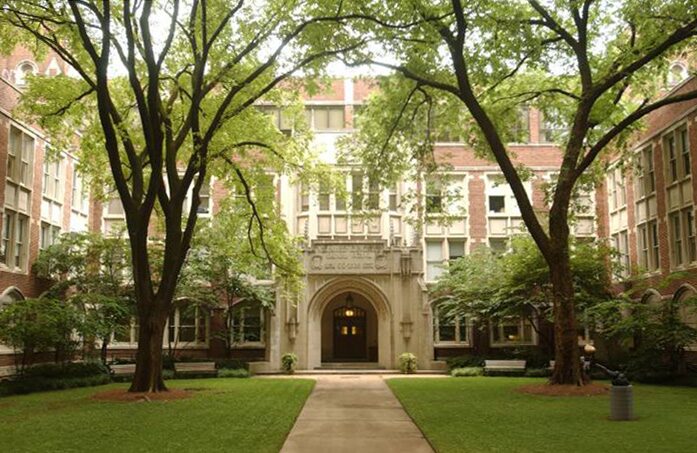
Vanderbilt University School of Medicine stands as one of the most prestigious private medical institutions in the United States, located in Nashville, Tennessee. This elite medical school operates on a 4-year MD program structure with a distinctive accelerated curriculum featuring a 13-month preclinical phase, setting it apart from traditional 4-year programs.
The medical school is situated on Vanderbilt University’s urban campus in Nashville, Tennessee, providing students with access to world-class medical facilities including the 864-bed Vanderbilt Medical Center (VMC) and the 267-bed Children’s Hospital at Vanderbilt. This strategic location offers students extensive clinical training opportunities across diverse patient populations.
Accreditation and Recognition: Vanderbilt University School of Medicine maintains full accreditation from the Liaison Committee on Medical Education (LCME), ensuring graduates are eligible to practice medicine throughout the United States. This accreditation demonstrates the school’s commitment to maintaining the highest standards of medical education.
Rankings and Prestige: According to US News & World Report 2025 rankings, Vanderbilt University School of Medicine ranks in Tier 1 for Best Medical Schools: Research and Tier 3 for Best Medical Schools: Primary Care. The medical school consistently ranks among the top research-focused institutions nationally, reflecting its strong commitment to advancing medical knowledge and training physician-scientists.
The school offers several combined degree programs, including MD/MPH, MD/JD, MD/PhD, and MD/MBA, allowing students to pursue interdisciplinary education aligned with their career goals.
Admission Requirements
Academic Prerequisites
Vanderbilt University School of Medicine has transitioned from strict “requirements” to “recommendations” for coursework, recognizing the diverse academic backgrounds of successful applicants. However, students must demonstrate competencies in natural and life sciences, social sciences, and mathematics.
Minimum Degree Requirements: Applicants must be graduates of regionally accredited colleges and universities before matriculation. There are no restrictions on undergraduate major, though students must demonstrate strong academic performance across diverse disciplines.
Course Recommendations: While specific prerequisite courses aren’t mandated, Vanderbilt recommends strong preparation in:
- Biology and Life Sciences
- Chemistry (General and Organic)
- Physics
- Mathematics (including Statistics)
- Social Sciences
- Humanities
GPA Requirements: With a median GPA of 3.97 for admitted students, Vanderbilt maintains exceptionally high academic standards. While no minimum GPA is specified, competitive applicants typically demonstrate GPAs well above 3.7, with most successful candidates approaching or exceeding the median.
Standardized Testing
MCAT Requirements: The Medical College Admission Test (MCAT) is required for all applicants. Vanderbilt’s admitted students demonstrate exceptional performance with a median MCAT score of 522. This places the typical admitted student in approximately the 99th percentile nationally.
Given the highly competitive nature of admissions, applicants should target MCAT scores of 520 or higher to be competitive. The school evaluates MCAT performance holistically, considering both total scores and section-by-section performance.
Extracurricular Activities & Experience Requirements
Vanderbilt employs a holistic admissions approach that evaluates multiple factors beyond academic achievement:
- Academic Accomplishment
- Motivation and Personal Qualities
- Leadership Skills and Experience
- Educational Background Diversity
- Clinical Exposure and Healthcare Experience
- Research Experience
- Community Service and Volunteer Work
The admissions committee particularly values candidates who demonstrate leadership potential and diverse experiences that contribute to their development as future physicians and medical leaders.
Application Process & Timeline
Application System and Requirements
Vanderbilt University School of Medicine participates in the American Medical College Application Service (AMCAS). All application materials must be submitted through the AMCAS system.
Key Application Dates:
- AMCAS Application Window: May 31 – November 1, 2025
- Application Deadline: November 1, 2025
- Secondary Application Invitations: Mid-July
- Interview Season: September – February
- Acceptance Notifications: Three waves (Late December, Late February, Early March)
Required Documents
Primary Application Materials:
- Complete AMCAS application
- Official transcripts from all institutions attended
- MCAT scores
- Letters of evaluation/recommendation
- Personal statement
- Work and activities descriptions
Secondary Application: After initial screening, approximately two-thirds of applicants receive invitations to submit Vanderbilt-specific secondary applications. The secondary application includes essays addressing:
- Personal background and experiences that shaped your identity (800 words)
- Interactions with diverse individuals and lessons learned (600 words)
- Times when you needed help and how you sought assistance
- Additional prompts for MSTP applicants
Interview Process
Vanderbilt conducts virtual interviews for selected candidates. The interview process is highly selective, with only 138 interview invitations extended from over 6,640 verified applications received in the 2025-26 cycle.
Interview invitations represent the final stage of evaluation, and candidates who receive interviews have demonstrated exceptional qualifications across all evaluation criteria.
Admission Statistics & Success Rates
Overall Competitiveness
Vanderbilt University School of Medicine ranks among the most competitive medical schools in the United States with an acceptance rate of approximately 4.7%. From the 2025-26 application cycle:
- Applications Received: 6,640 verified applications
- Secondary Application Invitations: 5,315 (80% of applicants)
- Interview Invitations: 138 (2.1% of applicants)
- First-Year Class Size: 103 students
- Overall Acceptance Rate: ~1.6% (96 positions for 6,640+ applicants)
Academic Profile of Admitted Students
GPA Statistics:
- Median GPA: 3.97
- Successful applicants typically maintain GPAs above 3.8
- The 25th-75th percentile range generally spans 3.85-4.0
MCAT Statistics:
- Median MCAT: 522
- Competitive applicants score 520+
- The 25th-75th percentile range typically spans 518-524
Geographic and Demographic Distribution
As a private institution, Vanderbilt accepts qualified applicants from all states and international students. The school explicitly welcomes out-of-state, Canadian, and international students, providing opportunities for geographically diverse applicants.
Waitlist Information
Given the highly selective nature of admissions, specific waitlist statistics aren’t publicly available. However, the school’s acceptance timeline suggests that waitlist movement may occur through the spring acceptance cycles.
Tuition & Financial Information
Tuition Rates 2025-2026
Vanderbilt University School of Medicine operates as a private institution with uniform tuition regardless of residency status:
- Annual Tuition: $70,900
- Student Services Fee: $791
- Student Health Fee: $1,012
- Additional Fees: Vary by year (transcript fees, laptop allowance, STEP fees, residency interviewing costs)
Total Cost of Attendance
Complete Cost Breakdown by Year:
| Component | Year 1 (12 months) | Year 2 (11 months) | Year 3 (12 months) | Year 4 (10 months) |
|---|---|---|---|---|
| Tuition | $70,900 | $70,900 | $70,900 | $70,900 |
| Fees | ~$1,803 | ~$1,803 | ~$1,803 | ~$1,803 |
| Living Expenses | ~$41,000 | ~$38,000 | ~$41,000 | ~$34,000 |
| Books/Supplies | $500 | $500 | $500 | $500 |
| Other Costs | Variable | Variable | Variable | $6,058 (interviews) |
| Total Cost | $116,943 | $113,063 | $116,523 | $114,983 |
Four-Year Total Program Cost: Approximately $461,512
Financial Aid and Assistance
Vanderbilt provides various financial aid options:
- Need-based financial aid programs
- Merit-based scholarships
- Federal loan programs
- Work-study opportunities
- External scholarship guidance
Students should contact the Office of Enrollment Services for detailed financial aid information and to discuss specific circumstances or needs.
Curriculum & Program Structure
Program Duration and Philosophy
Vanderbilt’s 4-year MD program features a distinctive curriculum structure emphasizing case-based learning and early clinical exposure. The program prioritizes conceptual knowledge, communication skills, and cultural competencies to prepare graduates for leadership in evolving healthcare systems.
Curriculum Phases
Year 1: Foundations of Medical Knowledge (13 months)
- Accelerated preclinical phase
- Case-based learning methodology
- Small-group case reviews
- Hands-on clinical practice integration
- Foundational sciences with clinical correlation
Year 2: Foundations of Clinical Care
- Six core clerkships
- One-on-one clinical training with expert physician-educators
- Direct patient care responsibilities
- Assessment in real clinical situations
Years 3-4: Immersion Phase
- Extended individualized learning period
- Student-crafted schedules
- Exploration of career-specific interests
- Advanced electives and research opportunities
- Preparation for residency applications
Long-Term Growth Components
Foundations of Physician Responsibility (FPR): Integrated throughout all four years, teaching foundational skills bridging practical science to the art of medicine.
Medical Student Research: Woven into each year of study, ensuring students develop evidence-based practice skills and research competencies.
Mentorship and Advising: Comprehensive support system including:
- College Mentors (dedicated faculty leadership)
- Portfolio Coaches (performance assessment and improvement)
- Clinical Preceptors and Master Clinical Teachers
- Research Directors and collaborators
Residency Preparation and Match Results
Vanderbilt demonstrates excellent residency placement outcomes. Recent match data shows graduates successfully matching into competitive residencies nationwide, including:
- Internal Medicine programs (Johns Hopkins, UCSF, Northwestern)
- Surgery specialties (Mayo Clinic, Barnes-Jewish Hospital)
- Radiology (Mayo Clinic, UCSF)
- Neurology (Johns Hopkins, Northwestern)
- Pediatrics (Children’s Hospital Philadelphia, Stanford)
- Dermatology (UT Southwestern)
- Orthopedic Surgery (Barnes-Jewish, Emory)
Many graduates remain at Vanderbilt University Medical Center for residency training, reflecting the strength of the institution’s graduate medical education programs.
Click To See Hundreds Of Consultants Who Can Mentor You:
Pre-Medical Preparation
Academic Planning Recommendations
Undergraduate Major Considerations: Vanderbilt accepts students from all academic backgrounds. While no specific major is required, successful applicants typically demonstrate:
- Strong performance in science coursework
- Diverse academic interests beyond sciences
- Critical thinking and analytical skills
- Written and oral communication proficiency
GPA Optimization: Given the median GPA of 3.97, pre-medical students should:
- Maintain exceptional academic performance (target 3.8+)
- Select challenging but manageable course loads
- Demonstrate upward academic trends
- Balance science requirements with diverse intellectual pursuits
Clinical Experience Development
Vanderbilt values meaningful healthcare exposure. Recommended clinical experiences include:
- Hospital volunteering
- Clinical research participation
- Physician shadowing across multiple specialties
- Community health initiatives
- Healthcare-related employment
Quality and reflection matter more than quantity of hours. Students should demonstrate genuine understanding of medicine and healthcare challenges.
Research Experience
Given Vanderbilt’s research emphasis (Tier 1 ranking), competitive applicants typically demonstrate:
- Basic science research experience
- Clinical research participation
- Research presentations or publications (preferred but not required)
- Long-term research commitment showing depth rather than breadth
Leadership and Service
Vanderbilt seeks future leaders in medicine. Valuable experiences include:
- Community service leadership roles
- Student government or organization leadership
- Healthcare-related advocacy
- Teaching and mentoring roles
- International service or study abroad
MCAT Preparation
With a median MCAT of 522, serious preparation is essential:
- Begin studying 3-6 months before test date
- Target practice scores consistently above 520
- Consider retaking if initial scores fall below 518
- Schedule testing to allow for potential retakes while meeting application deadlines
Frequently Asked Questions
Does Vanderbilt University School of Medicine look at extracurriculars?
Yes, Vanderbilt employs holistic admissions evaluation, considering leadership, clinical exposure, research, community service, and diverse experiences equally important to academic metrics.
What is Vanderbilt’s average GPA and MCAT score?
The median GPA is 3.97 and median MCAT is 522. Competitive applicants typically exceed these medians or demonstrate exceptional strengths in other areas.
How competitive is Vanderbilt compared to other medical schools?
Vanderbilt ranks among the most competitive medical schools nationally with a ~1.6% acceptance rate, placing it in the top tier of selectivity alongside Harvard, Johns Hopkins, and Stanford.
Does Vanderbilt prefer in-state applicants?
No, as a private institution, Vanderbilt welcomes qualified applicants from all states and internationally, including Canadian and international students.
What makes Vanderbilt different from other medical schools?
Vanderbilt’s distinctive features include its accelerated 13-month preclinical curriculum, case-based learning methodology, strong research opportunities, and comprehensive mentorship system preparing students for medical leadership.
When should I apply to Vanderbilt?
Submit your AMCAS application between May 31 and November 1, with earlier submission recommended for competitive advantage. The application deadline is November 1.
Does Vanderbilt accept international students?
Yes, international students are eligible to apply but may need to submit additional documentation. The school explicitly welcomes international applicants.
What clinical experience do I need for Vanderbilt?
While no specific hour requirements exist, competitive applicants demonstrate meaningful healthcare exposure through volunteering, shadowing, research, or employment showing genuine understanding of medicine.
Does Vanderbilt require research experience?
Research experience isn’t required but is highly valued given Vanderbilt’s Tier 1 research ranking. Most competitive applicants demonstrate research involvement and commitment.
How many letters of recommendation does Vanderbilt require?
Specific requirements should be confirmed through AMCAS, but typically include letters from science faculty, non-science faculty, and healthcare professionals who can evaluate your potential for medical school success.
What is Vanderbilt’s curriculum like?
Vanderbilt features an innovative 4-year curriculum with accelerated 13-month preclinical phase, case-based learning, early clinical exposure, and extensive research integration throughout all years.
Where do Vanderbilt graduates match for residency?
Graduates successfully match into competitive programs nationwide including Mayo Clinic, Johns Hopkins, UCSF, Northwestern, Stanford, and other top-tier institutions, with many also remaining at Vanderbilt for residency training.
How much does Vanderbilt cost?
Annual tuition is $70,900, with total cost of attendance ranging from $113,063-$116,943 per year depending on the academic year. Total four-year program cost approximates $461,512.
What financial aid is available at Vanderbilt?
Vanderbilt offers need-based aid, merit scholarships, federal loan programs, work-study opportunities, and guidance for external scholarships. Students should contact the Office of Enrollment Services for detailed information.
Does Vanderbilt offer interviews to all qualified applicants?
No, interviews are highly selective with only 138 invitations extended from over 6,640 applications. Interview invitations represent the final evaluation stage for the most competitive candidates.