Last updated on January 9th, 2026 at 06:26 am
Program Overview & Institution Identity
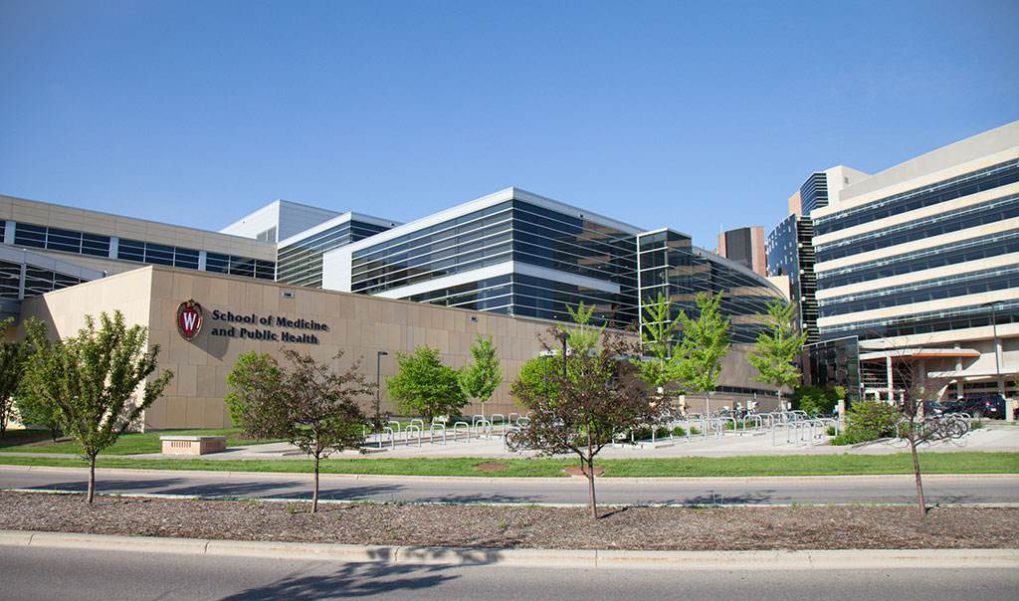
The University of Wisconsin School of Medicine and Public Health stands as a pioneering institution in American medical education, holding the distinction of being the nation’s first integrated school of medicine and public health. Located in Madison, Wisconsin, this public institution operates on an urban campus that embodies the Wisconsin Idea of advancing health and knowledge to serve communities.
Program Duration and Structure
The UW School of Medicine and Public Health offers a 4-year MD program structured around the innovative ForWard Curriculum. This revolutionary approach replaces the traditional two-years-basic-science-plus-two-years-clinical model with a three-phase integrated system that weaves basic sciences, public health, and clinical experiences throughout all four years of medical education.
Combined Degree Options:
- MD/MPH (Master of Public Health)
- MD/PhD (Medical Scientist Training Program – MSTP)
Location and Campus Details
- Primary Campus: Madison, Wisconsin
- Campus Type: Urban setting within a vibrant college town
- Clinical Partners: 245+ clinical training partners throughout Wisconsin
- Healthcare System: Partnership with UW Health University Hospitals and Clinics
Accreditation Status
The University of Wisconsin School of Medicine and Public Health maintains full accreditation from the Liaison Committee on Medical Education (LCME). The school received its most recent 8-year full accreditation renewal in 2018, demonstrating excellence across all 12 LCME standards. The school is currently preparing for reaccreditation with an LCME site visit scheduled for April 2026.
Rankings and Recognition
According to U.S. News & World Report, the University of Wisconsin School of Medicine and Public Health consistently ranks in Tier 2 for both:
- Best Medical Schools: Research
- Best Medical Schools: Primary Care
This ranking places the school among the top medical institutions nationally, reflecting its commitment to both cutting-edge research ($622M in extramural research funding) and primary care training that serves Wisconsin communities.
Admission Requirements
Academic Prerequisites
Minimum Degree Requirements:
Applicants must earn a bachelor’s degree from an accredited college or university before starting the MD program. The degree may be earned in any discipline. In rare cases, applicants with other advanced degrees (e.g., PharmD) may be admitted without a bachelor’s degree.
Required Prerequisite Courses:
All prerequisite courses must be completed prior to beginning the MD program. Courses meeting general biology, chemistry, and physics requirements should be taught at a level required for students majoring in science or engineering.
- General Biology: 8 credits, including lab (integrated or stand-alone)
- General Chemistry: 8 credits, including lab (integrated or stand-alone)
- Organic Chemistry: 3 credits
- Biochemistry: 3 credits
- Physics: 8 credits, including lab (integrated or stand-alone)
- Statistics or Equivalent: 3 credits
- Humanities/Social Sciences Intensive Writing: 3 credits
Special Requirements:
- Writing Requirement: Must be in humanities or social sciences (no “science writing” courses)
- Grade-Based Assessment: Courses where the majority of your grade was based on written work
- Restrictions: AP courses, foreign language courses, group writing projects, and creative writing courses do not satisfy the writing requirement
GPA Requirements
Academic Performance Expectations:
- Median GPA: 3.84 (Class of 2023)
- Average Cumulative GPA: 3.75
- Average Science GPA: 3.69
While there is no official minimum GPA requirement, successful applicants typically demonstrate strong academic performance with most admitted students having GPAs above 3.7. The school uses holistic review, so applicants with lower GPAs who have taken additional post-graduate coursework and performed well may still be competitive.
Standardized Testing
MCAT Requirements:
- Median MCAT Score: 511 (Class of 2023)
- Average MCAT Score: 511
- MCAT Validity: Must be taken after January 1, four years prior to starting medical school
- Application Deadline: Last acceptable test date is September 15 of the previous year
Additional Testing:
- AAMC PREview: Recommended but not required. The professional readiness exam helps assess pre-med competencies including resilience, service orientation, ethical responsibility, empathy, cultural humility, and teamwork.
Extracurricular Activities & Experience Requirements
The University of Wisconsin School of Medicine and Public Health uses holistic evaluation that considers:
- Research experience
- Clinical exposure
- Community service and volunteering
- Leadership experience
- Character and personal qualities
- State residency preferences (Wisconsin residents receive priority)
Wisconsin Residency Preference:
Consistent with the Wisconsin Idea, at least 70% of each entering class consists of Wisconsin residents. Out-of-state students are accepted but face significantly more competition.
Click To See Hundreds Of Consultants Who Can Mentor You:
Application Process & Timeline
Application System
The University of Wisconsin School of Medicine and Public Health participates in AMCAS (American Medical College Application Service), the centralized application system for most US medical schools.
Application Options:
- Regular MD Program
- Rural MD Program (WARM)
- MD-PhD/Medical Scientist Training Program (MSTP)
Application Deadlines
- Primary Application Deadline: October 15, 2025
- AMCAS Processing Time: 4-6 weeks after receipt of application and transcripts
- Recommendation: Submit early applications, but prioritize submitting the strongest possible application
Required Documents
- Primary Application: Complete AMCAS application
- Transcripts: Official transcripts through AMCAS
- Letters of Recommendation: Number and specific requirements detailed on school website
- Personal Statement: Part of AMCAS application
- Secondary Application: School-specific application sent after primary review
Common Secondary Essay Topics (Based on Recent Cycles):
- Motivation and Fit – Why UW SMPH is a good fit (500 words max)
- Diversity, Equity, and Inclusion – How you would embody these values (250 words max)
- Core Values – Reflect on integrity, accountability, or compassion (250 words max)
- Health Policy – Discuss a policy that impacts health outcomes (250 words max)
- COVID-19 Impact – If applicable, share how the pandemic affected your application
Interview Process
- Interview Invitations: Approximately 570 interviews extended annually
- Wisconsin residents: 285 invitations
- Out-of-state residents: 285 invitations
- Interview Format: Traditional format (specific details vary by cycle)
- Interview Timeline: Typically sent during fall/winter of application cycle
Admission Statistics & Success Rates
Overall Acceptance Rate and Application Volume
- Total Applications: 6,384 (Class of 2023)
- Wisconsin residents: 684 applications
- Out-of-state: 5,700 applications
- Total Interviews: 570
- Class Size: 176 students admitted
- Wisconsin residents: 122 (69%)
- Out-of-state: 54 (31%)
Acceptance Rate Calculation: Approximately 2.8% overall acceptance rate (176 accepted/6,384 applications)
- Wisconsin residents: ~18% acceptance rate
- Out-of-state: ~0.9% acceptance rate
Demographics of Admitted Students
Class of 2023 Profile:
- Age Range: 23-43 years old
- Underrepresented in Medicine: 33%
- Academic Background Diversity: Students come from various undergraduate majors, with Biology, Biochemistry, and Neuroscience being most common
Geographic Distribution:
- Wisconsin (majority of class)
- Minnesota
- California
Academic Statistics:
- 25th-75th Percentile MCAT: Data suggests range around 506-516 based on median of 511
- 25th-75th Percentile GPA: Data suggests range around 3.6-3.9 based on average of 3.75
Comparison Data
As a public institution with strong in-state preference, UW SMPH’s acceptance rates differ significantly between resident and non-resident applicants. The school’s commitment to training physicians for Wisconsin makes it highly competitive for out-of-state applicants while remaining more accessible to Wisconsin residents.
Tuition & Financial Information
Current Tuition Rates
2025-26 Academic Year MD Program:
- Wisconsin Residents: $43,288 per year
- Out-of-State Students: $60,968 per year
Total Cost of Attendance
For complete cost breakdowns including estimated living expenses, students should refer to the UW-Madison Office of Student Financial Aid Cost of Attendance page and select “Medicine” for current estimates.
Additional Fees to Consider:
- Technology fees
- Student services fees
- Health insurance requirements
- Clinical rotation expenses
- Equipment and materials costs
Total Program Cost (4-Year Estimate)
- Wisconsin Residents: Approximately $173,152 in tuition alone
- Out-of-State Students: Approximately $243,872 in tuition alone
- Living Expenses: Additional costs for housing, food, transportation, and personal expenses in Madison, Wisconsin
Financial Aid Options
Federal Financial Aid:
- All applicants must file FAFSA (Free Application for Federal Student Aid)
- FAFSA Deadline: March 1 (recommended)
- School Code: 003895
Loan Programs:
- Federal Direct Loans (subsidized and unsubsidized)
- Graduate PLUS loans
- Private loan options
Financial Wellness Program:
UW SMPH offers comprehensive financial wellness support including:
- One-on-one financial advising appointments
- Small group financial wellness sessions for M1 students
- Year-round financial wellness webinars
- Partnership with UW Credit Union for credit report reviews
- Physician Financial Wellness elective for M4 students
Loan Repayment Programs:
- Wisconsin Health Professions Loan Assistance Program
- National Health Service Corps (NHSC)
- Public Service Loan Forgiveness (PSLF)
- Various state and federal loan forgiveness programs for physicians serving underserved areas
Living Expenses in Madison, Wisconsin
Madison offers a relatively affordable cost of living compared to other major metropolitan areas, making it an attractive location for medical students. Housing options include on-campus graduate housing and numerous off-campus apartments near the medical school.
Curriculum & Program Structure
Program Duration and Innovation
The University of Wisconsin School of Medicine and Public Health features the ForWard Curriculum, a revolutionary 4-year program that abandons the traditional “2+2” model in favor of a fully integrated three-phase approach.
ForWard Curriculum Structure
Key Innovation: Instead of separating basic sciences and clinical training, the ForWard Curriculum integrates basic, public health, and clinical sciences throughout all four years, with earlier clinical exposure and continuous skill development.
Three-Phase Model:
Phase 1: Foundation and Integration
- Patients, Professionalism and Public Health
- Body in Balance
- Food, Fasting and Fitness
- Human Family Tree
- Invaders and Defense
- Mind in Motion
- Patient-Centered Education (PaCE) Cases: Small group-based learning sessions
Phase 2: Clinical Application
- Care Across the Life Cycle
- Chronic and Preventative Care
- Acute Care
- Surgical and Procedural Care
- Earlier entry into clinical clerkships for career exploration
Phase 3: Advanced Practice Preparation
- Advanced Clinical Experiences
- Career-Focused Basic Science
- Public Health Selectives
- Internship Preparation
- Graduation
Educational Philosophy and Methods
- Competency-Based Learning: Curriculum designed around specific competencies rather than time-based progression
- Team-Based Learning: Small group sessions and collaborative learning experiences
- Longitudinal Coaching: Intensive mentorship by top faculty throughout the program
- High-Quality Interprofessional Education: Learning alongside other health professions students
- Community-Based Learning: Hands-on application in clinical and community settings
Unique Curriculum Features
- Threads: 10 important content areas woven throughout the entire curriculum
- Earlier Clinical Exposure: Students enter clinical experiences sooner than traditional programs
- Public Health Integration: Unique emphasis on population health and community medicine
- Deliberate Developmental Sequencing: Carefully planned progression of skills and knowledge
Clinical Training
Clinical Partners: 245+ clinical training sites throughout Wisconsin
Hospital Partnerships: UW Health University Hospitals and Clinics plus extensive statewide network
Geographic Distribution: Clinical sites span urban, suburban, and rural settings across Wisconsin
Assessment Methods
The ForWard Curriculum employs competency-based assessment focusing on demonstrable skills and knowledge application rather than traditional test-based evaluation alone.
Residency Preparation
The curriculum specifically prepares students for residency training and USMLE examinations, with support systems in place for residency applications and career planning.
Pre-Medical Preparation
Undergraduate Program Recommendations
Academic Preparation:
While students from any undergraduate major are welcome, successful applicants typically demonstrate strong performance in science coursework. The most common undergraduate majors among admitted students include:
- Biology
- Biochemistry
- Neuroscience
Course Sequencing Strategy:
- Complete prerequisite courses early to allow time for MCAT preparation
- Take organic chemistry and biochemistry before the MCAT
- Complete statistics requirement through coursework that includes practical application
- Plan intensive writing course in humanities or social sciences
MCAT Preparation Timeline
- Recommended Timeline: Take MCAT after completing all science prerequisites
- Strategic Timing: Many applicants take the exam during spring of their application year
- Retake Considerations: Allow time for potential retake if initial scores are unsatisfactory
- Score Visibility: All MCAT scores are visible and considered in holistic review
Clinical Experience Requirements
While there’s no minimum number of clinical hours required, successful applicants typically demonstrate significant clinical exposure through:
- Hospital volunteering
- Clinical shadowing
- Healthcare employment
- Community health initiatives
- Medical mission trips or service learning
Quality vs. Quantity: UW SMPH values meaningful, sustained clinical experiences over extensive but superficial exposure.
Research Experience
Research experience is highly valued but not absolutely required. Types of research that strengthen applications include:
- Basic science research
- Clinical research
- Public health research
- Community-based participatory research
- Health policy research
Publication Expectations: While publications enhance applications, they are not required for admission.
Extracurricular Planning
Well-Rounded Profile Development:
- Leadership Experience: Demonstrated through various activities and organizations
- Community Service: Long-term commitment to serving others
- Cultural Competency: Experience working with diverse populations
- Professional Development: Activities that demonstrate commitment to medicine
Gap Year Considerations
When Gap Years Are Beneficial:
- Strengthening academic record through post-baccalaureate courses
- Gaining additional clinical or research experience
- Developing leadership and life experiences
- Improving MCAT scores
- Completing application materials without academic pressure
Productive Gap Year Activities:
- Research positions (full-time research associate roles)
- Clinical experience (medical scribe, EMT, healthcare employment)
- Community service (AmeriCorps, Peace Corps, Teach for America)
- Graduate coursework (post-baccalaureate programs, master’s degrees)
Application Timeline Planning
Junior Year:
- Complete majority of prerequisite courses
- Begin MCAT preparation
- Develop relationships for letters of recommendation
- Gain meaningful clinical and research experiences
Senior Year:
- Take MCAT (spring recommended)
- Submit primary applications early in cycle
- Complete secondary applications promptly
- Prepare for interviews
Post-Graduation (if applicable):
- Continue meaningful activities
- Maintain academic engagement
- Develop professional experiences