Last updated on January 9th, 2026 at 06:27 am
Program Overview & Institution Identity
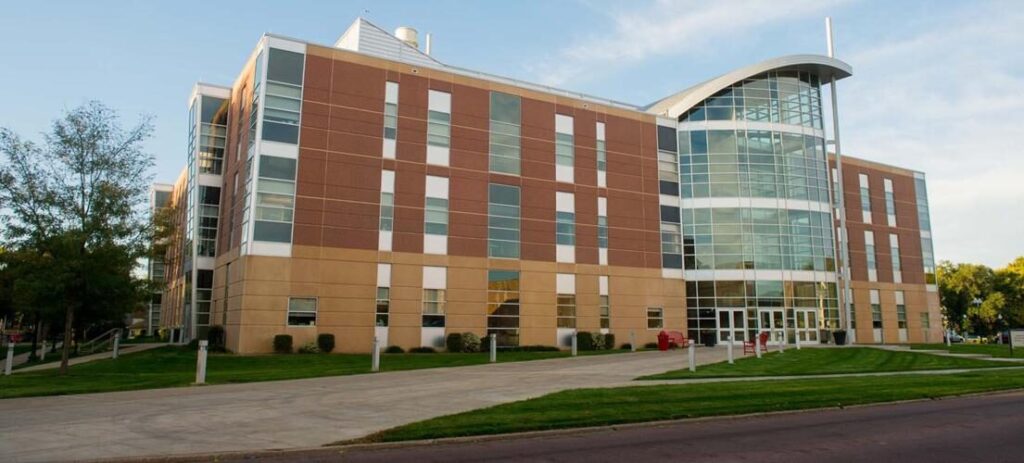
The University of South Dakota, Sanford School of Medicine stands as the state’s only medical school, established in 1907 with a distinguished history of training physicians dedicated to serving South Dakota and rural communities nationwide. Located in Sioux Falls, South Dakota, this public institution operates as a rural campus with a unique mission focused on addressing healthcare needs in underserved areas.
Official Program Details
- Full Name: University of South Dakota, Sanford School of Medicine
- Program Duration: 4-year Doctor of Medicine (M.D.) program
- Combined Degrees: MD/PhD program available
- Location: Sioux Falls, SD (moving first 18 months from Vermillion to Sioux Falls starting 2027)
- Institution Type: Public medical school
Accreditation & Recognition
The USD Sanford School of Medicine is fully accredited by the Liaison Committee on Medical Education (LCME), the official accrediting body for medical schools in the United States. The school underwent its most recent comprehensive accreditation survey in 2017, receiving continuing accreditation status. The next scheduled LCME site visit is October 6-8, 2025.
Distinguished Rankings & Achievements
- 99th percentile for graduates practicing in rural areas (AAMC 2022)
- 93rd percentile for proportion of graduates who are American Indian or Alaska Native (AAMC 2022)
- 97% of graduates had experience in free clinics for underserved populations
- $15.4 million in external research grants and contracts awarded in 2023
- Over 2,000 South Dakota practicing physicians teach students annually
Admission Requirements
Academic Prerequisites
Minimum Degree Requirements: Applicants must possess a bachelor’s degree from an accredited institution before matriculation.
Required Prerequisite Courses:
- Biology: 1 year (8 credit hours)
- General Chemistry: 1 year (8 credit hours)
- Physics: 1 year (8 credit hours)
- Organic Chemistry: 1 semester (4 credit hours)
- Biochemistry: 1 semester (4 credit hours)
- College Mathematics: 1 semester (3-4 credit hours)
- Statistics: 1 semester (3-4 credit hours)
Recommended Courses:
- Second semester of Organic Chemistry
- Genetics
- Microbiology
- Psychology
- Sociology
GPA Requirements
- Median GPA of admitted students: 3.84
- Average undergraduate GPA: 3.68
- No specific minimum GPA stated, but competitive applicants typically exceed 3.5
Standardized Testing Requirements
MCAT Requirements:
- Median MCAT score: 509
- MCAT validity: Scores must be within 3 years of application deadline
- Test deadline: No later than November 1 of application year
- Retake policy: Most recent scores compared to previous attempts
Extracurricular Activities & Experience
The school uses a holistic evaluation approach considering:
- Research experience (basic science, clinical, or public health)
- Clinical exposure and healthcare experience
- Community service and volunteering
- Leadership activities
- Personal and professional characteristics
Click To See Hundreds Of Consultants Who Can Mentor You:
Application Process & Timeline
Application System
USD Sanford School of Medicine participates in the American Medical College Application Service (AMCAS) for primary applications.
Key Deadlines
- Application Period: June 1 – November 1
- Primary Application Deadline: November 1, 2025
- Secondary Application Deadline: Two weeks after receiving invitation
- MCAT Deadline: November 1, 2025
Required Application Components
- Primary AMCAS Application including:
- Academic transcripts
- MCAT scores
- Personal statement
- Work and activities descriptions
- Letters of Recommendation: Submitted through AMCAS Letter Writer Service
- Secondary Application: School-specific essays and requirements
- Application Fees: AMCAS primary fee plus secondary application fee
Interview Process
- Interview Format: Multiple Mini-Interview (MMI) and traditional formats
- Interview Timeline: Typically begins in fall/winter
- 100% of students matched to residency programs in 2024
- Virtual and in-person options may be available
Admission Statistics & Success Rates
Acceptance Rate & Competitiveness
- Acceptance Rate: Approximately 8.13% (based on 2024 data)
- Total Enrollment: 280 students across all years
- Annual Class Size: 70-71 incoming students
Academic Profile of Admitted Students
- Median MCAT Score: 509
- Median GPA: 3.84
- Geographic Distribution: Strong preference for South Dakota residents
- Out-of-State Acceptance: Case-by-case basis
Demographics & Background
- In-State Preference: Significant advantage for South Dakota residents
- Diversity: 93rd percentile nationally for American Indian/Alaska Native representation
- Career Plans: 80% of students plan to practice in South Dakota
Tuition & Financial Information
Tuition Rates by Residency Status
- South Dakota Residents: $34,372 per year
- Out-of-State Students: $79,202 per year
- Additional Fees: $2,308 annually
- Health Insurance: $313.34 annually
Total Cost of Attendance
- In-State Total Cost: Approximately $61,088 per year (including living expenses)
- Out-of-State Total Cost: Approximately $107,248 per year
- 4-Year Program Cost: $244,352 (in-state) / $428,992 (out-of-state)
Financial Aid & Scholarships
- 91% of students receive academic scholarship support
- 96% of students receive some form of financial aid
- Average Annual Aid Package: $41,899
- Low in-state tuition compared to national averages
- Federal loan programs available
- Merit-based and need-based scholarships offered
Living Expenses
- Housing & Dining: Estimated $25,430 annually
- Room & Board: $17,981 (on-campus options)
- Cost of living in Sioux Falls is generally lower than national averages
Curriculum & Program Structure
Program Duration & Structure
The USD Sanford School of Medicine follows a 4-year curriculum organized into three pillars:
Pillar 1 (Pre-Clinical Foundation): 18 months
- 10 integrated science blocks across 3 semesters
- Strong foundational knowledge base
- Clinical foundations courses
- Scheduled classes 8AM-5PM, Monday-Friday
- Built-in time for independent study
Pillar 2 (Clinical Clerkships): Clinical rotations and core requirements
- Core clinical rotations
- Hospital and clinical site partnerships
- Longitudinal integrated clerkship model
Pillar 3 (Advanced Clinical Training): Senior year activities
- Advanced clinical rotations
- Residency preparation
- Board review
- Transition to residency course
Educational Philosophy
- Community-focused curriculum
- Rural health emphasis
- Hands-on clinical experience from early years
- Small class sizes enabling personalized attention
- Integration of technology and simulation-based learning
Clinical Training Opportunities
- Clinical Sites: Multiple locations across South Dakota
- FARM Program: Focus on rural medicine
- Longitudinal Patient Relationships: Continuity-based learning
- Free Clinic Experience: 97% of graduates participate
Residency Preparation & Outcomes
- 100% Match Rate: All 2025 graduates matched to residency
- Popular Specialties: Family medicine (10), Internal medicine (9), Anesthesiology (7)
- Geographic Distribution: 22 states represented in match results
- South Dakota Retention: 11 graduates remained in-state
Pre-Medical Preparation
Undergraduate Planning
- Major Flexibility: No preference for specific undergraduate major
- Science Foundation: Strong performance in prerequisite courses essential
- GPA Optimization: Maintain competitive grades throughout undergraduate career
Clinical Experience Requirements
- Healthcare Exposure: Significant clinical experience valued
- Quality over Quantity: Meaningful patient interaction preferred
- Rural Health Experience: Particularly valued given school’s mission
Research Experience
- Research Opportunities: Basic science, clinical, and public health research considered
- Publications: Not required but beneficial
- Research Skills: Important for MD/PhD applicants
Standardized Test Preparation
- MCAT Timeline: Plan to take MCAT by spring of application year
- Preparation Resources: Adequate study time and resources recommended
- Score Improvement: Consider retaking if significantly below median
Extracurricular Development
- Leadership Roles: Demonstrate leadership capabilities
- Community Service: Commitment to serving others
- Cultural Competency: Experience with diverse populations valued
Frequently Asked Questions
Does USD Sanford School of Medicine look at extracurricular activities?
Yes, USD uses a holistic evaluation approach that considers research experience, clinical exposure, community service, and leadership activities equally alongside academic credentials.
What is USD Sanford School of Medicine’s average GPA and MCAT score?
The median GPA for admitted students is 3.84, and the median MCAT score is 509. These represent the middle 50% of accepted students.
How competitive is USD Sanford School of Medicine compared to other medical schools?
With an acceptance rate of approximately 8.13%, USD Sanford School of Medicine is highly competitive. However, South Dakota residents have a significant advantage in the admissions process.
Does USD Sanford School of Medicine prefer in-state applicants?
Yes, as South Dakota’s only medical school, there is a strong preference for state residents. Out-of-state applicants are considered on a case-by-case basis.
What makes USD Sanford School of Medicine different from other medical schools?
The school’s unique focus on rural medicine, small class sizes (70 students per year), strong community partnerships, and emphasis on serving underserved populations distinguish it from other institutions.
When should I apply to USD Sanford School of Medicine?
Submit your AMCAS application as early as possible during the June 1 – November 1 application period. Earlier submission provides advantages in the rolling admissions process.
Does USD Sanford School of Medicine accept international students?
The school primarily serves South Dakota residents, though specific policies regarding international applicants should be confirmed directly with the admissions office.
What clinical experience do I need for USD Sanford School of Medicine?
While no specific hour requirements exist, significant healthcare exposure demonstrating commitment to medicine is essential. Rural healthcare experience is particularly valued.
Does USD Sanford School of Medicine require research experience?
Research experience is not required but is valued, especially for MD/PhD applicants. The school awarded $15.4 million in research grants in 2023.
How many letters of recommendation does USD Sanford School of Medicine require?
The school participates in the AMCAS Letter Writer Service. Specific requirements should be verified through the admissions office or official school resources.
What is USD Sanford School of Medicine’s curriculum like?
The curriculum features a three-pillar system over four years, with integrated science blocks, early clinical exposure, and a strong emphasis on rural and community medicine.
Where do USD Sanford School of Medicine graduates match for residency?
In 2025, graduates matched across 22 states, with family medicine being the most popular specialty. The school achieved a 100% match rate.
How much does USD Sanford School of Medicine cost?
Annual tuition is $34,372 for South Dakota residents and $79,202 for out-of-state students, plus additional fees and living expenses.
What financial aid is available at USD Sanford School of Medicine?
91% of students receive academic scholarships, and 96% receive some form of financial aid. The average annual aid package is $41,899.
Does USD Sanford School of Medicine offer interviews to all qualified applicants?
The school uses a selective interview process. Not all applicants meeting minimum requirements receive interviews, as the process is competitive with holistic evaluation criteria.