Last updated on January 9th, 2026 at 06:28 am
Program Overview & Institution Identity
Official Program Name and Structure
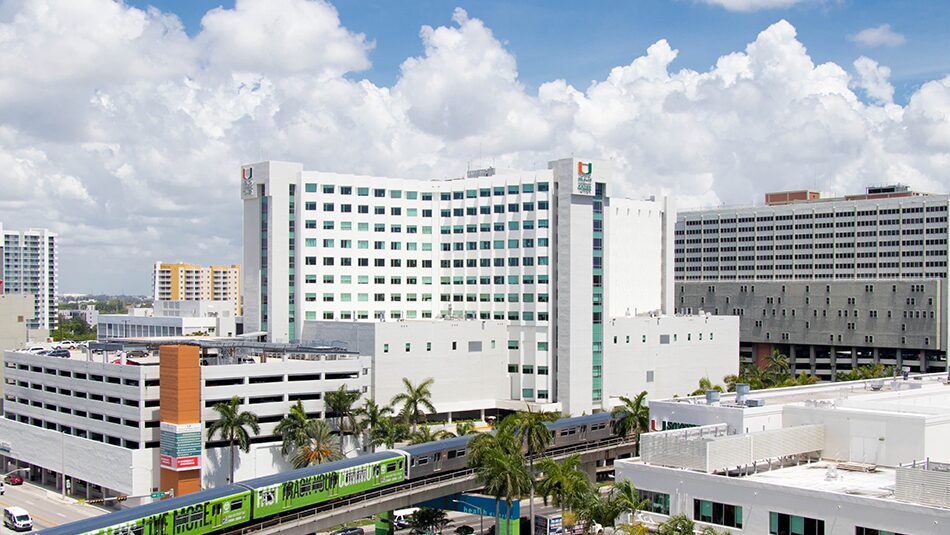
The University of Miami Leonard M. Miller School of Medicine is a prestigious private medical institution located in Miami, Florida. The school offers a traditional 4-year MD program through their innovative NextGenMD curriculum, which represents a revolutionary approach to medical education that shapes students into impactful leaders who will transform the future of healthcare.
Location and Campus Details
Located in Miami, Florida, the Miller School operates on an urban campus that provides students access to a diverse patient population and world-class clinical facilities. The school’s strategic location in Miami offers students exposure to a multicultural environment that mirrors the increasingly diverse healthcare landscape they will serve as physicians.
Accreditation Status
The University of Miami Miller School of Medicine holds full accreditation from the Liaison Committee on Medical Education (LCME) for an eight-year cycle, which was renewed in 2019. This full accreditation ensures that graduates are eligible to take the United States Medical Licensing Examination (USMLE) and apply for residency positions throughout the United States.
Ranking and Recognition
According to U.S. News & World Report rankings, the University of Miami Miller School of Medicine is ranked as:
- Tier 2 in Best Medical Schools: Research
- Tier 3 in Best Medical Schools: Primary Care
The school has gained national prominence and recognition for its innovative curriculum, outstanding faculty, and exceptional match rates for residency placements.
Admission Requirements
Academic Prerequisites
Minimum Degree Requirements
The University of Miami Miller School of Medicine requires applicants to have a conferred bachelor’s degree prior to matriculation. To be on track for degree completion, the school recommends that applicants have at least 90 credit hours completed at the time of application.
Important Note: This requirement does not apply to applicants accepted through the Medical Scholars Program, which is an early matriculation pathway for selected University of Miami undergraduate students.
Required Prerequisite Courses
All science coursework must be completed at a fully accredited 4-year (bachelor’s degree-granting) U.S., U.S. territorial, or Canadian postsecondary institution. Prerequisite coursework must be completed within 10 years of the AMCAS application date.
Required Courses:
| Course | Semesters | Quarters |
|---|---|---|
| English | 2 | 3 |
| Chemistry + Labs | 2 | 3 |
| Organic Chemistry + Lab | 1 | 2 |
| Biochemistry +/- Lab* | 1 | 2 |
| Physics + Labs | 2 | 3 |
| Biology + Labs | 2 | 3 |
| Behavioral Science† | 2 | 3 |
A biochemistry course is required, but a biochemistry lab is only recommended.
†Behavioral science may include humanities, bioethics, psychology, and sociology.
Advanced Placement Credits: The school accepts AP credits for English/literature, behavioral science, biology, physics, and inorganic chemistry requirements if verified by AMCAS and appearing on college transcripts.
Online Coursework: Only online courses completed between Summer 2020 and Fall 2021 are accepted. CLEP credits and foreign institution credits are not accepted, except for qualified study-abroad programs.
GPA Requirements
While the University of Miami Miller School of Medicine does not publish a minimum GPA requirement, the academic metrics for competitive applicants are:
Class of 2029 Academic Statistics:
- Average Cumulative GPA: 3.85
- Average Science GPA: 3.80
Historical Competitive Ranges:
- Average Undergraduate Cumulative GPA: 3.7
- Average Science GPA: 3.6
Students should aim for a GPA significantly above these averages to be competitive, as the school receives nearly 10,000 applications annually for approximately 200–235 seats.
Standardized Testing
MCAT Requirements
The MCAT is required for all applicants, with no minimum score published. However, competitive statistics show:
Class of 2029 MCAT Statistics:
- Average MCAT Score: 516
Historical Competitive Range:
- 505–515 average composite score range
MCAT Policies:
- Take the MCAT no later than the last test date of the year prior to desired matriculation
- MCAT scores are valid for 36 months from the examination date
- Students typically score well above the national average (513) to be competitive
Additional Testing
CASPer® Examination: The Miller School of Medicine does not require the CASPer examination, unlike many other medical schools.
Extracurricular Activities & Experience Requirements
The University of Miami Miller School of Medicine uses a holistic evaluation process that considers non-academic criteria alongside academic achievements. While there are no published minimum requirements for extracurricular activities, competitive applicants typically demonstrate:
- Clinical experience through healthcare settings
- Research experience (publications preferred but not required)
- Community service and volunteering
- Leadership experiences
- Diverse interests and experiences
State Residency: As a private institution, there is no preference for in-state vs. out-of-state applicants. The school actively recruits nationally, with the Class of 2029 representing students from 25 states and 68 undergraduate institutions.
Application Process & Timeline
Application System
All applications must be submitted through AMCAS (American Medical College Application Service). The school does not accept printed or mailed applications.
Key Deadlines
- AMCAS Application Deadline: December 1, 2025 (no extensions granted)
- Secondary Application Deadline: January 15, 2026
- Transcripts Due: Two weeks after AMCAS deadline
- Secondary Application Fee: $95 (non-refundable)
Required Documents
Primary Application (AMCAS):
- Complete AMCAS application
- Official transcripts
- MCAT scores
- Personal statement
- Work and activities descriptions
Secondary Application:
The school sends secondary applications to most U.S. citizens and permanent residents who submit AMCAS applications. Secondary applications include additional essays and questions specific to the Miller School.
Letters of Recommendation:
- Committee letter packet strongly recommended
- Individual letters accepted if committee letter not available
- Specific requirements detailed in secondary application
Interview Process
Interview Statistics (Class of 2029):
- Total Applicants: 9,912
- Interviews Offered: 686 (approximately 7% of applicants)
- Students Matriculated: 202
The interview process includes both traditional interviews and Multiple Mini Interviews (MMI), designed to assess candidates’ communication skills, ethical reasoning, and suitability for the medical profession.
International Students
Important Note: The University of Miami Miller School of Medicine does not accept international students. Applicants must be:
- U.S. citizens
- DACA students (with required documentation)
- Unconditional permanent residents with a green card in possession at the time of AMCAS application
Admission Statistics & Success Rates
Overall Acceptance Rate
Based on the most recent data for the Class of 2029:
- Total Applicants: 9,912
- Students Matriculated: 202
- Acceptance Rate: Approximately 2.04%
This extremely low acceptance rate makes the University of Miami Miller School of Medicine one of the most competitive medical schools in the United States.
Class Size and Demographics
Class of 2029 Demographics:
- Total Class Size: 202 students
- Female: 111 (55%)
- Male: 90 (45%)
- Other Identity: 1
State of Residence:
- In-State (Florida): 74 (37%)
- Out-of-State: 128 (63%)
Race/Ethnicity:
- Asian: 72 (36%)
- Non-Hispanic White: 56 (28%)
- Hispanic: 27 (13%)
- Multiple Ethnicities: 24 (12%)
- Black or African American: 8 (4%)
- No Race or Ethnicity Reported: 15 (7%)
Academic Statistics
Class of 2029 Academic Profile:
- Average Cumulative GPA: 3.85
- Average Science GPA: 3.80
- Average MCAT: 516
Dual Degree Enrollment
Class of 2029 Dual Degree Students:
- MD/MPH: 46 students
- MD/MBA: 25 students
- MD/PhD: 11 students
Comparison Data
The University of Miami Miller School of Medicine consistently attracts students with academic credentials above the national averages:
- National Average MCAT (matriculants): 513
- Miller School Average: 516
- National Average GPA (matriculants): 3.84
- Miller School Average: 3.85
Tuition & Financial Information
Current Tuition Rates
As a private institution, tuition rates are the same for all students regardless of residency status:
2024-25 Academic Year Tuition:
- MD Students (in-state and out-of-state): $53,500
- MD/MPH Students (MS1-2): $61,000
- MD/MPH Students (MS3): $59,750
- MD/MPH Students (MS4): $58,500
- MD/MBA (4-year program): $63,500
- MD/PhD Students: $58,500
Additional Fees (2024-25)
Mandatory Fees:
- Medical Student Assistance Programs: $220
- Disability/Accidental Death Insurance: $64
- Student Council: $115
- Student Activity Fee: $15
- Health and Counseling Centers Fee: $370
- Wellness Center: $430
- Technology Fee: $400
- Mandatory Background Check Fee (MS1): $300
- Board Exam Preparation Fee (MS2): $559
- Athletic Fee (optional): $310
Total Cost of Attendance
MD Program 4-Year Breakdown:
| Expense Category | Year 1 | Year 2 | Year 3 | Year 4 |
|---|---|---|---|---|
| Tuition | $53,500 | $53,500 | $53,500 | $53,500 |
| Fees | $1,614 | $1,614 | $1,614 | $1,614 |
| Housing | $25,200 | $25,200 | $25,200 | $25,200 |
| Food | $10,500 | $10,500 | $10,500 | $10,500 |
| Books & Supplies | $950 | $950 | $950 | $950 |
| Transportation | $3,980 | $3,980 | $3,980 | $3,980 |
| Miscellaneous | $5,000 | $5,000 | $5,000 | $5,000 |
| Loan Fees | $2,400 | $2,400 | $2,400 | $2,400 |
| Health Insurance | $4,041 | $4,041 | $4,041 | $4,041 |
| Board Prep Fee | $0 | $560 | $0 | $0 |
| Step Exam Registration Fee | $0 | $1,360 | $0 | $0 |
| Background Check Fee | $300 | $0 | $0 | $0 |
| Computer Allowance | $1,500 | $0 | $0 | $0 |
| Total Annual Cost | $108,985 | $109,105 | $107,185 | $107,185 |
Total 4-Year Program Cost: Approximately $432,460
Financial Aid Options
Merit Scholarships
- Automatic consideration for all accepted students based on AMCAS application
- No additional application required
- Merit scholarships awarded based on academic achievement and other factors
Need-Based Financial Aid
Institutional Need-Based Grants:
- CSS Profile required for consideration
- Parental information required if student will be 26 years of age or younger as of December 31, 2025
- School Code for CSS Profile: 5815
- AMCAS fee-waiver recipients may request CSS Profile fee waiver
Federal Financial Aid
Federal Direct Loans:
- FAFSA required for federal loan eligibility
- Federal School Code: E00533
- Medical students are considered independent for FAFSA purposes
- No parental information required on FAFSA
Loan Options:
- Federal Direct Unsubsidized Loans
- Federal Direct PLUS (Grad PLUS) Loans:
- No annual limit (up to cost of attendance minus other aid)
- 4.228% origination fee
- Current interest rate: 8.05% (fixed, changes annually)
- 6-month post-enrollment deferment
External Scholarships
Students are encouraged to seek external scholarships and funding opportunities. External scholarship payments should be sent to:
Cashier’s Office University of Miami
PO Box 025551 Location 20
Miami, Florida 33102-5551
Click To See Hundreds Of Consultants Who Can Mentor You:
Curriculum & Program Structure
NextGenMD Curriculum Overview
The University of Miami Miller School of Medicine’s NextGenMD curriculum is a revolutionary 4-year program that focuses on:
- Case-based and small-group learning
- Early clinical skills development
- Community involvement and mentorship
- Diverse skill sets beyond traditional medical training
- Integration of training across three hospital systems
Program Duration and Structure
The NextGenMD curriculum is completed in three phases over four years:
Phase 1: Foundations (14 months)
Focus: Student-led, faculty-facilitated, case-based collaborative approach to learning foundational sciences with early clinical experiences.
Key Features:
- Patient navigator experiences
- Emergency medical skills training
- Longitudinal Clinical Educators (LCEs) serve as coaches and mentors
- Foundational clinical skills development
Core Courses:
- Biomedical Principles of Health
- Symptoms, Signs, and Disease 1-5 (covering major organ systems)
Timeline:
- August: Introduction to the Medical Profession
- September-November: Biomedical Principles of Health
- December-September: Signs and Symptoms of Disease
Phase 2: Integrated Clerkships (12 months)
Focus: Four 12-week blocks of integrated clinical clerkships with basic science integration.
Four Integrated Clerkship Blocks:
- Mind, Matter, and Medicine: Neurology and Psychiatry
- ER to OR: Surgery, Anesthesia, and Emergency Medicine
- Practice of Medicine: Inpatient/Outpatient Internal Medicine, Family Medicine, Geriatrics, and Palliative Care
- Women and Children’s Health: Pediatrics and Obstetrics-Gynecology
Integrated Elements:
- Basic science integration in every clerkship
- Simulation and standardized patient experiences
- Competency-based assessments
- USMLE Step 1 preparation period
Phase 3: Pathways & Capstones (18 months)
Focus: Personalized curriculum with advanced clinical training and career preparation.
Components:
- Advanced clinical courses and electives
- Sub-internship experiences
- Integrated science selective courses
- Critical care selective
- Transition to Residency bootcamp
- Personalized elective schedule
Educational Philosophy and Teaching Methods
NextGenMD Teaching Approach:
- Problem-Based Learning (PBL) and case-based methodology
- Small-group collaborative learning
- Early clinical exposure (starting in first year)
- Longitudinal mentorship through LCEs
- Integration of basic sciences throughout clinical training
Clinical Training
Clinical Sites and Partners:
- Training occurs across three major hospital systems
- Early clinical exposure beginning in Phase 1
- Diverse patient population in Miami metropolitan area
- Access to cutting-edge medical technology and procedures
Key Clinical Partners:
- University of Miami Hospital
- Jackson Health System
- Additional affiliated hospitals and clinics throughout South Florida
Special Programs and Dual Degrees
The Miller School offers several combined degree options:
- MD/MPH: Master of Public Health
- MD/MBA: Master of Business Administration
- MD/PhD: Doctor of Philosophy (Medical Scientist Training Program)
- MD/JD: Juris Doctor
- BS/MD: Combined undergraduate/medical program
- MD/Certificate in Security Management