Last updated on January 9th, 2026 at 06:28 am
Program Overview & Institution Identity
Official Program Name & Historical Significance
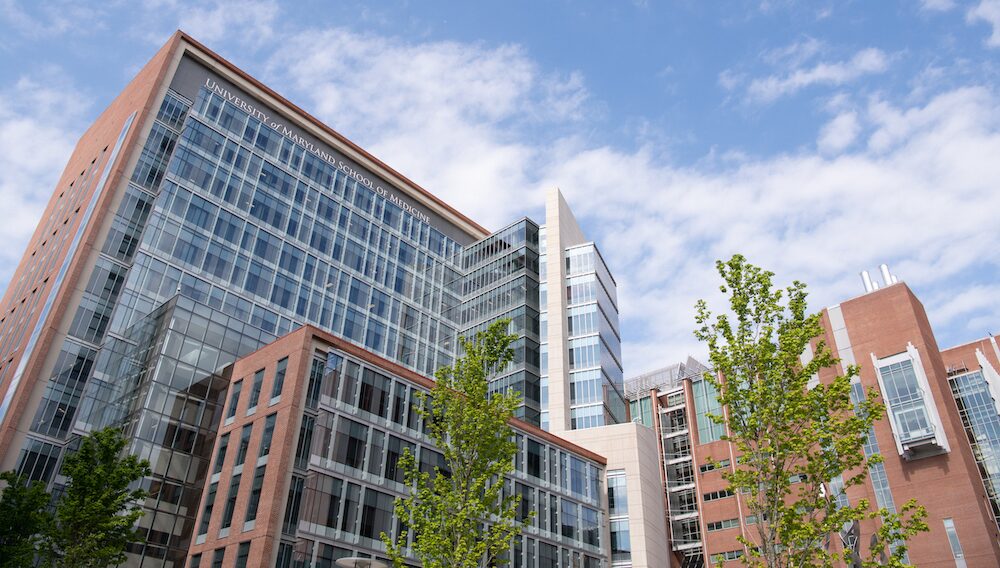
The University of Maryland School of Medicine stands as a historic institution in American medical education. Founded as the first public medical school in the United States, UMSOM was also the first university to build a teaching hospital and the first to offer residency programs. Located in Baltimore, Maryland, this public institution operates on an urban campus in the heart of Baltimore’s medical district.
Program Duration & Curriculum Structure
The University of Maryland School of Medicine offers a 4-year MD program with its innovative Renaissance Curriculum launched in 2020. This comprehensive curriculum features:
- Pre-clerkship phase: Reduced from 73 to 68 weeks, allowing earlier entry into clinical training
- Clerkship phase: Expanded to 44 weeks (increased from 40 weeks)
- Advanced Clinical phase: Including required “back to basics” experiences tailored to career paths
- Grading system: Honors, High Pass, Pass across all four years
Accreditation & Recognition
The University of Maryland School of Medicine is fully accredited by the Liaison Committee on Medical Education (LCME), ensuring graduates are eligible to take the USMLE and apply for residency programs nationwide. The school maintains its status as one of the top 10 most productive public research institutions in the country.
Unique Features & Rankings
- Top 30 ranking among medical schools for research
- Over $563 million in extramural funding
- 358 granted patents and 30+ start-up companies
- Pioneer in translational medicine
- Renaissance Curriculum with integrated learning approach
- Over 30 treatment facilities worldwide
Admission Requirements
Academic Prerequisites
Minimum Degree Requirements
Applicants must complete requirements for a bachelor’s degree from an accredited academic institution prior to matriculation. There are no restrictions on undergraduate major, encouraging diversity in academic backgrounds.
Required Courses
The University of Maryland School of Medicine requires the following prerequisite coursework:
- Inorganic Chemistry (with lab): 8 semester hours
- Organic Chemistry (with lab): 8 semester hours
- Biochemistry: Strongly recommended and may replace the second required semester of Organic Chemistry
- Biology (with lab): 8 semester hours
- Physics (with lab): 8 semester hours
- College English: 6 semester hours
GPA Requirements
- Median GPA: 3.9 for admitted students
- Average GPA of interviewed applicants (2025 cycle): 3.83
- While no minimum GPA is explicitly stated, competitive applicants typically maintain GPAs well above 3.7
Standardized Testing Requirements
MCAT Requirements
- Median MCAT Score: 515 for admitted students
- Average MCAT of interviewed applicants (2025 cycle): 514
- Last accepted MCAT date: September 30 for the current application cycle
- MCAT scores must be current and within the validity period established by the AAMC
Additional Testing
UMSOM does not require the CASPer test, unlike some other medical schools. The school focuses primarily on MCAT performance along with other application components.
Extracurricular Activities & Experience Requirements
The University of Maryland School of Medicine employs a holistic review process that considers:
- Clinical experience and patient exposure
- Research experience (strongly valued but not strictly required)
- Community service and volunteer work
- Leadership experiences
- Cultural competency and diversity contributions
Application Process & Timeline
Application System
UMSOM participates in the American Medical College Application Service (AMCAS). All applicants must submit their primary application through AMCAS.
Key Application Deadlines
| Program | AMCAS Deadline | Secondary Deadline | Special Notes |
|---|---|---|---|
| Regular MD Program | November 1 | December 1 | Most common pathway |
| Early Decision | August 1 | August 8 | Binding commitment required |
| MD/PhD Program | October 1 | October 15 | Earlier deadline |
| MD/Master’s Programs | November 1 | December 1 | Various dual degree options |
| RuralMD Scholars Program | November 1 | December 1 | Specialty track |
Secondary Application Process
- Timeline: Secondary applications are sent to all applicants with verified AMCAS applications in early July
- Completion: All secondary materials, MCAT scores, and letters of recommendation must be submitted by December 1
- Fee: Secondary application fees apply (specific amounts not publicly disclosed)
Interview Process
- Format: The school utilizes various interview formats
- Timeline: Interview invitations begin in early August, with interviews starting in early September
- Season: Interview season runs through early February
- Process: Interviews are part of a comprehensive evaluation including written application materials
Required Documents
- Verified AMCAS application
- Official transcripts through AMCAS
- MCAT scores
- Letters of recommendation/evaluation
- Secondary application essays
- Completion of all prerequisite coursework
Admission Statistics & Success Rates
Overall Acceptance Rate
The University of Maryland School of Medicine maintains a highly competitive acceptance rate of approximately 2.5-2.6%. Recent statistics show:
- 2024-2025 cycle: 6,519 applicants, 163 accepted (2.50% acceptance rate)
- 2023-2024 cycle: 5,684 applicants, 147 accepted (2.59% acceptance rate)
- 2022-2023 cycle: 6,017 applicants, 143 accepted (2.38% acceptance rate)
Class Size & Application Volume
- First-year class size: 163 students (2024-2025)
- Application volume: Consistently receives 5,000-6,500+ applications annually
- Trend: The school has maintained steady class sizes while application numbers fluctuate
Demographics of Admitted Students
Gender Distribution (2024-2025)
- Female students: 97 (59.5%)
- Male students: 64 (39.3%)
- Overall trend: Higher percentage of female matriculants
Residency Status
- Maryland residents: 116 students (71.2%)
- Out-of-state residents: 47 students (28.8%)
- Note: Strong preference for Maryland residents, as typical for public medical schools
Academic Statistics for Admitted Students
- Median MCAT: 515
- Median GPA: 3.9
- Competitive range: Most successful applicants exceed these median scores
Acceptance Rates by Residency Status
- Maryland residents: ~12% acceptance rate
- Out-of-state applicants: ~0.8% acceptance rate
- International students: Accepted on a case-by-case basis (very limited)
Tuition & Financial Information
Current Tuition Rates (2024-2025)
| Residency Status | Annual Tuition | 4-Year Total (Tuition Only) |
|---|---|---|
| Maryland Residents | $43,923 | $175,692 |
| Out-of-State Students | $74,708 | $298,832 |
| International Students | $74,708 | $298,832 |
Additional Fees & Costs
Students should budget for additional expenses including:
- Student services fees
- Health insurance (if not already covered)
- Laboratory and equipment fees
- Clinical rotation fees
- Technology fees
- Books and educational materials
Total Cost of Attendance Estimates
When including living expenses, transportation, and personal costs in Baltimore:
- Maryland residents: Approximately $65,000-$70,000 per year
- Out-of-state students: Approximately $95,000-$100,000 per year
Financial Aid Options
Federal Financial Aid
- FAFSA (Free Application for Federal Student Aid) required
- Federal Direct Loans available
- Graduate PLUS loans for additional funding needs
Institutional Support
- Merit-based scholarships available
- Need-based financial aid programs
- Student Emergency Fund for acute financial hardships
- Work-study opportunities
External Scholarships
The school encourages students to pursue external scholarship opportunities and provides guidance through the financial aid office.
Living Expenses in Baltimore
Baltimore offers relatively affordable living costs compared to other major East Coast cities. Students can find various housing options near campus, with costs varying based on proximity and amenities.
Click To See Hundreds Of Consultants Who Can Mentor You:
Curriculum & Program Structure
Renaissance Curriculum Overview
Launched in 2020, UMSOM’s Renaissance Curriculum aims to develop “Renaissance Physicians” who are life-long learners with clinical excellence, humanism, professionalism, scholarship, leadership, and attention to social justice and diversity.
Pre-Clinical Phase (68 weeks)
- Integrated curriculum: Normal and abnormal processes taught simultaneously
- Clinical context: Early patient interactions throughout pre-clinical years
- Assessment: Pass/Fail grading system promotes collaborative learning
- Innovation: Problem-based learning, team-based learning, and simulation
Clinical Training Phase
Clerkship Phase (44 weeks)
- Core rotations: All major medical specialties
- Flexibility: Streamlined requirements allow for personalized scheduling
- Sites: Multiple hospital and clinical site partnerships throughout Maryland
- Evaluation: Comprehensive assessment of clinical skills and knowledge
Advanced Clinical Phase
- “Back to basics”: Clinically relevant biomedical sciences review
- Career preparation: Tailored experiences based on specialty interests
- Residency preparation: Specialty-specific courses in fourth year
Special Programs & Opportunities
Combined Degree Programs
- MD/PhD: Research-intensive dual degree program
- MD/MBA: Business training for physician leaders
- MD/MPH: Public health focus for population health
Service Learning Requirements
- Partnership with Baltimore City Public Schools
- Community engagement integrated throughout curriculum
- Cultural competency and diversity training
Research Opportunities
- Substantial research opportunities available
- Summer research programs
- Scholarly project requirements
- Access to 19 high-end research centers
Residency Preparation & Match Rates
The University of Maryland School of Medicine maintains strong residency match rates:
- Comprehensive career counseling services
- Specialty-specific guidance and preparation
- Strong alumni network supporting residency placement
- Regular match into competitive specialties including dermatology, orthopedics, and subspecialties
Pre-Medical Preparation
Undergraduate Program Recommendations
Academic Planning
- Major flexibility: No preference for specific undergraduate majors
- Strong foundation: Excellence in prerequisite science courses
- GPA strategy: Maintain competitive grades while pursuing meaningful experiences
- Course sequencing: Complete prerequisites early to allow time for MCAT preparation
Study Abroad Considerations
International experiences can enhance applications but should not compromise prerequisite completion or GPA.
Clinical Experience Requirements
While not explicitly required, competitive applicants typically demonstrate:
- Patient interaction: Direct patient care or observation experiences
- Healthcare settings: Exposure to various medical environments
- Sustained commitment: Long-term volunteer or work experiences in healthcare
- Quality over quantity: Meaningful experiences with reflection and learning
Research Experience
Research experience is highly valued:
- Basic science research: Laboratory-based investigations
- Clinical research: Patient-oriented studies
- Public health research: Population-based studies
- Publication potential: While not required, publications strengthen applications
Extracurricular Planning
Successful applicants typically demonstrate:
- Leadership roles: In academic, community, or professional organizations
- Community service: Sustained commitment to helping others
- Cultural competency: Understanding of diverse populations and health disparities
- Professional development: Attendance at medical conferences, workshops, or shadowing
MCAT Preparation
- Timeline: Begin preparation 6-12 months before test date
- Score goals: Target scores at or above the median (515)
- Retake considerations: Consider retaking if below competitive range
- Practice tests: Extensive practice test preparation recommended
Application Timeline Planning
Successful applicants typically follow this timeline:
- Junior year: Complete prerequisites, begin MCAT preparation
- Spring junior year: Take MCAT, begin application preparation
- Summer before senior year: Submit AMCAS application
- Senior year: Complete secondary applications, interview preparation
- Alternative timeline: Gap year applications allow for additional experience
Frequently Asked Questions
What is University of Maryland School of Medicine’s average GPA and MCAT score?
The median GPA for admitted students is 3.9, and the median MCAT score is 515. However, competitive applicants often exceed these medians, with interviewed applicants averaging 3.83 GPA and 514 MCAT in the 2025 cycle.
How competitive is University of Maryland School of Medicine compared to other medical schools?
UMSOM is highly competitive with an acceptance rate of approximately 2.5%. This places it among the more competitive public medical schools, though it’s more accessible than top-tier private institutions like Johns Hopkins.
Does University of Maryland School of Medicine prefer in-state applicants?
Yes, as a public institution, UMSOM shows strong preference for Maryland residents. About 71% of the entering class consists of Maryland residents, with in-state applicants having approximately a 12% acceptance rate compared to 0.8% for out-of-state applicants.
What makes University of Maryland School of Medicine different from other medical schools?
UMSOM is distinguished by:
Historic significance as America’s first public medical school
Innovative Renaissance Curriculum
Strong research opportunities with $563 million in funding
Integrated community service requirements
Location in Baltimore’s medical district with extensive clinical partnerships
When should I apply to University of Maryland School of Medicine?
The AMCAS application deadline is November 1, with secondary applications due December 1. However, due to rolling admissions, earlier submission is advantageous. Begin AMCAS applications when they open in May.
Does University of Maryland School of Medicine accept international students?
Yes, but on a very limited, case-by-case basis. International students face extremely competitive odds and should have exceptional credentials.
What clinical experience do I need for University of Maryland School of Medicine?
While no minimum hours are specified, competitive applicants typically have substantial clinical experience including patient interaction, healthcare volunteering, and/or clinical employment. Quality and reflection matter more than quantity.
Does University of Maryland School of Medicine require research experience?
Research experience is not explicitly required but is highly valued. Most competitive applicants have meaningful research experiences, though this can range from basic science to clinical to public health research.
How many letters of recommendation does University of Maryland School of Medicine require?
UMSOM follows AMCAS requirements for letters of evaluation. Specific requirements include academic letters and may include clinical or research mentors. Check current AMCAS requirements for exact numbers and specifications.
What is University of Maryland School of Medicine’s curriculum like?
The Renaissance Curriculum features:
68-week pre-clinical phase with integrated learning
44-week clinical clerkship phase
Advanced clinical experiences tailored to career goals
Pass/Fail grading system
Emphasis on early patient interaction and community service
Where do University of Maryland School of Medicine graduates match for residency?
UMSOM graduates successfully match into residencies at prestigious institutions including Johns Hopkins, University of Maryland Medical Center, and other top programs nationwide. The school provides strong career counseling and has good match rates across specialties.
How much does University of Maryland School of Medicine cost?
Annual tuition is $43,923 for Maryland residents and $74,708 for out-of-state students. Including living expenses, total annual costs range from $65,000-$70,000 for residents and $95,000-$100,000 for non-residents.
What financial aid is available at University of Maryland School of Medicine?
Financial aid options include:
Federal student loans (Direct and Graduate PLUS)
Merit-based institutional scholarships
Need-based financial aid
Student emergency funds
Work-study opportunities
External scholarship opportunities
Does University of Maryland School of Medicine offer interviews to all qualified applicants?
No, interviews are offered selectively. Interview invitations begin in early August for the most competitive applicants, with the process continuing through the fall and winter months.