
Last updated on January 9th, 2026 at 06:28 am
Program Overview & Institution Identity
Official Program Name and Duration
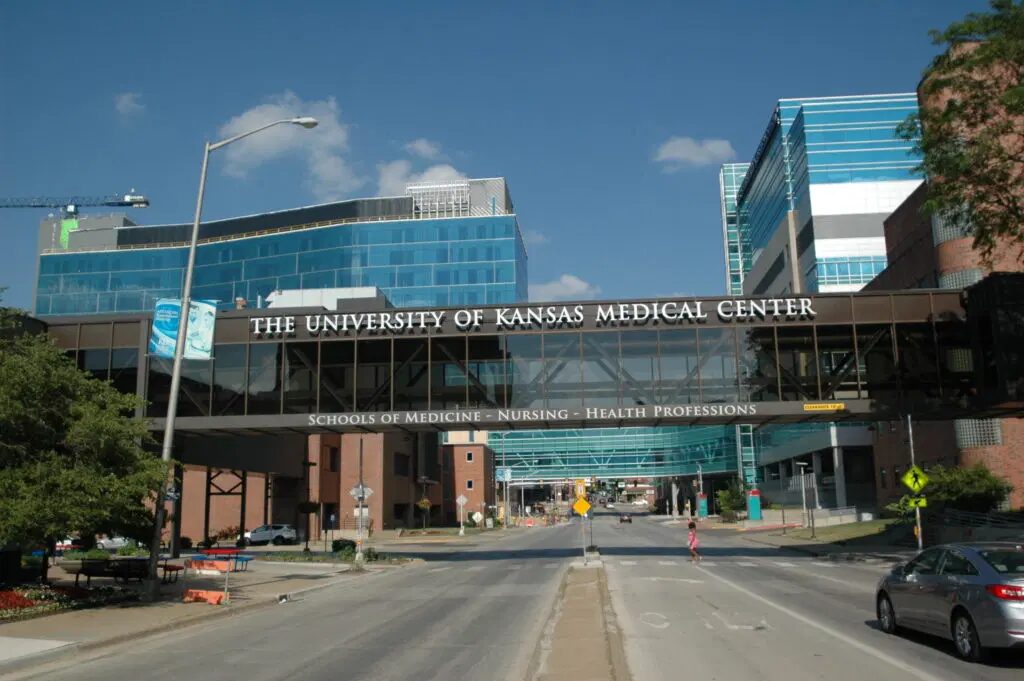
The University of Kansas School of Medicine offers a comprehensive 4-year Doctor of Medicine (M.D.) program designed to prepare physicians for tomorrow’s healthcare challenges. Located in Kansas City, Kansas, this LCME-accredited institution operates as a public medical school serving both Kansas residents and out-of-state students.
Location and Campus Details
The University of Kansas School of Medicine is strategically located in Kansas City, Kansas, providing students with access to a major metropolitan area while maintaining strong ties to rural and underserved communities throughout the state. The school operates on an urban campus that serves as a vibrant hub for medical education, research, and patient care.
Accreditation Status
The University of Kansas School of Medicine holds full accreditation from the Liaison Committee on Medical Education (LCME), the nationally recognized accrediting authority for medical education programs leading to the M.D. degree in the United States. This accreditation ensures that graduates are eligible to take the United States Medical Licensing Examination (USMLE) and apply for residency programs nationwide.
Ranking and Recognition
As an award-winning, top-ranked medical school, the University of Kansas School of Medicine has distinguished itself particularly in family medicine training. The school is recognized as a leader in addressing the national shortage of primary-care physicians, especially in rural areas and for underserved populations. The institution has experienced exponential growth in national competitive research grants, establishing itself as an emerging pacesetter in biomedical research.
Admission Requirements
Academic Prerequisites
Minimum Degree Requirements
Applicants to the University of Kansas School of Medicine must complete a bachelor’s degree from an accredited institution before matriculation. The school welcomes students from diverse academic backgrounds and does not restrict admission to specific undergraduate majors.
GPA Requirements
- Median GPA: 3.92 (for admitted students)
- The school uses a holistic evaluation system that considers both overall GPA and science GPA
- Competitive applicants typically have GPAs significantly above the minimum threshold
- The school evaluates academic performance in the context of the rigor of coursework and institution attended
Standardized Testing
MCAT Requirements
- Median MCAT Score: 510 (for admitted students)
- All sections of the MCAT are evaluated
- The school considers MCAT scores in the context of the overall application
- Recent MCAT scores are preferred, typically within 3 years of application
Extracurricular Activities & Experience Requirements
The University of Kansas School of Medicine employs a holistic evaluation system that equally considers:
- Research experience (basic science, clinical, or public health)
- Clinical exposure and healthcare experience
- Community service and volunteer work
- Leadership experience and potential
State Residency Preferences
As a public institution, the University of Kansas School of Medicine gives preference to Kansas residents, with approximately 82-91% of each entering class consisting of Kansas residents. However, the school actively accepts qualified out-of-state applicants, with recent classes including students from 15-22 different states.
Application Process & Timeline
Application System
The University of Kansas School of Medicine participates in the American Medical College Application Service (AMCAS) for primary applications. All applicants must submit their applications through this centralized system.
Application Deadlines
- Primary Application Deadline: October 15, 2025
- Secondary application deadlines vary but are typically 2-4 weeks after receiving the secondary application invitation
Required Documents
- Transcripts: All post-secondary transcripts must be submitted through AMCAS
- Letters of Recommendation: Specific requirements vary but typically include letters from science faculty, healthcare professionals, and advisors
- Personal Statement: Required as part of the AMCAS application
- Work and Activities: Detailed descriptions of experiences, research, and extracurricular activities
Interview Process
The University of Kansas School of Medicine employs a comprehensive interview process to evaluate candidates beyond their academic credentials. Interview invitations are extended to select applicants based on their overall application strength.
Admission Statistics & Success Rates
Overall Application Volume and Acceptance Rates
Based on recent admission statistics:
- Total KU Applications: Approximately 4,000-5,000 annually
- Kansas Resident Applications: 400-600 per year
- Applicants Interviewed: Approximately 460-620 candidates
- Class Size: 211 students per entering class
- Acceptance Rate: Highly competitive, with admission offers extended to approximately 295 candidates
Demographics of Admitted Students
- Kansas Residents: 82-91% of each class
- Geographic Diversity: Students from 15-22 different states
- Average Age: 23.1-24 years
- Gender Distribution: Relatively balanced between male and female students
- Academic Background Diversity: Students from 60+ different undergraduate institutions and 40+ different majors
Academic Statistics of Admitted Students
- Median GPA: 3.92
- Median MCAT: 510
- The school admits students with diverse academic backgrounds, including those with master’s and doctoral degrees
Tuition & Financial Information
Current Tuition Rates by Residency Status
- Kansas Residents: $42,079 per year
- Out-of-State Students: $73,807 per year
- Total Program Cost (4 years):
- Kansas Residents: Approximately $168,316
- Out-of-State Students: Approximately $295,228
Total Cost of Attendance
The total cost of attendance includes tuition, fees, and estimated living expenses. Students should budget for:
- Housing and meals
- Books and supplies
- Transportation
- Personal expenses
- Health insurance
Financial Aid Options
The University of Kansas School of Medicine offers various financial aid opportunities:
- Federal Financial Aid: Students can apply for federal loans and grants through FAFSA
- Merit-based Scholarships: Available based on academic achievement and other criteria
- Need-based Aid: Assistance for students demonstrating financial need
- Work-Study Programs: Opportunities for part-time employment
Living Expenses
Kansas City offers a relatively affordable cost of living compared to many other metropolitan areas, making medical education more financially accessible for students.
Click To See Hundreds Of Consultants Who Can Mentor You:

Curriculum & Program Structure
Program Duration and Structure
The University of Kansas School of Medicine offers a 4-year M.D. program following the traditional medical education model:
Pre-Clinical Years (Years 1-2)
Year One (35 credit hours):
- Introduction to Doctoring (3 hours)
- Molecular and Cellular Medicine (8 hours)
- Infection, Blood and Immunity (8 hours)
- Respiration and Circulation (8 hours)
- Gastrointestinal and Renal (8 hours)
Year Two (32 credit hours):
- Muscles and Movement (8 hours)
- Brain, Mind and Behavior (8 hours)
- Reproduction, Development and Sexuality (8 hours)
- Medicine Capstone (8 hours)
Clinical Years (Years 3-4)
Year Three (48 credit hours): Core clinical rotations including:
- Family Medicine Clerkship (8 hours)
- Obstetrics/Gynecology Clerkship (8 hours)
- Internal Medicine Clerkship (8 hours)
- Neurology Clerkship (4 hours)
- Pediatrics Clerkship (8 hours)
- Surgery Clerkship (8 hours)
- Issues in Clinical Medicine
Year Four (32 credit hours): Advanced rotations and electives including:
- Rural Preceptorship options
- Critical care and specialty rotations
- Research and scholarly activities
Educational Philosophy and Teaching Methods
The school emphasizes a patient-centered approach to medical education, integrating cutting-edge medical science with practical clinical skills development. The curriculum evolves with students, transitioning from classroom-based learning to hands-on clinical training.
Special Programs and Combined Degrees
The University of Kansas School of Medicine offers several combined degree programs:
- M.D./Ph.D. Program: For students interested in physician-scientist careers
- M.D./MBA Program: Combining medical training with business administration
- M.D./MPH Program: Focusing on public health and population medicine
Special Tracks and Programs
- MEDPATH Program: Special pathway program
- Scholars in Rural Health: Dedicated track for rural medicine
- Scholars in Urban Health: Focus on urban healthcare challenges
Pre-Medical Preparation
Undergraduate Program Recommendations
The University of Kansas School of Medicine welcomes students from all academic backgrounds. Successful applicants have represented 40+ different undergraduate majors, demonstrating that diverse academic preparation can lead to medical school success.
Academic Planning
Prospective applicants should focus on:
- Completing prerequisite coursework with strong performance
- Maintaining a competitive GPA throughout undergraduate studies
- Building a well-rounded academic foundation
Clinical Experience Requirements
While specific minimum clinical experience hours are not mandated, successful applicants typically demonstrate:
- Meaningful healthcare exposure through volunteering, shadowing, or employment
- Understanding of the medical profession and healthcare system
- Commitment to serving others through healthcare
Research Experience
Research experience is valued but not required. The school appreciates:
- Basic science research
- Clinical research participation
- Public health projects
- Quality over quantity in research experiences
Extracurricular Planning
Successful applicants typically demonstrate:
- Leadership experience in various settings
- Community service and volunteer work
- Long-term commitment to activities
- Well-rounded personal development
Frequently Asked Questions
Does University of Kansas School of Medicine look at extracurriculars?
Yes, the University of Kansas School of Medicine uses a holistic evaluation system that equally considers research experience, clinical exposure, community service, and leadership alongside academic achievements.
What is University of Kansas School of Medicine’s average GPA and MCAT score?
The median GPA for admitted students is 3.92, and the median MCAT score is 510.
How competitive is University of Kansas School of Medicine compared to other medical schools?
The University of Kansas School of Medicine is highly competitive, with thousands of applications for approximately 211 seats each year. The school maintains high academic standards while emphasizing holistic evaluation.
Does University of Kansas School of Medicine prefer in-state applicants?
Yes, as a public institution, approximately 82-91% of each entering class consists of Kansas residents. However, the school actively recruits qualified out-of-state applicants.
What makes University of Kansas School of Medicine different from other medical schools?
Key differentiators include:
Award-winning family medicine program
Strong focus on rural and underserved populations
Emerging leadership in biomedical research
Comprehensive support for student success
Multiple campus locations and clinical sites
When should I apply to University of Kansas School of Medicine?
Applications open in early summer with a deadline of October 15th. Students should begin preparation at least 12-18 months before their intended matriculation date.
Does University of Kansas School of Medicine accept international students?
Yes, the school accepts qualified international students, though they represent a small percentage of each class and face additional requirements for visa and licensing considerations.
What clinical experience do I need for University of Kansas School of Medicine?
While specific hour requirements aren’t mandated, successful applicants typically demonstrate meaningful healthcare exposure through volunteering, shadowing, or employment that shows understanding of the medical profession.
Does University of Kansas School of Medicine require research experience?
Research experience is valued but not required. The school appreciates diverse types of research experience, emphasizing quality over quantity.
How many letters of recommendation does University of Kansas School of Medicine require?
Specific letter requirements should be verified through the school’s current admissions materials, but typically include letters from science faculty, healthcare professionals, and academic advisors.
What is University of Kansas School of Medicine’s curriculum like?
The school offers a 4-year program with 2 years of pre-clinical classroom and laboratory-based learning followed by 2 years of clinical rotations in hospitals and healthcare settings.
Where do University of Kansas School of Medicine graduates match for residency?
Graduates match into residency programs across the country, with particular strength in primary care specialties. The school provides comprehensive support for residency applications and career planning.
How much does University of Kansas School of Medicine cost?
Annual tuition is $42,079 for Kansas residents and $73,807 for out-of-state students, with total program costs over 4 years ranging from approximately $168,000 to $295,000 depending on residency status.
What financial aid is available at University of Kansas School of Medicine?
Financial aid options include federal loans and grants through FAFSA, merit-based scholarships, need-based assistance, and work-study programs.
Does University of Kansas School of Medicine offer interviews to all qualified applicants?
No, interview invitations are selective, extended to approximately 460-620 candidates out of thousands of applicants each year based on comprehensive application review.
The University of Kansas School of Medicine represents an excellent choice for students seeking comprehensive medical education with particular strength in primary care, rural medicine, and service to underserved populations. With its combination of academic rigor, research opportunities, and commitment to producing physician leaders, KU School of Medicine prepares graduates for successful careers in medicine while addressing critical healthcare needs in Kansas and beyond.