Last updated on January 9th, 2026 at 06:29 am
Program Overview & Institution Identity
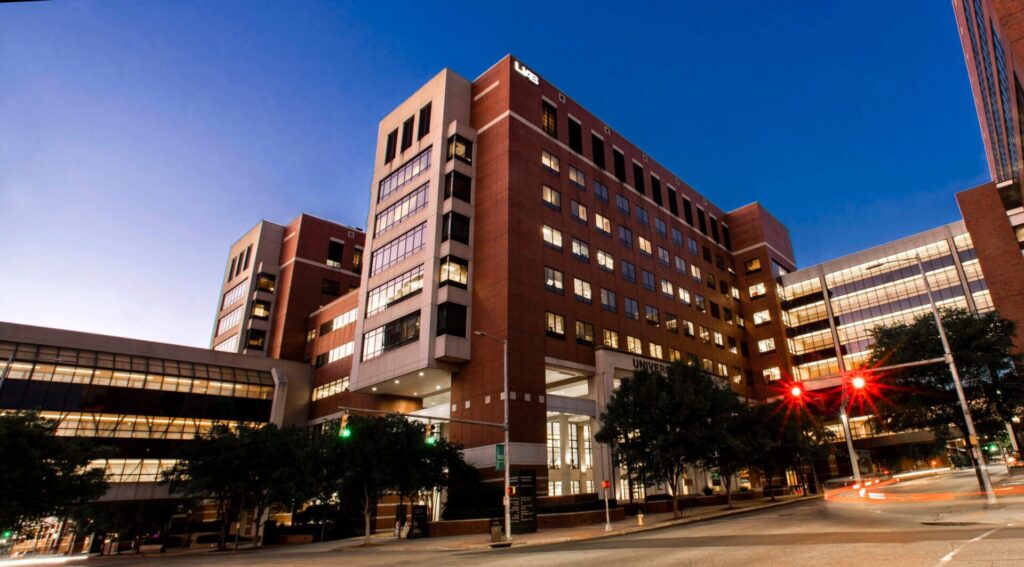
The University of Alabama at Birmingham Marnix E. Heersink School of Medicine stands as a premier medical education institution located in Birmingham, Alabama. As a public medical school situated on UAB’s urban campus, the Heersink School of Medicine offers a comprehensive 4-year MD program designed to prepare students to become exceptional clinicians, physician scientists, and medical educators.
Program Duration and Structure
The UAB Heersink School of Medicine follows a traditional 4-year MD program structure:
- Years 1-2: Pre-clinical education focused on basic sciences and clinical skills development
- Years 3-4: Clinical clerkships and elective rotations across multiple campus locations
Accreditation Status
The school maintains full accreditation from the Liaison Committee on Medical Education (LCME), the nationally recognized authority for accrediting medical education programs leading to the MD degree in the U.S. and Canada. In recent years, UAB received a full eight-year accreditation, demonstrating its commitment to maintaining high educational standards.
Location and Campus Details
Located in Birmingham, Alabama, the medical school operates within UAB’s comprehensive health system. Students complete their first two years of pre-clinical training on the Birmingham campus, surrounded by world-class medical facilities including:
- UAB Hospital
- Kirklin Clinic of UAB Hospital
- Children’s of Alabama
For clinical training, students have access to multiple campus locations:
- Birmingham Campus (primary location)
- Huntsville Campus
- Montgomery Campus
- Tuscaloosa Campus
Rankings and Recognition
According to U.S. News & World Report, UAB Heersink School of Medicine is ranked as Tier 2 in both:
- Best Medical Schools: Research
- Best Medical Schools: Primary Care
This recognition reflects the school’s strong performance in medical education, research output, and primary care preparation.
Admission Requirements
Academic Prerequisites
Minimum Degree Requirements
Applicants must possess a bachelor’s degree from an accredited institution before matriculation. The school does not specify minimum credit hour requirements beyond standard degree completion.
Required Prerequisite Courses
While UAB Heersink School of Medicine does not specify exact prerequisite courses, students should complete foundational coursework typically including:
- English: Two semesters of English composition
- Mathematics: Two semesters of college mathematics (pre-calculus recommended; statistics or biostatistics strongly recommended)
- General Chemistry: Two semesters with laboratory
- Biology: Two semesters of introductory biology with laboratory
- Organic Chemistry: Two semesters with laboratory
- Physics: Two semesters with laboratory (calculus-based or non-calculus based)
- Biochemistry: Strongly recommended
GPA Requirements
GPA requirements differ significantly based on residency status:
Alabama Residents:
- Minimum 3.0 science (BCPM) GPA at undergraduate level OR
- 3.0 science GPA after completing 20+ BCPM credits at post-baccalaureate/graduate level
Out-of-State Applicants:
- Minimum 3.3 science (BCPM) GPA at undergraduate level OR
- 3.3 science GPA after completing 20+ BCPM credits at post-baccalaureate/graduate level
Competitive Statistics:
- Median admitted student GPA: 3.88
- Average admitted student GPA: 3.83 (2024 class)
Standardized Testing
MCAT Requirements
- Minimum MCAT score: 495 total score to receive secondary application invitation
- Median MCAT score: 510 (2025 data)
- Average MCAT score: 509 (recent classes)
MCAT Timing:
- Latest acceptable scores: September 2025 MCAT dates for 2026 entering class
- Earliest acceptable scores: 2023 MCAT scores for 2026 entering class
- The most recent MCAT total score is used for secondary application consideration
- All MCAT attempts are considered during admissions evaluation
Additional Testing
UAB Heersink School of Medicine does not require additional standardized tests such as CASPer, though specific specialty programs may have different requirements.
Extracurricular Activities & Experience Requirements
UAB Heersink employs a mission-based admissions approach, valuing applicants who demonstrate alignment with one or more mission areas:
- Academic Medicine/Research: Exceptional research, leadership, or education experiences with potential for academic medicine careers
- Community Service: Significant service experiences with longitudinal commitments and leadership
- Intent to Serve Alabama Communities: Experiences supporting applicant’s intent to serve Alabama’s underserved communities, including rural areas
- Primary Care: Compelling experiences supporting primary care career intent
The admissions committee conducts holistic reviews considering:
- Academic preparation and competencies
- Professional competencies
- Pre-medical experiences
- Communication skills and teamwork
- Leadership abilities
- Service to others
Application Process & Timeline
Application System
UAB Heersink School of Medicine participates in the American Medical College Application Service (AMCAS) for primary applications.
Application Deadlines
Early Decision Program:
- AMCAS Application: August 1
- Secondary Application: August 15
Regular MD Program:
- AMCAS Application: November 1, 2025
- Secondary Application: November 15
Early Assurance Programs: (Rural Programs, EMSAP, Burroughs Wellcome Scholars, Blaze to MD)
- AMCAS Application: August 1
- Secondary Application: October 15
Required Documents
Letters of Recommendation
Maximum of five letters submitted through AMCAS Letters Service. Three fulfillment options:
- Committee Letter (Preferred): Authored by pre-health committee or advisor
- Letter Packet: Assembled by institution’s career center
- Three Individual Letters: At least one from science faculty member, two from faculty or other qualified evaluators
Secondary Application
Invitations sent starting early July. Applicants must meet minimum MCAT and GPA requirements to receive secondary application invitations.
Interview Process
- Interview invitations sent after secondary application review
- 2024 statistics: 493 candidates interviewed from 4,320 applicants
- Interview format and specific details vary by admissions cycle
Admission Statistics & Success Rates
Overall Acceptance Rate
Based on recent data:
- 2024 Cycle: 4,320 applied, 281 offered admission, 190 enrolled
- Estimated acceptance rate: Approximately 6.5%
- Yield rate: Approximately 67%
Application Volume and Class Size
- Applications received (2024): 4,320
- Interviews conducted: 493
- Class size: 190 students
- Total medical students: 799 across all four years
Academic Statistics of Admitted Students
MCAT Scores:
- Median: 510
- Average: 509
GPA Statistics:
- Median: 3.88
- Average: 3.83
Demographics
2024 Entering Class:
- Female students: 108 (57%)
- Male students: 82 (43%)
- Total physicians trained historically: 9,093
Historical Trends
Recent application and admission trends show:
- Slight decrease in applications from peak years (5,774 in 2021 to 4,320 in 2024)
- Consistent class size of approximately 186-190 students
- Stable MCAT and GPA medians
Tuition & Financial Information
Current Tuition Rates (2025-2026)
In-State Students
- MS1: $37,282
- MS2: $37,282
- MS3: $36,310
- MS4: $36,310
Out-of-State Students
- MS1: $67,786
- MS2: $67,786
- MS3: $66,814
- MS4: $66,814
Total Cost of Attendance (2025-2026)
In-State Total Costs
- MS1: $74,582 (including living expenses, books, supplies)
- MS2: $76,425
- MS3: $75,447
- MS4: $71,825
- Total 4-year estimated cost: ~$298,279
Out-of-State Total Costs
- MS1: $105,891
- MS2: $107,734
- MS3: $106,756
- MS4: $103,134
- Total 4-year estimated cost: ~$423,515
Additional Fees
- Professional Support Fee: $250 (funds wellness activities and academic support)
- Anatomy Lab Fee: Varies by course participation
- Alumni Residency Application Services Fee: $45 (for graduates only)
Financial Aid Options
Application Process
Students apply for financial aid through:
- FAFSA application (designate UAB as recipient institution)
- Contact: medschoolscholarship@uab.edu or 205-934-2332
Scholarship Opportunities
- Merit-based scholarships: Automatic consideration based on admissions application
- Need-based financial aid: Available through federal programs
- Institutional scholarships: Various school-specific award opportunities
- External scholarships: Third-party funding sources
Federal Aid Programs
- Federal loans available for eligible students
- Work-study opportunities may be available
Click To See Hundreds Of Consultants Who Can Mentor You:
Curriculum & Program Structure
Program Duration and Educational Philosophy
UAB Heersink follows a traditional 4-year medical education model emphasizing:
- Evidence-based fundamental science education
- Early integration of clinical skills and basic sciences
- Active, case-based learning approaches
- Teamwork and collaborative learning
Pre-Clinical Years (Years 1-2)
Year 1 Curriculum
- Patient, Doctor & Society (2 weeks)
- Learning Communities 1 (Longitudinal)
- Introduction to Clinical Medicine 1 (Longitudinal)
- Fundamentals of Medicine (Blocks 1-5, varying lengths)
- Cardiovascular (5 weeks)
- Pulmonary (5 weeks)
- Gastrointestinal (6 weeks)
- Renal (5 weeks)
- Optional co-enrolled electives
Year 2 Curriculum
- Introduction to Scholarly Activity (2 weeks)
- Learning Communities 2 (Longitudinal)
- Introduction to Clinical Medicine 2 (Longitudinal)
- Neurosciences (10 weeks)
- Musculoskeletal/Skin (6 weeks)
- Endocrine Systems (3 weeks)
- Reproductive Systems (4 weeks)
- Hematology/Oncology (4 weeks)
- Evidence-Based Medicine (1 week)
- Dedicated USMLE Step 1 study time (minimum 6 weeks)
- Special Topics (4 weeks required total)
- Scholarly Activity (Longitudinal)
Clinical Training (Years 3-4)
Year 3 Core Clerkships
Required 8-week clerkships:
- Internal Medicine
- Surgery
- Obstetrics/Gynecology
- Pediatrics
Required 4-week clerkships:
- Neurology
- Psychiatry
- Family Medicine
Additional components:
- Learning Communities 3 (Longitudinal)
- Clerkship Core Curriculum (Longitudinal)
- Scholarly Activity (Longitudinal)
Year 4 Electives and Advanced Training
- Specialty-focused electives
- Research opportunities
- Visiting elective programs
- Acting internships
- Special topics courses
Clinical Training Sites
Students train at multiple high-quality clinical sites:
- UAB Hospital (primary teaching hospital)
- Children’s of Alabama (pediatric training)
- Huntsville Hospital
- Baptist Medical Centers (Montgomery locations)
- DCH Regional Medical Center (Tuscaloosa)
- Various community-based practices
Special Programs
Combined Degree Options
- BS/MD Program
- MD/PhD Program (Medical Scientist Training Program)
- MD/MBA Program
- MD/MPH Program
Specialty Tracks
- Primary Care Track
- Rural Medicine Programs
- Tuscaloosa Primary Care Track
- Blaze to MD Program (accelerated pathway)
Assessment Methods
- Traditional grading systems for pre-clinical courses
- Clinical clerkship evaluations
- OSCEs (Objective Structured Clinical Examinations) for skills assessment
- Longitudinal competency assessments
Pre-Medical Preparation
Undergraduate Program Recommendations
Major Selection
UAB Heersink welcomes applicants from diverse academic backgrounds. While no specific major is required, students should:
- Complete required prerequisite coursework
- Maintain strong academic performance
- Demonstrate intellectual curiosity and critical thinking
Academic Planning Strategies
Optimal Course Sequencing:
- Complete foundational sciences early to allow for advanced coursework
- Take MCAT after completing organic chemistry and physics
- Consider summer courses to manage course load during regular semesters
GPA Optimization:
- Maintain consistent academic performance across all subjects
- Focus particularly on science GPA requirements
- Consider post-baccalaureate programs if GPA improvement is needed
Clinical Experience Development
Types of Valued Clinical Exposure
- Hospital volunteering and patient interaction
- Clinical research participation
- Healthcare shadowing experiences
- Community health initiatives
- Healthcare-related employment
Experience Quality vs. Quantity
The admissions committee values:
- Longitudinal commitments over brief exposures
- Leadership roles and increased responsibility
- Diverse populations served
- Reflection and learning from experiences
Research Experience Recommendations
Research Types Valued
- Basic science research in laboratory settings
- Clinical research with patient populations
- Public health research addressing community needs
- Translational research bridging bench to bedside
Publication and Presentation Expectations
While publications are not required, they demonstrate:
- Sustained research commitment
- Scientific communication skills
- Intellectual contribution to field
Extracurricular Planning
Mission-Aligned Activities
Focus on experiences supporting UAB’s mission areas:
Community Service Focus:
- Healthcare-related volunteering
- Community development projects
- Educational outreach programs
- Leadership in service organizations
Alabama Community Engagement:
- Rural health initiatives
- Underserved population programs
- Healthcare access improvement projects
- Cultural competency development
Leadership Development
- Student government participation
- Organization officer positions
- Initiative founding and management
- Team leadership in research or clinical settings
MCAT Preparation Strategy
Recommended Timeline
- Junior Year: Complete prerequisite coursework
- Late Junior Year/Early Senior Year: Take MCAT
- Allow 3-6 months for dedicated MCAT preparation
Score Improvement Considerations
- Retake policies allow for score improvement
- All MCAT attempts are considered in evaluation
- Significant score improvements are viewed favorably
Gap Year Considerations
When Gap Years Are Beneficial
- GPA improvement through post-baccalaureate programs
- Research experience enhancement
- Clinical experience development
- Mission-aligned service completion
Productive Gap Year Activities
- Post-baccalaureate pre-medical programs
- Research assistant positions
- Clinical coordinator roles
- Community service programs
- Healthcare-related employment
Frequently Asked Questions
Does UAB Heersink School of Medicine look at extracurriculars?
Yes, UAB Heersink conducts holistic admissions reviews that heavily weight extracurricular activities, especially those aligned with their mission areas: community service, research/academic medicine, intent to serve Alabama communities, and primary care focus.
What is UAB Heersink School of Medicine’s average GPA and MCAT score?
The median admitted student statistics are:
GPA: 3.88 (median), 3.83 (average)
MCAT: 510 (median), 509 (average)
How competitive is UAB Heersink School of Medicine compared to other medical schools?
With an acceptance rate of approximately 6.5% and median MCAT/GPA scores above national averages, UAB Heersink is highly competitive. It’s ranked Tier 2 by US News in both research and primary care categories.