Last updated on January 9th, 2026 at 06:29 am
Program Overview & Institution Identity
Official Program Name
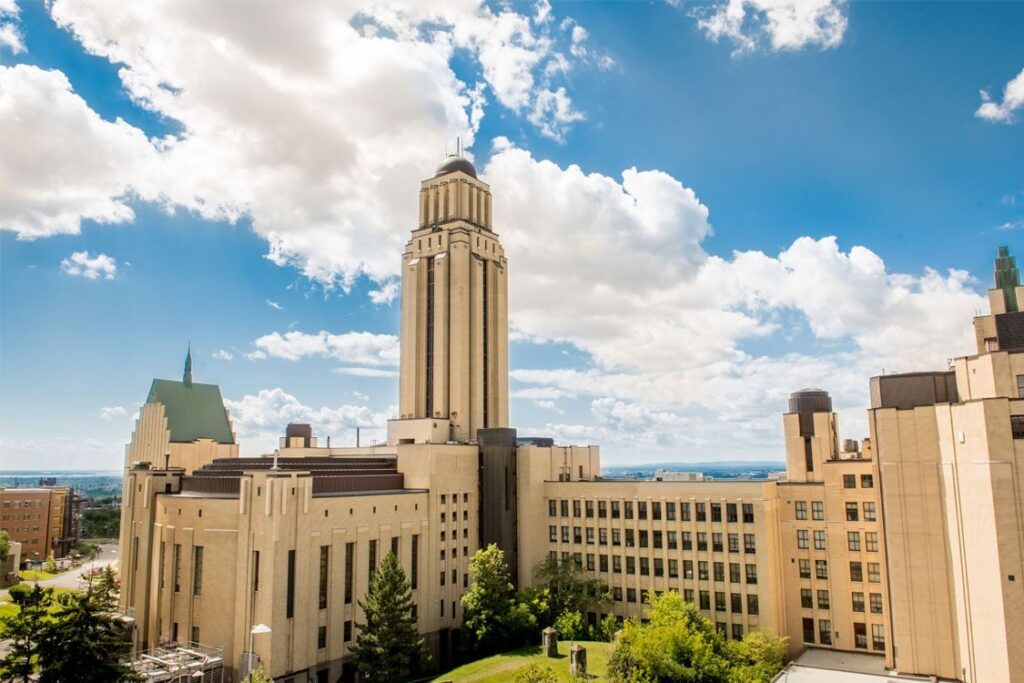
The Université de Montréal Faculty of Medicine (Faculté de médecine de l’Université de Montréal) offers the Doctor of Medicine (MD) program, officially known as “Doctorat de 1er cycle en médecine.” Established in 1843, this prestigious French-language medical school has served Quebec for over 180 years, training more than a third of all physicians currently practicing in the province.
Program Duration and Structure
The UdeM medical program is a 4-year full-time MD program, excluding the preparatory year that may be required depending on your educational background. Students from Quebec with a CEGEP diploma may need to complete a mandatory or optional preparatory year, while those with a bachelor’s degree can enter directly into the 4-year program.
Program Structure:
- Years 1-2 (Préclinique): Pre-clinical years focusing on team-based learning (APE – apprentissage par équipe), workshops, simulation training at the Centre d’apprentissage des attitudes et habiletés cliniques (CAAHC), and two half-days per week of clinical exposure
- Years 3-4 (Externat): Clinical rotations in over 15 affiliated hospital centers, including mandatory rotations and elective opportunities
Location and Campus Details
The Faculty of Medicine is located in Montreal, Quebec, on the university’s main urban campus. Montreal offers a vibrant, multicultural environment with a relatively affordable cost of living compared to other major Canadian cities. The university also operates a satellite campus in Mauricie for certain programs.
Accreditation Status
The Université de Montréal Faculty of Medicine is fully accredited by the Committee on Accreditation of Canadian Medical Schools (CACMS). This accreditation ensures that graduates are eligible for medical licensure throughout Canada and are recognized internationally. CACMS accreditation is the gold standard for Canadian medical education, guaranteeing that the program meets the highest educational standards.
Rankings and Recognition
While specific medical school rankings vary by publication, Université de Montréal consistently ranks among Canada’s top research universities. The University of Montreal overall is ranked #159 globally in the QS World University Rankings 2025 and is recognized as the fourth-largest research university in Canada. The Faculty of Medicine is particularly renowned for its contributions to medical research and healthcare in Quebec.
Admission Requirements
Academic Prerequisites
Minimum Degree Requirements
For Quebec Residents:
- CEGEP Diploma: Diplôme d’études collégiales (DEC) in sciences, letters and arts, or DEC in sciences of nature with specific biology (00XU) and chemistry (00XV) objectives
- University Studies: Bachelor’s degree from a recognized institution
For Non-Quebec Candidates:
- Bachelor’s Degree: Minimum 4 years (120 credits) of full-time undergraduate study
- Must be completed by the proposed year of entry
Required Courses
Quebec CEGEP Graduates must complete:
- Biology 301 and 401 (or two human biology courses)
- Chemistry 101, 201, and 202
- Mathematics 103 and 203
- Physics 101, 201, and 301
University-level Prerequisites:
- Equivalent courses to the above CEGEP requirements in biology, chemistry, mathematics, and physics
GPA Requirements
For Quebec Candidates:
- Minimum CRC (Cote de rendement au collégial): 33.000 for the first selection round
- The median GPA listed in your data shows 35.238, which represents a highly competitive R-score typical of Quebec’s system
Note: The R-score (cote R) system used in Quebec is different from the standard 4.0 GPA scale. An R-score of 35.238 represents excellent academic performance, as the average R-score is typically around 25-27.
Standardized Testing
MCAT Requirements
The University of Montreal Faculty of Medicine does NOT require the MCAT. This distinguishes it from most North American medical schools and can be advantageous for applicants who prefer to focus on other aspects of their application.
CASPer Test
CASPer is REQUIRED and represents a crucial component of the admission process:
- Must be taken in French (though English CASPer may be accepted in certain circumstances)
- Only the 90-minute situational judgment test is required
- CASPer snapshot is NOT considered
- Deadlines:
- French CASPer: March 3, 2026 (Quebec CEGEP candidates) / November 6, 2025 (university candidates)
- English CASPer: February 19, 2026 (Quebec CEGEP) / November 6, 2025 (university candidates)
French Language Proficiency
Since UdeM is a francophone institution, French proficiency is mandatory:
- Successful completion of “Épreuve uniforme de français” at the CEGEP level, OR
- Recognized proof of French knowledge by the University, OR
- Minimum C1 level in oral and reading comprehension and B2 level in written expression on a recognized French test (within 24 months of application)
Extracurricular Activities & Experience Requirements
UdeM uses a holistic evaluation approach that considers:
- Research experience: Valued but not mandatory
- Clinical exposure: Healthcare-related experience demonstrates commitment to medicine
- Community service: Volunteer work showing dedication to serving others
- Leadership roles: Evidence of leadership potential and teamwork skills
- Personal qualities: Assessed through CASPer and interviews
The school particularly values candidates who demonstrate commitment to serving Quebec communities and show evidence of the essential competencies required for medical practice.
Application Process & Timeline
Application System
Applications are submitted through the Université de Montréal direct application system, not through a centralized service like AMCAS. This is typical for Quebec medical schools.
Application Deadlines
Two Different Timelines Based on Candidate Category:
Quebec CEGEP Candidates:
- Application Deadline: March 1, 2026
- French Test Attestation: March 15, 2026
- Interviews (MEM): April 25-26, 2026
University Students/Out-of-Province Candidates:
- Application Deadline: November 1, 2025
- French Test Attestation: November 15, 2025
- Interviews (MEM): April 25-26, 2026
Required Documents
- Transcripts: Official transcripts from all post-secondary institutions
- French Language Attestation: Proof of French proficiency
- CASPer Test Results: Must be completed by the specified deadlines
- Personal Information: Academic and personal background through the application portal
Interview Process
Mini Multiple Interviews (MEM): UdeM uses the Multiple Mini Interview format, conducting Mini-Entrevues Multiples jointly with Université Laval.
Interview Details:
- Format: Multiple Mini Interviews (MMI) conducted in French
- Duration: Multiple stations assessing personal qualities and aptitudes essential for medical practice
- Focus: Situational judgment scenarios that do not require medical knowledge
- Location: In-person interviews on April 25-26, 2026
Interview Invitations: Sent starting March 24, 2026 – check all email folders including spam.
Post-Interview Process
- Offers Released: May 15, 2025, starting at 3:00 PM
- Acceptance Deadline: Specific deadlines provided with offers
- Orientation: Mandatory attendance in August (dates vary by program track)
Admission Statistics & Success Rates
Overall Acceptance Rate
Based on available data, the acceptance rate is approximately:
- Quebec Residents: ~13%
- Out-of-Province Canadian Students: ~2.8%
- International Students: ~5.3%
These rates reflect the highly competitive nature of medical school admission, particularly for non-Quebec candidates.
Application Volume and Class Size
- First-Year Class Size: 396 students (as provided in your data)
- Total Applications: Several thousand annually (exact numbers vary by year)
- Geographic Distribution: Approximately 95% Quebec residents, with the remainder from other provinces and international students
Demographics of Admitted Students
2018-2019 Admission Cycle Example:
- Total Accepted: 291 students
- Quebec Residents: 281 students
- Francophone Communities (Other Provinces): 9 students
- International Students: 2 students
Academic Statistics
- Median R-Score/GPA: 35.238 (exceptionally competitive in Quebec system)
- MCAT Scores: Not applicable (MCAT not required)
- Minimum CRC for First Selection: 33.000
Comparison Data
UdeM Faculty of Medicine is among the most competitive medical schools in Canada, particularly for non-Quebec residents. The acceptance rate for Quebec residents (13%) is more favorable than many other Canadian medical schools, while out-of-province rates (2.8%) are extremely competitive.
Tuition & Financial Information
Current Tuition Rates by Residency Status
Quebec Residents:
- Annual Tuition: Approximately CAD $4,070
Canadian Students (Non-Quebec Residents):
- Annual Tuition: Approximately CAD $12,550
International Students:
- Annual Tuition: Approximately CAD $33,840
- May be eligible for UdeM Exemption Scholarship reducing fees to Quebec resident levels
Additional Fees
- Application Fees: CAD $77.25-$79.50 (varies by session)
- Student Services Fees: Additional mandatory fees for health services, technology, and student activities
- Equipment and Lab Fees: Costs for required medical equipment and laboratory materials
- CASPer Test Fee: Approximately CAD $69-$99
Total Cost of Attendance
4-Year Program Cost Estimates:
Quebec Residents:
- Total Tuition (4 years): ~CAD $16,280
- Living Expenses: CAD $15,000-$20,000 per year
- Total Program Cost: CAD $76,280-$96,280
Canadian Students (Out-of-Province):
- Total Tuition (4 years): ~CAD $50,200
- Living Expenses: CAD $15,000-$20,000 per year
- Total Program Cost: CAD $110,200-$130,200
International Students:
- Total Tuition (4 years): ~CAD $135,360 (before exemption scholarship)
- With UdeM Exemption: Same as Quebec residents (~CAD $16,280)
- Living Expenses: CAD $15,000-$20,000 per year
Financial Aid Options
UdeM Exemption Scholarship for International Students
- Automatic Application: Applied automatically upon admission
- Benefit: Reduces international tuition to Quebec resident levels
- Savings: Over CAD $119,000 for the 4-year program
- Eligibility: Most international students (excluding French and Belgian students)
Other Financial Support
- UdeM Scholarship Directory: Access to over 5,000 scholarships
- Government Aid: Quebec and Canadian government student loan programs
- Merit-Based Awards: Excellence scholarships based on academic achievement
- Work-Study Programs: Limited opportunities due to program intensity
Cost of Living in Montreal
Montreal offers a relatively affordable cost of living compared to other major Canadian cities:
- Housing: CAD $500-$1,000/month (shared accommodation to private apartment)
- Food: CAD $300-$500/month
- Transportation: CAD $54/month (student STM pass)
- Personal Expenses: CAD $200-$400/month
Click To See Hundreds Of Consultants Who Can Mentor You:
Curriculum & Program Structure
Program Duration and Educational Philosophy
The 4-year MD program (plus optional preparatory year) follows an innovative educational approach that emphasizes:
- Team-Based Learning (APE): Small group problem-based learning sessions
- Early Clinical Exposure: Clinical contact from the first years
- Simulation-Based Training: Extensive use of the CAAHC simulation center
- Professional Identity Development: Integrated “Professional Medical Identity” courses
Pre-Clinical Years (Years 1-2)
Educational Methods:
- APE (Apprentissage par équipe): Team-based learning in small groups
- Limited Traditional Lectures: Focus on interactive learning
- Simulation Training: Regular sessions at the Centre d’apprentissage des attitudes et habiletés cliniques (CAAHC)
- Clinical Exposure: Two half-days per week in hospital settings from early in the program
- Professional Development Workshops: “Identité professionnelle du médecin” courses
Assessment:
- Continuous assessment through team-based activities
- Practical skills assessment in simulation labs
- Integration of theoretical knowledge with practical application
Clinical Training (Years 3-4: Externat)
Clinical Rotations:
- 15+ Affiliated Centers: Rotations across Quebec’s major teaching hospitals
- Core Rotations: Mandatory rotations in essential medical specialties
- Elective Opportunities: Diverse elective options in various specialties
- Geographic Distribution: Clinical sites throughout Quebec, including rural and urban settings
Clinical Sites Include:
- Centre hospitalier de l’Université de Montréal (CHUM)
- CHU Sainte-Justine (pediatric care)
- Institut de cardiologie de Montréal
- Various community hospitals across Quebec
Research Opportunities
- Optional Research Components: Opportunities for research involvement
- Summer Research Programs: Research positions during summer breaks
- Integration with Faculty Research: Access to world-class research facilities
- Publication Opportunities: Support for student research publication
Language of Instruction
All instruction is in French, making this program ideal for:
- Francophone students
- Students seeking French-language medical education
- Those committed to practicing medicine in Quebec’s francophone healthcare system
Pre-Medical Preparation
Undergraduate Program Recommendations
Optimal Academic Background:
- Science Programs: Biology, chemistry, physics, or health sciences provide strong foundations
- Non-Science Majors: Welcome, but must complete prerequisite courses
- CEGEP Programs: Sciences de la nature or Sciences, lettres et arts provide direct pathways
Academic Planning Strategy
For Quebec Students:
- CEGEP Route: Most direct pathway with integrated prerequisites
- R-Score Optimization: Focus on achieving R-scores above 33.000, ideally 35+
- Course Selection: Choose challenging courses that demonstrate academic rigor
For Out-of-Province Students:
- Bachelor’s Degree Completion: Ensure 4-year degree will be completed by entry
- Prerequisite Planning: Complete equivalent courses to Quebec CEGEP requirements
- French Language Development: Early investment in French language skills
French Language Preparation
Critical Requirements:
- Start Early: French proficiency takes time to develop
- Target Levels: C1 comprehension, B2 written expression minimum
- Immersion Opportunities: Consider Quebec immersion programs
- Test Preparation: Prepare for recognized French proficiency tests
Clinical and Research Experience
Healthcare Exposure:
- Volunteer Work: Hospital volunteering, health clinics, community health programs
- Shadowing: Observe physicians in various specialties (arrange in French-speaking settings)
- Healthcare Employment: Roles in healthcare settings provide valuable experience
Research Experience:
- Undergraduate Research: Work with faculty on research projects
- Summer Programs: Research internships at UdeM or other institutions
- Publications: While not required, research publications strengthen applications
CASPer Test Preparation
Preparation Strategies:
- Practice in French: Ensure comfort with French-language scenarios
- Situational Judgment: Develop skills in ethical decision-making
- Time Management: Practice within CASPer’s time constraints
- Mock Tests: Use available practice materials
Application Timeline Planning
Optimal Preparation Schedule:
2-3 Years Before Application:
- Begin French language study/improvement
- Complete prerequisite courses
- Start healthcare and research experience
1 Year Before Application:
- Complete French proficiency testing
- Register for CASPer test dates
- Prepare application materials
Application Year:
- Submit application by deadline
- Complete CASPer test
- Prepare for MEM interviews if selected