
Last updated on January 9th, 2026 at 06:29 am
Program Overview & Institution Identity
Official Program Name and Location
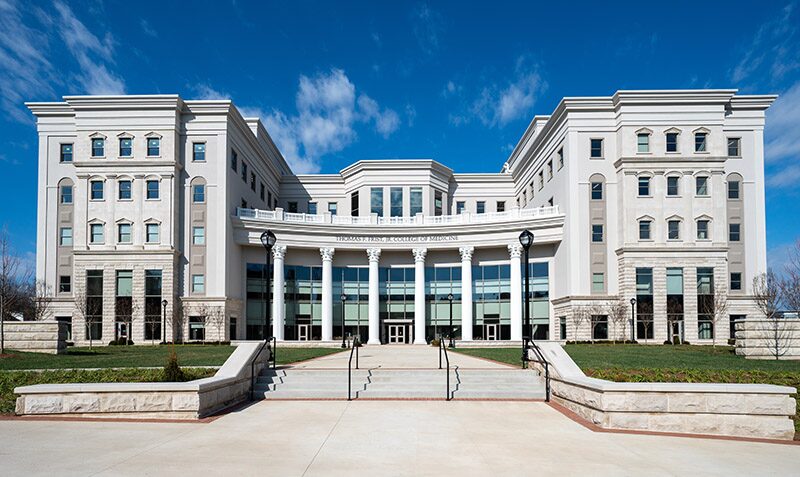
The Thomas F. Frist Jr. College of Medicine at Belmont University is located in Nashville, Tennessee, and represents one of the newest medical schools in the United States. This private, faith-based institution is situated on an urban campus in the heart of Nashville’s thriving healthcare corridor.
Program Duration and Structure
The Thomas F. Frist, Jr. College of Medicine offers a traditional 4-year MD program structured in three distinct phases:
- Foundation Phase (Years 1-2): Focuses on foundational clinical science with integrated coursework
- Application Phase: Clinical rotations and hands-on experience
- Distinction Phase: Advanced clinical training and specialization
Unique Characteristics and Educational Philosophy
Named in honor of Dr. Thomas F. Frist, Jr., co-founder of HCA Healthcare, the medical school embraces a whole-person approach to healing that integrates medical training with character development and service learning. The curriculum emphasizes:
- Active Learning Methodologies: Case-Based Learning (CBL), Problem-Based Learning (PBL), and simulation-based training
- Interprofessional Education: Collaboration with other Belmont health professional programs
- Impact Weeks: Dedicated periods for interprofessional education and wellness focus
- Service Learning: Community engagement inspired by Christian values while welcoming students of all faiths
Accreditation Status
The Thomas F. Frist, Jr. College of Medicine received Preliminary Accreditation from the Liaison Committee on Medical Education (LCME) in October 2023, allowing the school to begin recruiting students. The school is currently working toward Provisional Accreditation, with an LCME site visit expected in summer/fall 2026.
Clinical Partnerships
The medical school has established a significant partnership with HCA Healthcare, one of the nation’s leading healthcare providers, providing students with extensive clinical training opportunities across HCA’s network of facilities.
Admission Requirements
Academic Prerequisites
Minimum Degree Requirements
Applicants must hold a bachelor’s degree from an institution accredited by a regional accreditor recognized by both the U.S. Department of Education and the Council for Higher Education Accreditation.
Required Prerequisite Courses
- Biology with laboratory: 8 credit hours
- Inorganic (General) Chemistry with laboratory: 8 credit hours
- Organic Chemistry with laboratory: 8 credit hours
- Physics with laboratory: 8 credit hours
- Biochemistry: 3 credit hours
- English: 6 credit hours
- Mathematics: 3 credit hours
Recommended Coursework
While not required, the admissions committee recommends:
- Anatomy
- Physiology
- Molecular and/or Cell Biology
- Genetics
- Microbiology
- Immunology
- Psychology coursework
- Statistics
- Additional upper-level science courses
- Humanities
GPA Requirements
- Minimum GPA: 3.0 for supplemental application invitation
- Median GPA of admitted students: 3.76
- The school uses a holistic GPA evaluation, considering recent academic performance more heavily for students with graduate or post-baccalaureate work (focusing on the most recent 60 credit hours)
Standardized Testing
MCAT Requirements
- Minimum MCAT score: 500 for supplemental application invitation
- Median MCAT score of admitted students: 509
- MCAT validity period: Scores must be taken within three years of matriculation (oldest acceptable score for 2026 cycle: January 1, 2023)
- Multiple MCAT attempts: The most recent score is used in admissions consideration, with competitive applicants showing upward trends
AAMC PREview Exam
The Thomas F. Frist, Jr. College of Medicine encourages applicants to take the AAMC Professional Readiness Exam (PREview). While not mandatory, this exam is used as part of the holistic review process to assess professional readiness and personal attributes that correlate with medical school success.
Extracurricular Activities & Experience Requirements
The school employs a holistic admissions approach that values:
- Clinical Experience: Direct patient care and healthcare exposure
- Research Experience: Basic science, clinical, or public health research
- Community Service: Demonstrated commitment to serving others
- Leadership Experience: Evidence of leadership in various settings
- Character and Service: Alignment with the school’s mission of developing physician leaders with strong moral character
Residency Preferences: As a private institution, Thomas F. Frist, Jr. College of Medicine has no in-state preference and welcomes applicants from across the nation, as well as Canadian and international students.
Application Process & Timeline
Application System and Deadlines
- Primary Application: Submitted through AMCAS (American Medical College Application Service)
- AMCAS Deadline: November 15, 2025
- Secondary Application Deadline: December 16, 2025
- The school uses rolling admissions, encouraging early submission
Required Documents
Letters of Evaluation
The school requires three letters of evaluation ideally including:
- One letter from a healthcare professional who has observed the applicant in a clinical setting
- One letter from a faculty member who has taught the applicant in a hard science course
- One letter from an additional faculty member or supervisor in a service setting
- Committee letters and letter packets are also accepted
- All letters must be submitted through the AMCAS letter service
Secondary Application Essays (2025-2026 Cycle)
- Values Alignment: Select which FCoM value (love learning, lead by serving, live with integrity, heal together in humility, welcome difference) most energizes you and discuss its impact on your life
- Spiritual/Faith Experience: Discuss how spiritual experiences, faith, or personal beliefs have influenced your life and decision to pursue medicine
- Culture Building: Reflect on embracing ambiguity and contributing to a culture of growth, collaboration, and adaptability
- Reapplicants Only: Describe changes to your application from previous cycles
Interview Process
While specific interview format details weren’t available in my research, the school follows standard medical school interview practices as part of their holistic review process.
Application Fees
Specific application fee information was not detailed in the available sources, but applicants should expect standard AMCAS primary application fees plus secondary application fees.
Admission Statistics & Success Rates
Overall Competitiveness
As a newly established medical school that began accepting students in 2024, comprehensive admission statistics are not yet available. The school is in the process of establishing its admissions data baseline.
Class Size and Application Volume
- First-year class size: 50 students
- Application volume: Specific numbers not yet published as the school is completing its first few admission cycles
Current Admission Benchmarks
Based on available information:
- Minimum academic standards: 3.0 GPA and 500 MCAT for supplemental application invitation
- Median admitted student profile: 3.76 GPA and 509 MCAT
- Acceptance demographics: The school accepts out-of-state, Canadian, and international students
Future Statistical Availability
As the school completes more admission cycles, more detailed statistics on acceptance rates, demographic breakdowns, and waitlist information will become available.
Tuition & Financial Information
Current Tuition Rates (2025-2026 Academic Year)
Thomas F. Frist, Jr. College of Medicine charges the same tuition for all students regardless of residency status:
- Tuition (Resident & Non-Resident): $65,200 annually
Additional Fees (MS1 Year – 10 months)
- Consolidated Graduate Student Fee: $1,350
- Liability Insurance: $500
- Life Insurance: $32
- Disability Insurance: $64
- Needlestick/Bloodborne Pathogen Rider: $15
- USMLE Board Prep: $374
- Clinical Access Fee: $227
- Technology Fee: $765
- USMLE Step 1 Registration: $680
- Stethoscope Kit: $675
- EHR Licensing Fee: $200
- AMSA Membership: $50
- Activity Fee: $150
- Total Fees: $4,402
Total Direct Costs (MS1 Year)
Total Tuition and Fees: $69,602
Indirect Expenses (MS1 Year – 10 months)
- Personal Expenses: $4,100
- Housing & Meals: $25,234
- Transportation: $2,000
- Course Materials, Supplies & Equipment: $1,000
- Loan Origination Fees: $428
- Total Indirect Expenses: $32,762
Total Cost of Attendance
MS1 Year Total: $102,364
Additional Healthcare Costs:
- Health Insurance (if adequate coverage not provided): $3,275
Financial Aid Options
- Federal Direct Loans: Available to medical students
- Direct Unsubsidized Loans: Maximum $40,500 annually (can be prorated for longer enrollment periods)
- Direct PLUS (Grad PLUS) Loans: Available for remaining cost of attendance
- Belmont School Code: 003479
- Note: Pell grants are not available to medical students
Living in Nashville
Nashville offers a vibrant urban environment with a relatively moderate cost of living compared to other major metropolitan areas. The medical school’s location in Nashville’s healthcare corridor provides proximity to numerous hospitals and healthcare facilities.
Click To See Hundreds Of Consultants Who Can Mentor You:
Curriculum & Program Structure
Program Duration and Educational Philosophy
The Thomas F. Frist, Jr. College of Medicine operates a 4-year MD program built around a whole-person approach to healing that integrates rigorous medical education with character development and service learning.
Curriculum Structure: Three-Phase Design
Foundation Phase (Years 1-2)
The Foundation Phase ensures students develop comprehensive understanding of foundational clinical science through three parallel course types:
Key Components:
- Molecular & Cellular Foundations: 6 weeks
- Integrated Clinical Practice (ICP) 1A: 19 weeks
- Wonder and Wisdom in the World of Medicine (WWWM) 1A: 19 weeks
- Immunology, Microbiology, & Dermatology: 6 weeks
- Hematology & Basic Principles of Oncology: 5 weeks
- Impact Weeks: Dedicated periods for interprofessional education and wellness
Teaching Methods and Educational Innovation
- Active Learning Modalities: Case-Based Learning (CBL), Problem-Based Learning (PBL), and flipped classrooms
- Simulation-Based Learning: State-of-the-art 50,000-square-foot simulation center using virtual and augmented reality
- Team-Based Exercises: Interactive small group discussions strengthening clinical reasoning and collaboration
- Interprofessional Education: Collaboration with students from Belmont’s other health professional programs
Unique Curriculum Features
Impact Weeks
Strategically placed throughout the curriculum, Impact Weeks provide:
- Interprofessional Education: Learning alongside students from nursing, pharmacy, physical therapy, and other health programs
- Wellness Focus: Reduced schedule encouraging student decompression and personal wellness
- Professional Development: Deep learning about collaborative healthcare teams
Integrated Approach
The curriculum integrates basic and clinical sciences from day one, ensuring students understand the practical application of foundational knowledge throughout their medical education.
Facilities and Learning Environment
The medical school is housed in a six-story, 246,000-square-foot facility featuring:
- Comprehensive Simulation Center: 50,000 square feet with virtual and augmented reality capabilities
- Interprofessional Learning Spaces: Designed for collaboration with other health professional programs
- Modern Teaching Facilities: State-of-the-art classrooms and laboratories
Clinical Training Partnerships
Students benefit from clinical training opportunities through the school’s partnership with HCA Healthcare, providing access to one of the nation’s largest healthcare networks for diverse clinical experiences.
Pre-Medical Preparation
Academic Planning for Thomas F. Frist, Jr. College of Medicine
Optimal Undergraduate Preparation
- Major Selection: The school welcomes diverse academic backgrounds; no specific major is required
- Science Foundation: Strong performance in required prerequisite courses is essential
- Broad Education: The school values “broad-based education” including upper-level sciences, psychology, statistics, and humanities
GPA Optimization Strategies
- Minimum Standards: Maintain at least a 3.0 GPA, though the median admitted student GPA is 3.76
- Recent Academic Performance: For students with graduate work, focus on strong performance in the most recent 60 credit hours
- Science GPA: Excel in prerequisite science courses as these directly prepare students for medical school rigor
Clinical Experience Development
Quality Over Quantity: The school seeks meaningful healthcare exposure rather than simply accumulating hours
Recommended Clinical Activities:
- Direct patient care roles
- Hospital volunteering
- Clinical research participation
- Healthcare professional shadowing
- Community health initiatives
Research Experience
While not explicitly required, research experience demonstrates:
- Scientific inquiry skills
- Ability to contribute to medical knowledge
- Analytical and critical thinking abilities
- Types Valued: Basic science, clinical research, public health, or community-based research
Standardized Test Preparation
MCAT Preparation Strategy
- Target Score: Aim for 509+ (current median) while meeting the 500 minimum
- Timing: Take the MCAT within three years of intended matriculation
- Retake Considerations: The school uses the most recent score, so retakes can be beneficial with proper preparation
- Study Timeline: Plan 3-6 months of dedicated preparation
AAMC PREview Exam
- Timing: Take within one year of applying
- Preparation: Focus on understanding professional behaviors and personal attributes
- Scheduling: Plan around the limited offering schedule
Character and Service Development
Alignment with School Mission
Demonstrate commitment to:
- Whole-person healing approach
- Service to others
- Character development
- Community engagement
- Embracing diversity and difference
Leadership Development
Show progressive leadership responsibilities in:
- Academic organizations
- Community service projects
- Research initiatives
- Healthcare settings
- Faith-based or secular service organizations
Application Timeline Planning
Early Preparation (Junior Year)
- Complete prerequisite courses
- Begin MCAT preparation
- Develop clinical and research experiences
- Build relationships with potential letter writers
Application Year (Senior Year/Gap Year)
- Take MCAT by spring of application year
- Submit AMCAS application by November 15
- Complete secondary application by December 16
- Take PREview exam if planning to include it
Gap Year Considerations
Productive Gap Year Activities:
- Advanced clinical experience
- Research opportunities
- Service learning programs
- Healthcare professional roles
- Graduate coursework to strengthen academic profile
The school values non-traditional timelines and diverse life experiences, making gap years potentially beneficial for building a stronger application.
Frequently Asked Questions
What is Thomas F. Frist, Jr. College of Medicine’s average GPA and MCAT score?
The median GPA for admitted students is 3.76, and the median MCAT score is 509. However, the school looks for a minimum GPA of 3.0 and MCAT of 500 for supplemental application invitation.
Does Thomas F. Frist, Jr. College of Medicine look at extracurriculars?
Yes, absolutely. The school employs a holistic admissions process that heavily weighs clinical experience, research, community service, leadership, and character development alongside academic metrics.
How many letters of recommendation does Thomas F. Frist, Jr. College of Medicine require?
The school requires three letters of evaluation, ideally including one from a healthcare professional, one from a science faculty member, and one from an additional faculty member or service supervisor. Committee letters and letter packets are also accepted.
How competitive is Thomas F. Frist, Jr. College of Medicine compared to other medical schools?
As a new medical school, specific acceptance rate data is not yet available. However, with a median MCAT of 509 and median GPA of 3.76, the school maintains competitive standards while emphasizing holistic review.
Does Thomas F. Frist, Jr. College of Medicine prefer in-state applicants?
No. As a private institution, Thomas F. Frist, Jr. College of Medicine has no in-state preference and welcomes applicants from across the nation, as well as Canadian and international students.