
Last updated on January 9th, 2026 at 06:29 am
Program Overview & Institution Identity
The Warren Alpert Medical School of Brown University stands as Rhode Island’s only medical school and one of the most prestigious Ivy League medical institutions in the United States. Founded in 1972, the medical school was renamed in 2007 to honor Warren Alpert, whose transformative gift of $100 million established it as one of the premier medical education institutions in the country.
Program Duration & Structure
The Warren Alpert Medical School offers a traditional 4-year MD program with an innovative, competency-based curriculum designed to prepare students for the evolving landscape of medicine. The school also offers several combined degree programs including:
- BS/MD program through the Program in Liberal Medical Education (PLME)
- MD/PhD program for physician-scientists
- MD/ScM in Population Medicine through the Primary Care-Population Medicine Program
- MD/MPA program combining medicine with public affairs
Location & Campus Details
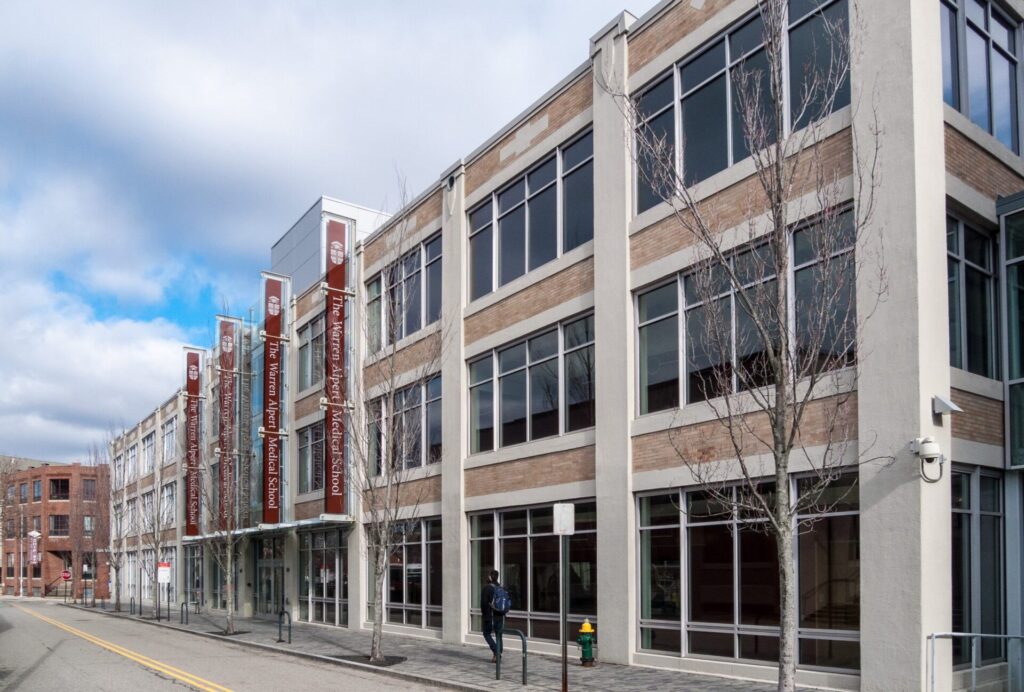
Located in Providence, Rhode Island, the medical school operates from a state-of-the-art facility in the heart of Providence’s medical district. As a private institution with an urban campus setting, students have access to eight teaching hospitals and numerous clinical sites throughout Rhode Island and southeastern New England. The medical school building features modern classrooms, laboratories, simulation facilities, and collaborative learning spaces.
Accreditation Status
The Warren Alpert Medical School is fully accredited by the Liaison Committee on Medical Education (LCME), ensuring graduates are eligible for medical licensure and residency training throughout the United States. This accreditation demonstrates the school’s commitment to maintaining the highest standards in medical education.
Ranking & Recognition
According to recent rankings, The Warren Alpert Medical School is consistently ranked among the top medical schools in the nation. The school is particularly recognized for its:
- #35 ranking by U.S. News & World Report for Best Medical Schools
- Strong reputation in primary care and research
- High residency match rates at competitive programs
- Innovative curriculum and clinical training programs
Admission Requirements
Academic Prerequisites
Minimum Degree Requirements
Applicants must present a minimum cumulative GPA of 3.00 on a 4.0 scale. While a baccalaureate degree is not required for application, it must be completed prior to matriculation.
Required Coursework
The following prerequisite courses must be completed prior to matriculation:
Quantitative Reasoning
- One course in calculus or statistics (biostatistics preferred)
Biology
- Two courses with a grade of B or higher, covering cell biology and genetics
- Laboratory experience is highly recommended
Chemistry
- Two courses in general chemistry with laboratory
- Two courses in organic chemistry with laboratory
- One course in biochemistry
Physics
- Two courses in physics (algebra-based or calculus-based acceptable)
- Laboratory experience recommended
Additional Requirements
- One course in English composition or literature
- Additional coursework in humanities, social sciences, and behavioral sciences is encouraged
GPA Requirements
- Minimum GPA: 3.00
- Median GPA of admitted students: 3.88
- Competitive range: Most successful applicants have GPAs significantly above the minimum requirement
- The school uses a holistic evaluation process, considering both overall and science GPAs
Standardized Testing
MCAT Requirements
The Medical College Admission Test (MCAT) is required for all applicants.
Score Requirements:
- Median MCAT score: 517
- Validity period: Scores must be from within three years prior to matriculation
- Multiple attempts: All MCAT scores are considered; the school does not average or select highest scores
- Timing: Scores must be available by the secondary application deadline of November 1
Extracurricular Activities & Experience Requirements
The Warren Alpert Medical School values a holistic approach to admissions, seeking candidates who demonstrate:
Clinical Experience
- Meaningful exposure to patient care settings
- Quality of experience valued over quantity of hours
- Direct patient interaction preferred
Research Experience
- 90% student research participation rate during medical school
- Prior research experience highly valued but not required
- Publications and presentations enhance applications
Leadership & Service
- Demonstrated commitment to serving others
- Leadership roles in various settings
- Community service and volunteer work
Personal Attributes
The admissions committee especially values:
- Intellectual curiosity
- Integrity and ethical behavior
- Enthusiasm for medicine
- Commitment to advancing human health
Application Process & Timeline
Application System
All applicants must apply through the American Medical College Application Service (AMCAS). The school does not accept direct applications.
Key Deadlines
- AMCAS Application Deadline: October 7, 2025
- Secondary Application Deadline: November 1, 2025
- Letter of Recommendation Deadline: November 1, 2025
Required Documents
Primary Application (AMCAS):
- Completed AMCAS application
- Official transcripts
- MCAT scores
- Work and activities section
- Personal statement
Secondary Application:
- School-specific essays and questions
- Additional information about activities and experiences
- Interview availability information
Letters of Recommendation:
- Specific requirements vary but typically include letters from science faculty, clinical supervisors, and academic advisors
Application Timeline
- July: AMCAS applications begin acceptance
- October 7: AMCAS application deadline
- November 1: Secondary application deadline
- September-February: Interview season (Thursdays and most Fridays)
- Rolling admissions: Decisions made on a rolling basis throughout the cycle
- April: Second look day for accepted applicants
Interview Process
The Warren Alpert Medical School conducts interviews from September through February, primarily on Thursdays and most Fridays. The interview format and specific details are provided to invited candidates. Interview invitations are sent via email to competitive applicants.
Admission Statistics & Success Rates
Overall Statistics
- Total applicants (2021 cycle): 10,259 across all routes of admission
- Class size: 144 students
- Overall acceptance rate: 2.99%
- Routes of admission breakdown:
- AMCAS: 84 students
- PLME: 53 students
- PB Link: 4 students
- EIP: 3 students
Academic Profile of Admitted Students
- Median MCAT: 517
- Median GPA: 3.88
- Age range: 21-32 years
- Undergraduate institutions represented: 62 schools
Demographics
- Students from groups underrepresented in medicine: 33%
- Geographic diversity: Students from 34 U.S. states and territories
- International representation: 19 other countries represented by birth/citizenship
- Combined degree programs: 16 MD-ScM students, 3 MD/PhD students
Comparison with National Averages
Brown medical school applicants consistently perform above national averages:
- Brown applicant acceptance rate: 82% (compared to national average of 43.7%)
- Average MCAT for admitted Brown applicants: 516.2 (compared to national average of 511.7)
- Brown applicants demonstrate significantly higher success rates than the national pool
Tuition & Financial Information
Current Tuition Rates
- Tuition (2024-2025): $72,618 per year
- Note: As a private institution, tuition is the same for in-state and out-of-state students
Additional Fees & Costs
Required Fees:
- Health Services Fee: $1,166
- Student Activity Fee: $70-80
- Recreational Fee: $90
- Health Insurance: $4,780-5,166 (waivable if student has comparable coverage)
Additional Costs by Year:
- Books and Supplies: $700-1,500 per year
- Diagnostic Equipment/iPad: $1,570 (final year)
- USMLE Exam Fees: $670 for Steps 1, 2CS, and 2CK
Total Cost of Attendance
The total cost of attendance varies by year:
- MD’28 (1st year): $101,690
- MD’27 (2nd year): $103,000
- MD’26 (3rd year): $107,680
- MD’25 (4th year): $105,540
Living Expenses Include:
- Apartment rent and utilities: $12,300-14,760
- Food costs: $4,546-5,457
- Transportation: $1,410-3,995
- Personal expenses: $3,100-3,720
- Apartment insurance: $280
Total 4-Year Program Cost
Estimated total cost for the 4-year program: Approximately $417,910
Financial Aid Options
Institutional Aid:
- 67% of students receive financial aid
- Average need-based scholarship award: $43,774
- The Warren Alpert Medical School Scholarships (need-based)
- Merit-based scholarships available
- School-specific loan programs
Federal Aid:
- Direct Unsubsidized Loans
- Graduate PLUS Loans
- Work-study opportunities
Financial Aid Process:
- FAFSA required for all aid
- March 1 priority deadline for institutional aid
- Need-based aid calculation: Cost of Attendance – Student Aid Index = Need
Click To See Hundreds Of Consultants Who Can Mentor You:
Curriculum & Program Structure
Program Duration & Philosophy
The Warren Alpert Medical School offers a 4-year, competency-based curriculum designed around “Nine Abilities” that define the knowledge, skills, and professional values expected of all graduates. The curriculum emphasizes integrated learning, early clinical exposure, and scholarly concentration.
Pre-Clinical Years (Years 1 & 2)
Integrated Medical Sciences (IMS)
The curriculum features four sequential semesters of integrated coursework:
Year 1:
- IMS-I: Cell biology, physiology, biochemistry, nutrition, immunology, genetics, pharmacology, anatomy, and general pathology
- Brain Sciences: Head and neck anatomy, neurobiology, neurologic pathology, and neuropharmacology
- Musculoskeletal & Infectious Disease: Anatomy, orthopedics, rheumatology, dermatology, microbiology
Year 2:
- Systems-based approach including cardiovascular, renal, pulmonary, endocrinology, human reproduction, hematology, and gastroenterology
- Each course integrates physiology, pathophysiology, pathology, and pharmacology
Doctoring Program
A signature 2-year Doctoring course pairs students with community physician mentors for:
- Clinical skills development
- Communication training
- Professional development
- Early patient exposure (14 half-days per year)
Clinical Training (Years 3 & 4)
Core Clerkships (Year 3):
- Internal Medicine
- Surgery
- Pediatrics
- Obstetrics/Gynecology
- Psychiatry
- Family Medicine
Clinical Sites:
- 8 teaching hospitals affiliated with Brown
- Clinical rotations throughout Rhode Island and southeastern New England
- Both hospital-based and ambulatory care settings
Year 4:
- Advanced clinical electives
- 114 preclinical elective offerings available
- Subspecialty rotations
- Research opportunities
- Preparation for residency applications
Special Programs & Features
Scholarly Concentrations Program
- 13 scholarly concentration programs available
- Allows students to pursue focused research and scholarship
- Can begin as early as the first year
- Areas include medical technology, global health, and various medical specialties
Assessment & Evaluation
- Competency-based evaluation system
- Pass/fail grading in pre-clinical years
- Clinical grades for clerkships
- Comprehensive feedback and mentoring
Pre-Medical Preparation
Academic Planning
Undergraduate Major Selection
The Warren Alpert Medical School welcomes students from diverse academic backgrounds. While science majors are common, the school values intellectual diversity and encourages applicants from:
- Humanities and social sciences
- Engineering and mathematics
- Arts and literature
- Business and economics
Course Sequencing Strategy
- Complete prerequisite courses early to allow for MCAT preparation
- Maintain strong performance in science courses (B or higher in biology courses)
- Consider taking biochemistry and statistics for stronger preparation
- Plan for laboratory experiences in science courses
Clinical Experience Development
Types of Valued Clinical Experience:
- Hospital volunteering
- Clinical research positions
- EMT/CNA certification and work
- Medical scribing
- International medical missions
- Community health programs
Quality Over Quantity
The admissions committee emphasizes meaningful engagement over extensive hours. Focus on:
- Understanding healthcare delivery
- Patient interaction experiences
- Learning about healthcare teams
- Developing empathy and communication skills
Research Experience
Research Opportunities:
- Basic science research in laboratory settings
- Clinical research projects
- Public health and epidemiological studies
- Community-based participatory research
- International health research
Getting Started:
- Approach faculty early in undergraduate career
- Consider summer research programs
- Pursue research thesis opportunities
- Present findings at conferences when possible
Extracurricular Development
Leadership Development:
- Student government participation
- Club and organization leadership
- Peer tutoring and mentoring
- Community organization involvement
Service Commitment:
- Long-term volunteer commitments preferred over short-term activities
- Focus on causes aligned with personal values
- Document impact and learning experiences
- Consider service-learning courses
Standardized Test Preparation
MCAT Preparation Strategy:
- Plan 3-6 months of dedicated study time
- Complete prerequisite courses before taking the MCAT
- Take practice exams under timed conditions
- Consider prep courses or tutoring if needed
- Aim to take the exam by spring of application year
Timeline Considerations:
- Take the MCAT early enough to retake if necessary
- Ensure scores are available by secondary application deadline
- Plan around academic and work commitments
Application Timeline Planning
Junior Year:
- Complete prerequisite courses
- Gain clinical and research experience
- Begin MCAT preparation
- Develop relationships with potential letter writers
Senior Year (or Application Year):
- Take MCAT (spring preferred)
- Complete AMCAS application (submit early)
- Continue meaningful activities
- Prepare for interviews
Student Life & Outcomes
Residency Match Success
The Warren Alpert Medical School demonstrates exceptional residency match outcomes:
Recent Match Statistics:
- High match rates into competitive residency programs
- Students match at prestigious institutions including:
- Harvard Medical School affiliates
- Johns Hopkins
- Mayo Clinic
- New York University
- Mount Sinai
- Boston University Medical Center
2025 Match Highlights:
- Students matched into diverse specialties including internal medicine, surgery, pediatrics, radiology, psychiatry, and orthopedic surgery
- Strong representation at top-tier academic medical centers
- Geographic diversity in residency placements
Campus Life & Community
Student Body Characteristics:
- Close-knit community of 144 students per class
- Diverse backgrounds with students from 62 undergraduate institutions
- Strong collaborative rather than competitive environment
- Active student organizations and interest groups
Location Advantages:
- Providence offers urban amenities with New England charm
- Close proximity to Boston (45 minutes)
- Access to beaches, mountains, and cultural attractions
- Vibrant arts and dining scene
- Affordable living compared to other major cities
Frequently Asked Questions
What is The Warren Alpert Medical School’s average GPA and MCAT score?
The median GPA for admitted students is 3.88, and the median MCAT score is 517. However, the school uses a holistic admissions process that considers all aspects of an applicant’s profile.
How competitive is The Warren Alpert Medical School compared to other medical schools?
With an acceptance rate of 2.99%, The Warren Alpert Medical School is highly competitive. It ranks among the most selective medical schools in the United States, consistent with its Ivy League status.
Does The Warren Alpert Medical School prefer in-state applicants?
As a private institution, The Warren Alpert Medical School does not give preference to Rhode Island residents in the same way public schools favor in-state applicants. However, the school does welcome Rhode Island residents and has specific pathways for local students.
What makes The Warren Alpert Medical School different from other medical schools?
Key distinguishing features include:
Innovative integrated curriculum with early clinical exposure
2-year Doctoring program with physician mentors
Scholarly Concentrations Program for focused research
Small class size fostering close faculty-student relationships
Strong Ivy League alumni network