Last updated on August 12th, 2026 at 06:02 am
A guide to the University of Toronto’s Brief Personal Essays and ABS Statement — the prompts, how they’re marked, and how to stand out. Along with these essays, your UofT application also requires three Confidential Assessment Forms (CAFs) — see our CAF guide for how to choose referees and what to ask them.
You can access our OMSAS guide that covers other parts of the application by clicking here!
| TLDR The University of Toronto (Temerty) MD program asks for three written pieces in OMSAS: two Brief Personal Essays (BPEs), each 250 words or less, and one ABS Statement of 500 words or less. All three are scored against four “clusters” based on CanMEDS: Professional, Communicator/Collaborator/Manager, Advocate, and Scholar. The goal isn’t fancy writing — UofT explicitly scores content over style — it’s clear, honest, personal reflection that shows real growth. Start 4–6 weeks early so you have time to edit, and make sure your two BPEs together hit all four clusters. |
| Essay | Word Limit | Scored On |
|---|---|---|
| ABS Statement | 500 words | Personal growth tied to your Autobiographical Sketch |
| Brief Personal Essay 1 | 250 words | Feedback experience |
| Brief Personal Essay 2 | 250 words | Learning outside a formal classroom |
All three essays are scored against UofT’s four CanMEDS-based clusters: Professional, Communicator/Collaborator/Manager, Advocate, and Scholar — see the full breakdown below.
Table of Contents
About the UofT MD program

The University of Toronto MD program, known as the Temerty Faculty of Medicine, is one of Canada’s most competitive medical schools, drawing top applicants from across the country and around the world. It follows the CanMEDS competency framework, with a big emphasis on research, innovation, and community engagement, aiming to develop well-rounded physicians strong in clinical skill, professionalism, and leadership.
You can see how competitive the pool is by checking the official admission statistics. The essays are a big part of how UofT sorts through thousands of strong applicants, so it’s essential that yours stand out and leave a lasting impression. Here’s how to write ones that help you land an interview.
| Want a second reader who’s been through it? Browse hundreds of AcceptedTogether consultants here — many are current med students and residents who wrote these exact essays. |
Click to see hundreds of consultants who can mentor you:
The essays you’ll write
UofT puts real weight on your non-academic qualities. As part of your OMSAS application, you submit two Brief Personal Essays (BPEs) and one Autobiographical Sketch (ABS) Statement. Together they’re your chance to show your experiences, growth, and the soft skills that don’t come through in a GPA.
| Essay | How many | Word limit | What it’s for |
|---|---|---|---|
| ABS Statement | 1 | 500 words or less | Reflect on one impactful experience from your ABS and how it prepared you for medicine |
| Brief Personal Essay (BPE) | 2 | 250 words each | Answer two set questions tied to UofT’s mission and values |
| Good to know: the word counts do not include your titles, references, or verifiers if you choose to add them. UofT also runs essays through plagiarism-detection software, and the ABS plus ABS Statement are evaluated together as one unit. |
The current prompts
The ABS Statement prompt is the same every year:
Write about an impactful experience from your Autobiographical Sketch that demonstrates your personal growth, character, and values. How did this experience prepare you for medical school?
It’s capped at 500 words, giving you room to dig into one formative experience and connect it to your path toward medicine.
The two BPE prompts change from year to year. As of the current cycle, the two questions posted on UofT’s official site are:
1) Describe a time when you received feedback that stands out in your memory. Why did it stand out from other feedback experiences? What did you do with the feedback and how did it influence your use of feedback, if at all?
2) Describe a meaningful learning experience that occurred outside of a formal educational context (e.g., community service, employment, or extracurricular setting). What concepts or skills did you find particularly challenging to learn? What resources did you use to assist this learning? How did this experience impact your approach to learning, if at all?
| Always double-check the prompts. UofT develops new BPE questions most years through a working group, so before you start writing, confirm the current wording on the official UofT non-academic requirements page. Never draft from a prompt you found in an old guide. |
How the essays are marked (the four clusters)
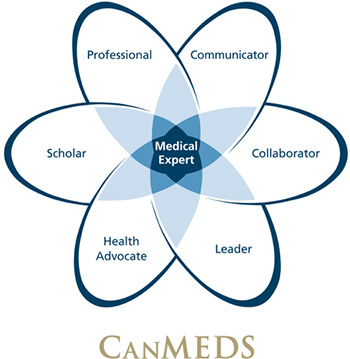
Source: Royal College
Before you write, it helps to know how you’re scored. UofT evaluates your non-academic materials against four clusters based on the CanMEDS roles:
| Cluster | What it covers |
|---|---|
| Professional | Maturity, reliability, perseverance, responsibility |
| Communicator / Collaborator / Manager | Communication, collaboration, teamwork, time management, leadership |
| Advocate | Advocacy, community service, social responsibility |
| Scholar | Academic standing and achievements in leadership, research, and social responsibility (awards, presentations, publications, scholarships) |
Here’s a point people often get wrong: UofT states it assesses your essays on content, not style. They don’t deduct marks specifically for spelling or grammar. That said, errors that muddy your meaning still hurt you, because clarity is part of what they’re judging. So don’t obsess over sounding impressive — obsess over being clear, personal, and easy to follow.
What they really want: a response that actually answers the question, makes its point clearly, stays concise, and is personalized with specific examples. A “basic” essay that could have been written by anyone won’t cut it when reviewers are reading thousands. Address the prompt thoughtfully, show a genuine connection to the clusters, and make yours memorable.
| Pro tip: keep a simple spreadsheet with the four clusters as a checklist. As you draft, tick off which cluster each essay touches. Your two BPEs combined should cover all four by the time you’re done. |
Writing a compelling introduction
A strong opening sets the tone and can be the difference between a reviewer leaning in or skimming. Two approaches that reliably work:
- A relevant quote. Open with a line that connects to the prompt or challenges the reader’s perspective — then tie it straight into your own experience. Use this sparingly and only if it feels natural.
- A vivid anecdote. Drop the reader into a specific personal moment that connects to the prompt. This builds an immediate emotional connection and pulls them in from the first line.
Whichever you choose, your intro should do two jobs: grab attention and hint at your unique perspective. Don’t rush it — brainstorm a few options and test which opening makes your essay feel like yours. With only 250 words in a BPE, every sentence has to earn its place, and the first one most of all.
Building your essay around a story

Both the BPEs and the ABS Statement work best when they’re built around a real personal story. It’s easiest in the ABS Statement, where you have 500 words, but you can weave a compact anecdote into the 250-word BPEs too. A story lets you show critical thinking and a point of view instead of just asserting them.
In the ABS Statement especially, use storytelling to convey your growth and how it connects to your path toward medicine — the experiences, challenges, and turning points that shaped your character. Throughout, keep the CanMEDS roles and UofT’s four clusters in mind so your stories quietly line up with what they value. Stay concise and focused on the most impactful parts.
| Pro tip: stuck for material? Brainstorm a list of your most impactful moments — triumphs, challenges you overcame, insights that shifted your thinking — then match each one to the prompt it fits best. The strongest essays usually come from that list, not from forcing a story to fit. |
BPE-specific tips
Prompt 1 — the feedback question
Choose a moment that shows both vulnerability and growth. The best feedback here is something that challenged you — hard to hear, or that revealed a blind spot. Be specific: who gave it, the context, and why it stood out from other feedback. Avoid vague or purely positive feedback that didn’t require any real change; the committee is looking for self-awareness.
Then show what you did with it. Not just a one-time fix, but a real shift in how you learn, communicate, or grow — even if the change was gradual. If it reshaped how you now seek out or respond to feedback, say so. The strongest responses have a clear before-and-after: a turning point that made you a more thoughtful, resilient learner.
Prompt 2 — the learning-outside-the-classroom question
Pick a setting where you weren’t expected to “study” but still faced a genuine challenge — a new role in a volunteer group, a job where you had to read interpersonal dynamics fast, an extracurricular that pushed you past your comfort zone. Be clear about what you were trying to learn and why it mattered to you.
Then reflect on what made it hard — a technical skill, a mindset shift, navigating others’ feedback — and what you leaned on to get through it: mentorship, observation, trial and error, self-guided research. Most importantly, connect it to how you learn now. Are you more resourceful? More collaborative? More comfortable with discomfort? UofT wants self-directed learners who grow from real-world experience.
| Remember: your two BPEs combined should cover all four clusters. Keep that in mind from the very first brainstorm so you don’t end up with two essays that lean on the same one or two. |
ABS Statement tips
- Show personal growth. Pick an experience that challenged you or built new skills and perspectives, and make that growth the heart of the essay.
- Keep the clusters in mind. Ideally your experience touches all four, but that’s not mandatory. The clusters describe the qualities of a good MD candidate, so choose an experience that shows you’re well-rounded — you’ll naturally hit most of them.
- Stay humble. Present yourself well, but don’t exaggerate. Committees want self-aware applicants who can reflect honestly, not people overselling their accomplishments.
How to conclude
Your conclusion is the last impression you leave, so make it count — though with a tight word count, it may only be a sentence or two. Aim for a succinct wrap-up of your main point that still lands with the reader. Tying it back to medicine can help, but it isn’t required; what matters most is showing your unique perspective and your potential as a future physician.
Editing and getting feedback

Give the whole process 4–6 weeks: time to brainstorm, write, and — most importantly — edit. Revision is where good essays become strong ones. With enough time for multiple passes, you can tighten the flow, sharpen your ideas, and catch the grammar and spelling slips that muddy your meaning.
Outside feedback matters too. Mentors or admissions consultants can spot weak points you’ve gone blind to and help you make each essay more compelling. Look for people with a track record with OMSAS schools — current med students or residents are ideal — who’ll give responsive, personalized feedback.
Not sure how to choose the right person to edit your sketch? Check out our OMSAS ABS editing guide for a breakdown of what matters most.
| Pro tip: the most overused words in these essays are “collaborate,” “persevere,” and “advocate.” Reviewers see them constantly. Try to demonstrate those qualities through what you actually did, without ever writing the word. |
| Want a second reader who’s been through it? Browse hundreds of AcceptedTogether consultants here — many are current med students and residents who wrote these exact essays. |
Click to see hundreds of consultants who can mentor you:
Frequently
Asked Questions
How many essays does UofT medicine require?
Three: two Brief Personal Essays (BPEs) and one ABS Statement, all submitted through OMSAS.
How long are the UofT MD essays?
Each BPE is 250 words or less, and the ABS Statement is 500 words or less. These limits don’t include titles, references, or verifiers.
What are the current UofT BPE prompts?
As of the current cycle, the two prompts ask about a memorable piece of feedback and a meaningful learning experience outside a formal classroom. UofT sets new questions most years, so always confirm the wording on the official non-academic requirements page before writing.
What is the ABS Statement prompt?
It stays the same each year: write about an impactful experience from your Autobiographical Sketch that shows your personal growth, character, and values, and how it prepared you for medical school.
How are the essays scored?
Against four clusters based on CanMEDS: Professional; Communicator/Collaborator/Manager; Advocate; and Scholar. Your two BPEs together should cover all four.
Do spelling and grammar affect my score?
UofT says it assesses content over style and doesn’t deduct marks specifically for spelling or grammar. But errors that make your writing unclear still hurt you, since clarity is part of what’s judged.
How early should I start?
Give yourself 4–6 weeks. The biggest gains come from editing, so the earlier you draft, the more rounds of revision and feedback you can fit in.
Who should I ask for feedback?
Mentors or admissions consultants with OMSAS experience — current med students or residents are ideal. Just make sure your final essays are authentically yours.
What are UofT’s essay “clusters”?
UofT scores MD essays against four CanMEDS-based clusters: Professional (maturity, reliability, perseverance, responsibility), Communicator/Collaborator/Manager (communication, collaboration, teamwork, time management, leadership), Advocate (advocacy, community service, social responsibility), and Scholar (academic standing and achievements in leadership, research, and social responsibility). Strong essays typically demonstrate two or more clusters at once rather than addressing only one.
Does UofT require an essay?
Yes. UofT’s MD program requires two Brief Personal Essays (250 words each) and one Autobiographical Sketch (ABS) Statement (500 words) as part of your OMSAS application.
Good luck with your UofT MD essays! If you’d like a hand at any stage, search our database of experienced consultants and find someone who fits your background and goals.