
Last updated on January 9th, 2026 at 06:29 am
Program Overview & Institution Identity
Official Program Name
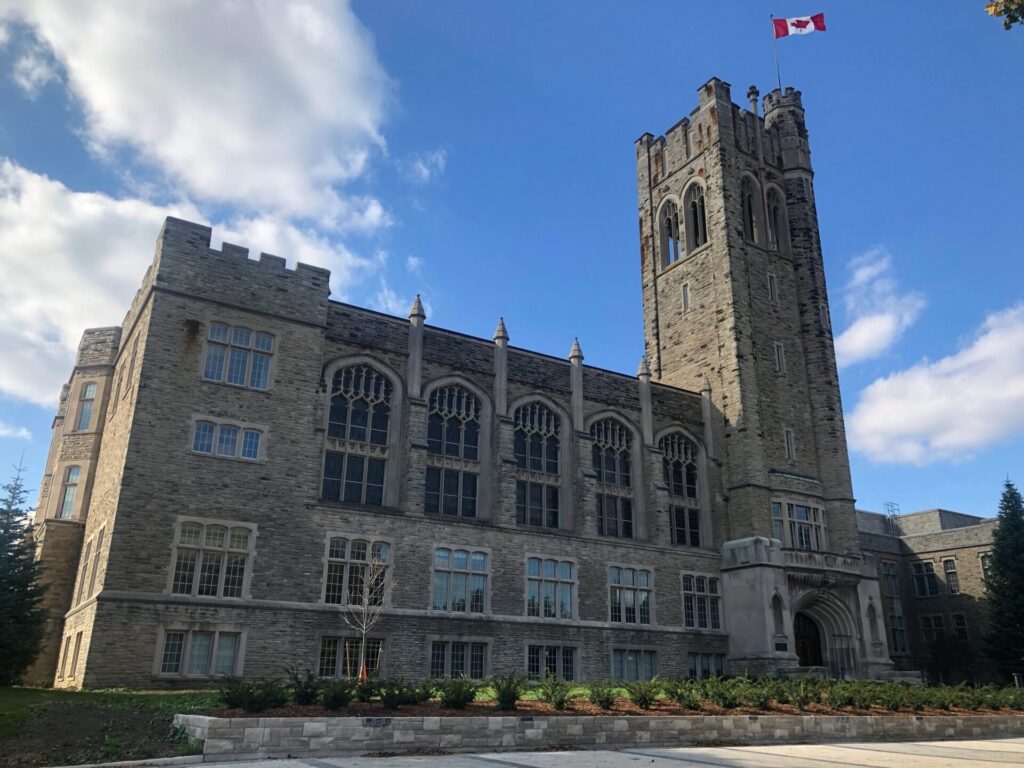
The University of Western Ontario – Schulich School of Medicine & Dentistry offers a comprehensive 4-year Doctor of Medicine (MD) program that has been training physicians since 1883. The school is commonly referred to as “Schulich Medicine,” “Western Medicine,” or the “Schulich School of Medicine & Dentistry.”
Program Duration and Structure
The MD program at Schulich follows a traditional 4-year curriculum structure divided into:
- Years 1-2: Pre-clinical foundations including “Foundations of Medicine” and “Principles of Medicine I and II”
- Years 3-4: Clinical clerkship rotations and electives across various medical specialties
- The program utilizes a competency-based medical education (CBME) approach with both small group learning and independent study components
Location and Campus Details
Primary Campus: London, Ontario – Urban setting located on the banks of the Thames River, approximately 200 kilometers west of Toronto, midway between Toronto and Detroit
Secondary Campus: Windsor Campus – Provides distributed medical education in partnership with the University of Windsor
Additional Sites: Clinical training occurs across southwestern Ontario through partnerships with multiple hospital systems and academies
Accreditation Status
Schulich School of Medicine & Dentistry is fully accredited by the Committee on Accreditation of Canadian Medical Schools (CACMS), ensuring graduates are eligible for medical licensure across Canada and meet international standards for medical education.
Class Size and Recognition
- Annual Class Size: 190 students (updated from the original 171 mentioned in some sources)
- The school accepts both in-province (Ontario) and out-of-province Canadian students
- International students are not eligible for admission
- Ranked among Canada’s top medical schools with strong research integration
Admission Requirements
Academic Prerequisites
Minimum Degree Requirements
- Bachelor’s Degree: A minimum 4-year undergraduate degree from a recognized university
- Minimum GPA: While no specific minimum is stated, competitive applicants typically have GPAs above 3.85
- Course Load: Must maintain full-time student status during degree completion
Required Prerequisites
Schulich Medicine requires completion of specific prerequisite courses, though the school emphasizes a holistic approach to academic backgrounds:
- Science Foundation: Strong background in biological and physical sciences
- English Proficiency: Demonstrated through undergraduate coursework
- Diverse Academic Interests: The school values applicants from various undergraduate majors
GPA Requirements
- Median GPA: 3.95 for admitted students
- Competitive Range: Successful applicants typically maintain GPAs of 3.85 or higher
- GPA Calculation: Uses the OMSAS (Ontario Medical School Application Service) calculation method
- Academic Performance: Consistent high performance across all years, with particular attention to recent academic work
Standardized Testing
MCAT Requirements
- Median MCAT Score: 513 total score
- Section Breakdown:
- Biological and Biochemical Foundations (BBFLS): 128.8 average
- Critical Analysis and Reasoning Skills (CARS): 127.5 average
- Chemical and Physical Foundations (CPBS): 128.5 average
- Score Validity: MCAT scores must be taken within the past 5 years
- Retake Policy: Students may retake the MCAT; the school considers the highest scores
CASPer Test Requirements
- Requirement Status: CASPer test is required for admission
- Test Purpose: Evaluates personal and professional characteristics including professionalism, ethics, and communication skills
- Timing: Must be completed by the specified deadline in the application cycle
- Preparation: No specific preparation materials recommended; focuses on ethical reasoning and situational judgment
Extracurricular Activities & Experience Requirements
Holistic Evaluation Approach
Schulich Medicine employs a comprehensive evaluation system that considers:
- Clinical Experience: Direct patient interaction and healthcare exposure
- Research Experience: Laboratory research, clinical research, or health services research
- Volunteer Service: Community involvement and service to others
- Leadership: Demonstrated leadership in academic, professional, or community settings
- Personal Qualities: Resilience, empathy, cultural competency, and commitment to medicine
Residency Preferences
- Ontario Residents: Given preference due to provincial funding and healthcare workforce planning
- Out-of-Province Students: Accepted but face higher competition
- Geographic Considerations: Strong preference for students committed to practicing in Ontario or rural/underserved areas
Application Process & Timeline
Application System
Primary Application: Through OMSAS (Ontario Medical School Application Service)
- All Ontario medical schools use the centralized OMSAS system
- Single application allows students to apply to multiple Ontario medical schools
- Application portal opens in early July for the following year’s admission
Key Application Deadlines
- OMSAS Application Deadline: October 1, 2025
- Document Deadlines: All supporting documents must be received by OMSAS by early November
- Reference Deadline: Letters of reference due by the same deadline as transcripts
Required Application Components
Academic Documents
- Official Transcripts: All post-secondary transcripts must be sent directly to OMSAS
- Degree Verification: Proof of degree completion for applicants who have graduated
- Academic History: Complete record of all coursework and institutions attended
References
- Number Required: Three references minimum
- Reference Types: At least one academic reference; professional and personal references acceptable
- Electronic Submission: All references submitted through the OMSAS system
- Reference Requirements: Referees must be able to assess academic ability, personal qualities, and suitability for medicine
Essays and Personal Statements
- OMSAS Essays: Required essays through the central application system
- Personal Statement: Detailed statement outlining motivation for medicine and personal experiences
- Supplemental Essays: School-specific essays may be required after initial screening
Interview Process
Interview Format
- Multiple Mini Interview (MMI): Schulich uses the MMI format
- Station-Based Assessment: Typically 8-10 stations testing different competencies
- Virtual vs. In-Person: Format may vary; recent years have included virtual options
- Duration: Approximately 2-3 hours total including orientation and breaks
Interview Timeline
- Invitations: Sent typically between January and March
- Interview Dates: Conducted from February through April
- Notification: Successful candidates notified shortly after interviews are completed
Application Fees
- OMSAS Application Fee: Approximately $285 CAD for the first school, additional fees for each additional school
- CASPer Test Fee: Additional fee for the CASPer assessment
- Transcript Fees: Costs for official transcript submissions
Admission Statistics & Success Rates
Overall Competitiveness
- Acceptance Rate: Approximately 7.27% overall
- Application Volume: Typically receives over 4,000 applications annually for 190 seats
- Competition Level: Highly competitive among Ontario medical schools
Academic Statistics of Admitted Students
GPA Statistics
- Median GPA: 3.95
- Competitive Range: Most successful applicants have GPAs between 3.85-4.0
- 25th-75th Percentile: Approximately 3.9-3.98 range
MCAT Score Statistics
- Median Total Score: 513
- Section Medians:
- BBFLS: 128.8
- CARS: 127.5
- CPBS: 128.5
- Competitive Range: Scores above 510 are typically competitive
Demographics and Geographic Distribution
Provincial Distribution
- Ontario Residents: Majority of accepted students (approximately 85-90%)
- Out-of-Province: Limited spots available (approximately 10-15%)
- Rural/Regional: Special consideration for students from southwestern Ontario
Age and Background Diversity
- Average Age: Most students are 22-26 years old at matriculation
- Undergraduate Majors: Accepts students from diverse academic backgrounds
- Gap Year Students: Common among accepted applicants
Waitlist Information
- Waitlist Numbers: Typically several hundred students are waitlisted
- Movement Timeline: Waitlist activity typically occurs from May through August
- Communication: Regular updates provided to waitlisted candidates
- Acceptance Rate from Waitlist: Varies yearly but generally 10-20% of waitlisted students are eventually accepted
Tuition & Financial Information
Tuition Rates by Residency Status
Ontario Residents
- Estimated Annual Tuition: $25,000-$30,000 CAD per year for medical school programs
- Total 4-Year Cost: Approximately $100,000-$120,000 CAD in tuition
Out-of-Province Canadian Students
- Annual Tuition: Similar to Ontario residents due to interprovincial agreements
- Additional Considerations: May face higher living costs due to relocation
International Students
- Eligibility: International students are not eligible for admission to Schulich Medicine
- Citizenship Requirement: Only Canadian citizens and permanent residents may apply
Additional Fees and Expenses
Mandatory University Fees
- Student Services Fees: Approximately $1,000-$1,500 annually
- Technology Fees: Around $400-$600 per year
- Health Insurance: Mandatory health and dental coverage
- Professional Fees: Medical liability insurance and professional association dues
Clinical Training Costs
- Equipment: Stethoscope, medical equipment, and professional attire
- Clinical Site Fees: Some rotation sites may charge additional fees
- Travel Expenses: Costs for clinical rotations at distributed sites
Total Cost of Attendance
Comprehensive Annual Costs
- Tuition and Fees: $26,000-$32,000 CAD
- Living Expenses: $15,000-$20,000 CAD (varies by housing choice)
- Books and Supplies: $1,500-$2,500 CAD
- Transportation: $1,000-$3,000 CAD depending on clinical site travel
- Personal Expenses: $2,000-$4,000 CAD
Total 4-Year Investment
- Conservative Estimate: $180,000-$200,000 CAD total
- Higher-End Estimate: $220,000-$250,000 CAD including all living expenses
Financial Aid and Support
Government Financial Aid
- OSAP (Ontario): Provincial student loans and grants for Ontario residents
- Provincial Aid: Each province provides financial assistance for residents
- Federal Programs: Canada Student Loans available to all Canadian students
University-Based Financial Support
- Merit Scholarships: Academic excellence awards for top-performing students
- Need-Based Aid: Financial assistance based on demonstrated financial need
- Emergency Funds: Short-term financial assistance for students facing hardship
- Work-Study Programs: Limited opportunities due to demanding curriculum
External Funding Sources
- Professional Associations: Medical association scholarships and bursaries
- Community Organizations: Local healthcare organizations and service clubs
- Research Stipends: Paid research opportunities during summer breaks
Click To See Hundreds Of Consultants Who Can Mentor You:
Curriculum & Program Structure
Program Duration and Educational Philosophy
4-Year Curriculum Framework
The Schulich MD program follows a comprehensive 4-year structure designed around competency-based medical education (CBME) principles, emphasizing the development of “Master Adaptive Learners” who can continuously evolve throughout their medical careers.
Educational Philosophy
- Research-Intensive Environment: Integration of research and clinical practice throughout the curriculum
- Distributed Learning: Clinical training across southwestern Ontario to provide diverse patient populations and clinical experiences
- Social Responsibility: Emphasis on developing physicians who serve their communities and address health inequities
Pre-Clinical Years (Years 1-2)
Foundations Phase
Foundations of Medicine: Integrated basic science curriculum covering:
- Human anatomy and physiology
- Pathophysiology and disease mechanisms
- Pharmacology and therapeutics
- Public health and epidemiology
- Medical ethics and professionalism
Principles of Medicine I & II: Advanced integration of:
- Clinical reasoning and diagnostic skills
- Physical examination techniques
- Communication skills with patients and families
- Introduction to clinical procedures
- Evidence-based medicine principles
Learning Methods
- Small Group Learning: Problem-based learning (PBL) and team-based learning (TBL)
- Large Group Sessions: Lectures, case presentations, and grand rounds
- Independent Study: Self-directed learning with faculty mentorship
- Simulation-Based Training: High-fidelity simulation for procedural skills
Assessment Methods
- Competency-Based Evaluation: Focus on demonstrating specific medical competencies
- Pass/Fail System: Reduced emphasis on grades to promote collaborative learning
- Frequent Formative Assessment: Regular feedback to support learning progression
Clinical Years (Years 3-4)
Core Clinical Rotations (Year 3)
Required Clerkships typically include:
- Internal Medicine
- Surgery
- Pediatrics
- Obstetrics and Gynecology
- Psychiatry
- Family Medicine
- Emergency Medicine
Clinical Training Sites
- London Campus: London Health Sciences Centre, St. Joseph’s Health Care London
- Windsor Campus: Windsor Regional Hospital, Hôtel-Dieu Grace Healthcare
- Regional Sites: Clinical academies across southwestern Ontario including:
- Kent-Lambton Academy
- Oxford Academy
- Huron-Perth Academy
- Grey-Bruce Academy
- Elgin-Middlesex Academy
- Essex Academy
Elective Opportunities (Year 4)
Clinical Electives: Students choose from:
- Advanced specialty rotations
- Rural and remote medicine experiences
- International health electives
- Research electives
- Community-based practice experiences
Visiting Student Electives: Opportunities to train at other medical schools across Canada and internationally
Special Programs and Tracks
MD/PhD Combined Degree
- Program Length: Typically 7-8 years total
- Research Focus: Students complete PhD research in medical or related sciences
- Integration: Structured to integrate research training with medical education
Specialized Pathways
- Access Pathway: For students from underrepresented backgrounds
- Black Applicant Pathway: Dedicated pathway supporting Black students in medicine
- Indigenous Applicant Pathway: Culturally relevant medical education for Indigenous students
- Military Medical Training Program: Partnership with Canadian Armed Forces
- Southwestern Ontario Pathway: Focus on students committed to serving southwestern Ontario
Competency Framework
The curriculum is organized around key competencies including:
- Medical Expert
- Communicator
- Collaborator
- Leader
- Health Advocate
- Scholar
- Professional
Pre-Medical Preparation
Undergraduate Program Recommendations
Academic Major Selection
STEM Majors: While common, not required
- Biology, Chemistry, Physics provide strong foundation
- Biochemistry and Molecular Biology particularly relevant
- Engineering and Computer Science increasingly valued
Non-STEM Majors: Welcomed and encouraged
- Social Sciences (Psychology, Sociology, Anthropology)
- Humanities (English, Philosophy, History)
- Business and Economics
- Fine Arts and Music
Optimal Course Planning
Science Prerequisites: Ensure completion of basic sciences
- General Biology and Chemistry
- Organic Chemistry
- Physics
- Mathematics/Statistics
- Additional advanced sciences as available
Breadth Requirements: Develop well-rounded academic profile
- English and Communication courses
- Social Sciences and Humanities
- Ethics and Philosophy courses
- Statistics and Research Methods
Building Clinical Experience
Types of Valuable Clinical Exposure
Direct Patient Care:
- Hospital volunteering
- Long-term care facilities
- Community health centers
- Mental health organizations
Healthcare System Exposure:
- Shadowing physicians
- Healthcare administration roles
- Public health initiatives
- Medical research with clinical components
Quality vs. Quantity Approach
- Sustained Involvement: Long-term commitments more valuable than short-term experiences
- Depth of Engagement: Active participation rather than passive observation
- Reflection and Learning: Ability to articulate what was learned from experiences
- Impact Demonstration: Evidence of meaningful contribution to healthcare teams or patients
Research Experience Development
Types of Research Valued
Basic Science Research:
- Laboratory-based research in medical sciences
- Publication opportunities in peer-reviewed journals
- Presentation at academic conferences
Clinical Research:
- Patient-oriented research
- Clinical trials participation
- Health services research
- Quality improvement projects
Community Health Research:
- Population health studies
- Health policy research
- Social determinants of health
- Global health research
Research Engagement Strategies
- Faculty Mentorship: Develop relationships with research faculty
- Summer Research Programs: Dedicated research experiences
- Independent Projects: Thesis or capstone research projects
- Research Conferences: Present findings and network with researchers