Last updated on January 9th, 2026 at 06:30 am
Program Overview & Institution Identity
Official Program Name
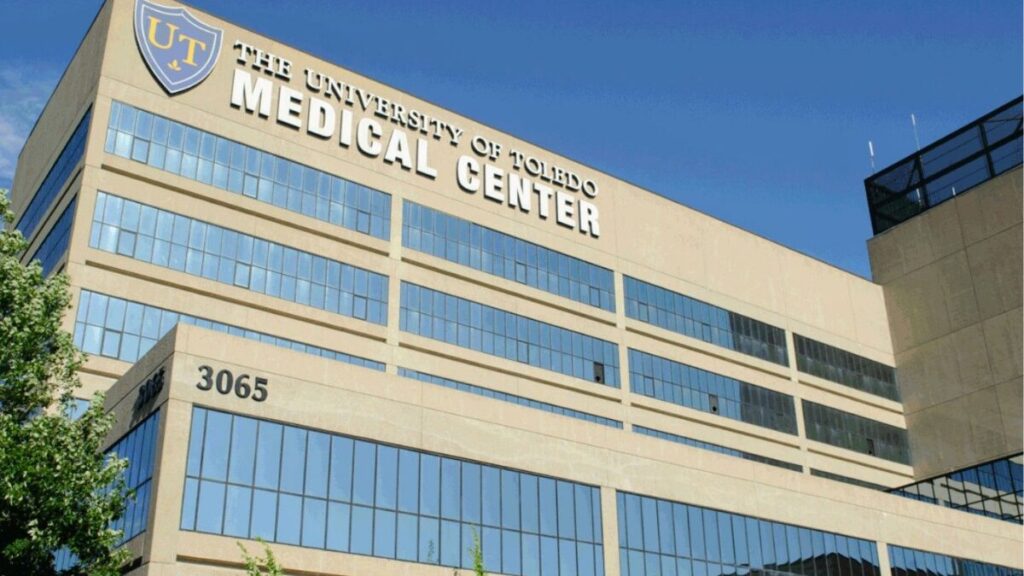
The University of Toledo College of Medicine and Life Sciences offers a comprehensive Doctor of Medicine (MD) program, preparing students to become compassionate physician leaders through their innovative “Rocket Medicine” curriculum. Established as a public institution, the school is known for its integrated approach to medical education and commitment to producing physicians who serve diverse communities.
Program Duration & Structure
The University of Toledo College of Medicine operates a traditional 4-year MD program with a unique three-phase structure:
- Foundational Sciences Phase (M1-M2): Pre-clerkship years focusing on basic medical sciences
- Clinical Phase (M3): Core clerkships with innovative thematically integrated curriculum
- Advanced Clinical Experience Phase (M4): 45 weeks including acting internships, emergency medicine rotations, and transition to residency preparation
Location and Campus Details
Located in Toledo, Ohio, the university operates on an urban campus setting, providing students access to diverse clinical training opportunities. The Health Science Campus houses the medical school facilities and is connected to major clinical training sites throughout Northwest Ohio.
Accreditation Status
The University of Toledo College of Medicine and Life Sciences is fully accredited by the Liaison Committee on Medical Education (LCME), ensuring the program meets all standards for medical education in the United States. This accreditation guarantees that graduates are eligible to take the USMLE and apply for residency training programs nationwide.
Unique Program Features
- “Rocket Medicine” Curriculum: Competency-based, longitudinally connected medical education program
- Integrated Clinical Curriculum: Features innovative assessment practices and health systems science integration
- Multiple Admission Pathways: Including BACC2MD (early assurance), MEDStart, and MSBS bridge programs
- Strong Combined Degree Options: MD/MPH, BS/MD, MD/JD, MD/MBA, and MD/PhD programs available
Admission Requirements
Academic Prerequisites
Minimum Degree Requirements
- Bachelor’s degree from an accredited U.S. college or university is required prior to matriculation
- Permanent residents must provide photocopy of both sides of permanent resident card at time of application
Required Prerequisite Courses
The University of Toledo College of Medicine has streamlined prerequisites effective for the 2026 application cycle:
Minimum Required Courses:
- One semester of Biochemistry
- One year of Biological Sciences
- One year of Organic Chemistry with Labs
- One year of Physics
Highly Recommended Courses:
- Anatomy
- Biostatistics
- Chemistry (General Chemistry)
- English
- Genetics
- Mathematics
- Medical Terminology
- Microbiology
- Physiology
- Psychology
- Social Science courses
GPA Requirements
Based on recent class profile data:
- Average Total GPA: 3.78 for admitted students
- Average Science GPA: 3.71 for admitted students
- Average Graduate GPA: 3.65 for admitted students
- Median GPA: 3.87 (from provided data)
While no minimum GPA is explicitly stated, competitive applicants typically maintain GPAs well above 3.5, with most successful candidates having GPAs of 3.7 or higher.
Standardized Testing
MCAT Requirements
- MCAT Required: All applicants must submit MCAT scores taken within five years of anticipated matriculation
- Average MCAT Score: 510 (79th percentile) for admitted students
- Median MCAT: 511 (from provided data)
- Score Validity: Scores must be taken within 5 years from matriculation year
- Exceptions: Students accepted through early assurance programs (MEDStart) may have exceptions
Additional Testing
The University of Toledo College of Medicine does not require additional standardized testing such as CASPer, though applicants should verify requirements for specific admission pathways.
Extracurricular Activities & Experience Requirements
The school uses a holistic evaluation approach considering:
- Clinical Experience: Exposure to healthcare settings highly valued
- Research Experience: Basic science, clinical, or public health research beneficial
- Community Service: Demonstrated commitment to service
- Leadership Activities: Evidence of leadership potential
- Diverse Experiences: Well-rounded application profile preferred
Residency Preferences
- Ohio Residents: 63% of enrolled students are Ohio residents (111 out of 175 students in 2025 class)
- Out-of-State Acceptance: 37% of students are non-Ohio residents, indicating significant out-of-state opportunities
- Geographic Distribution: Students from 24 states plus D.C. represented in recent class
Application Process & Timeline
Application System
The University of Toledo College of Medicine participates in the American Medical College Application Service (AMCAS). All primary applications must be submitted through the AMCAS portal.
Key Deadlines
- AMCAS Application Opens: First week of May
- Primary Application Deadline: November 15, 2025
- Secondary Application Deadline: December 15
- AMCAS Verification: Takes 4-6 weeks, early submission strongly encouraged
Required Documents
- AMCAS Application: Primary application with transcripts
- University of Toledo Secondary Application: Required after primary review
- Letters of Recommendation:
- Minimum: 3 letters required
- Maximum: 6 letters accepted
- Must be submitted via AMCAS
- Can include pre-medical advisory committee letters or individual faculty letters
- Letters from family members strongly discouraged
- Official Transcripts: From all undergraduate, graduate, and professional schools
- Criminal Background Check: Required for all accepted students
- Technical Standards: Must meet minimal technical standards for admission
Interview Process
- Timeline: Interview invitations sent on rolling basis from August through March/April
- Format: Information on specific interview format not detailed in available sources
- Invitation Statistics: Reviews begin in August with secondary applications
Application Fees
Specific fee information not provided in sources, but typical medical school applications include both AMCAS fees and secondary application fees.
Admission Statistics & Success Rates
Overall Acceptance Rate
Based on 2025 class profile data:
- Total Applications Received: 6,577
- Ohio Residents: 1,163 applications
- Non-Ohio Residents: 5,414 applications
- Entering Class Size: 175 students (though data shows 176 in some sources)
- Estimated Overall Acceptance Rate: Approximately 2.7% overall acceptance rate
Class Size and Demographics
2025 Entering Class Profile:
- Total Enrolled: 175 students
- Ohio Residents: 111 (63%)
- Non-Ohio Residents: 64 (37%)
- Northwest Ohio Students: 38 (22%)
- First Generation Students: 13%
- Gender Distribution: 49% Male (86 students), 50% Female (87 students)
Geographic and Educational Diversity:
- States Represented: 24 states plus District of Columbia
- Colleges Represented: 64 different institutions
- Ohio Colleges Represented: 14 institutions
Academic Statistics
Recent Class Academic Profile:
- Average Total GPA: 3.78
- Average Science GPA: 3.71
- Average Graduate GPA: 3.65
- Average MCAT Score: 510 (79th percentile)
- Median MCAT: 511
Colleges Well-Represented:
Major feeder schools include Harvard University, Princeton University, Cornell University, The Ohio State University, University of California system schools, Case Western Reserve University, and many others, demonstrating the program’s ability to attract students from top-tier institutions nationwide.
Waitlist Information
Specific waitlist statistics and procedures are not detailed in available sources, though the school operates on a rolling admissions basis through spring.
Tuition & Financial Information
Current Tuition Rates
2025-26 Academic Year Tuition:
- Ohio Residents: $39,661 per year
- Out-of-State Students: $74,112 per year (includes $35,829 out-of-state surcharge)
Year-Specific Cost Breakdown:
First Year (M1) Total Cost of Attendance:
- Ohio Residents: $68,353
- Direct costs: $41,241
- Indirect costs: $27,112
- Out-of-State Students: $104,182
- Includes $35,829 out-of-state surcharge
Third Year (M3) Total Cost of Attendance:
- Ohio Residents: $89,388
- Out-of-State Students: $133,256
Additional Fees and Expenses
Direct Costs Include:
- General Fee: $1,606 annually
- MD Program Fees: $1,144 (M1), $1,716 (M3)
- Lab Fees: $350 (M2)
- Health Insurance: $2,295 (optional, can be waived)
- Disability Insurance: $53-63
- Registration/ID Fees: $65
Indirect Costs Include:
- Books and Supplies: $1,290-1,500 annually
- Housing and Food: $19,594 (M1) to $24,493 (M3)
- Transportation: $3,179-3,974 annually
- Clinical Transportation: $1,925 (M3)
- Personal Expenses: $3,049-3,811 annually
- USMLE Step 2: $680 (M3)
Financial Aid Options
Federal Financial Aid:
- Federal Direct Unsubsidized Loans: 7.94% interest rate (2025-26)
- Federal Graduate PLUS Loans: 8.94% interest rate (2025-26)
- Loan Fees: Stafford loans (1.057%), PLUS loans (4.228%)
Scholarships:
- Incoming Students: Over 20 scholarships available
- Continuing Students: Nearly 30 scholarships for current students
- Application Deadlines: Many scholarships due May 31
- Notable Scholarships: College of Medicine New Student Scholarship, David Hamilton Ryerson Memorial Scholarship
Cost of Living in Toledo, Ohio
- Monthly Living Costs: Approximately $762 per month for single person
- Housing Costs: 50% lower than national average
- Overall Cost: 15% lower than national average, 7% lower than Ohio average
- Housing and Food: Budgeted at $19,594 for first-year students
Click To See Hundreds Of Consultants Who Can Mentor You:
Curriculum & Program Structure
Program Duration and Educational Philosophy
The University of Toledo College of Medicine operates a 4-year MD program built around their innovative “Rocket Medicine” curriculum. This competency-based, longitudinally connected approach prepares students to be “life-long, master adaptive learners” who provide equitable, high-quality patient care.
Educational Methods and Innovation
- Integrated Approach: Thematically integrated curriculum combining basic sciences with clinical applications
- Competency-Based Learning: Focus on achieving specific competencies rather than just time-based progression
- Health Systems Science: Integration of health systems science throughout the clinical curriculum
- Assessment Innovation: Redesigned clinical performance assessment to ensure equitable evaluation practices
Pre-Clinical Years (M1-M2): Foundational Sciences
First Year (M1): Foundational Sciences
- Structure: Traditional foundational science curriculum
- Duration: Two-semester academic year
- Focus Areas: Basic medical sciences integrated with early clinical exposure
Second Year (M2): Foundational Sciences Continuation
- Advanced Sciences: Continued foundational sciences with increased clinical correlation
- Assessment: Mix of traditional and innovative assessment methods
- Research Opportunities: Pre-clinical research opportunities available
Pre-Clinical Electives
Students have opportunities for electives during pre-clinical years to explore interests and enhance their educational experience.
Clinical Years (M3-M4)
Third Year (M3): Core Clerkships
The M3 curriculum features innovative, thematically integrated clerkships with unique elements:
Innovative Features:
- “Integrate and Innovate”: Self-directed learning projects with multidisciplinary clinical questions
- “Critical Consciousness in Medicine”: Workshops developing awareness of professional power and privilege
- “Value-Based Care”: Small group experiences introducing high-value care concepts
- Equitable Assessment: Redesigned clinical performance evaluation system
Fourth Year (M4): Advanced Clinical Experience
The M4 curriculum is 45 weeks in duration with structured flexibility:
Required Components (37 weeks):
- Acting Internship: 4 weeks of advanced clinical responsibility
- Emergency Medicine: 2-week required rotation
- Transition to Residency Course: 5 weeks of longitudinal preparation (Advanced Clinical Care 1, 2, 3)
- Final Preparation: 2-week intensive course for “residency readiness”
Flexible Time (8 weeks):
- Available for residency interviews
- Off-cycle electives
- Additional clinical experiences
Clinical Training Sites and Partnerships
Students train at various clinical sites throughout Northwest Ohio, providing exposure to diverse patient populations and healthcare settings. The program maintains partnerships with multiple hospitals and healthcare systems in the region.
Special Programs and Combined Degrees
Available Combined Degree Programs:
- MD/MPH: Medicine and Public Health
- BS/MD: Bachelor’s/Medical Doctor early assurance
- MD/JD: Medicine and Law
- MD/MBA: Medicine and Business Administration
- MD/PhD: Medicine and Research doctorate
Special Admission Pathways:
- BACC2MD: Early assurance program for high school students
- MEDStart: Junior year early assurance program
- MSBS-Medical Sciences: One-year master’s program serving as bridge to medical school
Research Opportunities
The curriculum includes various research opportunities throughout all four years, with particular emphasis on scholarly projects and research electives.
Residency Preparation and Match Results
Recent Match Statistics (2025)
- Students Matched: 167 out of 175 fourth-year students
- Specialties Represented: 23 medical specialties
- States for Training: 28 different states
Specialty Distribution:
Primary Care Specialties (35% – 59 students):
- Family Medicine: 9
- Internal Medicine (Categorical): 34
- Pediatrics: 16
Major Non-Primary Care Specialties:
- Anesthesiology: 12
- Emergency Medicine: 12
- Surgery (General): 13
- Internal Medicine (Preliminary): 10
- Neurology: 10
- Psychiatry: 9
Competitive Specialties Successfully Matched:
- Dermatology: 1
- Neurological Surgery: 2
- Orthopedic Surgery: 6
- Otolaryngology: 2
- Urology: 3
Geographic Distribution of Matches:
- UToledo Residency Programs: 19 students (11%)
- Northwest Ohio: 27 students (16%)
- Ohio Total: 71 students (43%)
- National Distribution: Students matched across 28 states
Historical Match Performance:
The program consistently achieves high match rates with students successfully matching into both primary care and competitive specialties across the country.
Pre-Medical Preparation
Undergraduate Program Recommendations
Optimal Academic Planning:
- Major Flexibility: No preference for specific undergraduate majors; diverse academic backgrounds welcomed
- Prerequisite Completion: All required courses must be completed before matriculation
- GPA Optimization: Maintain strong performance in both science and non-science courses
- Balanced Approach: Combine rigorous science preparation with liberal arts education
Recommended Timeline:
- Early Years: Complete foundational science requirements
- Junior Year: Take MCAT, complete remaining prerequisites
- Senior Year: Application cycle, maintain academic performance
- Gap Year Considerations: Can be beneficial for strengthening application
Clinical Experience Recommendations
While specific hour requirements are not mandated, meaningful clinical exposure is essential:
- Healthcare Settings: Hospital volunteering, clinical shadowing, patient care roles
- Quality over Quantity: Sustained, meaningful experiences preferred
- Diverse Exposures: Primary care, specialty care, underserved populations
- Reflection: Ability to articulate learning from clinical experiences
Research Experience Guidelines
- Not Mandatory but Valuable: Research experience enhances applications
- Types Valued: Basic science, clinical, public health, or community-based research
- Publications: Not required but can strengthen applications
- Long-term Commitment: Sustained research involvement demonstrates dedication
Extracurricular Planning
Leadership Development:
- Campus Organizations: Student government, pre-med clubs, honor societies
- Community Leadership: Volunteer organizations, community service projects
- Healthcare Leadership: Healthcare volunteer coordination, health education programs
Service and Volunteer Work:
- Community Service: Long-term commitment to community organizations