
Last updated on January 9th, 2026 at 06:30 am
Program Overview & Institution Identity
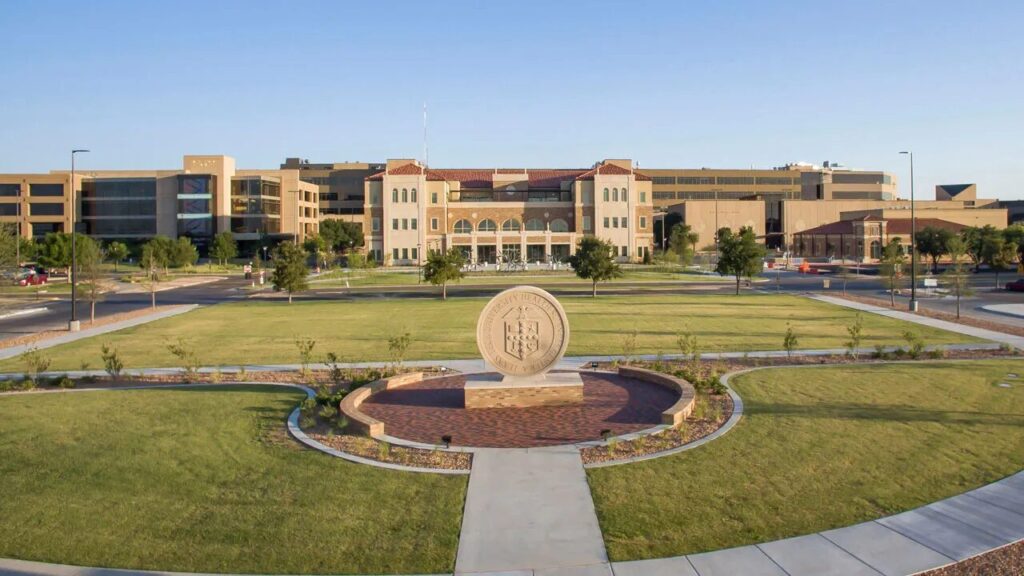
Texas Tech University Health Sciences Center School of Medicine stands as a distinguished public medical institution in Lubbock, Texas, serving the healthcare needs of West Texas and beyond. Established in 1969, the school has built a reputation for training physicians who are committed to serving underserved communities.
Official Program Name and Duration
The Texas Tech University Health Sciences Center School of Medicine offers a traditional 4-year Doctor of Medicine (MD) program. The school also pioneered the innovative Family Medicine Accelerated Track (FMAT), which is a 3-year accelerated program—the first of its kind in the nation.
Location and Campus Details
Located in Lubbock, Texas, the school operates on an urban campus that serves as the flagship location for TTUHSC’s medical education mission. The institution maintains multiple clinical training sites across Texas, providing students with diverse learning opportunities in both urban and rural settings.
Accreditation Status
Texas Tech University Health Sciences Center School of Medicine is fully accredited by the Liaison Committee on Medical Education (LCME), the national accrediting body for MD programs in the United States and Canada. This accreditation ensures that graduates are eligible for USMLE examinations and residency programs accredited by the ACGME.
Unique Program Features
- Multiple degree pathways: Traditional 4-year MD, 3-year FMAT program
- Combined degree programs: MD/PhD, MD/MPH, MD/MBA, MD/JD
- Strong commitment to rural medicine: 20% of practicing physicians in West Texas are TTUHSC graduates
- Over 4,000 physicians graduated since the program’s inception
- Holistic admissions approach: Emphasis on serving underserved communities
Admission Requirements
Academic Prerequisites
Minimum Degree Requirements
- Completion of at least 90 semester hours (or 134 quarter hours) at a regionally accredited US or Canadian college or university
- Bachelor’s degree preferred (though not absolutely required)
- All prerequisite courses must be completed with grades of “C” or better
Required Prerequisite Courses
| Course | Semester Hours | Lab Required |
|---|---|---|
| Biology | 12 | ✅ |
| General Chemistry | 8 | ✅ |
| Organic Chemistry | 8 | ✅ |
| Physics | 8 | ✅ |
| Biochemistry | 3 | — |
| Statistics | 3 | — |
| English | 6 | — |
Recommended Additional Coursework
- Humanities, social sciences, or behavioral sciences: 12 semester hours
- Immunology, genetics, and cellular/molecular biology courses are strongly encouraged
- Non-science majors are advised to take additional science coursework beyond prerequisites
GPA Requirements
- Median GPA of admitted students: 3.95
- Minimum competitive threshold: While no absolute minimum is published, successful applicants typically have GPAs significantly above 3.5
- Both overall GPA and science GPA (BCPM) are evaluated
- Upward grade trends are viewed favorably for applicants with lower initial performance
Standardized Testing
MCAT Requirements
- Median MCAT score of admitted students: 511
- MCAT scores must be valid (within 3 years of application)
- All four sections of the MCAT are evaluated
- No minimum MCAT score requirement, but competitive applicants typically score above the 75th percentile
Additional Testing
- The school does not require CASPer testing, unlike some other Texas medical schools, making the application process more streamlined for prospective students.
Experience and Extracurricular Requirements
The school uses a holistic admissions approach that considers:
- Clinical exposure and healthcare experience
- Research experience (beneficial but not required)
- Community service and volunteer work
- Leadership activities
- Commitment to serving underserved populations
- Geographic connections to Texas and the Southwest
Application Process & Timeline
Application Systems
Texas Tech University Health Sciences Center School of Medicine participates in the American Medical College Application Service (AMCAS) for primary applications, along with a required secondary application.
Key Application Deadlines
- Primary Application Deadline: October 1, 2025
- Early application submission recommended: June–July for best consideration
- Interview season: Extends from fall through early spring
- Final decisions: Rolling admissions process
Required Documents
- Primary AMCAS Application including:
- Official transcripts from all institutions attended
- MCAT scores
- Personal statement
- Work and activities descriptions
- Letters of evaluation/recommendation
- Secondary Application (school-specific):
- Additional essays addressing specific prompts
- Geographic connection questions
- Experience descriptions
- Secondary application fee
Interview Process
- Format: Both virtual and in-person interview options
- Structure: Traditional interview format with faculty and possibly student interviewers
- Timeline: Invitations sent on a rolling basis from August through February
- Holistic evaluation: Emphasis on commitment to the school’s mission of serving underserved communities
Admission Statistics & Success Rates
Class Size and Acceptance Rates
- First-year class size: 182 students
- Highly competitive admission process with thousands of applicants competing for limited spots
- Strong preference for Texas residents as a public institution
- Limited out-of-state acceptance: Also accepts out-of-state and Canadian students on a case-by-case basis
Academic Statistics of Admitted Students
- Median GPA: 3.95
- Median MCAT: 511
- Strong academic credentials required, with most successful applicants well above national averages
Geographic Distribution
- Strong Texas preference: As a public institution, significant preference for Texas residents
- Some out-of-state opportunities: Limited slots available for exceptional out-of-state candidates
- International consideration: Canadian students considered on a case-by-case basis
Tuition & Financial Information
Current Tuition Rates
| Residency | Annual Tuition |
|---|---|
| Texas Residents | $22,829 |
| Out-of-State Students | $35,829 |
Note: Significant savings for residents (~$13,000 annual difference between resident and non-resident tuition).
Total Cost of Attendance Estimates (Based on 2024–25 data)
For Texas Residents (annual ranges):
- Tuition: $17,700–$22,829 (varies by year and program updates)
- Fees: ~$4,376
- Books and Supplies: ~$1,734
- Housing and Food: $14,220–$17,064
- Transportation: $5,000–$6,000
- Personal/Miscellaneous: $8,500–$10,200
- Total Estimated Annual Cost: $51,530–$62,183 (resident rates)
Financial Aid Options
- Federal financial aid programs: Direct Loans, Grad PLUS loans
- Institutional scholarships: Merit and need-based options available
- Military scholarship programs: Army and Navy scholarship information provided
- External scholarships: Various opportunities for qualified students
- Work-study opportunities: Limited availability
Cost Comparison
The tuition rates at TTUHSC School of Medicine are competitive compared to other Texas public medical schools, offering excellent value for a quality medical education.
Click To See Hundreds Of Consultants Who Can Mentor You:

Curriculum & Program Structure
Program Duration and Structure
Traditional MD Program (4 years)
- Years 1–2: Pre-clinical/pre-clerkship education
- Years 3–4: Clinical rotations and clerkships
Family Medicine Accelerated Track (FMAT) — 3 years
- Accelerated curriculum designed specifically for students committed to family medicine
- First program of its kind in the United States
- Allows students to enter residency one year earlier
Educational Philosophy
The curriculum emphasizes:
- Integration of basic and clinical sciences from the beginning of medical education
- Clinical relevance: Basic science concepts taught within clinical contexts
- Problem-based learning approaches
- Early clinical exposure
- Commitment to serving underserved populations
Pre-Clinical Years (Years 1–2)
- Scientific Principles of Medicine: Organized around clinical presentations
- Medical Skills Training: History-taking and physical examination skills
- Community Medicine Integration: Understanding public health and community needs
- Research Opportunities: Scholarly activities and research programs available
Clinical Training (Years 3–4)
- Core clerkship rotations in major medical specialties
- Clinical training sites throughout Texas and regional partnerships
- Rural medicine opportunities consistent with the school’s mission
- Elective opportunities with flexibility in fourth-year scheduling
Combined Degree Programs
- MD/PhD, MD/MPH, MD/MBA, MD/JD
Residency Preparation and Match Results
Strong Match Performance
- 2024 Match Results: Outstanding success with graduates matching into competitive specialties
- Broad specialty placement: Internal medicine, emergency medicine, surgery, pediatrics, and others
- Geographic distribution: Many graduates remain in Texas to serve local communities
- Primary care emphasis: ~39% enter primary care specialties
- Step exam support: Resources and preparation for USMLE Step examinations
Pre-Medical Preparation
Undergraduate Program Recommendations
- No preferred major: Students from all academic backgrounds are welcome
- Strong science foundation: Completion of prerequisite courses with excellence
- Broad educational experience: Humanities and social sciences encouraged
- Non-science majors: Additional science coursework beyond prerequisites recommended
Academic Planning Strategy
- Course sequencing: Plan prerequisite courses to allow for MCAT preparation
- GPA optimization: Maintain strong performance throughout undergraduate career
- Grade trends: Focus on improvement if early performance was suboptimal
Clinical Experience Requirements
- Healthcare exposure essential: Clinical volunteering, shadowing, or work experience
- Quality over quantity: Meaningful experiences are valued over extensive hours
- Underserved populations: Experience with diverse and underserved communities particularly valued
- Long-term commitment: Sustained involvement preferred over short-term experiences
Research Experience
- Beneficial but not required: Research experience can strengthen applications
- Various types accepted: Basic science, clinical, public health, or community-based research
- Publication opportunities: Helpful but not necessary
- Research programs available: School offers research opportunities for interested students
Extracurricular Planning
- Leadership experience: Demonstrate leadership abilities in various settings
- Community service: Commitment to service aligns with school mission
- Geographic connections: Experience in Texas or similar regions beneficial
- Diverse experiences: Well-rounded candidates preferred
MCAT Preparation
- Optimal timing: Take MCAT by spring of application year
- Adequate preparation time: Allow 3–6 months for comprehensive study
- Retake considerations: Multiple attempts require careful consideration
- Score validity: Ensure scores will be valid through matriculation
Frequently Asked Questions
Does Texas Tech University Health Sciences Center School of Medicine look at extracurriculars?
Yes, TTUHSC School of Medicine uses a holistic admissions approach that heavily weighs extracurricular activities. The school particularly values clinical experience, community service, leadership activities, and experiences that demonstrate commitment to serving underserved populations.
What is Texas Tech University Health Sciences Center School of Medicine’s average GPA and MCAT score?
The median GPA for admitted students is 3.95, and the median MCAT score is 511. These statistics reflect the highly competitive nature of admissions, with successful applicants typically performing well above national averages.
How competitive is Texas Tech University Health Sciences Center School of Medicine compared to other medical schools?
TTUHSC School of Medicine is highly competitive, with admission statistics comparable to other well-regarded public medical schools. The combination of strong academic requirements and the school’s mission focus makes it particularly competitive among applicants interested in serving underserved communities.
Does Texas Tech University Health Sciences Center School of Medicine prefer in-state applicants?
Yes, as a public Texas institution, TTUHSC School of Medicine shows strong preference for Texas residents. However, the school does accept out-of-state and Canadian students on a case-by-case basis, typically requiring exceptional qualifications.
What makes Texas Tech University Health Sciences Center School of Medicine different from other medical schools?
TTUHSC School of Medicine is distinguished by its commitment to training physicians for underserved communities, particularly in rural and West Texas areas. The school pioneered the 3-year Family Medicine Accelerated Track and has graduated over 4,000 physicians, with 20% of practicing physicians in West Texas being TTUHSC alumni.
When should I apply to Texas Tech University Health Sciences Center School of Medicine?
The primary application deadline is October 1, 2025, but early submission is strongly recommended. Most successful applicants submit their primary applications by June or July to maximize their chances of receiving secondary application invitations and interview opportunities.
Does Texas Tech University Health Sciences Center School of Medicine accept international students?
The school primarily focuses on US and Canadian students. Canadian students may be considered on a case-by-case basis, but opportunities for other international students are extremely limited.
What clinical experience do I need for Texas Tech University Health Sciences Center School of Medicine?
While there are no specific hour requirements, meaningful healthcare exposure is essential. The school values quality experiences that demonstrate understanding of healthcare and commitment to service, particularly with underserved populations. Clinical volunteering, shadowing, healthcare employment, or research involving patient contact are all valuable.
Does Texas Tech University Health Sciences Center School of Medicine require research experience?
Research experience is beneficial but not required. The school recognizes that students come from diverse backgrounds and values various types of experiences that demonstrate intellectual curiosity and commitment to the medical profession.
How many letters of recommendation does Texas Tech University Health Sciences Center School of Medicine require?
Specific letter requirements follow AMCAS guidelines. Typically, letters from science faculty, healthcare professionals, and individuals who can speak to the applicant’s character and commitment to medicine are most valuable.
What is Texas Tech University Health Sciences Center School of Medicine’s curriculum like?
The curriculum emphasizes integration of basic and clinical sciences from the beginning, with strong emphasis on clinical relevance and early patient exposure. The school offers both the traditional 4-year MD training and the innovative 3-year FMAT program, along with various combined degree options.
Where do Texas Tech University Health Sciences Center School of Medicine graduates match for residency?
TTUHSC graduates successfully match into a wide range of specialties and programs nationwide. The 2024 match results show excellent placement rates, with many graduates remaining in Texas while others match at prestigious programs across the country. Approximately 39% enter primary care specialties.
How much does Texas Tech University Health Sciences Center School of Medicine cost?
Annual tuition is $22,829 for Texas residents and $35,829 for out-of-state students. The total cost of attendance, including living expenses, ranges from approximately $51,530 to $62,183 annually for Texas residents.
What financial aid is available at Texas Tech University Health Sciences Center School of Medicine?
The school offers various financial aid options including federal loans, institutional scholarships, merit-based awards, military scholarship programs, and work-study opportunities. Students should complete the FAFSA to determine eligibility for federal financial aid programs.
Does Texas Tech University Health Sciences Center School of Medicine offer interviews to all qualified applicants?
No, interview invitations are extended selectively based on holistic review of applications. The school receives many more qualified applications than available interview spots, making the interview invitation itself a significant achievement in the admissions process.