
Last updated on January 9th, 2026 at 06:30 am
Program Overview & Institution Identity
Official Program Identity
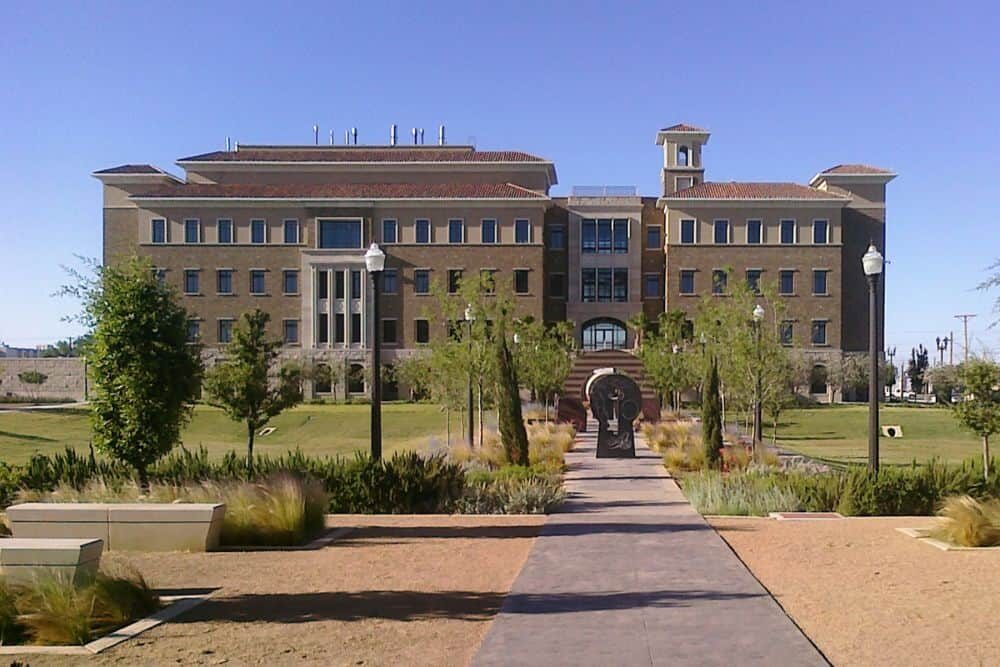
The Texas Tech University Health Sciences Center Paul L. Foster School of Medicine is located in El Paso, Texas, serving as a public medical school situated on the US-Mexico border. The school operates as part of the Texas Tech University Health Sciences Center system but maintains its unique identity as Texas Tech Health El Paso.
Program Duration and Structure
The Paul L. Foster School of Medicine offers a traditional 4-year MD program that leads to the Doctor of Medicine degree. The curriculum features an innovative, integrated approach that combines basic sciences with clinical presentations from the onset of instruction.
Unique Features:
- Integrated, organ-system-based curriculum
- Clinical presentation-based learning approach
- Bilingual healthcare focus with Spanish medical terminology integration
- Combined degree options including MD/MBA and MD/MPH
Location and Campus Details
Campus Location: El Paso, Texas — Urban campus setting
- Located on the US-Mexico border, providing unique cultural and linguistic diversity
- Strategic location offers exposure to border health issues and Hispanic healthcare needs
- Modern medical facilities integrated with clinical training sites
- Campus includes state-of-the-art clinical skills and simulation laboratories
Accreditation Status
The Paul L. Foster School of Medicine is fully accredited by the Liaison Committee on Medical Education (LCME), ensuring graduates are eligible for residency training programs and medical licensure. LCME accreditation validates that the program meets rigorous national standards for medical education quality and graduate competency.
Rankings and Recognition
As a relatively newer medical school (established in 2007), the Paul L. Foster School of Medicine has quickly established itself as a significant contributor to healthcare in the Southwest. The school is recognized for:
- High-quality medical education with innovative curriculum design
- Strong focus on serving underserved border communities
- Commitment to training physicians for West Texas and the Southwest region
- Excellence in bilingual healthcare education
Admission Requirements
Academic Prerequisites
Minimum Degree Requirements
Applicants must complete 90 semester hours at a regionally accredited U.S. or Canadian college or university, with a bachelor’s degree preferred. All prerequisite courses must be completed with grades of C or better.
Required Prerequisite Courses
| Course | Credit Hours |
|---|---|
| Biology | 12 |
| Biology laboratories | 2 |
| Biochemistry | 3 |
| General chemistry with laboratories | 8 |
| Organic chemistry with laboratories | 8 |
| Physics with laboratories | 8 |
| Statistics | 3 |
| English | 6 |
Total Required Prerequisites: 42 semester hours
Additional Recommended Courses:
- Humanities, social sciences, or behavioral sciences: 12 semester hours
- Immunology, genetics, and cellular/molecular biology (strongly encouraged)
- Spanish language proficiency (advantageous for Southwest practice)
GPA Requirements
Current Statistics (Entry Year 2025):
- Median Overall GPA: 3.94
- Average Overall GPA (Matriculants): 3.84
- Average Science GPA (BCPM): 3.81
- Average Overall GPA (Interviewees): 3.94
- Average Science GPA (Interviewees): 3.87
Successful applicants typically maintain GPAs well above 3.8, with competitive candidates demonstrating consistent academic excellence throughout their undergraduate studies.
Standardized Testing
MCAT Requirements
Current MCAT Statistics (Entry Year 2025):
- Median MCAT Score: 513
- Average MCAT (Matriculants): 509
- Average MCAT (Interviewees): 513
- Average MCAT (All Applicants): 506
The MCAT is required for admission, with scores typically valid for 3 years. Most successful applicants score in the 85th percentile or higher (510+), though the school considers applications holistically.
CASPer Testing
All applicants must complete CASPer (Computer-Based Assessment for Sampling Personal Characteristics), an online assessment measuring personal and professional characteristics.
- Required for all applicants
- Must be completed before interview consideration
- Scores must be specifically released to Texas Tech University Health Sciences Center El Paso
- Assesses critical thinking, ethical reasoning, and interpersonal skills
Extracurricular Activities & Experience Requirements
The Paul L. Foster School of Medicine employs a holistic evaluation approach that considers:
- Clinical exposure: Direct patient care experience preferred
- Research experience: Basic science, clinical, or public health research
- Community service: Volunteer work, particularly in underserved communities
- Leadership experience: Demonstrated leadership in academic or community settings
- Cultural competency: Experience working with diverse populations
Texas Residency Preference: Strong preference for Texas residents (approximately 91% of matriculants are Texas residents).
Application Process & Timeline
Application Systems
Primary Application: TMDSAS (Texas Medical and Dental Schools Application Service) — not AMCAS.
Secondary Application: Required school-specific application with $60 fee.
Key Application Deadlines and Timeline
| Date | Milestone |
|---|---|
| May 1 | TMDSAS and secondary applications open |
| July | Interview period begins |
| October 15 | Pre-match offer period begins |
| November 1 | TMDSAS application deadline |
| December 15 | Secondary application deadline (5 p.m. MST) |
| December 31 | Pre-match offer period ends for Texas residents |
| January 31 | Match preference deadline (5 p.m. CT) |
| February 14 | Match results announced |
| May 15 | Deposit deadline to hold seat |
Required Documents
- TMDSAS application with all transcripts
- Secondary application ($60 fee)
- Letters of recommendation (specific requirements through TMDSAS)
- Personal statement
- MCAT scores
- CASPer results
Interview Process
Interview Format: Structured interviews, with recent adaptations including virtual options.
Interview Statistics (Entry Year 2025):
- Total Applicants: 4,814
- Candidates Interviewed: 656
- Interview Dates: 29
- Average Interviewed per Day: 23
Interviews are typically 20 minutes long and assess both academic preparation and personal characteristics essential for medical practice.
Admission Statistics & Success Rates
Overall Competitiveness
- Acceptance Rate: Approximately 13.6% (656 interviewed out of 4,814 applicants, with 124 matriculating)
Application Volume Trends:
- Total Applicants (EY2025): 4,814
- Texas Residents: 4,085 (85%)
- Non-Residents: 729 (15%)
- Class Size: 124 (increased from historical 120)
Demographics of Admitted Students
Gender Distribution (Matriculants):
- Male: 73 students (59%)
- Female: 57 students (46%)
Residency Status:
- Texas Residents: 119 students (91%)
- Non-Residents: 11 students (9%)
- International Students: Accepted (limited numbers)
Academic Statistics Summary
| Statistic | Matriculants | Interviewees | All Applicants |
|---|---|---|---|
| Average Overall GPA | 3.84 | 3.94 | 3.83 |
| Average Science GPA | 3.81 | 3.87 | 3.60 |
| Average MCAT | 509 | 513 | 506 |
Waitlist Information
A waitlist is maintained for qualified candidates who are not initially accepted. Waitlisted students may be offered admission if spaces become available after the match process concludes.
Tuition & Financial Information
Current Tuition Rates (Academic Year 2025–2026)
Texas Residents
- Tuition: $17,903 per year
- Fees: $5,693 per year
- Total Tuition and Fees: $23,596 per year
Non-Texas Residents
- Tuition: $33,024 per year
- Fees: $5,693 per year
- Total Tuition and Fees: $38,717 per year
Complete Cost of Attendance Analysis
4-Year Program Costs (Texas Residents):
| Year | MS1 | MS2 | MS3 | MS4 | Total |
|---|---|---|---|---|---|
| Tuition & Fees | $23,628 | $23,628 | $23,628 | $23,728 | $94,612 |
| Living Expenses | $42,240 | $31,700 | $46,560 | $54,513 | $175,013 |
| Total | $65,868 | $55,328 | $70,188 | $78,241 | $269,625 |
4-Year Program Costs (Non-Texas Residents):
- Total Estimated Cost: $331,661 (approximately $62,000 more than residents)
Additional Fees Include
- Clinical Simulation Fee: $1,681
- Educational Technology Fee: $470
- NBME Testing Program Support Fee: $410
- Student Health Insurance (required, unless waived)
- USMLE examination fees
- Externship costs (MS4 year)
Financial Aid Options
- Federal financial aid programs
- State-based aid for Texas residents
- Need-based grants and scholarships
- Merit-based scholarships, including:
- Foster Scholar Program
- Judy and Kirk Robison Medical Student Scholarship
- Aguilar Family Medical Student Scholarship
- Military scholarship programs (Army, Navy)
- Work-study opportunities
- External scholarship opportunities
Living Expenses in El Paso
El Paso offers a relatively affordable cost of living compared to other major Texas cities, with estimated annual living expenses ranging from $25,000–$35,000 including housing, food, transportation, and personal expenses.
Click To See Hundreds Of Consultants Who Can Mentor You:


Curriculum & Program Structure
Program Duration and Structure
A 4-year MD program with an innovative, integrated curriculum design that distinguishes it from traditional medical schools.
Educational Philosophy and Teaching Methods
Core Educational Approach:
- Integrated, organ-system-based curriculum replacing traditional discipline-based teaching
- Clinical presentation-focused learning where students encounter real patient scenarios from day one
- “One-pass” learning system preventing content redundancy
- Problem-based and case-based learning methodologies
Pre-Clinical Years (Years 1–2)
Core Curriculum Structure — Required Courses
- Scientific Principles of Medicine (SPM) — Centerpiece course organized around 77 clinical presentations
- Medical Skills — History-taking and physical examination training
- Society, Community, and the Individual — Public health and community medicine integration
- Masters’ Colloquium — Professional development and ethics
Phase 1 Curriculum Blocks
- Clinically Oriented Anatomy (10 weeks) — Cadaver-based team dissection with clinical applications
- General Principles — Foundational medical concepts
- Organ Systems 1–5 — Integrated basic science and clinical learning
- Introduction to Clinical Medicine (ICM) — Patient communication and clinical skills
- Patients, Physicians, and Populations (P3) — Interprofessional education
- Spanish Medical Terminology — Online course preparing students for Hispanic patient interactions
Unique Features
- State-of-the-art clinical skills and simulation laboratory
- Standardized patient programs
- High-fidelity human body simulators
- Bilingual healthcare training components
Clinical Training (Years 3–4)
Core Clinical Rotations
- Internal Medicine
- Surgery
- Pediatrics
- Obstetrics and Gynecology
- Psychiatry
- Family Medicine
- Emergency Medicine
Clinical Training Sites
- University Medical Center of El Paso (Level 1 Trauma Center)
- El Paso Children’s Hospital
- Texas Tech University Health Sciences Center El Paso clinics
- Community-based healthcare facilities
- Border health clinics
Special Programs and Opportunities
Combined Degree Programs
- MD/MBA
- MD/MPH
- MD/PhD (available through partnership)
- MD/JD
Longitudinal Programs
- Scholarly Activity and Research Program (SARP) — Required research component throughout all four years
- Border health initiatives
- Community service learning
- International rotation opportunities
Research Opportunities
- Summer research programs
- Faculty-mentored research projects
- Basic science research opportunities
- Clinical research participation
- Public health and border health research
- Publication and presentation opportunities
Assessment Methods
- Competency-based evaluation system
- Pass/fail grading in pre-clinical years (selected courses)
- Clinical performance evaluations
- OSCE (Objective Structured Clinical Examinations)
- NBME subject examinations
Pre-Medical Preparation
Undergraduate Program Recommendations
Optimal Academic Preparation
Major Selection: Open to all academic backgrounds. While science majors provide strong preparation, non-science majors are encouraged to apply and are advised to take additional science coursework beyond prerequisites.
Recommended Academic Strategy:
- Maintain high GPA (target 3.8+ overall, 3.8+ science)
- Excel in prerequisite courses (minimum C grades required)
- Pursue advanced science coursework in genetics, immunology, and cellular/molecular biology
- Develop Spanish language proficiency (significant advantage for Southwest practice)
Course Sequencing Strategy
Freshman Year
- General biology with lab (2 semesters)
- General chemistry with lab (2 semesters)
- English composition
- Mathematics/statistics preparation
Sophomore Year
- Organic chemistry with lab (2 semesters)
- Physics with lab (2 semesters)
- Biochemistry
- Statistics
- Advanced biology electives
Junior/Senior Year
- Complete remaining prerequisites
- Advanced science coursework
- Research opportunities
- MCAT preparation and testing
- Clinical experience
Clinical Experience Requirements
Types of Clinical Exposure Valued — Direct Patient Care
- Hospital volunteering
- Clinical shadowing
- Emergency medical services
- Medical missions
- Healthcare facility employment
Quality vs. Quantity: Meaningful, sustained clinical experiences are preferred over numerous short-term exposures. Demonstrate genuine commitment to healthcare service.
Border Health Experience: Experience with underserved or Hispanic populations is particularly valuable.
Research Experience Planning
Research Opportunities
Types of Research Valued:
- Basic science research
- Clinical research
- Public health research
- Border health research
- Healthcare disparities research
Research Timeline
- Sophomore/Junior year: Begin research involvement
- Junior/Senior year: Develop substantial research project
- Publication goals: Aim for poster presentations and peer-reviewed publications
Extracurricular Planning
Building a Competitive Profile — Essential Elements
- Leadership experience: Student government, organization leadership, team captaincy
- Community service: Long-term commitment to volunteer work
- Cultural competency: Experience with diverse populations
- Professional development: Healthcare-related work or internships
Recommended Activities
- Pre-health student organizations
- Community health fairs
- Medical mission trips
- Tutoring and mentoring
- Healthcare policy advocacy
Standardized Test Preparation
MCAT Preparation Strategy
Optimal Timeline
- Junior year spring: Take MCAT after completing prerequisite courses
- Preparation period: 3–4 months of dedicated study
- Target score: 510+ (competitive range for PLFSOM)