Last updated on January 9th, 2026 at 06:30 am
Program Overview & Institution Identity
Official Program Name
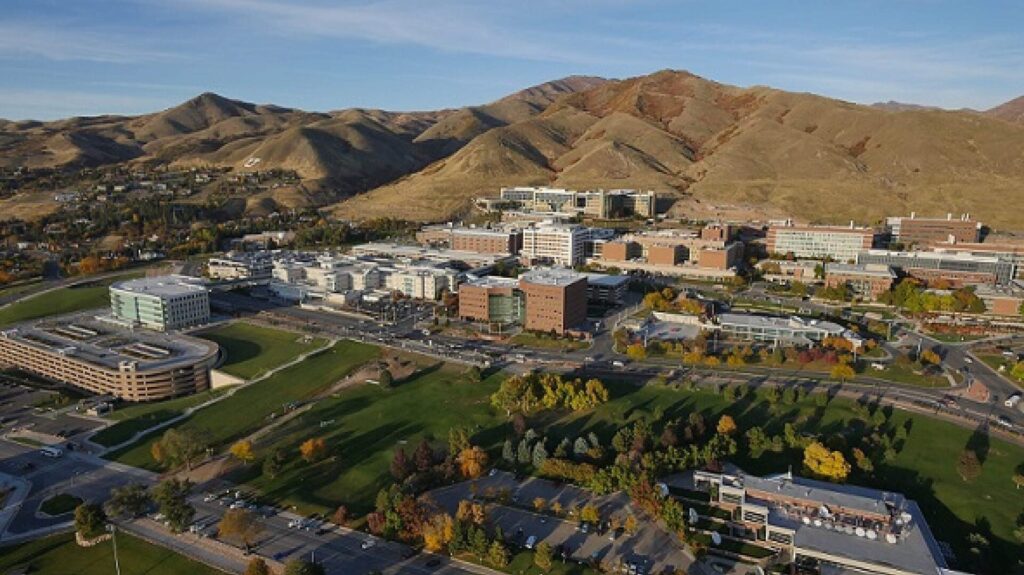
The Spencer Fox Eccles School of Medicine at the University of Utah (SFESOM), formerly known as the University of Utah School of Medicine, is the state’s premier medical education institution. Located in Salt Lake City, Utah, this distinguished public medical school has been training physicians since its establishment in 1906.
Program Duration & Unique Features
The Spencer Fox Eccles School of Medicine offers a traditional 4-year MD program with a mission-driven curriculum that emphasizes community service, patient-centered care, and addressing health disparities. The program combines rigorous academic training with extensive clinical experience, preparing students to serve diverse communities throughout Utah and the Mountain West region.
Unique Program Features:
- Mission-driven MD program with emphasis on community health
- Early clinical exposure and hands-on training
- Strong focus on serving rural and underserved populations
- Integrated research opportunities throughout the curriculum
- Combined degree options: MD/MBA, MD/MPH, and MD/PhD programs
Location and Campus Details
Campus Location: Salt Lake City, Utah – Urban Campus
The school is situated on the University of Utah campus in Salt Lake City, providing students with access to:
- Urban clinical training opportunities
- Multiple hospital systems and healthcare networks
- Research facilities and academic medical centers
- The only academic medical center in the Mountain West
Accreditation Status
Spencer Fox Eccles School of Medicine is fully accredited by the Liaison Committee on Medical Education (LCME), with accreditation obtained on or prior to 1942. The current accreditation status is Full, with the next survey year for maintaining LCME accreditation scheduled for 2027-28.
Rankings and Recognition
- Ranked among the top 35 public institutions for research (US News & World Report)
- Annual research funding: $433 million
- Home to over 1,000 physicians and researchers across 24 departments
- Recognized for interdisciplinary research in genetics, cancer, biomedical informatics, and infectious diseases
Admission Requirements
Academic Prerequisites
Minimum Degree Requirements
- Bachelor’s degree from a regionally accredited institution in the United States or Canada must be completed prior to matriculation
- No specific undergraduate major required – students may choose any discipline as long as required premedical coursework is completed
- Alternative: Doctoral-level (terminal degree) from a regionally accredited U.S. or Canadian institution that didn’t require a bachelor’s degree for entrance
Required Courses
Spencer Fox Eccles School of Medicine requires completion of prerequisite courses, though specific credit hour requirements are evaluated on a case-by-case basis during the holistic review process. Students should complete standard pre-medical requirements including:
- Biology (including lab components)
- Chemistry (general and organic, with labs)
- Physics (with lab components)
- Mathematics
- English/Writing
GPA Requirements
Spencer Fox Eccles School of Medicine employs a matrix model when evaluating GPA and MCAT scores. Applicants are encouraged to apply if they fall within these ranges:
GPA-MCAT Matrix for Competitive Applications:
- MCAT Total 494-497: Undergraduate GPA of 3.80 or higher
- MCAT Total 498-499: Undergraduate GPA of 3.60 or higher
- MCAT Total 500+: Undergraduate GPA of 3.00 or higher
Current Statistics:
- Median GPA: 3.88
- Average GPA: 3.82
- Successful applicants typically maintain GPAs well above minimum thresholds
Standardized Testing
MCAT Requirements
- Median MCAT Score: 511
- Average MCAT Score: 511-514 range
- MCAT scores are evaluated as part of the matrix model alongside GPA
- No specific minimum MCAT score, but competitive applicants typically score 494 or higher
Additional Testing Requirements
AAMC PREview Exam (Required):
Beginning with the 2023-2024 application cycle, all SFESOM applicants must complete the AAMC PREview exam (formerly known as AAMC SJT – Situational Judgment Test) to be considered for an interview invitation. This exam assesses professional readiness and personal characteristics valued in healthcare professionals.
Extracurricular Activities & Experience Requirements
Spencer Fox Eccles School of Medicine uses a holistic review process that considers all aspects of an applicant’s background beyond academics. Key areas evaluated include:
Required Activity Categories:
- Community Engagement: Demonstrated service to underserved populations
- Clinical Experience: Hands-on exposure to healthcare settings
- Leadership: Evidence of leadership roles and responsibilities
- Research: Intellectual curiosity and scholarly engagement
- Personal Growth: Activities showing personal development and resilience
State Residency Considerations:
As a public institution, Spencer Fox Eccles School of Medicine gives preference to Utah residents, with approximately 72% of enrolled students being Utah residents. However, the school accepts out-of-state applicants on a case-by-case basis and also considers:
- Regional students from Idaho, Montana, and Wyoming (may be eligible for tuition support from home states)
- Canadian applicants (case-by-case basis)
- International applicants (case-by-case basis)
Application Process & Timeline
Application System
Spencer Fox Eccles School of Medicine participates in the American Medical College Application Service (AMCAS) for primary applications.
Application Timeline:
- AMCAS Opens: June 1
- Application Deadline: October 1, 2025 (11:59 PM Eastern Standard Time)
- Secondary Application: Invited applicants receive secondary applications after meeting preliminary requirements
- Secondary Deadline: 14 days from invitation to complete secondary materials
Required Documents
Primary Application (AMCAS):
- Official transcripts from all institutions attended
- MCAT scores
- Letters of recommendation/evaluation
- Personal statement
- Work and activities descriptions
- Course prerequisites verification
Secondary Application:
- School-specific essays and questions
- Additional activities information
- Supplemental materials as requested
Interview Process
Spencer Fox Eccles School of Medicine conducts interviews for selected candidates, though specific interview format details (traditional, MMI, panel) vary by cycle. The interview process evaluates:
- Communication skills and professionalism
- Commitment to medicine and service
- Fit with the school’s mission and values
- Problem-solving abilities and ethical reasoning
Interview Statistics:
- Interview invitations are extended to competitive applicants who complete secondary applications
- Interviews typically occur from fall through early spring
- Both virtual and in-person interview options may be available
Application Fees
Current application fees include:
- AMCAS Primary Application: Standard AMCAS fees apply
- Secondary Application: School-specific fees (contact admissions office for current rates)
Admission Statistics & Success Rates
Overall Acceptance Rate
Spencer Fox Eccles School of Medicine has an acceptance rate of approximately 5.01%, making it highly competitive among medical schools nationally.
Application Volume and Class Statistics:
- Total Applicants: ~2,496 (recent cycle)
- Students Enrolled: 125 per year
- Class Size: 125 first-year medical students
- Total Medical Students: Approximately 548 across all four years
Demographics of Admitted Students
Geographic Distribution:
- Utah Residents: ~72% of enrolled students
- Out-of-State Students: ~28% of enrolled students
- Regional Students: Idaho, Montana, and Wyoming residents encouraged to apply
- International/Canadian: Considered case-by-case basis
Academic Profile Statistics:
- Median MCAT: 511
- Median GPA: 3.88
- Average MCAT: 511-514 range
- Average GPA: 3.82
Competitiveness Analysis
Spencer Fox Eccles School of Medicine is classified as “Moderately Competitive” based on:
- Acceptance rate of 5.01%
- Strong academic requirements
- Holistic review process considering diverse factors
- Public institution status with in-state preference
Historical Trends:
The school maintains consistent admission standards while emphasizing its mission to serve Utah and the Mountain West region, particularly rural and underserved communities.
Tuition & Financial Information
Current Tuition Rates by Residency Status
2024-2025 Academic Year Tuition & Fees:
- Utah Residents (In-State): $48,081 per year
- Out-of-State Students: $89,416 per year
- Regional Students: Idaho, Montana, and Wyoming residents may qualify for reduced tuition through state support programs
Total Cost of Attendance
Annual Cost of Attendance (COA) Estimates:
- Utah Residents: $80,578 annually
- Tuition & Fees: $47,820
- Living Costs: $18,052
- Books & Supplies: $4,286
- Personal Expenses: $10,420
- Out-of-State Students: $120,486 annually
- Tuition & Fees: $87,728
- Living Costs: $18,052
- Books & Supplies: $4,286
- Personal Expenses: $10,420
Program Length Cost Analysis
Total 4-Year Program Costs:
- Utah Residents: Approximately $252,394
- Out-of-State Students: Approximately $397,222
Financial Aid Options
Federal Financial Aid:
- Federal Direct Unsubsidized Stafford Loans
- Federal Graduate PLUS Loans
- Work-study opportunities
School-Specific Loan Programs:
Spencer Fox Eccles School of Medicine offers several private donor-funded loan programs at 5% interest rate, deferred through medical school and one residency training:
- American Medical Association-Education and Research Foundation (AMA-ERF) loans
- Clifford C. Snyder Medical Student Emergency Loan Fund
- Dr. Ezekiel R. and Edna Wattis Dumke Emergency Loan Fund
- Edward I. Hashimoto, MD Emergency Loan Fund
- Leone E. Fackrell Memorial Loan Fund
- Various other specialized loan funds
Regional Support Programs:
Students from Idaho, Montana, and Wyoming may be eligible for tuition support from their home states, significantly reducing costs for regional students.
Living Expenses in Salt Lake City
Salt Lake City offers relatively affordable living costs compared to other major metropolitan areas:
- On-Campus Housing: Available through University of Utah
- Off-Campus Housing: Diverse options in Salt Lake City area
- Transportation: Public transit and proximity to campus
- Cost of Living: Generally lower than coastal cities
Click To See Hundreds Of Consultants Who Can Mentor You:
Curriculum & Program Structure
Program Duration and Structure
The Spencer Fox Eccles School of Medicine offers a traditional 4-year MD program structured as follows:
Years 1-2: Pre-Clinical Education
- Foundation in basic medical sciences
- Integrated curriculum combining multiple disciplines
- Early clinical exposure and patient interaction
- Problem-based learning and case-based instruction
Years 3-4: Clinical Rotations
- Core clinical rotations in major specialties
- Elective rotations and specialty exploration
- Advanced clinical experiences
- Preparation for residency applications
Educational Philosophy and Teaching Methods
Spencer Fox Eccles School of Medicine emphasizes a mission-driven, people-first curriculum that focuses on:
- Community-Centered Learning: Strong emphasis on serving diverse populations
- Collaborative Education: Team-based learning and interdisciplinary approaches
- Early Clinical Integration: Hands-on patient care from early in the program
- Research Integration: Opportunities for scholarly activity throughout training
Clinical Training
Clinical Sites and Partnerships:
- University of Utah Hospital and Health System
- Primary Children’s Hospital
- Huntsman Cancer Institute
- VA Salt Lake City Health Care System
- Community hospitals throughout Utah and the Mountain West
- Rural and underserved clinical sites
Geographic Distribution:
Clinical rotations extend throughout Utah and neighboring states, providing exposure to diverse patient populations and healthcare settings, including:
- Urban academic medical centers
- Rural community hospitals
- Underserved community health centers
- Specialty care facilities
Special Programs and Tracks
Combined Degree Programs:
- MD/MBA: Business administration training for healthcare leadership
- MD/MPH: Public health emphasis for population health
- MD/PhD (MSTP): Medical Scientist Training Program for physician-scientists
Special Focus Areas:
- Rural medicine preparation
- Underserved population health
- Community engagement and service learning
- Research training and scholarly activity
Research Opportunities
Spencer Fox Eccles School of Medicine is a major research institution offering:
- Annual Research Funding: $433 million
- Research Areas: Genetics, cancer, biomedical informatics, infectious diseases
- Student Research: Opportunities for involvement in faculty research projects
- Scholarly Projects: Required research or scholarly activity for graduation
Pre-Medical Preparation
Undergraduate Program Recommendations
Academic Preparation:
- Major Selection: Any undergraduate major acceptable; choose a field that interests you
- Strong GPA: Maintain competitive GPA, particularly in science courses
- Prerequisite Completion: Complete all required pre-medical courses with strong performance
- Study Abroad: Can be beneficial but ensure prerequisite completion
Academic Planning Strategies
Course Sequencing:
- Complete prerequisites early to allow for MCAT preparation
- Balance challenging science courses with other coursework
- Maintain consistent academic performance throughout undergraduate years
- Consider advanced coursework in areas of interest
GPA Optimization:
- Focus on consistent performance rather than late improvement
- Seek academic support when needed
- Balance course load appropriately
- Consider academic workload when planning extracurricular activities
Clinical Experience Requirements
Recommended Clinical Exposure:
- Quality over Quantity: Meaningful clinical experiences preferred
- Direct Patient Care: Hands-on clinical roles preferred
- Diverse Settings: Exposure to different healthcare environments
- Underserved Populations: Experience with diverse and underserved communities
Types of Clinical Experience:
- Medical assistant or medical scribe positions
- Hospital volunteering
- EMT or paramedic training
- Clinical research positions
- Community health center volunteering
Research Experience
Research Engagement:
Spencer Fox Eccles School of Medicine values intellectual curiosity and research experience:
- Types of Research: Basic science, clinical, public health, or community-based research
- Publication Expectations: Not required but beneficial
- Research Duration: Long-term commitment preferred over multiple short experiences
- Research Mentorship: Develop meaningful relationships with research mentors
Extracurricular Planning
Community Service and Leadership:
- Service to Underserved: Align with school’s mission of serving diverse populations
- Leadership Roles: Demonstrate leadership capabilities
- Long-term Commitment: Show sustained engagement rather than brief involvements
- Personal Growth: Activities that demonstrate character development
MCAT Preparation
Test Preparation Timeline:
- Study Duration: 3-6 months of dedicated preparation typical
- Practice Tests: Regular full-length practice examinations
- Content Review: Comprehensive review of prerequisite material
- Test Date Planning: Allow time for retake if necessary
Score Improvement:
Consider MCAT retake if initial score doesn’t align with GPA in the matrix model for competitive consideration.
Application Timeline Planning
Optimal Preparation Timeline:
- Junior Year: Complete prerequisites, gain clinical experience, prepare for MCAT
- Senior Year: Take MCAT, submit applications, continue extracurricular activities
- Gap Year Considerations: Can be beneficial for additional experience and application strengthening
Frequently Asked Questions
What is Spencer Fox Eccles School of Medicine’s average GPA and MCAT score?
Spencer Fox Eccles School of Medicine’s median GPA is 3.88 and median MCAT score is 511. The average GPA is 3.82 and average MCAT ranges from 511-514.
Does Spencer Fox Eccles School of Medicine look at extracurricular activities?
Yes, Spencer Fox Eccles School of Medicine uses a holistic review process that heavily considers extracurricular activities including community engagement, clinical experience, leadership, and research. These activities are evaluated equally alongside academic credentials.
How competitive is Spencer Fox Eccles School of Medicine compared to other medical schools?
Spencer Fox Eccles School of Medicine is considered “Moderately Competitive” with a 5.01% acceptance rate. While competitive, it’s more accessible than the most selective private medical schools while maintaining high academic standards.
Does Spencer Fox Eccles School of Medicine prefer in-state applicants?
Yes, as a public institution, approximately 72% of enrolled students are Utah residents. However, Spencer Fox Eccles School of Medicine accepts qualified out-of-state applicants, particularly those from the Mountain West region (Idaho, Montana, Wyoming).