Last updated on January 9th, 2026 at 06:30 am
Program Overview & Institution Identity
Official Program Name
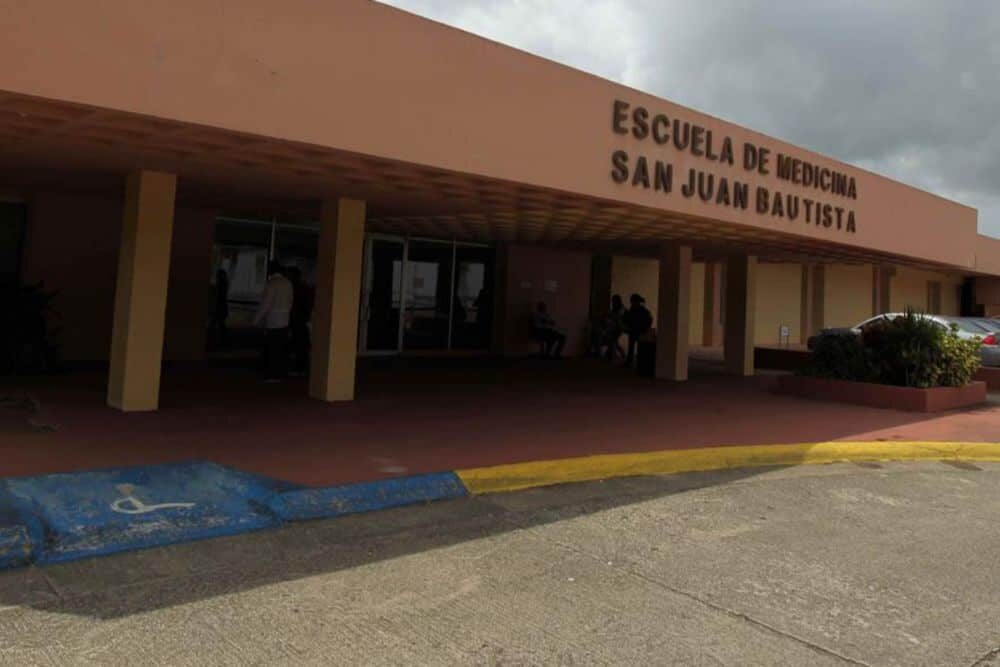
San Juan Bautista School of Medicine is a private, non-profit medical school located in Caguas, Puerto Rico, and consolidated with the Commonwealth of Puerto Rico. Established in 1978, the school is governed by a board of trustees who ensure compliance with its vision and mission.
Program Duration
San Juan Bautista School of Medicine offers a traditional 4-year MD program structured into two distinct phases:
- Phase 1: Two years of Biomedical Sciences (pre-clinical years)
- Phase 2: Two years of Clinical training
The curriculum follows a coherent and longitudinal sequence designed to integrate biomedical sciences with clinical components effectively.
Location and Campus Details
Caguas, Puerto Rico – Known as the “Heart of Puerto Rico,” Caguas is strategically located in the Central Mountain Range, just 20 miles south of San Juan, the capital city. This vibrant urban center of approximately 150,000 residents offers a blend of urban amenities and natural beauty.
Campus Information:
- 52-acre campus situated on the grounds of the Menonita Hospital Center (formerly San Juan Bautista Medical Center)
- Administrative Offices housing school administrative functions
- Biomedical Sciences Faculty with dedicated teaching and research spaces
- Library/Learning Resources Center providing comprehensive study materials
- Modern classrooms and laboratories equipped with current technology
- Clinical training sites affiliated with teaching hospitals throughout Puerto Rico and the United States
Accreditation Status
LCME Accreditation: The Liaison Committee on Medical Education (LCME) accredits San Juan Bautista School of Medicine for a full eight-year term (due 2027). This accreditation ensures that graduates are eligible to practice medicine in the United States and are eligible for residency programs.
Ranking and Recognition
San Juan Bautista School of Medicine specializes in community-based medical education with a focus on serving underserved and medically vulnerable populations. The school has achieved notable recognition for:
- 95% Match Rate in 2024 residency programs
- Strong emphasis on community health and translational community medicine research
- Bilingual education approach (Spanish and English)
- Cultural competency training
Admission Requirements
Academic Prerequisites
Minimum Degree Requirements
- Bachelor’s degree from an accredited institution is required
- No specific major requirement – the school accepts students from diverse academic backgrounds
- Must complete all prerequisite courses with satisfactory grades
GPA Requirements
- Minimum GPA: 3.00 (both general and science GPA)
- Median GPA of admitted students: 3.68
- Average GPA for 2021 admitted class: 3.41 overall / 3.57 science GPA
- Competitive applicants typically have GPAs significantly above the minimum threshold
The school uses a holistic admissions process, considering both academic and non-academic factors when evaluating GPA performance.
Standardized Testing
MCAT Requirements
- Minimum MCAT score: 495
- Median MCAT score of admitted students: 498
- Average MCAT for 2021 admitted class: Data shows the school accepts students with MCAT scores below the national average
- MCAT validity period follows AAMC guidelines
- Retake policies align with standard practices
San Juan Bautista School of Medicine is known for accepting students with lower MCAT scores compared to many other medical schools, making it accessible to students who may have faced testing challenges.
Additional Testing
- CASPer Test: Not required
- GRE: Not accepted as MCAT substitute
- Other tests: No additional standardized testing requirements
Extracurricular Activities & Experience Requirements
San Juan Bautista School of Medicine uses a holistic admissions process that evaluates:
Clinical Experience: While not requiring minimum hours, the school values meaningful clinical exposure that demonstrates:
- Understanding of healthcare settings
- Commitment to patient care
- Cultural sensitivity
Research Experience:
- Not mandatory but valued
- Research requirement during program: Students must complete a research project
- Basic science, clinical, and community health research are all valued
Community Service:
- Minimum requirement during MD program: 24 hours of community service
- Pre-admission community service demonstrates commitment to serving others
- Preference for work with underserved populations
Language Requirements:
- Spanish proficiency: Highly valued given the school’s bilingual approach
- English proficiency: Required for all coursework and clinical rotations
Other Valued Experiences:
- Leadership roles
- Cultural competency activities
- Work with diverse populations
- Public health initiatives
Residency Preferences
As a Puerto Rican institution, the school:
- Welcomes out-of-state applicants: Accepted case-by-case basis
- Canadian applicants: Accepted case-by-case basis
- International applicants: Accepted case-by-case basis
- No specific state residency preference, though familiarity with Hispanic/Latino culture and Spanish language proficiency are advantages
Application Process & Timeline
Application System
San Juan Bautista School of Medicine participates in the AMCAS (American Medical College Application Service) system.
Application Deadlines and Timeline
| Action | Date |
|---|---|
| AMCAS application opens | June 1st |
| Early Decision AMCAS application deadline | August 1st |
| Early decision applicants are notified | October 1st |
| Admission interviews begin | November 14 |
| Final AMCAS application deadline | December 15 |
| Offers of admission made (rolling basis) | Starting January 17 |
| “Plan to Enroll” available in AMCAS | February 19 |
| “Commit to Enroll” deadline | April 30 |
| Final commitment to matriculate | May 1st |
Required Documents
- AMCAS Primary Application with all required sections completed
- Official transcripts processed through AMCAS
- Letters of recommendation: Required (specific number not specified in available data)
- Personal statement as part of AMCAS application
- Work and Activities section completion
- Secondary application (school-specific requirements)
Application Fees
- AMCAS primary application fee: Standard AMCAS fees apply
- Secondary application fee: $25 (significantly lower than most medical schools)
Interview Process
- Interview invitations: Begin in November according to school policies
- Interview format: Information not specified in available sources – likely traditional or MMI format
- Virtual vs. in-person: Current format not specified
- Interview process follows holistic evaluation criteria
Post-Interview Process
- Acceptance notifications: Made on rolling basis starting January 17
- Waitlist procedures: Standard practices apply
- Deposit requirements: Follow AMCAS timelines
Admission Statistics & Success Rates
Overall Acceptance Rate
Acceptance rate varies by source:
- Recent data suggests 77% acceptance rate (more competitive than initially indicated)
- Some sources indicate very high acceptance rates, but this may reflect the small applicant pool
- The school is considered less competitive compared to most US medical schools
Application Volume
- Class size: 70 students per year
- Total applicants: Recent data shows approximately 22 applicants, though this seems inconsistently reported
- Application volume is significantly lower than most medical schools
Demographics of Admitted Students
Academic Statistics
- Median GPA: 3.68
- Median MCAT: 498
- GPA range: Minimum 3.00 required, averages around 3.41-3.57
- MCAT range: Minimum 495 required, median 498
Student Demographics
- Gender distribution:
- Women: 59-64% of applicants and enrolled students
- Men: 36-41% of applicants and enrolled students
- Racial/ethnic diversity (among domestic students):
- Hispanic/Latino: 91%
- White: 4%
- Asian and Pacific Islander: 1%
- Black: <1%
- Other: 4%
Geographic Distribution
- Student body: Highly diverse with students from Puerto Rico, US mainland, and international locations
- Retention rate: 88%
- 4-year graduation rate: 67%
- 6-year graduation rate: 67%
Comparison Data
Compared to national averages, San Juan Bautista School of Medicine:
- More accessible with lower MCAT and GPA requirements
- Smaller applicant pool making it less competitive statistically
- Strong focus on diversity, particularly Hispanic/Latino representation
- Unique mission serving underserved populations
Click To See Hundreds Of Consultants Who Can Mentor You:
Tuition & Financial Information
Current Tuition Rates
2024-2025 Academic Year:
- In-state tuition: $35,000 per year
- Out-of-state tuition: $45,000 per year
- International student tuition: $45,000 per year
Note: As a Puerto Rican institution, “in-state” typically refers to Puerto Rico residents
Additional Fees
- Books and supplies: Approximately $1,772 per year
- Application fee: $25 (secondary application)
- Technology fees: Not specifically itemized
- Health insurance: Available through the school
- Clinical rotation fees: Included in tuition
Total Cost of Attendance
4-year program total cost estimates:
- Puerto Rico residents: $140,000 (tuition only)
- Out-of-state/International: $180,000 (tuition only)
- Including living expenses: Add approximately $15,000-20,000 per year for housing, food, and personal expenses
Cost Comparison
San Juan Bautista School of Medicine offers significantly lower tuition compared to most US medical schools:
- US private medical school average: $60,000-70,000+ per year
- SJBSM advantage: $15,000-25,000 less per year than typical private schools
- Total program savings: $60,000-100,000 compared to mainland US private schools
Financial Aid Options
Federal Financial Aid
- Federal loan programs: Available to US citizens and eligible non-citizens
- Stafford Loans: Available up to annual limits
- Grad PLUS Loans: Available for additional costs
- Work-study opportunities: Limited availability
Institutional Aid
- Merit-based scholarships: Available but specific programs not detailed
- Need-based aid: 94% of students receive some form of financial aid
- Average aid per year: $5,540
- Average total aid awarded: $5,540
Financial Aid Statistics
- Students receiving financial aid: 94%
- Average net price: $7,589 per year (significantly lower than sticker price)
- Net price by income bracket:
- Under $30,000: $7,487 per year
- $30,000-$48,000: $7,867 per year
- $48,000-$75,000: $7,984 per year
- $75,000-$110,000: $11,146 per year
Living Expenses in Caguas, Puerto Rico
Cost of living advantages:
- Housing: Significantly lower than mainland US cities
- Transportation: Lower costs due to location
- Food: Local cuisine and groceries generally less expensive
- Healthcare: Lower cost medical care
- Recreation: Abundant natural and cultural activities at lower cost
Estimated annual living expenses: $15,000-20,000
- Housing: $6,000-10,000
- Food: $3,000-4,000
- Transportation: $1,000-2,000
- Personal expenses: $2,000-3,000
- Books/supplies: $1,772
Curriculum & Program Structure
Program Duration and Structure
4-Year MD Program Structure:
- Years 1-2: Biomedical Sciences (Pre-clinical phase)
- Years 3-4: Clinical training (Clinical phase)
- Educational approach: Integration of biomedical sciences with clinical components
- Calendar system: Semester-based
Educational Philosophy and Teaching Methods
Community-Based Medical Education:
- Mission focus: Educating physicians responsive to underserved and medically vulnerable populations
- Cultural competence: Training in culturally sensitive healthcare delivery
- Bilingual education: Instruction in both Spanish and English
- Holistic approach: Balancing academic rigor with personal development and wellness
Teaching Methods:
- Modern classrooms and laboratories equipped with current technology
- Early clinical exposure: Patient interaction from early program stages
- Research integration: Mandatory research component
- Community engagement: Required community service (24 hours minimum)
Pre-Clinical Years (Years 1-2)
Biomedical Sciences Curriculum:
- Comprehensive basic science foundation
- Integrated approach to medical knowledge
- Assessment methods: Pass/fail system details not specified
- Research opportunities: Available throughout pre-clinical years
- Community service: Integrated into curriculum
Clinical Training (Years 3-4)
Clinical Rotations:
- Core rotations: Standard medical specialties
- Hospital partnerships: Menonita Hospital Center (on-campus)
- Clinical sites: Affiliated teaching hospitals throughout Puerto Rico and United States
- Geographic distribution: Opportunities both locally and in mainland US
Clinical Features:
- Early patient exposure: Beginning in pre-clinical years
- Diverse patient populations: Strong exposure to Hispanic/Latino healthcare needs
- Bilingual practice: Preparation for serving diverse linguistic communities
Special Programs and Requirements
Required Components:
- Community service: Minimum 24 hours during MD program
- Research requirement: Completion of research project
- Cultural competency training: Integrated throughout curriculum
Elective Opportunities:
- Research electives: Available in various specialties
- Community rotations: Emphasis on underserved populations
- International opportunities: Not specifically detailed
Combined Degree Programs:
- Current status: “Not Provided” in available data
- Potential options: Information not available in current sources
Residency Preparation
2024 Match Results:
- Match rate: 95% (excellent performance)
- USMLE preparation: Integrated into curriculum
- Residency counseling: Career development program available
Specialties where SJBSM graduates have matched (2008-2024):
- Anesthesiology
- Dermatology
- Emergency Medicine
- Family Medicine
- General Surgery
- Internal Medicine
- Internal Medicine-Pediatrics
- Neurology
- Neurosurgery
- Nuclear Medicine
- Obstetrics & Gynecology
- Ophthalmology
- Orthopedic Surgery
- Otolaryngology
- Pathology
- Pediatrics
- Physical Medicine & Rehabilitation
- Psychiatry
- Radiation Oncology
- Radiology-Diagnostic
- Transitional Year
- Urology
Residency Program Locations:
Graduates have matched at prestigious institutions including:
- Baylor College of Medicine, Houston, TX
- Duke University Medical Center, Durham, NC
- Emory University School of Medicine, Atlanta, GA
- Boston University Medical Center, Boston, MA
- Cleveland Clinic, Weston, FL
- And many other high-quality programs across the United States
Pre-Medical Preparation
Undergraduate Program Recommendations
Academic Preparation:
- No specific major required: School welcomes students from diverse academic backgrounds
- Strong science foundation: Essential for success in medical school
- Liberal arts appreciation: Valued for cultural competency development
- Language skills: Spanish proficiency highly advantageous
Recommended coursework (typical pre-med requirements):
- Biology with laboratory
- Chemistry (general and organic) with laboratory
- Physics with laboratory
- Mathematics (including statistics)
- English/Writing courses
- Social sciences and humanities
Academic Planning
GPA Optimization:
- Minimum requirement: 3.00 (both overall and science)
- Competitive range: 3.4+ based on recent admitted student averages
- Grade trends: Consistent performance or upward trend preferred
- Course rigor: Balance challenging courses with GPA maintenance
Clinical Experience Requirements
Clinical Exposure Recommendations:
- Meaningful patient contact: Quality over quantity approach
- Healthcare settings: Hospitals, clinics, community health centers
- Bilingual settings: Advantage for applicants with Spanish-speaking patient exposure
- Underserved populations: Aligns with school’s mission
Types of valuable clinical experience:
- Medical assistant positions
- Hospital volunteering
- Community health programs
- Public health initiatives
- International medical missions (particularly Spanish-speaking countries)