
Last updated on January 9th, 2026 at 06:30 am
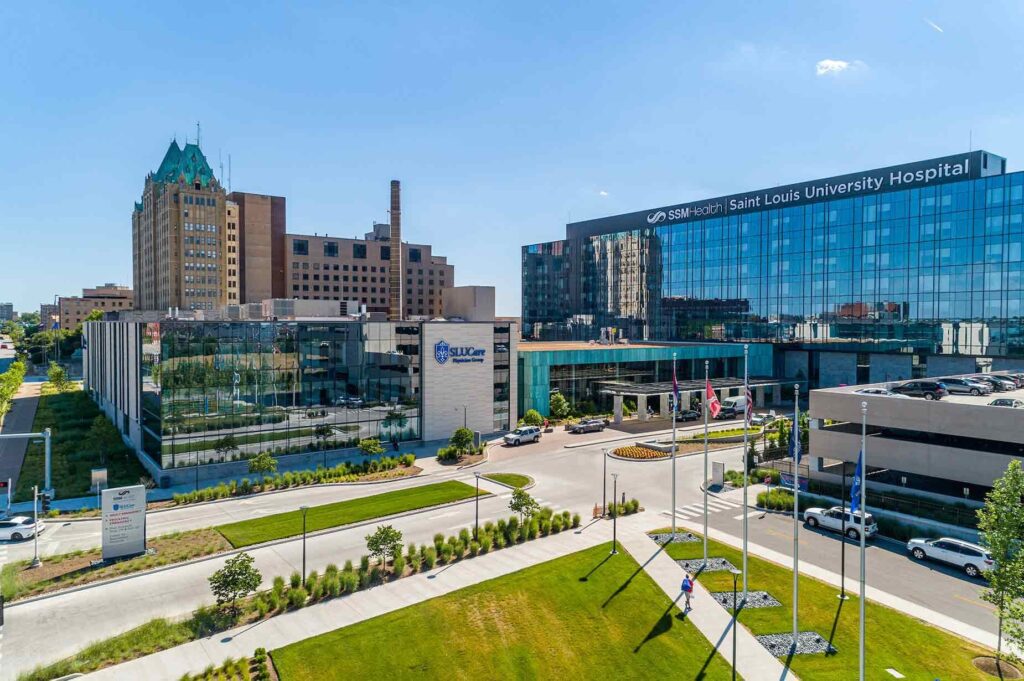
Program Overview & Institution Identity
Official Program Name and Identity
Saint Louis University School of Medicine (SLU School of Medicine) is a prestigious private medical institution founded in 1901 and located in Saint Louis, Missouri. As one of the oldest medical schools in the United States, SLU School of Medicine operates on an urban campus in the heart of St. Louis, providing students with access to diverse clinical experiences and research opportunities.
Program Duration and Structure
The Saint Louis University School of Medicine offers a 4-year MD program following the traditional medical education structure. The curriculum is organized into four distinct phases:
- Foundations Phase (Early Year One)
- Core Knowledge Phase (Years One and Two)
- Core Clinical Phase (Year Three)
- Pre-Residency Phase (Year Four)
Unique Curriculum Features
SLU School of Medicine has implemented several innovative changes to enhance student wellness and learning:
- Pass/Fail grading system in the first two years (changed from tiered grading)
- Longitudinal electives spanning the first two years, with one full day every two weeks dedicated to electives
- Learning communities focused on service and advocacy, research, global health, wellness, and medical education
- Required resilience and mindfulness curriculum for first-year students
- Enhanced wellness programming and extracurricular events
Location and Campus Details
Located in Saint Louis, Missouri, the school operates as a private institution on an urban campus. The strategic location provides students with access to major healthcare systems and diverse patient populations throughout the St. Louis metropolitan area.
Accreditation Status
Saint Louis University School of Medicine is accredited by the Liaison Committee on Medical Education (LCME), ensuring that graduates are eligible to take the USMLE and apply for residency programs throughout the United States.
Rankings and Recognition
According to US News & World Report rankings:
- Tier 3 in Best Medical Schools: Research
- Tier 1 in Best Medical Schools: Primary Care
- #57 in Most Graduates Practicing in Primary Care (tie)
- #93 in Most Graduates Practicing in Health Professional Shortage Areas
Admission Requirements
Academic Prerequisites
Minimum Degree Requirements
Saint Louis University School of Medicine requires a minimum of 90 semester hours (135 quarter hours) in undergraduate arts and sciences courses. However, virtually all accepted applicants complete a baccalaureate degree of at least 120 semester hours (180 quarter hours) from an accredited college or university.
For international students who received their education abroad, they must complete at least one academic year of science coursework in an accredited North American college or university before applying.
Required Courses
The following prerequisite courses are mandatory for admission:
| Course | Credit Hours Required |
|---|---|
| General Biology or Zoology | 8 credit hours* |
| General Chemistry | 8 credit hours* |
| Organic Chemistry | 8 credit hours* |
| Physics | 8 credit hours* |
| English | 6 credit hours |
| Other Humanities and Behavioral Sciences | 12 credit hours |
*Laboratory courses are required for all science prerequisites.
Important Notes:
- Advanced Placement (AP) coursework is acceptable for prerequisites except for required biology and chemistry courses
- Biochemistry may be taken in place of one semester of organic chemistry
- Students must have at least 18 credit hours total of English and/or humanities courses
- Business, health, or science-based courses cannot fulfill humanities or English requirements
GPA Requirements
- Saint Louis University School of Medicine does not use any GPA cut-offs when considering applicants
- Median GPA of admitted students: 3.92
- The admissions committee evaluates applications holistically, considering academics alongside all other relevant experiences
- Both overall GPA and science GPA are considered in the evaluation process
Standardized Testing
MCAT Requirements
- Minimum MCAT score: 502 total score (applicants must achieve this threshold to be considered)
- Median MCAT score of admitted students: 514
- The committee focuses on the highest total score from a single exam sitting
- MCAT validity period: 4 years from the application year
- Multiple MCAT attempts: The committee has access to all past scores but focuses on the highest single sitting score
Additional Testing Requirements
- AAMC PREview Professional Readiness Exam: Required for all applicants
- Applicants are encouraged to register early as registration closes on September 3
- All previous administrations of the PREview exam will be considered
- CASPer Test: Not required for Saint Louis University School of Medicine
Extracurricular Activities & Experience Requirements
Saint Louis University School of Medicine uses a holistic evaluation system that considers:
- Research experience (not explicitly required but valued)
- Clinical exposure and healthcare experience
- Community service and volunteer work
- Leadership roles and experiences
- Non-academic achievements and personal qualities
The school values diverse experiences and does not mandate specific minimum hours for extracurricular activities, focusing instead on the quality and impact of experiences.
Application Process & Timeline
Application System
Saint Louis University School of Medicine participates in the American Medical College Application Service (AMCAS), which allows applicants to submit materials to multiple medical schools with one application.
Key Deadlines
- AMCAS Application Deadline: November 15, 2025
- Secondary Application Deadline: December 15, 2025
- Rolling admissions process begins October 15 and continues until July
Required Documents
Applicants must submit the following materials:
- Verified AMCAS application
- MCAT scores (minimum 502)
- AAMC PREview Professional Readiness Exam
- Secondary application (SLU-specific)
- Letters of recommendation (maximum of 3)
- Photograph
- Application fee ($100, with fee waivers available for AMCAS fee waiver recipients)
Letters of Recommendation
- Maximum of 3 letters of recommendation allowed
- Options include:
- Pre-medical committee letter plus 2 additional letters, OR
- 3 individual letters of recommendation
- No additional letters should be submitted beyond the maximum
Secondary Application Requirements
The 2025-2026 secondary application includes the following prompts:
- Gap time activities (1000 characters): Description of any gap time equal to a semester or more
- Comments to admissions committee (1000 characters): Why you chose to apply to SLU, extenuating circumstances, etc.
- Being “the other” (1000 characters): Tell us about a time when you were the “other”
Interview Process
Saint Louis University School of Medicine uses a rolling admissions process:
- Applications received early may be invited to interview earlier
- Interview invitations are sent based on completed applications
- No specific information available about interview format (Traditional vs. MMI)
- Interview season typically runs from fall through spring
Admission Statistics & Success Rates
Overall Acceptance Rate
Saint Louis University School of Medicine has an acceptance rate of approximately 3.03%, making it highly competitive among medical schools nationwide.
Application Volume and Class Size
- Total applicants: 5,808 (recent cycle)
- Students matriculated: 176
- First-year class size: 176 students
Academic Statistics of Admitted Students
- Median GPA: 3.92
- Average GPA: 3.89
- Median MCAT: 514
- Average MCAT: 513
Residency Match Statistics
Saint Louis University School of Medicine participates in the National Residency Match Program (NRMP). The school has a strong track record of matching students to residency programs across various specialties, though specific match rates are not publicly detailed.
Geographic Diversity
As a private institution, Saint Louis University School of Medicine accepts students from:
- In-state (Missouri residents)
- Out-of-state students
- Canadian students
- International students
Tuition & Financial Information
Current Tuition Rates
For the 2024-2025 academic year:
- Tuition: $68,120 (same for in-state and out-of-state students as a private institution)
- Additional Fees: $2,310 (first year)
- Total Tuition and Fees: $70,430
Total Cost of Attendance
The estimated cost of attendance varies by housing situation:
First-Year Students (2024-2025)
| Category | Living with Parents | Off-Campus |
|---|---|---|
| Tuition | $68,120 | $68,120 |
| Fees | $2,310 | $2,310 |
| Housing/Room and Board | $11,060 | $15,170 |
| Books and Supplies | $250 | $250 |
| Transportation | $2,450 | $2,450 |
| Miscellaneous | $6,210 | $6,780 |
| Total | $90,400 | $95,080 |
Four-Year Program Cost
- Total estimated cost: $338,176 over four years (based on tuition data)
- Costs may vary slightly by year due to different fee structures
Financial Aid Options
Merit-Based Scholarships
- School of Medicine Opportunity Scholarship: Full tuition plus fees available annually
- Renewable each year with good academic standing
- Focus on reducing healthcare disparities
- Preference for students from underrepresented backgrounds
Need-Based Financial Aid
- Federal loan programs available
- Institutional financial aid opportunities
- Work-study programs may be available
Living Expenses in Saint Louis
The cost of living in Saint Louis, Missouri, is generally lower than major metropolitan areas like New York or Los Angeles, making it a more affordable option for medical students.
Click To See Hundreds Of Consultants Who Can Mentor You:

Curriculum & Program Structure
Program Duration and Philosophy
The Saint Louis University School of Medicine offers a 4-year MD program that emphasizes the Jesuit tradition of educating the whole person—mind, body, heart, and spirit.
Educational Philosophy and Teaching Methods
The curriculum combines multiple teaching approaches:
- Small group activities
- Computer-based instruction
- Case-based tutorials
- Problem-based learning elements
- Simulation-based training
Pre-Clinical Years (Years 1-2)
Year One: Foundations and Core Knowledge Phase
Foundations Phase Courses:
- Normal Structure and Function (Musculoskeletal, Thorax and Neck, Abdomen and Pelvis)
- Molecular Foundations in Medicine
- Epidemiology and Biostatistics
- Introduction to Medical Information Management
- Healthcare Quality Improvement
- Principles of Immunology, Pharmacology and Therapeutics
- Clinical Interviewing
- Introduction to Pathology
- Foundation in Health Care Ethics
- Medicine and Society
- Leadership in the Business of Medicine
Core Knowledge Phase (starting Year One):
- Brain and Behavior
- Cardiovascular System
- Clinical Diagnosis
- Clinical Reasoning in Healthcare Ethics
Year Two: Continued Core Knowledge Phase
- Endocrine and Reproductive Systems
- Hematology
- Gastrointestinal System
- Renal-Urinary System
- Respiratory System
- Skin, Bone and Joint
- Professional and Personal Development II
Clinical Training (Years 3-4)
- Core Clinical Phase (Year 3): Core rotations in major specialties
- Pre-Residency Phase (Year 4): Advanced clinical experiences and electives
Clinical Sites and Affiliations
Saint Louis University conducts medical training at several affiliated institutions:
- SSM Health Saint Louis University Hospital (365-bed tertiary care facility and Level I trauma center)
- SSM Health Cardinal Glennon Children’s Hospital
- St. Elizabeth’s Hospital
- Mercy Hospital
- St. Mary’s Hospital
- St. Anthony’s Medical Center
- St. Louis Veterans Affairs Medical Center
Special Programs and Opportunities
Combined Degree Programs
- MD/MPH (Master of Public Health)
- MD/MBA (Master of Business Administration)
- MD/PhD (Doctor of Philosophy)
Medical Scholars Program
A special pathway for high-achieving undergraduates that allows early conditional acceptance to medical school during junior year, with specific GPA and MCAT requirements.
Learning Communities
Students can participate in specialized learning communities focused on:
- Service and advocacy
- Research
- Global health
- Wellness
- Medical education
Assessment Methods
- Pass/Fail grading in the first two years
- Longitudinal electives throughout pre-clinical training
- Comprehensive clinical evaluations in years 3-4
Pre-Medical Preparation
Undergraduate Program Recommendations
Saint Louis University School of Medicine welcomes applicants from diverse academic backgrounds. The admissions committee does not favor any specific major, suitable areas include:
- Natural sciences
- Behavioral sciences
- Humanities
- Engineering
- Other disciplines
Key principle: Students majoring in behavioral sciences and humanities must demonstrate strong performance in natural sciences, while science majors must show broad exposure to humanities.
Academic Planning Strategy
- Complete all prerequisite courses with laboratory components
- Maintain strong academic performance (median admitted GPA: 3.92)
- Pursue advanced coursework in your area of interest
- Consider biochemistry or cellular biology (highly recommended)
Clinical Experience Development
While specific minimum hours are not required, successful applicants typically demonstrate:
- Clinical exposure through shadowing, volunteering, or employment
- Quality over quantity approach to clinical experiences
- Diverse healthcare settings to understand different aspects of medicine
Research Experience
- Research experience is valued but not explicitly required
- Types of research appreciated include:
- Basic science research
- Clinical research
- Public health research
- Community-based research
Extracurricular Planning
Build a well-rounded profile including:
- Leadership roles in organizations
- Community service and volunteer work
- Long-term commitments demonstrating dedication
- Diverse interests showing personal growth
MCAT Preparation
- Target score: Aim for 514+ (median admitted score)
- Minimum threshold: 502 total score required
- Timing: Take MCAT when adequately prepared
- Retake policy: Highest single sitting score considered
Application Timeline
- Junior year: Begin MCAT preparation, gain clinical experience
- Spring junior year: Take MCAT, begin application preparation
- Summer before senior year: Submit AMCAS application
- Fall senior year: Complete secondary applications, interview preparation
Frequently Asked Questions
Does Saint Louis University School of Medicine look at extracurriculars?
Yes, SLU School of Medicine uses a holistic evaluation system that considers extracurricular activities alongside academic performance. The admissions committee values research experience, clinical exposure, community service, leadership roles, and other meaningful experiences that demonstrate your commitment to medicine and service to others.
What is Saint Louis University School of Medicine’s average GPA and MCAT score?
Median GPA: 3.92
Average GPA: 3.89
Median MCAT: 514
Average MCAT: 513
How competitive is Saint Louis University School of Medicine compared to other medical schools?
SLU School of Medicine is highly competitive with an acceptance rate of approximately 3.03%. With 5,808 applicants competing for 176 positions, it ranks among the more selective medical schools in the United States.
Does Saint Louis University School of Medicine prefer in-state applicants?
As a private institution, SLU School of Medicine does not show preference for Missouri residents. The school actively accepts out-of-state, Canadian, and international students, creating a geographically diverse student body.
What makes Saint Louis University School of Medicine different from other medical schools?
Key distinguishJesuit educational tradition emphasizing whole-person development
Pass/fail grading in pre-clinical years for reduced stress
Longitudinal electives with dedicated time for exploration
Wellness-focused curriculum with mindfulness training
Strong primary care track record (Tier 1 ranking)
Diverse clinical training sites in urban St. Louising features include:
When should I apply to Saint Louis University School of Medicine?
Apply through AMCAS with a deadline of November 15. Since SLU uses rolling admissions, earlier applications (June-August) may have advantages in interview scheduling and acceptance timing.
Does Saint Louis University School of Medicine accept international students?
Yes, SLU School of Medicine accepts Canadian and international students. International applicants