Last updated on October 15th, 2026 at 08:48 am
Program Overview & Institution Identity
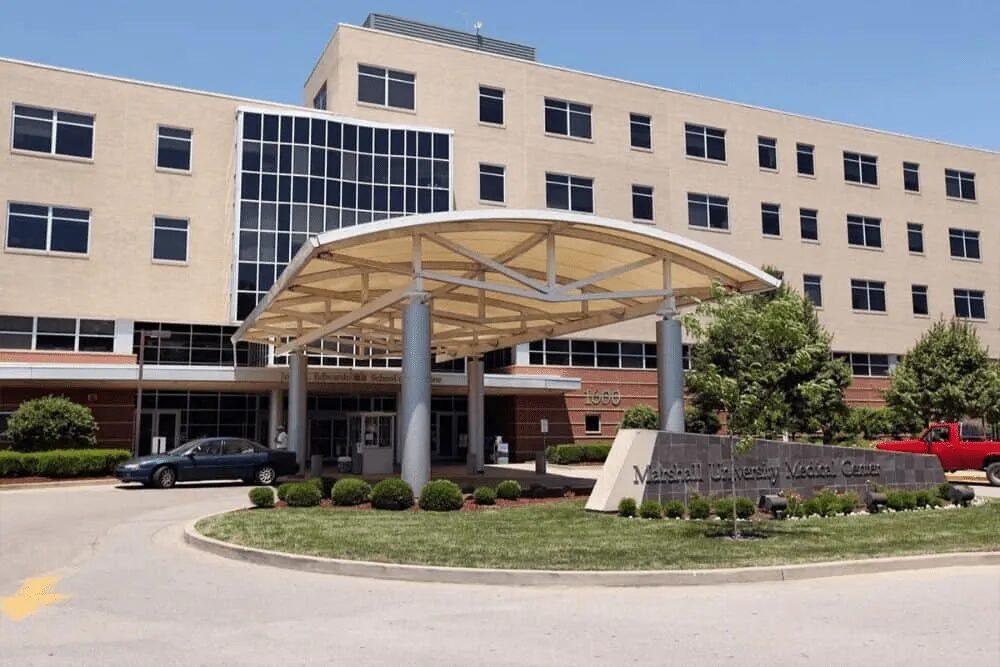
Marshall University Joan C. Edwards School of Medicine is a community-based, Veterans Affairs affiliated medical school located in Huntington, West Virginia. Established as a public institution on a rural campus, the school is dedicated to providing high-quality medical education and postgraduate training programs designed to meet the unique healthcare needs of West Virginia and Central Appalachia.
Program Duration and Structure
The Joan C. Edwards School of Medicine offers a traditional 4-year MD program that follows a comprehensive curriculum structure. The program is designed with a focus on preparing physicians to serve rural and underserved communities, particularly in the Appalachian region.
Location and Campus Details
Situated in Huntington, West Virginia, the medical school operates as part of Marshall University’s health sciences campus. The rural campus setting provides students with unique exposure to healthcare challenges and opportunities specific to rural communities and Central Appalachia.
Accreditation Status
Marshall University Joan C. Edwards School of Medicine holds full LCME (Liaison Committee on Medical Education) accreditation for a complete eight-year period. This LCME accreditation ensures that graduates are eligible to take the USMLE examinations and apply for residency programs throughout the United States.
Combined Degree Programs
The school offers a MD/PhD combined degree program for students interested in pursuing careers that combine clinical practice with research. This program allows qualified students to integrate their medical education with doctoral research training.
Admission Requirements
Academic Prerequisites
Minimum Degree Requirements:
Marshall University requires applicants to have a bachelor’s degree from an accredited college or university. In exceptional cases, well-qualified students may be considered after completing ninety semester hours of academic work if all other requirements are met.
Required Courses:
All prerequisite courses must be completed at an accredited college or university in the United States or Canada with a grade of “C” or better by June 15 of the year of matriculation. The level of required courses should be equivalent to courses for students majoring in their respective fields.
GPA Requirements
- Median GPA: 3.84 (overall)
- Science GPA: 3.74 (Biology, Chemistry, Physics, and Math courses)
- Minimum GPA: While specific minimums aren’t published, competitive applicants typically maintain GPAs well above 3.5
The Admissions Committee considers the quality of academic work more important than the specific field of study, encouraging applicants from diverse academic backgrounds beyond traditional science majors.
Standardized Testing
MCAT Requirements:
- Median MCAT Score: 505
- Average MCAT Score: 504 for matriculating students
- The school requires competitive MCAT scores, with successful applicants typically scoring around the median
Special Programs:
Marshall University offers an MD Early Assurance Program for current Marshall University undergraduate students. Students successfully completing this program’s undergraduate portion are not required to take the MCAT.
Residency Preferences
As a state-assisted medical school, Marshall University gives strong preference to West Virginia residents. The admission statistics reflect this preference:
- West Virginia residents: 36.32% acceptance rate (57.3% of matriculating class)
- Out-of-state applicants: 1.76% acceptance rate (42.7% of matriculating class)
A limited number of well-qualified nonresidents from adjoining states or those with strong ties to West Virginia will be considered. Only U.S. citizens or permanent residents are eligible for admission.
Application Process & Timeline
Application System
Marshall University Joan C. Edwards School of Medicine participates in the AMCAS (American Medical College Application Service) for primary applications.
Key Deadlines
- Application Deadline: November 1, 2025
Applications must be complete by this date for consideration
Required Documents
- Official transcripts from all institutions attended
- MCAT scores
- Letters of recommendation
- Personal statement
- Work and activities descriptions
- Secondary application (school-specific requirements)
Interview Process
The school conducts interviews for selected candidates, with an interview invitation rate of 9.50%. This rate is below the national average of 13.66% for medical schools, indicating selective screening of applicants for interviews.
Admission Statistics & Success Rates
Overall Acceptance Rate
Marshall University Joan C. Edwards School of Medicine has an acceptance rate of 3.87% for the 2025 admission cycle. This places it in line with the national average for medical schools (4.02%).
Application Volume and Class Size
- Total Applicants: 2,121
- Matriculating Students: 82
- First Year Class Size: 82 students
Demographics of Admitted Students
Gender Distribution:
- Male matriculants: 45% (37 students)
- Female matriculants: 55% (45 students)
Geographic Distribution:
- West Virginia residents: 57.3% (47 students)
- Out-of-state residents: 42.7% (35 students)
Academic Statistics Trends
| Year | MCAT Score | Overall GPA | Science GPA |
|---|---|---|---|
| 2022 | 503 | 3.60 | – |
| 2023 | 503 | 3.66 | 3.56 |
| 2024 | 504 | 3.80 | 3.74 |
| 2025 | 504 | 3.80 | 3.74 |
Tuition & Financial Information
Current Tuition Rates
- West Virginia Residents: $25,614 per year
- Out-of-State Students: $59,198 per year
This represents a significant in-state advantage for West Virginia residents, with out-of-state tuition being more than double the resident rate.
Total Program Cost
Over the 4-year MD program:
- West Virginia residents: Approximately $102,456 (tuition only)
- Out-of-state students: Approximately $236,792 (tuition only)
Financial Aid Options
Marshall University Joan C. Edwards School of Medicine offers various financial assistance programs:
Merit-Based Scholarships:
- Internal scholarships based on academic achievement and need
- The school has specific scholarship policies and tuition assistance programs
Need-Based Aid:
- Federal student loans and financial aid programs
- Work-study opportunities where available
Specialized Programs:
- WV Financial Incentive Programs for physicians
- National Health Service Corps Loan Repayment Program
- WV State Loan Repayment Program (SLRP)
- Rural Health Service Program
- VA Scholarship Program (HPSP)
External Scholarship Opportunities:
Students are encouraged to apply for outside scholarships and can access resources through the Office of Student Financial Assistance.
Cost of Living
Huntington, West Virginia offers a relatively affordable cost of living compared to many other medical school locations, which can help offset educational expenses for students.
Click To See Hundreds Of Consultants Who Can Mentor You:
Curriculum & Program Structure
Program Duration and Educational Philosophy
Marshall University Joan C. Edwards School of Medicine follows a traditional 4-year curriculum structure designed around community-based medical education with a strong emphasis on serving rural and underserved populations.
Pre-Clinical Years (Years 1-2)
The curriculum includes foundational courses such as:
- MDC 710 – Elements of Medicine (153 instructional hours)
- MDC 711-714 – Structure and Function I-IV (multiple courses covering anatomy, physiology, pathology)
- IDM 715 – Introduction to Clinical Skills (148 instructional hours with 54 hours of patient contact)
Instructional Methods:
- Traditional lectures
- Laboratory sessions
- Small group discussions
- Patient contact experiences
- Case-based instruction
- Simulation-based learning
Clinical Training (Years 3-4)
The clinical curriculum emphasizes hands-on training through rotations at affiliated hospitals and clinical sites. Students gain experience in various medical specialties while serving diverse patient populations, including significant exposure to rural healthcare settings.
Curriculum Management
The school maintains robust curriculum oversight through:
- Curriculum Committee with comprehensive curriculum control
- Year-specific subcommittees for coordination and integration
- Curriculum Evaluation Committee (CEC) for programmatic assessment
- Office of Medical Education providing ongoing support
Special Features
- Veterans Affairs Affiliation: Provides unique training opportunities in VA healthcare settings
- Rural Medicine Focus: Specialized training for rural healthcare delivery
- Community-Based Learning: Emphasis on community health and service
- Research Opportunities: Access to research through the MD/PhD program and other initiatives
Residency Match Results
Marshall University Joan C. Edwards School of Medicine maintains strong residency match rates, with the 2025 Match Day results showing successful placement of graduates in residency programs. The school’s focus on primary care and rural medicine preparation aligns well with residency opportunities in these fields.
The school’s Medical Student Career Development Program provides comprehensive support for:
- Residency application preparation
- Career advising and mentorship
- USMLE preparation support
- Interview skills development
- Specialty exploration guidance
Pre-Medical Preparation
Undergraduate Program Recommendations
While most applicants have science majors, Marshall University Joan C. Edwards School of Medicine encourages diversity in academic backgrounds. The Admissions Committee values the quality of work over the specific field of study.
Recommended Preparation:
- Complete all prerequisite courses with grades of “C” or better
- Maintain a competitive GPA (target above 3.8)
- Gain meaningful clinical experience
- Participate in community service and leadership activities
- Consider research opportunities
Clinical Experience Requirements
The school values applicants with meaningful healthcare exposure, particularly those with experience in:
- Rural healthcare settings
- Community health programs
- Underserved populations
- Primary care environments
Extracurricular Planning
Marshall University values applicants who demonstrate:
- Commitment to serving West Virginia and Central Appalachia
- Leadership experience in various capacities
- Community service and volunteer work
- Understanding of rural healthcare challenges
- Cultural competency and diversity awareness
Application Timeline Planning
Prospective applicants should:
- Begin MCAT preparation during junior year
- Complete prerequisite courses by spring of application year
- Gain clinical and volunteer experience throughout undergraduate years
- Develop relationships for strong letters of recommendation
- Submit AMCAS application early in the cycle
- Prepare thoroughly for potential interviews
Frequently Asked Questions
Does Marshall University Joan C. Edwards School of Medicine look at extracurriculars?
Yes, the school uses a holistic evaluation system that considers clinical experience, community service, leadership, and other non-academic factors alongside academic achievements.
What is Marshall University Joan C. Edwards School of Medicine’s average GPA and MCAT score?
The median GPA is 3.84 and median MCAT score is 505 for matriculating students. The science GPA median is 3.74.
How competitive is Marshall University Joan C. Edwards School of Medicine compared to other medical schools?
With a 3.87% acceptance rate, it’s similarly competitive to the national average (4.02%) but offers significant advantages for West Virginia residents.
Does Marshall University Joan C. Edwards School of Medicine prefer in-state applicants?
Yes, as a state-assisted institution, West Virginia residents have a significant advantage with a 36.32% acceptance rate compared to 1.76% for out-of-state applicants.
What makes Marshall University Joan C. Edwards School of Medicine different from other medical schools?
The school’s focus on rural and community-based medicine, Veterans Affairs affiliation, and commitment to serving Central Appalachia makes it unique. It’s specifically designed to address healthcare needs in underserved rural communities.
When should I apply to Marshall University Joan C. Edwards School of Medicine?
Applications are due November 1, 2025. Submit your AMCAS application early in the cycle (June-July) to ensure timely processing.
Does Marshall University Joan C. Edwards School of Medicine accept international students?
No, only U.S. citizens or permanent residents are eligible for admission.
What clinical experience do I need for Marshall University Joan C. Edwards School of Medicine?
While specific requirements aren’t stated, meaningful healthcare exposure is valued, particularly experience with rural healthcare, primary care, or underserved populations.
Does Marshall University Joan C. Edwards School of Medicine require research experience?
Research experience is not required but can strengthen an application. The school offers MD/PhD programs for research-focused students.
How many letters of recommendation does Marshall University Joan C. Edwards School of Medicine require?
Follow AMCAS requirements for letters of recommendation, typically including academic and clinical references.
What is Marshall University Joan C. Edwards School of Medicine’s curriculum like?
The 4-year program follows a traditional structure with 2 years of pre-clinical education and 2 years of clinical rotations, emphasizing community-based and rural healthcare training.
Where do Marshall University Joan C. Edwards School of Medicine graduates match for residency?
Graduates successfully match in various specialties, with strong representation in primary care fields and programs that serve rural and underserved populations.
How much does Marshall University Joan C. Edwards School of Medicine cost?
Tuition is $25,614 per year for West Virginia residents and $59,198 per year for out-of-state students.
What financial aid is available at Marshall University Joan C. Edwards School of Medicine?
The school offers scholarships, federal financial aid, loan repayment programs, and specialized programs for students committed to serving rural areas or underserved populations.
Does Marshall University Joan C. Edwards School of Medicine offer interviews to all qualified applicants?
No, with a 9.50% interview invitation rate, interviews are selective. Strong academic credentials, meaningful experiences, and alignment with the school’s mission increase interview chances.