Last updated on January 9th, 2026 at 06:26 am
Program Overview & Institution Identity
West Virginia University School of Medicine stands as a distinguished public medical institution located in Morgantown, West Virginia, serving as a cornerstone of medical education in the Appalachian region. Established in 1903 with the first MD recipients graduating in 1962, WVU School of Medicine has been the premiere institution for medical education in West Virginia for over a century.
Program Duration: The MD program is a traditional 4-year curriculum designed to train future physicians with a strong emphasis on serving rural and underserved communities.
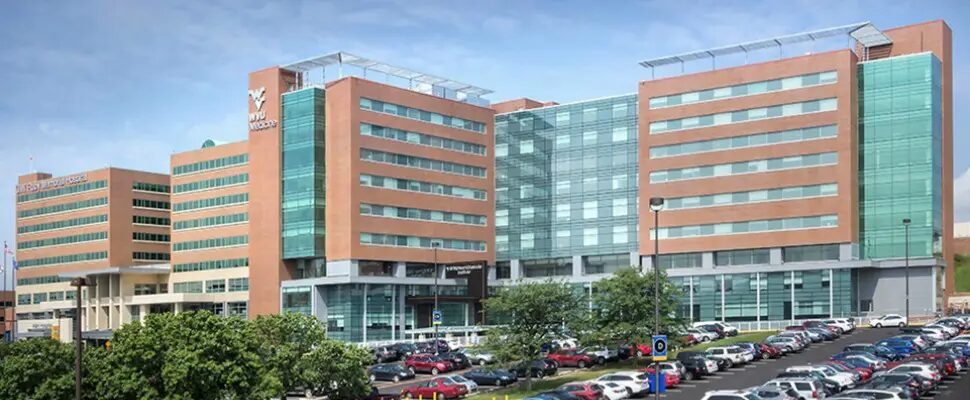
Campus Location: The medical school is situated on WVU’s Health Sciences campus in Morgantown, West Virginia, which includes the Robert C. Byrd Health Sciences Center. This large, modern medical complex houses the Schools of Dentistry, Nursing, Pharmacy, and Public Health, along with three hospitals, a physician office building, and state-of-the-art cancer, heart and vascular, and eye centers. Students also have access to clinical training at additional campuses in Charleston and Eastern West Virginia.
Accreditation Status: WVU School of Medicine holds full accreditation from the Liaison Committee on Medical Education (LCME). The most recent accreditation visit occurred in fall 2022, resulting in full accreditation for an eight-year term until the next full survey visit in the 2030-2031 academic year.
Ranking and Recognition: WVU School of Medicine is nationally recognized as 13th in training rural-medicine doctors and holds R1 research status, making it one of only 115 institutions to receive this designation out of 4,500+ schools nationwide. The institution is particularly noted for its commitment to serving rural communities and training primary care physicians.
Special Programs: The school offers MD/PhD combined degree programs and features specialty tracks in global health, rural health, culinary and lifestyle medicine, and an accelerated curriculum (MATTER program) that allows students to finish in 3.5 years.
Admission Requirements
Academic Prerequisites
Minimum Degree Requirements: WVU School of Medicine requires a minimum of 90 credit hours at the undergraduate or graduate level from an accredited US or Canadian academic institution by matriculation. Additionally, applicants must complete a minimum of three years of higher education or employment post-high school before matriculation.
Prerequisite Courses: Unlike many medical schools, WVU School of Medicine does not require specific prerequisite coursework. Instead, the school practices competency-based admissions where students must demonstrate mastery of required core competencies through various means including:
- Successful completion of relevant coursework
- Strong MCAT performance
- Specialized experiences such as research, employment, military courses, and self-study
Examples of coursework that can demonstrate science competency include:
- Biochemistry
- Biological Sciences
- Chemistry
- Engineering Sciences
- Laboratory Sciences
- Mathematics/Statistics
- Organic Chemistry
- Physics
GPA Requirements: While no minimum GPA is specified, the academic statistics for admitted students are competitive:
- Class of 2029: Average BCPM GPA: 3.80, Average Postbac BCPM: 3.86, Average Masters BCPM: 3.89
- Class of 2028: Average BCPM GPA: 3.73, Average Total GPA: 3.76
For the Early Decision Program, applicants must have an AMCAS calculated undergraduate, post-bac, or graduate degree BCPM GPA of at least 3.6, with preference given to applicants with at least 30 BCPM hours from preferred courses.
Standardized Testing
MCAT Requirements: All applicants are required to take the MCAT. For Regular Decision applicants, scores will be accepted from exams taken between September 2022 and September 2025. The most recent MCAT total and sub-section scores are reported to the committee, while all scores are reviewed.
MCAT Statistics:
- Class of 2029: Average MCAT Total: 511
- Chemical and Physical Foundations: 128
- Critical Analysis and Reasoning: 127
- Biological and Biochemical Foundations: 128
- Psychological, Social, and Biological Foundations: 128
- Class of 2028: Average MCAT Total: 510
For the Early Decision Program, a total MCAT score of at least 506 is required, with sub-section scores less than 125 considered potentially non-competitive.
Extracurricular Activities & Experience Requirements
WVU School of Medicine practices holistic review and requires strong experiences in:
- Patient care (including MD shadowing)
- Leadership roles
- Research experience
- Service to West Virginia and beyond
- Community service (100 hours required before graduation)
For Early Decision applicants, competitive candidates should have a minimum of 12 mission-based experiences listed in their AMCAS application.
Application Process & Timeline
Application System
WVU School of Medicine uses the AMCAS (American Medical College Application Service) for primary applications.
Key Deadlines
- Regular Decision: November 1, 2025
- Early Decision Program:
- Last date to take MCAT: July 25, 2025
- Application Deadline: August 1, 2025, 11:59 PM
- Secondary Application Deadline: August 31, 2025, 11:59 PM
Required Documents
- AMCAS primary application
- Official transcripts
- MCAT scores
- Letters of recommendation/evaluation
- Personal statement
- Work and activities descriptions
- Secondary application (school-specific)
Interview Process
The school conducts interviews as part of the admissions process. For the Early Decision Program, applicants are interviewed in September with acceptance notifications by October 1st.
Post-Interview Process
Early Decision accepted students are notified by October 1st and receive guaranteed scholarships worth at least $30,000, plus guaranteed first choice for campus selection.
Admission Statistics & Success Rates
Overall Statistics
- Class of 2029:
- Total Applicants: 6,304
- Total Interviews: 543
- Class Size: 115
- Acceptance Rate: Approximately 1.8%
- Class of 2028:
- Total Applicants: 5,268
- Total Interviews: 542
- Class Size: 115
- Acceptance Rate: Approximately 2.2%
Demographics of Admitted Students
Class of 2029:
- WV Residents: 47%
- Out-of-State Residents: 53%
- Male: 57%
- Female: 43%
Class of 2028:
- WV Residents: 52%
- Out-of-State Residents: 48%
- Male: 50%
- Female: 50%
Geographic Distribution
The school accepts students from West Virginia, out-of-state, Canadian, and international applicants, demonstrating its commitment to diversity in geographic representation.
Tuition & Financial Information
Current Tuition Rates (2025-2026)
Medical students are billed per term with the following structure:
- Medical Professional (M1-M3): Term Total × 3 = Academic Year
- Medical Professional (M4): Term Total × 2 = Academic Year
Resident Students:
- M1-M3: $12,357 per term × 3 = $37,071 per year
- M4: $17,775 per term × 2 = $35,550 per year
Non-Resident Students:
- M1-M3: $24,669 per term × 3 = $74,007 per year
- M4: $35,253 per term × 2 = $70,506 per year
Total Program Cost
- Resident Students: Approximately $145,242 over 4 years
- Non-Resident Students: Approximately $291,526 over 4 years
Financial Aid Options
- Early Decision Scholarship: Accepted students receive at least $30,000
- Federal student loans (Stafford, Graduate PLUS)
- Work-study programs
- Merit-based scholarships
- Need-based aid programs
WVU distributed over $157.8 million in scholarships across all programs in 2022-2023, demonstrating the university’s commitment to making education affordable.
Curriculum & Program Structure
Program Duration and Structure
WVU School of Medicine offers a traditional 4-year MD program with unique features:
- Accelerated Option: MATTER program allows completion in 3.5 years
- Specialty Tracks: Four specialty tracks available in global health, rural health, culinary and lifestyle medicine, and accelerated curriculum
Educational Philosophy
The medical degree program serves approximately 450 students with a variety of educational offerings. The curriculum emphasizes:
- Mission-based learning with focus on serving West Virginia and rural communities
- Competency-based education aligned with AAMC standards
- Holistic patient care with emphasis on primary care training
Clinical Training
- Clinical Sites: Multiple training locations across West Virginia including Morgantown, Charleston, and Eastern campuses
- Hospital Partnerships: Access to three hospitals within the Health Sciences Center plus additional affiliated institutions
- Specialty Services: State-of-the-art cancer, heart and vascular, and eye centers
- Community Integration: Emphasis on serving rural and underserved populations throughout West Virginia
Special Programs
- MD/PhD Programs: Available for students interested in research careers
- Rural Medicine Focus: Nationally recognized program (13th nationally) for training rural physicians
- Research Opportunities: Access to 60+ research labs with R1 research status
- Global Health Track: Specialized training in international medicine
Residency Preparation
WVU School of Medicine graduates consistently match in more than 20 residency specialties across more than 20 states annually, demonstrating the program’s effectiveness in preparing students for diverse medical careers.
Click To See Hundreds Of Consultants Who Can Mentor You:
Pre-Medical Preparation
Academic Planning
Undergraduate Preparation: While no specific major is required, students should focus on developing competencies in:
- Scientific knowledge base through relevant coursework
- Critical thinking and research skills
- Communication and interpersonal abilities
- Cultural competency and service orientation
GPA Optimization: Successful applicants typically maintain GPAs above 3.7, with strong performance in science courses being particularly important.
Clinical Experience Requirements
Strong patient care experiences are essential, including:
- Direct patient contact through clinical work or volunteering
- Physician shadowing across multiple specialties
- Healthcare employment in hospitals, clinics, or other medical settings
Research Experience
Research experience is valued and can help demonstrate scientific competency:
- Basic science research in laboratory settings
- Clinical research with patient populations
- Public health research addressing community health issues
- Publications enhance but are not required for admission
Extracurricular Planning
Mission-Based Experiences: Early Decision candidates should have at least 12 mission-based experiences including:
- Community service with emphasis on underserved populations
- Leadership roles in healthcare, education, or community organizations
- Service to West Virginia particularly valued for demonstrating commitment to the school’s mission
Standardized Test Preparation
MCAT Strategy:
- Target score: 510+ total with balanced section scores
- Preparation timeline: 3-6 months of dedicated study
- Multiple attempts: School reviews all scores but reports most recent
Timeline Planning:
- Take MCAT by July 25th for Early Decision
- Take MCAT by September for Regular Decision
- Allow time for retakes if necessary
Frequently Asked Questions
Does West Virginia University School of Medicine look at extracurriculars?
Yes, WVU School of Medicine practices holistic review and heavily weighs extracurricular activities, particularly mission-based experiences including patient care, research, leadership, and service to West Virginia and beyond.
What is West Virginia University School of Medicine’s average GPA and MCAT score?
For the Class of 2029: Average BCPM GPA is 3.80 and average MCAT is 511. For the Class of 2028: Average BCPM GPA is 3.73 and average MCAT is 510.
How competitive is West Virginia University School of Medicine compared to other medical schools?
WVU School of Medicine is highly competitive with acceptance rates around 1.8-2.2%. The school receives over 5,000-6,000 applications annually for 115 positions.
Does West Virginia University School of Medicine prefer in-state applicants?
While WVU SOM serves West Virginia first, recent classes show roughly equal representation of in-state (47-52%) and out-of-state (48-53%) students.
What makes West Virginia University School of Medicine different from other medical schools?
WVU SOM is distinguished by its mission to serve rural communities, competency-based admissions without specific prerequisites, strong primary care focus (ranked 13th nationally for rural medicine training), and commitment to serving Appalachian populations.
When should I apply to West Virginia University School of Medicine?
Applications open through AMCAS in early summer. Regular Decision deadline is November 1, 2025. Early Decision deadline is August 1, 2025.
Does West Virginia University School of Medicine accept international students?
Yes, WVU School of Medicine accepts international students, Canadian students, and out-of-state students.
What clinical experience do I need for West Virginia University School of Medicine?
Strong patient care experiences are required, including direct patient contact, physician shadowing, and healthcare-related employment or volunteering. Quality and depth of experience matter more than specific hour requirements.
Does West Virginia University School of Medicine require research experience?
Research experience is not explicitly required but is valued as a way to demonstrate scientific competency and critical thinking skills.
How many letters of recommendation does West Virginia University School of Medicine require?
Letters of recommendation are required through AMCAS, though the school doesn’t specify an exact number. Letters should come from faculty, healthcare professionals, and others who can speak to your competencies.
What is West Virginia University School of Medicine’s curriculum like?
WVU SOM offers a 4-year traditional curriculum with competency-based learning, early clinical exposure, and specialty tracks. An accelerated 3.5-year MATTER program is also available.
Where do West Virginia University School of Medicine graduates match for residency?
Graduates consistently match in more than 20 specialties across more than 20 states, with strong representation in primary care specialties and competitive specialties.
How much does West Virginia University School of Medicine cost?
For 2025-2026: West Virginia residents pay approximately $37,071 per year (M1-M3), while non-residents pay approximately $74,007 per year (M1-M3).
What financial aid is available at West Virginia University School of Medicine?
Financial aid includes federal loans, work-study programs, merit scholarships, and need-based aid. Early Decision Program students receive guaranteed scholarships of at least $30,000.
Does West Virginia University School of Medicine offer interviews to all qualified applicants?
No, interviews are selective. In recent cycles, approximately 540 interviews were offered from over 5,000-6,000 applicants, making the interview invitation rate around 8-10%.