

Last updated on January 9th, 2026 at 06:26 am
Program Overview & Institution Identity
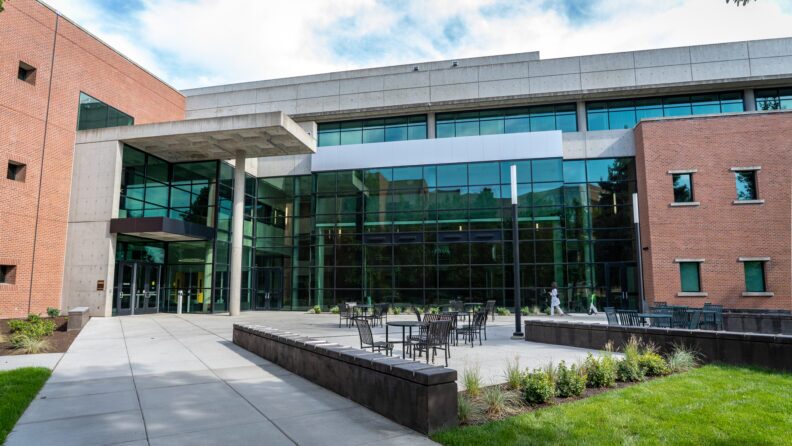
Washington State University Elson S. Floyd College of Medicine is a state-of-the-art medical institution located in Spokane, Washington, established with a clear mission to serve Washington communities and beyond by training future physicians committed to caring for rural, underserved, historically marginalized, and vulnerable populations.
Program Duration and Structure
The WSU Elson S. Floyd College of Medicine offers a 4-year MD program that integrates classroom learning with community-based clinical training from the very first year. This innovative approach sets the school apart by providing students with early clinical exposure while building a strong foundation in medical sciences.
Location and Campus Details
The medical school is based on the WSU Spokane campus, classified as an urban campus within a public institution. Students begin their pre-clinical years in Spokane and then transition to one of four regional medical campuses for clinical training:
- Spokane (main campus)
- Everett
- Tri-Cities
- Vancouver
This multi-campus approach allows students to experience healthcare delivery in diverse community settings across Washington state.
Accreditation Status
The Elson S. Floyd College of Medicine holds full accreditation from the Liaison Committee on Medical Education (LCME), the governing body for allopathic medical schools in the United States. The school achieved this significant milestone in June 2021, progressing through preliminary status (2016) and provisional status (2019) to full accreditation. This LCME accreditation ensures that graduates are eligible for medical licensure and residency training nationwide.
Class Size and Enrollment
The medical school enrolls 80 students per year in its MD program, maintaining a total student body of approximately 320 students across all four years. This relatively small class size allows for personalized attention and close faculty-student relationships.
Admission Requirements
Academic Prerequisites
Minimum Degree Requirements
The Washington State University Elson S. Floyd College of Medicine requires applicants to hold a bachelor’s degree from a regionally accredited college or university in the United States or Canada by July 15 of the matriculation year. The degree may be in any discipline, though students must complete specific prerequisite courses.
Required Courses
While specific prerequisite courses are mentioned in the admissions materials, students must complete all premedical course requirements by the matriculation date. The school accepts coursework from regionally accredited institutions, including online courses and community college classes.
GPA Requirements
Based on the current class statistics:
- Median Overall GPA: 3.73
- Mean Overall GPA: 3.64
- Mean BCPM (Biology, Chemistry, Physics, Math) GPA: 3.52
The medical school uses three combination thresholds of GPA and MCAT scores for admission consideration, with a minimum undergraduate GPA of 2.6 required to be eligible for review.
Standardized Testing
MCAT Requirements
- Median MCAT Score: 511
- Mean MCAT Score: 507.9
The medical school requires the Medical College Admission Test (MCAT) for admission. MCAT scores and GPAs are used primarily as screening criteria to determine eligibility for secondary applications, but the school emphasizes that these metrics are “masked” during the holistic review process.
Washington State Connection Requirements
Critical Requirement: WSU Elson S. Floyd College of Medicine has strict Washington state connection requirements. 93% of students are Washington residents, with the remaining 7% having strong ties to the state. The school requires applicants to demonstrate significant connections to Washington through:
- Washington residency
- Childhood address in Washington (between ages 8-18, minimum 6 years)
- Other defined ties to Washington state
Note: Out-of-state applicants are accepted only on a case-by-case basis and must demonstrate compelling reasons for their interest in serving Washington communities.
Extracurricular Activities & Experience Requirements
The admissions committee seeks applicants with:
Personal Attributes:
- Teamwork and collaboration
- Communication and interpersonal skills
- Intellectual excellence
- Ethical responsibility
- Leadership
- Resilience and adaptability
Life Experiences:
- Experience with rural and/or underserved communities
- Strong connection and commitment to Washington
- Clinical exposure
- Community service (non-healthcare)
- Experience beyond the classroom
Application Process & Timeline
Application System
WSU Elson S. Floyd College of Medicine participates in the American Medical College Application Service (AMCAS), the centralized application system for most U.S. medical schools.
Application Deadlines
- AMCAS Application Deadline: October 15, 11:59 p.m. EST (8:59 p.m. PST)
- Secondary Application Deadline: December 1, 5:00 p.m. PST
Required Documents
- AMCAS Application with all required sections completed
- Letters of Evaluation: Submitted through the AMCAS Letters of Evaluation/Recommendation Service
- Secondary Application: Sent only to applicants who meet initial screening requirements
- Official Transcripts: Processed through AMCAS
- MCAT Scores: Reported through AMCAS
Application Fees
- AMCAS Processing Fee: $175 for the first medical school designation, $47 for each additional school
- Secondary Application Fee: Information available upon receiving secondary application
The AAMC Fee Assistance Program is available for qualified applicants.
Interview Process
The medical school conducts interviews for selected candidates, with recent data showing:
- 2025 Entering Year: 318 applicants interviewed out of 636 complete applications
- Interview Format: The school has adapted to include virtual interview options
Interview invitations are extended based on holistic review of complete applications.
Admission Statistics & Success Rates
Overall Acceptance Rate
Based on recent application cycles:
- 2025 Entering Year (Class of 2029):
- Total Applicants: 636 complete applications
- Interviewed: 318 candidates
- Accepted: 151 students
- Estimated Acceptance Rate: ~12.6% overall, ~47.5% of interviewed candidates
Application Volume Trends
The school has maintained relatively stable application numbers:
- 2022: 666 applicants
- 2023: 655 applicants
- 2024: 628 applicants
- 2025: 636 applicants
Demographics of Admitted Students
The current student body (Classes 2026-2029) represents:
Geographic Distribution:
- 93% Washington residents
- 27 counties represented across Washington state
- 15.3% from rural childhood counties
Academic Diversity:
- 76.3% are multilingual speakers
- 35 languages spoken among students
- 13.4% hold advanced degrees
Socioeconomic Diversity:
- 29% are first-generation college graduates
- 37.2% come from low socioeconomic backgrounds
- 15.6% are underrepresented in medicine
Age and Experience:
- Average age: 26 years
- Age range: 19-47 years
- 50% are non-traditional students (25 and older)
- 5.6% have military service experience
Comparison Data
The WSU Elson S. Floyd College of Medicine is considered highly competitive among public medical schools, particularly for Washington residents. Its focus on mission-aligned candidates who want to serve underserved populations makes it unique compared to other state medical schools.
Tuition & Financial Information
Current Tuition Rates
2024-2025 Academic Year:
- In-State Tuition and Fees: $43,527 (from provided data)
- Updated Tuition and Fees: $43,242 (based on current reports)
- Out-of-State Tuition: Not applicable (school primarily serves Washington residents)
Total Cost of Attendance
2024-2025 Estimated Cost of Attendance: $71,688
Cost Breakdown:
- Tuition & Fees: $43,242
- Room & Board: $25,422
- Books: $600
- Other Expenses: $2,424
Additional Fees
Students at WSU Spokane may be responsible for:
- Health Fee: $130 per term
- Technology fees: Vary by program
- Other mandatory fees: As applicable to medical students
Financial Aid Options
Federal Financial Aid
- Students must complete the Free Application for Federal Student Aid (FAFSA)
- WSU FAFSA School Code: 003800
- FAFSA Priority Deadline: January 31 of matriculation year
- Access to federal loan programs for graduate students
Scholarships and Grants
- Need-based scholarships available through the College of Medicine
- Awards based on financial need and mission alignment
- FAFSA required for all scholarship considerations
- Additional scholarship opportunities through WSU and external organizations
Financial Education Support
The College of Medicine provides:
- One-on-one budget development meetings
- Group financial education workshops
- Ongoing financial counseling and support
Tuition Trends
The tuition at WSU College of Medicine has increased 5.71% over the past 3 years:
- 2022-2023: $40,908
- 2023-2024: $42,000 (+2.67%)
- 2024-2025: $43,242 (+2.96%)
Cost Comparison
Compared to other medical schools:
- Below average for public medical school tuition ($62,281 average)
- Significantly lower than private medical school average ($67,861)
- Competitive within the regional market for public medical education
Click To See Hundreds Of Consultants Who Can Mentor You:


Curriculum & Program Structure
Program Duration and Structure
The WSU Elson S. Floyd College of Medicine operates a 4-year MD program with a distinctive structure that integrates clinical training from the first year:
Pre-Clerkship Years (Years 1-2):
- Focus on foundational medical sciences
- Integrated clinical exposure from Year 1
- Campus visits: One week per term at assigned regional campus
- Clinical sessions: Half-day clinical sessions per term in Spokane
Clerkship Years (Years 3-4):
- Year 3: 46-week Longitudinal Integrated Clerkship (LIC)
- Year 4: Sub-internship, required rotations, and elective rotations
Educational Philosophy and Teaching Methods
The curriculum employs multiple educational approaches:
- Large-group classroom learning
- Case-based small-group learning
- Simulation-based clinical skills training
- Community-based clinical training
- Longitudinal patient relationships
Innovative Longitudinal Integrated Clerkship (LIC)
WSU is one of the few medical schools in the U.S. utilizing the Longitudinal Integrated Clerkship model for Year 3:
How LIC Works:
- Students experience multiple disciplines simultaneously throughout the year
- 46-week duration providing continuity with patients and preceptors
- Six clinical care domains covered:
- Care of the Ambulatory Adult Patient
- Care of the Hospitalized Patient
- Care of the Patient with Obstetric or Gynecologic Needs
- Care of the Patient with Psychiatric Needs
- Care of the Pediatric Patient
- Care of the Surgical Patient
Advantages of LIC:
- Meaningful patient relationships developed over time
- Continuity of care experience similar to practicing physicians
- Multi-specialty exposure throughout the year
- Community-based learning at regional campuses
Clinical Training Locations
Students complete clinical rotations at four regional medical campuses:
- WSU Spokane (main campus)
- Everett (Snohomish County)
- Tri-Cities (Benton and Franklin Counties)
- Vancouver (Clark County)
Special Programs and Tracks
- Original scholarship project required for all students
- Leadership certificate program
- Rural medicine exposure built into the curriculum
- Community-based medical education emphasis
Assessment Methods
- Pass/fail grading system during pre-clinical years
- Clinical evaluations during clerkship years
- Competency-based assessments
- OSCE examinations
Pre-Medical Preparation
Undergraduate Program Recommendations
Academic Preparation:
- Bachelor’s degree required in any discipline
- Strong science foundation through prerequisite courses
- GPA optimization: Aim for competitive GPAs (median 3.73)
- Community college coursework accepted for prerequisites
MCAT Preparation
Testing Strategy:
- Target Score: Aim for 507+ (current mean)
- Score Validity: Ensure scores are current for application cycle
- Retake Considerations: All scores reported to medical schools
- Test Timing: Allow adequate preparation time
Essential Experiences
Clinical Experience
- Direct patient care exposure preferred
- Healthcare settings variety: Hospitals, clinics, community health centers
- Long-term commitments valued over short-term experiences
Community Service
- Non-healthcare community service required
- Focus on underserved populations aligned with school mission
- Rural community exposure particularly valued
- Leadership roles in service activities preferred
Research Experience
- Research background beneficial but not required
- Variety of research types: Basic science, clinical, public health, community-based
- Publications not required but can strengthen applications
Washington State Connection
Critical for Admission:
- Establish residency in Washington state
- Develop community ties throughout the state
- Understand rural/underserved health challenges in Washington
- Demonstrate commitment to serving Washington communities long-term
Application Timeline Planning
Recommended Timeline:
- Junior Year: Begin MCAT preparation, strengthen clinical experiences
- Senior Year: Complete AMCAS application by October deadline
- Gap Year Considerations: Use productively to strengthen application components
Letters of Recommendation
- Submitted through AMCAS Letters of Evaluation Service
- Required for secondary application eligibility
- Multiple recommenders: Academic and clinical mentors preferred
Residency Preparation and Match Outcomes
Match Statistics
WSU Elson S. Floyd College of Medicine Match Results (Class of 2025):
- 100% Residency Attainment Rate (includes all residency placements to date)
- 40.6% Matched in Washington State
- 47% Matched in the Pacific Northwest (WA, OR, ID, AK)
- 46.4% Matched in Primary Care Specialties (Family Medicine, Internal Medicine, Med-Peds, OB/GYN)
Specialty Distribution
Recent graduates have matched into:
- Anesthesiology
- Dermatology
- Diagnostic Radiology
- Emergency Medicine
- Family Medicine
- General Surgery
- Internal Medicine
- Neurology
- Obstetrics and Gynecology
- Ophthalmology
- Orthopedic Surgery
- Pediatrics
- Psychiatry
- And many other specialties
Geographic Distribution
Class of 2025 Match Results:
- 19 Washington counties represented among graduates
- 19.7% grew up in rural counties
- 28.2% were first-generation college graduates
This data demonstrates the school’s success in training physicians who return to serve diverse communities throughout Washington state.
Frequently Asked Questions
Does WSU Elson S. Floyd College of Medicine look at extracurriculars?
Yes, absolutely. The school uses a holistic review process that heavily weighs extracurricular activities, particularly those demonstrating:
Experience with rural/underserved communities
Community service (non-healthcare)
Clinical exposure
Leadership experience
Connection and commitment to Washington state
What is WSU Elson S. Floyd College of Medicine’s average GPA and MCAT score?
Current Statistics:
Median GPA: 3.73 overall
Mean GPA: 3.64 overall, 3.52 BCPM
Median MCAT: 511
Mean MCAT: 507.9
How competitive is WSU Elson S. Floyd College of Medicine compared to other medical schools?
The school is highly competitive, especially for Washington residents, with an overall acceptance rate of approximately 12.6%. However, competitiveness is unique because the school prioritizes mission alignment over pure academic metrics.
Does WSU Elson S. Floyd College of Medicine prefer in-state applicants?
Yes, strongly. 93% of students are Washington residents, and the school has strict requirements for Washington state connections.