Last updated on January 9th, 2026 at 06:27 am
Program Overview & Institution Identity
Official Program Identity
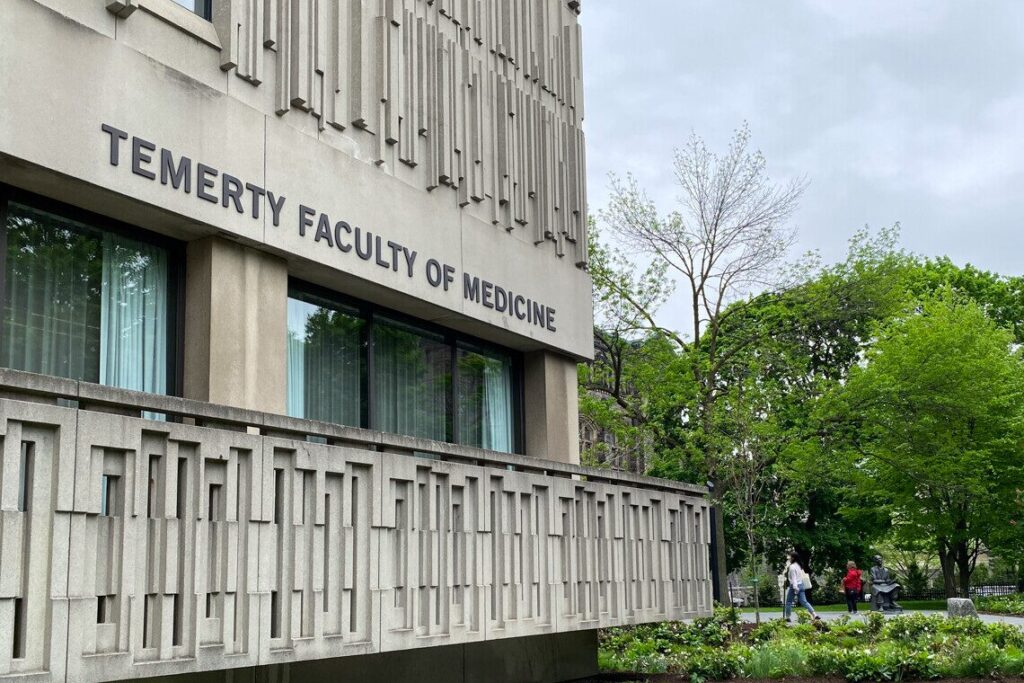
The University of Toronto Temerty Faculty of Medicine stands as Canada’s leading medical education institution and one of the most prestigious medical schools globally. Located in Toronto, Ontario, the Faculty operates across two campuses: the historic St. George campus in downtown Toronto and the modern Mississauga campus. The program offers a comprehensive 4-year Doctor of Medicine (MD) degree that prepares students for leadership in healthcare, research, and medical innovation.
Program Structure and Duration
The 4-year MD program follows a distinctive two-phase structure:
- Foundations (Years 1-2): 72 weeks of pre-clinical education combining laboratory, classroom, clinical, and community-based learning
- Clerkship (Years 3-4): 76 weeks of clinical rotations and workplace-based learning in hospitals and clinical settings
Location and Campus Details
St. George Campus (Downtown Toronto)
- Historic medical education campus in Canada’s largest city
- Access to major teaching hospitals and research centers
- Urban setting with extensive public transportation
Mississauga Campus
- Modern facilities serving the Greater Toronto Area
- Integrated clinical training opportunities
- Suburban campus environment
Accreditation and Recognition
The University of Toronto Temerty Faculty of Medicine holds full accreditation from the Committee on Accreditation of Canadian Medical Schools (CACMS) through 2028. The program is also recognized by the LCME for international equivalency. This accreditation ensures graduates are eligible for residency training in Canada and internationally recognized medical licensure.
Rankings and Recognition:
- #1 in Canada for Medicine (QS Rankings 2024)
- Top 3 globally for Clinical Medicine (2024 National Taiwan University Rankings)
- Top 3 Best Universities for Clinical Medicine (2024 U.S. News & World Report)
Admission Requirements
Academic Prerequisites
Minimum Degree Requirements
Undergraduate Applicants:
- Completion of at least three years of undergraduate study (15 full course equivalents) towards a Canadian university bachelor’s degree
- Requirements for Year 3 must be completed
Graduate Applicants:
- Completion of Master’s or PhD degree
- Lower GPA threshold due to advanced degree status
Internationally Educated Applicants:
- Completion of a non-medical bachelor’s degree equivalent to a four-year Canadian bachelor’s degree
- World Education Services (WES) transcript assessment required (except for US-educated applicants)
Required Courses
All applicants must complete:
- Two full-course equivalents (FCEs) in life sciences: Biology, Zoology, Anatomy, and medical sciences
- One FCE in social sciences, humanities, or languages: Sociology, Psychology, Literature, History, Philosophy, Gender Studies, Anthropology
Important Notes:
- Chemistry and Physics are classified as physical sciences, not life sciences
- No minimum grade requirement for prerequisite courses (must be passed)
- Psychology classification varies by institution
GPA Requirements
Minimum GPA Thresholds:
- Undergraduate Applicants: 3.6/4.0 on the OMSAS scale
- Graduate Applicants: 3.3/4.0 on the OMSAS scale (effective 2026-2027 admission cycle)
Competitive Statistics:
- Average accepted GPA: 3.94-3.95 (2023-2025 admission cycles)
- GPA Calculation: OMSAS uses specific conversion tables for different institutions
- Part-time Studies: Not included in GPA calculation but count toward prerequisites
Standardized Testing Requirements
MCAT Requirements
Minimum Score Requirements:
- 125 minimum in each of the four sections
- Allowance of 124 in one section only
- Validity Period: 5 years from application deadline
- Score Policy: Only most recent MCAT scores considered
Test Preparation Support:
- Fee Assistance Program available for Canadian students in financial need
- AFMC partnership provides financial support for eligible applicants
Important Notes:
- MCAT scores must be released to OMSAS each application cycle
- September MCAT scores acceptable if released before OMSAS deadline
- No total MCAT score used in assessment – section minimums only
Additional Testing
No CASPer requirement for University of Toronto Temerty Faculty of Medicine, unlike many other Canadian medical schools.
Extracurricular Activities & Experience Requirements
The University of Toronto uses a holistic evaluation system that considers:
Non-Academic Assessment Areas:
- Community involvement and service
- Leadership experience and potential
- Research experience and scholarly activity
- Clinical exposure and healthcare understanding
- Communication skills and interpersonal abilities
- Reliability, responsibility, and perseverance
- Creativity, innovation, and problem-solving
Evaluation Method:
- Comprehensive review of activities, essays, and references
- No specific minimum experience requirements
- Quality and depth of experiences matter more than quantity
- Strong preference for long-term commitments and meaningful involvement
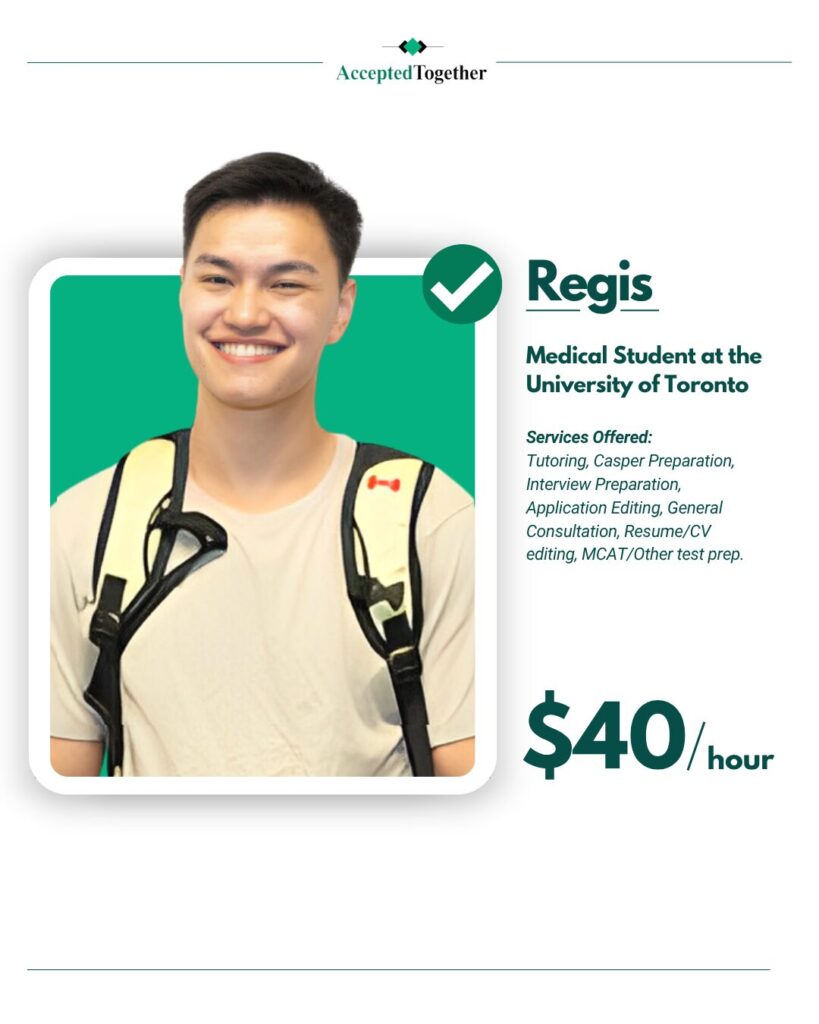
Click To See Hundreds Of Consultants Who Can Mentor You:
Application Process & Timeline
Application System
All applications must be submitted through OMSAS (Ontario Medical School Application Service), the centralized application system for Ontario medical schools.
Key Application Deadlines
- OMSAS Application Deadline: October 1, 2025
- Supporting Documents: Must be received by specified deadlines
- Reference Letters: Coordinated through OMSAS system
Required Documents
Academic Documentation:
- Official transcripts from all post-secondary institutions
- OMSAS transcript verification
- WES assessment (international applicants only)
Standardized Testing:
- MCAT scores released to OMSAS
- Score release must occur before application deadline
References:
- Letters of recommendation through OMSAS system
- Specific number and type requirements outlined in application
Written Components:
- Personal essays and statements
- Activity descriptions and explanations
- Academic explanation essays (optional, for extenuating circumstances)
Application Fees
Current application fees are available through the OMSAS system and are subject to annual updates.
Interview Process
Interview Selection:
- Approximately 700 candidates invited for interviews from 4,722+ applications (2025 statistics)
- Interview invitations typically sent in winter months
- Selection based on comprehensive academic and non-academic review
Interview Format:
Multiple formats may be used, including traditional interviews, Multiple Mini-Interviews (MMI), or panel interviews. Specific format details are provided to invited candidates.
Admission Statistics & Success Rates
Overall Competitiveness
2025 Admission Cycle Statistics:
- Total Applications: 4,722
- Interview Invitations: 700 (approximately 14.8% of applicants)
- First Year Class Size: 276 students
- Estimated Acceptance Rate: 5.8% overall acceptance rate
Historical Application Trends:
The number of applications has steadily increased from 3,553 in 2019 to 4,722 in 2025, demonstrating growing competitiveness.
Admitted Student Demographics
Gender Distribution (2025):
- Male: 37%
- Female: 58%
- Unreported: 5%
Academic Background Diversity (2025 Class):
- 3-year Bachelor’s/Non-degree: 54 students
- 4-year Bachelor’s: 162 students
- Graduate & Professional degrees: 87 students
University Background (2025):
- University of Toronto: 42 students
- McMaster University: 77 students
- Queen’s University: 52 students
- Western University: 49 students
- Other Ontario universities: 43 students
- McGill University: 12 students
- Other Canadian & International: 28 students
Academic Statistics
GPA Statistics:
- Average Accepted GPA: 3.94 (2025), 3.95 (2024), 3.93 (2023)
- Consistency: Accepted student GPAs remain remarkably consistent year-over-year
- Competitiveness: Successful applicants typically significantly exceed minimum requirements
Tuition & Financial Information
Current Tuition Rates (2025-2026 Academic Year)
St. George Campus
Ontario Residents:
- Tuition Fee (Year 1): $23,090
- Incidental + Ancillary Fees: $2,327
- Total Annual Cost: $25,417
Non-Ontario Canadian Students:
- Tuition Fee (Year 1): $27,510
- Incidental + Ancillary Fees: $2,327
- University Health Insurance: $756
- Total Annual Cost: $30,593
International Students:
- Tuition Fee (Year 1): $97,350
- Incidental + Ancillary Fees: $2,327
- University Health Insurance: $756
- Total Annual Cost: $100,433
Mississauga Campus
Ontario Residents:
- Tuition Fee (Year 1): $23,090
- Incidental + Ancillary Fees: $2,905
- Total Annual Cost: $25,995
Non-Ontario Canadian Students:
- Tuition Fee (Year 1): $27,510
- Incidental + Ancillary Fees: $2,905
- University Health Insurance: $756
- Total Annual Cost: $31,171
International Students:
- Tuition Fee (Year 1): $97,350
- Incidental + Ancillary Fees: $2,905
- University Health Insurance: $756
- Total Annual Cost: $101,011
Additional Cost Considerations
Estimated Additional First Year Expenses:
- Books and Equipment: $1,000
- Living Expenses (rent, food, other): $17,577
- Total Additional Costs: $18,577
Total Cost of Attendance (First Year):
- Ontario Residents (St. George): $43,994
- Ontario Residents (Mississauga): $44,572
- International Students (St. George): $119,010
- International Students (Mississauga): $119,588
Financial Aid Options
The University of Toronto follows a comprehensive Policy on Student Financial Support ensuring no admitted student is unable to complete the program due to financial constraints.
Financial Support Available:
- Government Student Assistance Programs (OSAP and provincial programs)
- Professional Student Line of Credit from financial institutions
- Faculty of Medicine grants and bursaries for demonstrated financial need
- MD Admission Bursaries for accepted students
- Merit-based scholarships and awards
Support Philosophy:
Most students utilize a combination of government loans, professional lines of credit, and faculty financial aid. The school provides financial literacy modules and counseling to help students manage educational debt effectively.
Curriculum & Program Structure
Program Duration and Educational Philosophy
The 4-year MD program follows an innovative curriculum structure designed to prepare students for 21st-century medical practice through integrated, competency-based education.
Pre-Clinical Years (Foundations – Years 1 & 2)
Curriculum Design
Duration: 72 weeks of structured learning
Format: Integration of laboratory, classroom, clinical, and community settings
Assessment: Weekly objectives and assessments building toward program competencies
Educational Approaches:
- Problem-Based Learning (PBL)
- Team-Based Learning (TBL)
- Technology-enhanced learning and simulation
- Early clinical exposure and community engagement
Key Features:
- Competency-based progression system
- Programmatic assessment with frequent, low-stakes evaluations
- Emphasis on professional development and self-directed learning
- Integration of basic sciences with clinical applications
Clinical Years (Clerkship – Years 3 & 4)
Year 3 Structure (52 weeks)
Transition to Clerkship (TTC): 2 weeks
- Clinical skills development
- Teamwork and patient safety training
- Medical-legal aspects and professionalism
- Academy system orientation
Core Rotations (Two 24-week blocks):
Block 1:
- Surgery: 8 weeks
- Internal Medicine: 8 weeks
- Emergency Medicine: 4 weeks
- Anesthesia: 2 weeks
- Ophthalmology: 1 week
- Otolaryngology: 1 week
Block 2:
- Psychiatry: 6 weeks
- Pediatrics: 6 weeks
- Obstetrics & Gynecology: 6 weeks
- Family & Community Medicine: 6 weeks
Additional Requirements:
- Home School Elective: 2 weeks
- Clerkship OSCE (mandatory for graduation)
Year 4 Structure (24 weeks)
Electives Course (ELV410Y): 14 weeks
- Specialized area exposure
- Career exploration opportunities
- Research and scholarly projects
- Advanced clinical training
Assessment and Evaluation
Assessment Philosophy:
- Programmatic Assessment: Comprehensive evaluation across diverse competencies
- Competency-Based Progression: Focus on achieving defined learning outcomes
- Formative Feedback: Regular, constructive feedback for continuous improvement
Key Assessments:
- Clerkship OSCE (required for graduation)
- Clinical performance evaluations
- Written examinations and assessments
- Portfolio-based assessment
- Professional behavior evaluations
Special Programs and Opportunities
Combined Degree Options
MD/MBA Program: Integration of medical education with business administration
MD/PhD Program: Research-intensive pathway for future physician-scientists
Academy System
Students are assigned to one of several academies providing:
- Mentorship and career guidance
- Professional development opportunities
- Peer support and networking
- Longitudinal relationships with faculty
Pre-Medical Preparation
Undergraduate Program Recommendations
Academic Planning
Optimal Course Selection:
- Complete prerequisite courses early to allow MCAT preparation time
- Maintain strong performance across all coursework, not just prerequisites
- Consider diverse academic interests – no preference for specific majors
- Balance science requirements with humanities and social sciences
GPA Optimization Strategies:
- Understand OMSAS GPA calculation methods
- Focus on full-time study when possible (part-time courses excluded from GPA)
- Plan course load to maintain academic excellence
- Consider academic explanation essays for legitimate extenuating circumstances
Clinical Experience Development
Types of Valued Experience:
- Hospital volunteering and patient interaction
- Healthcare shadowing opportunities
- Community health initiatives
- Global health experiences
- Allied health profession exposure
Quality vs. Quantity:
- Long-term commitments preferred over numerous brief experiences
- Depth of involvement and learning more important than hours logged
- Meaningful reflection on experiences essential
- Understanding of healthcare challenges and complexities
Research Experience
Research Opportunities:
- Basic science research in university labs
- Clinical research with healthcare providers
- Public health and epidemiological studies
- Health services research
- Humanities and social science research related to health
Publication Expectations:
- Publications not required but can strengthen applications
- Quality and meaningful contribution more important than quantity
- Presentation at conferences and scholarly meetings valued
- Research awards and recognition beneficial
Extracurricular Development
Leadership Opportunities:
- Student government and organization leadership
- Community service project coordination
- Healthcare advocacy and policy work
- Mentoring and teaching experiences
Service and Volunteering:
- Sustained community service commitments
- Healthcare-related volunteer work
- Social justice and equity initiatives
- International service experiences
Standardized Test Preparation
MCAT Strategy:
- Plan 3-6 months of dedicated preparation time
- Understand that retakes are allowed but only most recent scores considered
- Utilize fee assistance programs if eligible
- Focus on achieving consistent performance across all sections
Application Timeline Planning
Junior Year (Year 3):
- Complete prerequisite courses
- Begin MCAT preparation
- Develop meaningful extracurricular commitments
- Establish relationships with potential references
Senior Year (Year 4) or Gap Year:
- Complete MCAT by spring/summer
- Finalize application materials
- Submit OMSAS application by October 1
- Continue meaningful activities through application cycle
Gap Year Considerations:
- Productive gap years can strengthen applications
- Research, clinical work, or teaching experiences valuable
- Travel and personal development acceptable with reflection
- Maintain academic engagement and healthcare exposure
Frequently Asked Questions
What makes University of Toronto Temerty Faculty of Medicine different from other medical schools?
The University of Toronto offers unparalleled access to research opportunities, diverse clinical training sites across Canada’s largest city, world-renowned faculty, and a comprehensive academy system for mentorship. The program’s integration with 14 fully affiliated teaching hospitals provides exceptional clinical training diversity.
How competitive is University of Toronto Temerty Faculty of Medicine compared to other Canadian medical schools?
With approximately 4,700+ applications for 276 positions, U of T is among Canada’s most competitive medical schools. The acceptance rate of approximately 5.8% reflects the high caliber of applicants and the program’s selectivity.