Last updated on January 9th, 2026 at 06:27 am
Program Overview & Institution Identity
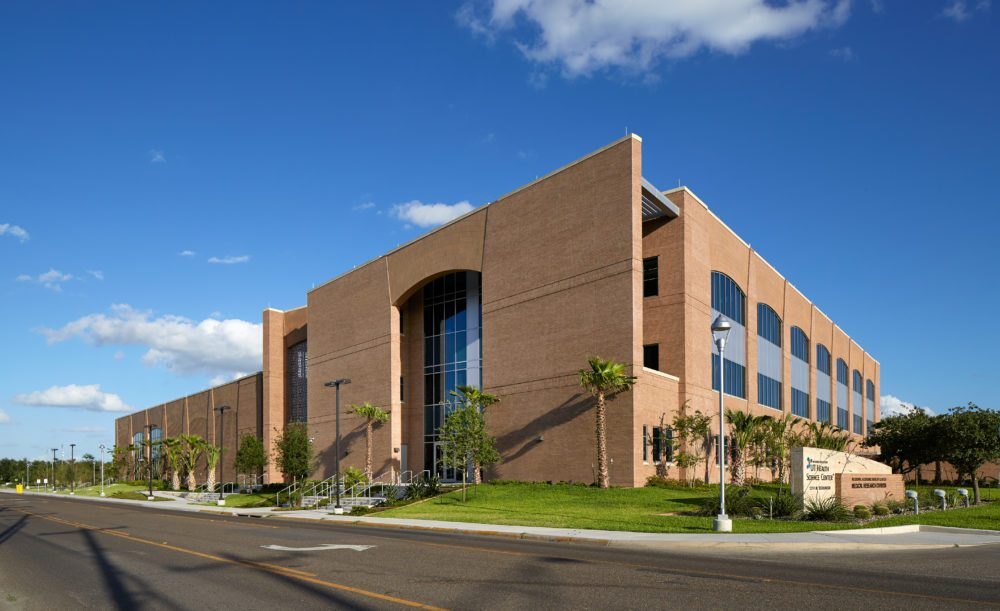
The University of Texas Rio Grande Valley School of Medicine (UTRGV SOM) is a dynamic, LCME-accredited public medical school located in Edinburg, Texas. Established as part of the University of Texas Rio Grande Valley, this innovative institution serves the unique healthcare needs of the Rio Grande Valley and beyond through its distinctive approach to medical education.
Official Program Details
- Full Program Name: University of Texas Rio Grande Valley School of Medicine
- Program Duration: 4-year MD program
- Location: Edinburg, Texas (Suburban Campus)
- Institution Type: Public Medical School
- Accreditation: LCME (Liaison Committee on Medical Education) accredited
The UTRGV School of Medicine distinguishes itself through its strategic location at the US-Mexico border, providing students with unique opportunities to experience bicultural medicine and address healthcare disparities in underserved communities. The school’s mission focuses on educating diverse physicians dedicated to serving all medical disciplines while advancing medical knowledge through research and community engagement.
Unique Program Features
- Border Medicine Focus: Leverages unique geographic location for cross-cultural healthcare education
- Community Service Emphasis: Strong commitment to serving underserved populations
- Interprofessional Education: Integration with nursing, pharmacy, physician assistant, and other healthcare programs
- Early Clinical Exposure: Students participate in patient interactions from year one through the Student-Run Free Clinic and community outreach programs
Admission Requirements
Academic Prerequisites
Minimum Degree Requirements:
- Minimum of 90 semester credit hours (or 135 quarter hours) from an accredited US college or university
- All prerequisite courses must be completed with a grade of “C” or better
- Online courses generally not accepted unless special permission is granted
- Pass/Fail or Credit/No Credit grading does not fulfill requirements
Required Prerequisite Courses:
- English: 6 semester hours of college English
- Biological Sciences: 14 semester hours (12 lecture + 2 lab)
- Biochemistry: 3 semester hours (advanced level)
- General Chemistry: 8 semester hours (6 lecture + 2 lab)
- Organic Chemistry: 8 semester hours (6 lecture + 2 lab)
- Physics: 8 semester hours (6 lecture + 2 lab)
- Statistics: 3 semester hours (math/statistics department required)
GPA Requirements:
- Minimum Overall GPA: 3.0
- Minimum Science GPA: 3.2
- Median Admitted Student GPA: 3.92
- UTRGV SOM uses holistic review, and applications below minimum requirements may receive special committee evaluation
Standardized Testing Requirements
MCAT Requirements:
- Median MCAT Score: 510
- Minimum Threshold: MCAT scores above 50th percentile with each section ≥122
- Special Review: Scores below 50th percentile forwarded to special admissions subcommittee
- Exclusion: MCAT scores below 495 not considered
- Validity Period: 3 years from test date
Letters of Recommendation
- Minimum Required: 3 evaluations or Health Professions Advisory packet
- Preferred Sources: Professors, health professions advisers
- Alternative Sources: Employment supervisors (if professor letters unavailable)
Additional Requirements
- Demonstrated clinical experience through shadowing or healthcare exposure
- Community service and leadership experience
- Background check required for accepted students
- Criminal history evaluation (misdemeanors reviewed by committee; felony convictions disqualify)
Click To See Hundreds Of Consultants Who Can Mentor You:
Application Process & Timeline
Application System
UTRGV School of Medicine participates in TMDSAS (Texas Medical and Dental Schools Application Service), not AMCAS.
Key Timeline:
- Application Opens: May 1st at 8:00 AM Central Time
- Application Deadline: November 1, 2025
- Secondary Application: Required for selected applicants
Required Application Components:
- TMDSAS primary application and fee
- UTRGV SOM secondary application and fee (for selected applicants)
- Official MCAT scores
- Letters of recommendation
- Official transcripts (upon acceptance)
Interview Process
- Format: Interview invitations issued by email upon Admissions Committee recommendation
- Timing: Invitations sent following application review
- Components: Traditional interview format with holistic evaluation
Interview Statistics:
- Class of 2026: 510 interviews extended from 4,738 total applications
- Interview Rate: Approximately 10.8% of applicants receive interviews
Admission Statistics & Success Rates
Overall Competitiveness
Based on recent class data, UTRGV School of Medicine maintains moderate competitiveness among Texas medical schools.
Class of 2026 Statistics:
- Total Applications: 4,738
- Interviews Extended: 510
- Students Matriculated: 55
- Overall Acceptance Rate: Approximately 1.2% of total applicants
Academic Statistics of Admitted Students
- Median MCAT: 510
- Median GPA: 3.92
- Class Size: 55 students per year
Geographic and Demographic Profile
Class of 2026 Demographics:
- Texas Residents: 53 students (96%)
- Out-of-State: 2 students (4%)
- Rio Grande Valley: 55% of class
- Gender Distribution: Varies by year (historically diverse)
Diversity Statistics:
- Hispanic: 58%
- Caucasian: 11%
- Asian/Indian: 15%
- African American: 9%
Notable Undergraduate Institutions Represented
Recent classes have included graduates from:
- University of Texas at Austin
- Texas A&M University systems
- Baylor University
- Cornell University
- University of California Berkeley
- University of Washington
- Rice University
Tuition & Financial Information
Tuition Rates (2025-2026)
- Texas Residents: $21,532 per year
- Out-of-State Students: $34,632 per year
- International Students: $34,632 per year
Total Cost Analysis
4-Year Program Costs:
- Texas Residents: Approximately $86,128 (tuition only)
- Out-of-State Students: Approximately $138,528 (tuition only)
Additional Fees and Expenses
- Technology fees
- Student services fees
- Health insurance
- Laboratory fees
- Clinical rotation expenses
- Living expenses in Edinburg, TX area
Financial Aid Opportunities
Scholarship Programs:
- Merit-based scholarships available
- Need-based financial aid
- External scholarship opportunities through:
- Texas Medical Association (TMA)
- Star Scholarship Fund
- Various specialty medical associations
Military Benefits:
- Post 9/11 GI Bill® accepted
- Hazlewood Act benefits (Texas veterans)
- Health Professions Scholarship Program (Armed Forces)
Federal Aid:
- Federal loan programs available
- Work-study opportunities
Curriculum & Program Structure
Four-Year Program Overview
The UTRGV School of Medicine follows an integrated 4-year curriculum divided into two distinct phases:
Pre-Clerkship Years (Years 1-2):
- Focus on foundational medical sciences
- Integration of basic science disciplines, clinical skills, and professional development
- Early clinical exposure through community programs
Clerkship Years (Years 3-4):
- Core clinical rotations
- Sub-internships
- Elective opportunities
- Residency preparation
Year-by-Year Curriculum Structure
Year 1 Curriculum Blocks:
- Foundations of Medicine (4 weeks)
- Molecules to Medicine (8-9 weeks)
- Attack & Defense (9-10 weeks)
- Cardiovascular & Respiratory (11-12 weeks)
- Clinical Skills training throughout
- Language of Medicine integration
- Health Systems Science
Year 2 Curriculum Blocks:
- Renal & Reproduction (5-7 weeks)
- Musculoskeletal & Dermatology (7 weeks)
- Digestive Health & Nutrition (8 weeks)
- Mind, Brain & Behavior (10 weeks)
- Endocrine systems
- USMLE Step 1 preparation period
Year 3 Core Clerkships:
- Internal Medicine (8 weeks)
- Surgery (8 weeks)
- Obstetrics & Gynecology (8 weeks)
- Pediatrics (8 weeks)
- Psychiatry (8 weeks)
- Family Medicine (4 weeks)
- Emergency Medicine (4 weeks)
- Clinical Performance Exam (CPX)
Year 4 Advanced Training:
- Sub-Internships: Home (4 weeks) and Away (4 weeks)
- Emergency Medicine rotation (4 weeks)
- Electives and research opportunities (28 weeks)
- Graduation readiness preparation (2 weeks)
Educational Philosophy and Methods
- Problem-Based Learning (PBL) integration
- Team-Based Learning (TBL) approaches
- Simulation-based training
- Community-based learning
- Interprofessional education
Special Program Features
- Underserved Medicine Track: Focus on healthcare disparities and population health
- Research Opportunities: Integration throughout curriculum
- Border Medicine: Unique bicultural healthcare experiences
- Community Engagement: Student-Run Free Clinic, Colonia UniMovil clinics
Pre-Medical Preparation
Recommended Academic Planning
Optimal Undergraduate Majors:
While UTRGV SOM accepts students from diverse academic backgrounds, successful applicants commonly major in:
- Biological Sciences
- Chemistry/Biochemistry
- Public Health
- Liberal Arts with science prerequisites
- Engineering (with medical prerequisites)
Academic Timeline Recommendations:
- Freshman/Sophomore Years: Complete general chemistry, biology, physics, English
- Junior Year: Organic chemistry, biochemistry, statistics, MCAT preparation
- Senior Year: Complete any remaining prerequisites, apply during TMDSAS cycle
Clinical Experience Requirements
While no specific minimum is required, competitive applicants typically have:
- Physician Shadowing: Multiple specialties, including primary care
- Clinical Volunteering: Hospital or clinic-based experience
- Healthcare Employment: EMT, CNA, medical scribe, or similar roles
- Quality over Quantity: Meaningful, sustained engagement preferred
Research Experience
- Not Required: UTRGV SOM does not mandate research experience
- Valued Component: Research demonstrates academic curiosity and analytical skills
- Types Valued: Basic science, clinical, public health, or community-based research
- Publication Benefits: Publications enhance application but not required
Community Service and Leadership
- Community Service: Emphasis on serving underserved populations aligns with school mission
- Leadership Roles: Student organizations, community groups, healthcare-related leadership
- Cultural Competency: Experience with diverse populations, especially Hispanic/Latino communities
- Language Skills: Spanish proficiency beneficial but not required
MCAT Preparation Strategy
- Target Score: Aim for 510+ to be competitive (school’s median)
- Preparation Timeline: 3-6 months dedicated study recommended
- Retake Considerations: Scores below 500 may warrant retaking
- Section Balance: Ensure no section below 122
Gap Year Considerations
Productive Gap Year Activities:
- Clinical experience enhancement
- Research projects
- Community service
- Graduate coursework (if GPA improvement needed)
- Healthcare-related employment
Frequently Asked Questions
Does UTRGV School of Medicine look at extracurriculars?
Yes, UTRGV SOM uses holistic review and strongly values extracurricular activities, particularly those demonstrating commitment to community service, leadership, and healthcare exposure. The school especially values experiences with underserved populations.
What is UTRGV School of Medicine’s average GPA and MCAT score?
The median GPA for admitted students is 3.92, and the median MCAT score is 510. Minimum requirements are 3.0 overall GPA and 3.2 science GPA, with MCAT scores above the 50th percentile.
How competitive is UTRGV School of Medicine compared to other medical schools?
UTRGV SOM is moderately competitive among Texas medical schools. With approximately 4,738 applications for 55 positions, the acceptance rate is around 1.2%, making it competitive but not among the most selective schools in Texas.
Does UTRGV School of Medicine prefer Texas applicants?
Yes, UTRGV strongly prefers Texas residents. The Class of 2026 includes 96% Texas residents and only 4% out-of-state students. Out-of-state applicants face significantly more competition for very limited spots.
What makes UTRGV School of Medicine different from other medical schools?
UTRGV’s unique features include its location at the US-Mexico border, strong emphasis on serving underserved populations, bicultural medical education opportunities, early clinical exposure through community programs, and integration with other health professions.
When should I apply to UTRGV School of Medicine?
Applications open May 1st through TMDSAS, with a deadline of November 1st. Early submission is recommended as the school uses rolling admissions and interviews are offered throughout the cycle.
Does UTRGV School of Medicine accept international students?
Yes, but in very limited numbers. International students pay out-of-state tuition ($34,632 per year) and face extremely competitive admission odds given the school’s preference for Texas residents.
What clinical experience do I need for UTRGV School of Medicine?
While no specific minimum is required, competitive applicants typically have substantial clinical exposure through physician shadowing, healthcare volunteering, or employment in healthcare settings. Quality and reflection on experiences matter more than quantity.
Does UTRGV School of Medicine require research experience?
No, research experience is not required but is valued as part of holistic review. Research demonstrates academic curiosity and analytical skills, whether in basic science, clinical, or community-based settings.
How many letters of recommendation does UTRGV School of Medicine require?
A minimum of three letters of evaluation or a Health Professions Advisory packet are required. Letters from professors are preferred, though employment supervisors may write letters if professor letters are unavailable.
What is UTRGV School of Medicine’s curriculum like?
UTRGV follows a 4-year integrated curriculum with 2 pre-clerkship years focusing on foundational sciences and 2 clerkship years emphasizing clinical training. The curriculum emphasizes early clinical exposure, community service, and interprofessional education.
Where do UTRGV School of Medicine graduates match for residency?
As a relatively new school (first class graduated recently), comprehensive residency match data is still developing. The school prepares students for residency through dedicated preparation programs and clinical training partnerships throughout the Rio Grande Valley.
How much does UTRGV School of Medicine cost?
Annual tuition is $21,532 for Texas residents and $34,632 for out-of-state students. Over four years, total tuition costs approximately $86,128 for residents and $138,528 for non-residents, plus living expenses and fees.
What financial aid is available at UTRGV School of Medicine?
The school offers merit and need-based scholarships, accepts federal loans, and recognizes military benefits including GI Bill and Hazlewood Act. A dedicated Associate Director of Financial Aid assists students with funding options.
Does UTRGV School of Medicine offer interviews to all qualified applicants?
No, interviews are selective. From 4,738 applications for the Class of 2026, only 510 candidates (approximately 10.8%) received interview invitations. Meeting minimum requirements does not guarantee an interview invitation.
This guide provides comprehensive information about UTRGV School of Medicine admissions based on official school data and recent class statistics. Prospective applicants should verify current requirements and deadlines directly with the school’s admissions office.