
Last updated on January 9th, 2026 at 06:27 am
Program Overview & Institution Identity
Official Program Name and Recognition
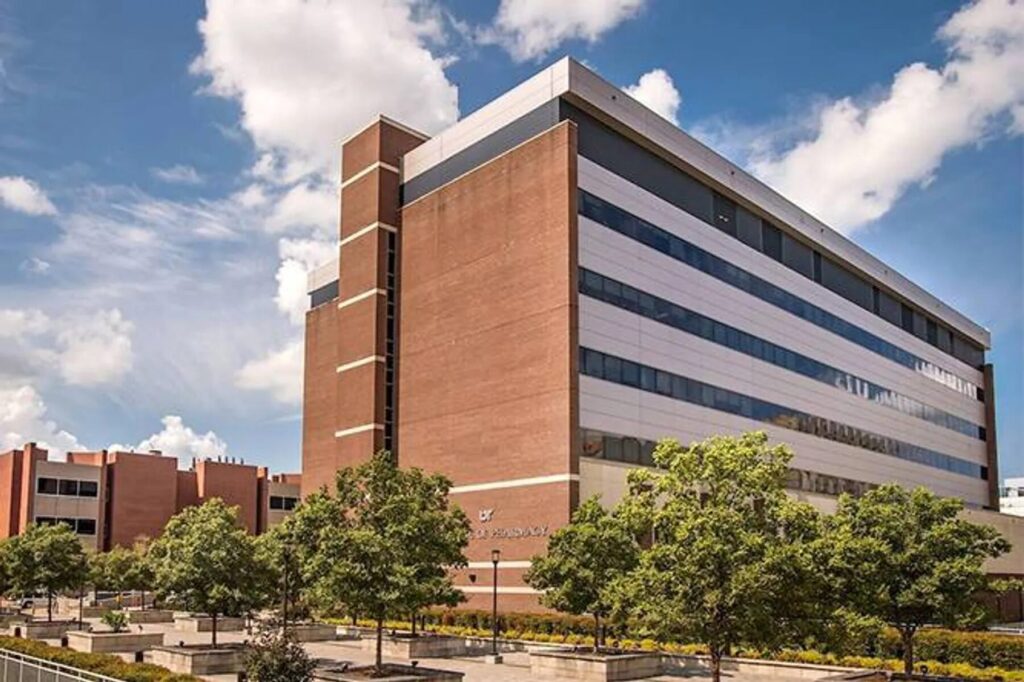
The University of Tennessee Health Science Center College of Medicine stands as Tennessee’s premier public medical school, serving the state and region through comprehensive medical education across multiple campuses. Founded as part of the University of Tennessee Health Science Center, this LCME-accredited institution has been training physicians for over a century.
Program Duration and Structure
The UTHSC College of Medicine offers a traditional 4-year MD program designed to prepare students for the full spectrum of medical practice. The program follows a conventional structure with two years of pre-clinical coursework followed by two years of clinical rotations. Additionally, the school offers a unique 3-year MD program for select students, as well as combined degree options including MD/PhD, MD/MPH, and MD/MBA programs.
Location and Campus Details
Located in Memphis, Tennessee, the UTHSC College of Medicine operates as part of a comprehensive health science center in an urban setting. The institution extends its reach throughout Tennessee with additional clinical training sites in:
- Chattanooga – Offering clinical rotations and residency programs
- Knoxville – Graduate School of Medicine providing specialized training
- Nashville – Clinical affiliations and graduate medical education
Accreditation Status
The University of Tennessee Health Science Center College of Medicine is fully accredited by the Liaison Committee on Medical Education (LCME), the national accrediting body for MD-granting medical schools in the United States. This accreditation ensures graduates are eligible to take the USMLE examinations and apply for residency positions throughout the United States.
Ranking and Recognition
As Tennessee’s flagship public medical school, UTHSC College of Medicine holds significant recognition in medical education. The institution is particularly noted for its strong primary care training, research programs, and commitment to serving rural and underserved populations throughout Tennessee and the surrounding region.
Admission Requirements
Academic Prerequisites
Minimum Degree Requirements
Applicants must have completed a bachelor’s degree from an accredited college or university in the United States or Canada prior to matriculation. There is no preference for specific undergraduate majors, and the school welcomes applicants from diverse academic backgrounds.
Required Courses
The following coursework must be completed with laboratory components where specified:
Chemistry (16 semester hours total):
- 8 semester hours of organic chemistry
- 8 semester hours of inorganic chemistry (may include analytical chemistry)
- All courses must be standard college-level courses with full laboratory facilities
Physics (8 semester hours):
- Must include laboratory credits
- Must adequately cover mechanics, heat, light, sound, electricity, and magnetism
- Survey-type courses do not satisfy this requirement
Biology (8 semester hours):
- Modern concepts of mammalian biology with laboratory
- Botany courses do not meet this requirement
- Strongly encouraged: additional upper-level courses in biochemistry, cell biology, comparative anatomy, embryology, genetics, histology, immunology, mammalian physiology, or microbiology
English/Literature (6 semester hours):
- Introductory freshman English meets the requirement
- Emphasizes facility in both oral and written English communication
GPA Requirements
- Minimum GPA: While no specific minimum is published, successful applicants typically demonstrate strong academic performance
- Average Total GPA: Admitted students average 3.83
- Average Science GPA: Admitted students average 3.79
- Competitive Range: Students should aim for GPAs well above 3.5 to be competitive
Standardized Testing
MCAT Requirements
- Required: All applicants must submit valid MCAT scores
- Average MCAT: Admitted students score an average of 512
- MCAT Range: Admitted students typically score between 501-525
- Section Averages for Admitted Students:
- Chemical and Physical Foundations of Biological Systems: 128
- Critical Analysis and Reasoning Skills: 127
- Biological and Biochemical Foundations of Living Systems: 128
- Psychological, Social, and Biological Foundations of Behavior: 129
- Validity Period: MCAT scores for the 2026 admissions cycle from all test dates through September 2025 are accepted
- Retake Policy: Multiple MCAT attempts are accepted; the school considers all scores
Additional Testing
No additional standardized tests (such as CASPer) are currently required for admission to UTHSC College of Medicine.
Extracurricular Activities & Experience Requirements
The admissions committee evaluates applications holistically, assessing core areas including:
Clinical Shadowing Experience:
- Direct observation of physicians in clinical settings
- Demonstrates understanding of medical practice
- No specific minimum hours required, but substantial exposure expected
Community Service:
- Volunteer work demonstrating commitment to serving others
- Preference for sustained, meaningful engagement over short-term activities
Research Experience:
- Scientific research in any field (basic science, clinical, public health, social sciences)
- Publications not required but can strengthen applications
- Demonstrates scholarly inquiry and analytical thinking
Oral Communication:
- Leadership roles, presentations, teaching experiences
- Demonstrates ability to communicate effectively with patients and colleagues
Other Extracurricular Activities:
- Employment, athletics, arts, cultural activities
- Demonstrates well-rounded interests and time management skills
Residency Requirements
The University of Tennessee Health Science Center College of Medicine gives priority to Tennessee residents. While out-of-state applicants are considered, only approximately 10% of each class consists of non-residents. When out-of-state applicants are admitted, preference is given to children of University of Tennessee alumni.
Eligibility Requirements:
- Must be a United States citizen or permanent resident (green card holder) at time of application
- International students are not eligible for admission
Click To See Hundreds Of Consultants Who Can Mentor You:

Application Process & Timeline
Application System
UTHSC College of Medicine participates in the American Medical College Application Service (AMCAS). All primary applications must be submitted through this centralized system.
Key Dates and Deadlines
2026 Admissions Cycle Timeline:
- Primary Application Opens: Late June 2025
- Application Deadline: November 15, 2025, by 11:59 PM EST
- Secondary Application: Invitations sent to qualified candidates after primary application review
- Interview Invitations: Sent beginning in fall 2025
- Interview Season: October 2025 through March 2026
Important Notes:
- No Early Decision Program: UTHSC does not offer an early decision option
- Rolling Admissions: Applications are reviewed as completed; earlier submission is advantageous
Required Documents
Primary Application (AMCAS):
- Official transcripts from all colleges/universities attended
- MCAT scores
- Personal statement
- Work and activities descriptions
- Course descriptions for prerequisite courses
Secondary Application:
- School-specific essays and questions
- Additional demographic and background information
- Typically due within 2-4 weeks of invitation
Letters of Recommendation:
- Letters through AMCAS letter service
- Typically 3-4 letters recommended
- Should include academic references and clinical/research mentors
Interview Process
Format: Virtual interviews continue to be offered throughout the 2026 admissions cycle
Structure: Multiple Mini Interview (MMI) format or traditional panel interviews
Timeline: Interview invitations sent beginning in October 2025
Statistics: Approximately 416 interviews are conducted from over 2,600 applications
Application Fees
- AMCAS Primary Application: $170 for first school, $42 for each additional school
- Secondary Application Fee: Contact admissions office for current fee structure
Admission Statistics & Success Rates
Overall Acceptance Rate
With approximately 2,628 applications for 175 seats, UTHSC College of Medicine has an acceptance rate of approximately 6.7%, making it highly competitive among medical schools nationally.
Application Volume and Trends
2024 Admissions Cycle Statistics:
- Total Applications: 2,628
- Interviews Offered: 416 (15.8% of applicants)
- Offers Made: 257
- Matriculated Students: 175
- Yield Rate: Approximately 68%
Class Size and Demographics
Class of 2029 Profile:
- Total Enrollment: 175 students
- Gender Distribution: 49% female, 51% male
- Average Age: 24 years
- Tennessee Residents: 159 (91%)
- Out-of-State Students: 16 (9%)
Geographic Distribution:
- In-State (Tennessee): 666 applicants, 159 matriculants
- Out-of-State: 1,962 applicants, 16 matriculants
Academic Statistics
GPA Statistics:
- Matriculants Average Total GPA: 3.83
- Matriculants Average Science GPA: 3.79
- All Applicants Average Total GPA: 3.61
- All Applicants Average Science GPA: 3.49
MCAT Statistics:
- Matriculants Average MCAT: 512
- All Applicants Average MCAT: 511
- Score Range: 501 (low) to 525 (high)
Diversity and Background Statistics
2024 Matriculants:
- First-Generation College Students: 11 students
- Rural Background: 15 students
- Low Socioeconomic Status: 24 students
- Advanced Degrees: 16 students
Experience Statistics:
- Average Research Hours: 110,615 hours (cumulative for class)
- Average Service Hours: 65,048 hours (cumulative for class)
Undergraduate Institutions Represented
Top Feeder Schools:
- University of Tennessee Knoxville
- Rhodes College
- Vanderbilt University
- The University of Alabama
- The University of Memphis
Total Undergraduate Institutions: 61 primary undergraduate institutions represented
Top Five Undergraduate Majors:
- Biology
- Biochemistry
- Neuroscience
- Chemistry
- Other diverse majors
Tuition & Financial Information
Current Tuition Rates by Residency Status
2024-2025 Academic Year Tuition:
- Tennessee Residents: $38,102 per year
- Out-of-State Students: $56,154 per year
- Out-of-State Surcharge: $18,051 per year
Total Cost of Attendance
Estimated Annual Cost of Attendance (2024-2025):
First Year (MD1) – Tennessee Residents:
- Tuition: $36,101
- Fees: $5,438
- Housing & Food: $15,835
- Books & Supplies: $2,245
- Transportation: $3,230
- Personal/Miscellaneous: $10,298
- Loan Fees: $456
- Total: $73,603
First Year (MD1) – Out-of-State:
- Total with Out-of-State Surcharge: $91,654
Four-Year Program Total Cost:
- Tennessee Residents: Approximately $294,000-$320,000
- Out-of-State Students: Approximately $366,000-$400,000
Cost Breakdown by Year
Costs increase annually due to clinical activities and board examination fees:
- MD1: $73,603 (residents)
- MD2: $77,885 (residents) – includes board exam fees
- MD3: $81,997 (residents) – includes Step 1 and clinical expenses
- MD4: $80,167 (residents)
Financial Aid Options
Federal Financial Aid:
- Unsubsidized Stafford Loans: Available up to federal limits
- Graduate PLUS Loans: Available for additional funding needs
- Maximum Annual Loan Funding: $42,722 to $47,167 for medical students
Institutional Scholarships:
- Merit-Based Scholarships: Awarded to incoming students based on academic excellence
- Need-Based Grants: Available to students demonstrating financial need
- Renewal Requirements: Based on academic performance, professionalism, and leadership
Application Process:
- FAFSA Required: Use school code 006725 for UTHSC Memphis
- Scholarship Survey: Complete annual survey in Banner System
- No Separate Application: Merit scholarships awarded based on Admissions Committee nomination
Living Expenses in Memphis
Estimated Monthly Living Costs:
- Housing: $800-$1,500 (depending on location and housing type)
- Food: $300-$500
- Transportation: $200-$400
- Personal Expenses: $300-$500
Housing Options:
- On-campus housing available
- Off-campus apartments near medical center
- Shared housing options popular among students
Curriculum & Program Structure
Program Duration and Structure
The University of Tennessee Health Science Center College of Medicine offers a traditional 4-year MD program with a well-integrated curriculum designed to prepare students for the full spectrum of medical practice.
Program Options:
- Traditional 4-Year MD Program: Standard medical education pathway
- 3-Year MD Program: Accelerated track for select students
- Combined Degree Programs: MD/PhD, MD/MPH, MD/MBA options available
Educational Philosophy and Teaching Methods
The curriculum integrates multiple educational approaches:
- Problem-Based Learning (PBL): Small group, case-based learning
- Traditional Lectures: Foundation science instruction
- Clinical Skills Training: Simulation-based learning and patient encounters
- Research Integration: Scholarly activity requirements throughout curriculum
Pre-Clinical Years (Years 1-2)
First Year Curriculum:
- Duration: August through May
- Focus Areas: Basic medical sciences
- Core Subjects:
- Anatomy and Histology
- Physiology
- Biochemistry
- Cell Biology and Genetics
- Immunology
- Introduction to Clinical Medicine
Second Year Curriculum:
- Duration: August through May
- Focus Areas: Pathophysiology and clinical correlation
- Core Subjects:
- Pathology
- Pharmacology
- Microbiology
- Clinical Skills Development
- Physical Diagnosis
- Medical Ethics and Professionalism
Assessment Methods:
- Pass/Fail Grading: Reduces competition, promotes collaboration
- NBME Shelf Exams: Subject-specific standardized assessments
- OSCE Evaluations: Practical clinical skills assessments
- USMLE Step 1: Taken after completion of pre-clinical curriculum
Clinical Training (Years 3-4)
Third Year Core Clerkships:
- Internal Medicine: 8 weeks
- Surgery: 8 weeks
- Pediatrics: 6 weeks
- Obstetrics and Gynecology: 6 weeks
- Psychiatry: 6 weeks
- Family Medicine: 6 weeks
- Ambulatory Care: Integrated throughout rotations
Fourth Year Requirements:
- Emergency Medicine: 4 weeks (required)
- Critical Care: 4 weeks (required)
- Acting Internships: 4-8 weeks in chosen specialty
- Electives: 16-20 weeks of selectives
- Research/Scholarly Project: Completion required for graduation
Clinical Training Sites
Primary Hospital Affiliations:
- Regional One Health (Level 1 Trauma Center)
- St. Jude Children’s Research Hospital
- Methodist Le Bonheur Healthcare
- Veterans Affairs Medical Center
- Baptist Memorial Health Care
Geographic Distribution:
Students rotate through clinical sites across Tennessee:
- Memphis metropolitan area
- Chattanooga regional sites
- Knoxville clinical partnerships
- Nashville area hospitals
- Rural and community hospital rotations
Special Programs and Tracks
Combined Degree Programs:
- MD/PhD: For research-oriented students, typically 7-8 years
- MD/MPH: Public health focus, adds 1 additional year
- MD/MBA: Healthcare management preparation
Special Interest Tracks:
- Rural Medicine Track: Emphasis on rural and underserved populations
- Primary Care Focus: Enhanced family medicine and internal medicine training
- Research Track: Additional research opportunities and mentorship
Elective Opportunities
Fourth Year Electives Include:
- Away Rotations: At other medical schools and hospitals
- International Rotations: Global health opportunities
- Specialty Exploration: Sub-specialty and competitive specialty exposure
- Research Electives: Laboratory and clinical research projects
- Community-Based Rotations: Rural and underserved population focus