Last updated on January 9th, 2026 at 06:27 am
Program Overview & Institution Identity
Official Program Name & Identity
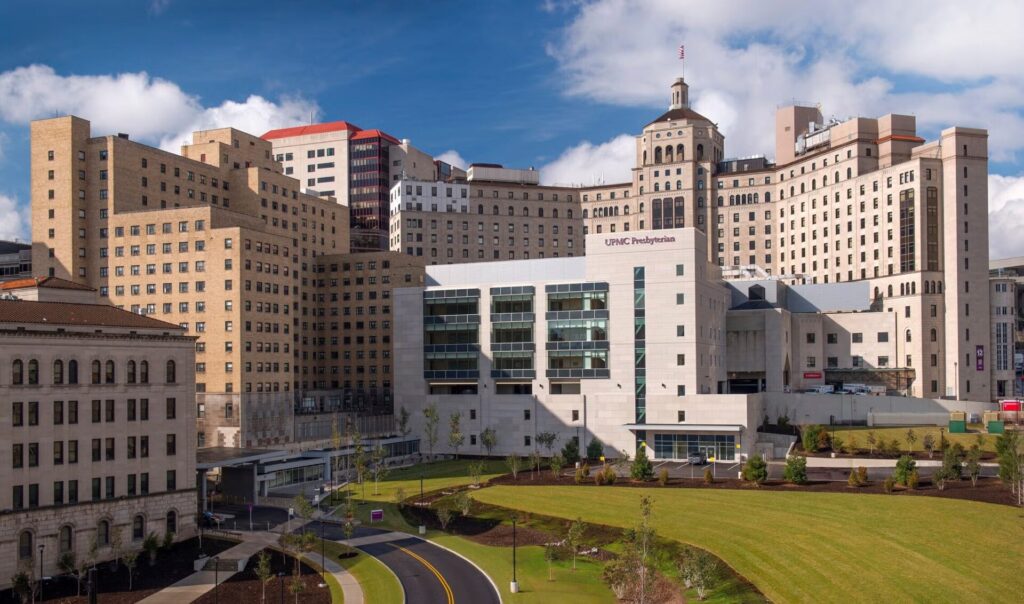
The University of Pittsburgh School of Medicine stands as one of America’s premier medical education institutions, consistently ranked among the top 15 medical schools by U.S. News & World Report. Located in Pittsburgh, Pennsylvania, this private institution operates on an urban campus in the heart of one of America’s leading medical centers.
Program Duration & Structure
The University of Pittsburgh School of Medicine offers a 4-year MD program following a traditional medical school curriculum structure. The school also provides combined degree options including:
- MD/MPH (Master of Public Health)
- MD/PhD (Physician Scientist Training Program)
- MD/MBA (Master of Business Administration)
Location & Campus Details
Situated in Pittsburgh’s Oakland neighborhood, the University of Pittsburgh School of Medicine enjoys a prime location within the world-renowned UPMC (University of Pittsburgh Medical Center) health system. The urban campus provides students with unparalleled access to:
- Multiple UPMC hospitals and clinical facilities
- Advanced research laboratories and institutes
- The vibrant Pittsburgh cultural and professional community
Accreditation & Rankings
The University of Pittsburgh School of Medicine holds full accreditation from the Liaison Committee on Medical Education (LCME), ensuring graduates are eligible for medical licensure throughout the United States.
Current Rankings:
- #13 for Best Medical Schools: Research (U.S. News & World Report)
- #11 for Best Medical Schools: Primary Care
- Top 10 recipient of National Institutes of Health (NIH) funding
Admission Requirements
Academic Prerequisites
Minimum Degree Requirements:
- Bachelor’s degree from an accredited institution
- At least one year of post-secondary education completed in the United States or Canada
Required Prerequisite Courses:
- Biology: One full year (excluding Microbiology, Botany, Ecology, and Anatomy) with one full year lab or a single two-credit lab
- General/Inorganic Chemistry: One full year with one full year lab or a single two-credit lab
- Organic Chemistry: One half year with one half year lab or a single credit lab
- Biochemistry: One half year
- Physics: One full year with one full year lab or a single two-credit lab
- English/Intensive Writing Course: One full year
GPA Requirements:
- Median GPA: 3.9
- Average GPA of admitted students: 3.83
- The school evaluates both overall GPA and science GPA as part of the holistic review process
Standardized Testing Requirements
MCAT Requirements:
- Median MCAT Score: 517
- Average MCAT Score: 515
- MCAT Score Range: 494-526 (previous year)
- No minimum MCAT score requirement, but competitive applicants typically score above the 90th percentile
The University of Pittsburgh School of Medicine does not currently require the CASPer test for general MD program applicants.
Extracurricular Activities & Experience Requirements
The University of Pittsburgh School of Medicine uses a holistic evaluation system that considers:
- Clinical Experience: Direct patient care or clinical exposure highly valued
- Research Experience: Both basic science and clinical research welcomed
- Community Service: Emphasis on addressing healthcare disparities
- Leadership: Demonstrated leadership in academic, professional, or community settings
- Diversity of Experiences: Broad range of experiences beyond traditional pre-medical activities
Application Process & Timeline
Application System & Requirements
Primary Application: University of Pittsburgh School of Medicine participates in AMCAS (American Medical College Application Service).
Key Deadlines:
- Primary Application Deadline: October 15, 2025
- Secondary Application: Typically sent within 2-4 weeks of primary application submission
Required Documents
- Official transcripts through AMCAS
- MCAT scores
- Letters of recommendation (typically 3-4 letters)
- Personal statement
- Work and activities descriptions
Secondary Application Essays
2025-2026 Secondary Essay Prompts:
- Team Collaboration (250 words max): The Three Rivers Curriculum features collaborative team-based learning. Describe a time you worked with others in a collaborative process, challenges encountered and how you overcame these challenges. Discuss any personal growth achieved through the experience.
- Difficult Situation (250 words max): Describe a difficult situation you faced, how you responded to this situation and how this helped shape the person you’ve become.
- Social Determinants of Health (250 words max): Describe a situation you observed between a patient and the health care system that illustrates the impact of social determinants of health and/or the impact of racism on delivery of care. Describe what you learned from this situation.
- Optional Essay: Additional space to tell the admissions committee anything else about yourself.
Interview Process
The University of Pittsburgh School of Medicine conducts interviews as part of their comprehensive evaluation process. While specific format details are not publicly disclosed, medical schools typically use either traditional interview formats or Multiple Mini Interview (MMI) systems.
Interview Statistics:
- Interview Rate: 11.61% of applicants receive interview invitations
- Interview invitations are typically sent between October and February
Admission Statistics & Success Rates
Overall Competitiveness
Acceptance Rate: 1.79% (2025 admission cycle)
This extremely low acceptance rate makes University of Pittsburgh School of Medicine one of the most competitive medical schools in the United States.
Application Volume:
- Total Applicants: 8,259
- Matriculated Students: 148
- First Year Class Size: 148
Demographic Breakdown
Gender Distribution:
- Applicants: 47% male, 53% female
- Matriculants: 39% male, 61% female
Geographic Distribution:
- Pennsylvania Residents: 29.7% of matriculants
- Out-of-State Residents: 70.3% of matriculants
- The school welcomes out-of-state applicants and has a strong national draw
Acceptance Rates by Residency:
- Pennsylvania Residents: 5.02%
- Out-of-State Residents: 1.41%
Academic Statistics of Admitted Students
MCAT Scores:
- Average: 515
- Median: 517
- Range: 494-526
GPA Statistics:
- Average: 3.83
- Median: 3.9
Tuition & Financial Information
2024-2025 Tuition Rates
Direct Expenses:
- Pennsylvania Residents: $64,600 per year
- Out-of-State Residents: $68,432 per year
- Required University Fees: $1,272 per year
Additional Costs
Medical Insurance: $4,728 per year
Books/Supplies/Equipment:
- MS1: $2,000
- MS2: $2,000
- MS3: $1,000
- MS4: $1,000
USMLE and ERAS Expenses:
- MS3-MS4: $740-$3,000
Total Cost of Attendance
Pennsylvania Residents:
- MS1: $95,304
- MS2: $97,545
- MS3: $101,382
- MS4: $102,137
Out-of-State Residents:
- MS1: $99,136
- MS2: $101,377
- MS3: $105,214
- MS4: $105,969
Living Expenses (Estimated)
Housing: $14,175-$18,900 per year
Food: $4,050-$5,400 per year
Transportation: $2,610-$3,480 per year
Personal Expenses: $1,440-$1,920 per year
Financial Aid Options
The University of Pittsburgh School of Medicine provides various financial aid opportunities including:
- Federal loan programs
- Merit-based scholarships
- Need-based financial aid
- Work-study opportunities
- External scholarship opportunities
Students are encouraged to complete the FAFSA (Federal School Code: 008815) to determine eligibility for federal financial aid programs.
Click To See Hundreds Of Consultants Who Can Mentor You:

Curriculum & Program Structure
Educational Philosophy
The University of Pittsburgh School of Medicine employs the Three Rivers Curriculum, which emphasizes:
- Team-based learning and collaborative education
- Interdisciplinary approach to medical education
- Innovation and entrepreneurship in healthcare
- Social determinants of health and healthcare equity
Pre-Clinical Years (Years 1-2)
The pre-clinical curriculum focuses on:
- Foundational science knowledge
- Clinical skills development
- Team-based learning sessions
- Early clinical exposure
- Assessment through comprehensive exams
Clinical Training (Years 3-4)
Core Clinical Rotations:
- Internal Medicine
- Surgery
- Pediatrics
- Obstetrics and Gynecology
- Psychiatry
- Family Medicine
- Emergency Medicine
- Other specialty rotations
Clinical Sites:
Students rotate through multiple UPMC hospitals and affiliated clinical sites throughout the Pittsburgh region, providing exposure to diverse patient populations and medical conditions.
Special Programs & Opportunities
Combined Degree Programs:
- MD/PhD Program: Physician Scientist Training Program for research-focused careers
- MD/MPH Program: Public health emphasis
- MD/MBA Program: Healthcare leadership preparation
Research Opportunities:
- Extensive research opportunities across basic science and clinical disciplines
- Summer research programs
- Scholarly project requirements
Residency Placement & Match Results
Match Day 2024 Success
Overall Match Rate: 98% (significantly higher than national average of 93.7%)
Specialty Distribution:
- Primary Care: 32% (largest group)
- Hospital-based Specialties: 26%
- Surgery: 19%
- Other Specialties: 23%
Geographic Placement:
- Many graduates remain in Pittsburgh, with at least 40 matching at UPMC
- Strong national placement across prestigious residency programs
Notable Match Results
Recent graduates have successfully matched into highly competitive specialties including:
- Anesthesiology
- Dermatology
- Emergency Medicine
- Internal Medicine at top-tier programs
- Radiology
- Surgery subspecialties
Pre-Medical Preparation
Academic Planning
Recommended Preparation:
- Complete prerequisite courses with excellent grades
- Maintain strong overall and science GPAs
- Consider advanced coursework in biochemistry and physiology
Major Selection:
- No specific major required
- Science majors common but not necessary
- Liberal arts backgrounds welcomed
- Focus on academic excellence regardless of major
Clinical Experience
Essential Components:
- Direct patient care experience through volunteering or employment
- Clinical shadowing across multiple specialties
- Understanding of healthcare systems and challenges
Research Experience
Research Opportunities:
- Basic science research in university laboratories
- Clinical research projects
- Public health and population health research
- Quality improvement initiatives
Extracurricular Activities
Leadership Development:
- Student organization leadership roles
- Community service leadership
- Healthcare advocacy initiatives
Community Service:
- Focus on addressing healthcare disparities
- Long-term commitments preferred over short-term activities
- Emphasis on understanding social determinants of health
Application Timeline
Junior Year:
- Complete MCAT preparation and testing
- Finalize prerequisite coursework
- Develop research and clinical experiences
Senior Year/Gap Year:
- Submit AMCAS application by October deadline
- Complete secondary applications promptly
- Prepare for interviews
Frequently Asked Questions
Does University of Pittsburgh School of Medicine look at extracurriculars?
Yes, the University of Pittsburgh School of Medicine uses a holistic evaluation system that heavily weighs extracurricular activities, including clinical experience, research, community service, and leadership roles. The school particularly values experiences that demonstrate commitment to addressing healthcare disparities and social determinants of health.
What is University of Pittsburgh School of Medicine’s average GPA and MCAT score?
The median GPA for admitted students is 3.9, with an average of 3.83. The median MCAT score is 517, with an average of 515. These statistics place University of Pittsburgh School of Medicine among the most competitive medical schools nationally.
How competitive is University of Pittsburgh School of Medicine compared to other medical schools?
With an acceptance rate of only 1.79%, University of Pittsburgh School of Medicine is extremely competitive, ranking among the most selective medical schools in the United States. This is significantly lower than the national average acceptance rate of approximately 4%.
Does University of Pittsburgh School of Medicine prefer in-state applicants?
While Pennsylvania residents have a higher acceptance rate (5.02% vs 1.41% for out-of-state), the majority of the class (70.3%) consists of out-of-state students. The school welcomes applications from all qualified candidates regardless of residency status.
What makes University of Pittsburgh School of Medicine different from other medical schools?
University of Pittsburgh School of Medicine distinguishes itself through:
Integration with the world-class UPMC health system
Three Rivers Curriculum emphasizing team-based learning
Strong emphasis on research and innovation
Focus on addressing healthcare disparities
Top-tier NIH research funding
Exceptional residency match rates
When should I apply to University of Pittsburgh School of Medicine?
Submit your AMCAS application as early as possible, with the absolute deadline being October 15, 2025. Early submission is crucial given the highly competitive nature of admissions.
Does University of Pittsburgh School of Medicine accept international students?
Yes, the school accepts international students. International applicants must have completed at least one year of post-secondary education in the United States or Canada. The same academic standards apply to all applicants regardless of citizenship status.
What clinical experience do I need for University of Pittsburgh School of Medicine?
While there’s no specified minimum requirement, successful applicants typically have substantial clinical experience including direct patient care, clinical shadowing, and exposure to various healthcare settings. The quality and depth of experience matter more than total hours.
Does University of Pittsburgh School of Medicine require research experience?
Research experience is not explicitly required but is highly valued and recommended. Most successful applicants have significant research experience, including publications, presentations, or substantial research projects.
How many letters of recommendation does University of Pittsburgh School of Medicine require?
The school typically requires 3-4 letters of recommendation, usually including science faculty, healthcare professionals, and others who can speak to your academic and personal qualifications for medical school.
What is University of Pittsburgh School of Medicine’s curriculum like?
The Three Rivers Curriculum features team-based learning, early clinical exposure, and a focus on collaborative education. The curriculum emphasizes innovation, social determinants of health, and interdisciplinary approaches to medical practice.
Where do University of Pittsburgh School of Medicine graduates match for residency?
With a 98% match rate, graduates successfully match into competitive residencies nationwide. Many remain in Pittsburgh through UPMC programs, while others match at prestigious institutions across the country in all medical specialties.
How much does University of Pittsburgh School of Medicine cost?
Annual tuition is $64,600 for Pennsylvania residents and $68,432 for out-of-state students. Total cost of attendance, including living expenses, ranges from approximately $95,000-$105,000 per year depending on residency status and year of study.
What financial aid is available at University of Pittsburgh School of Medicine?
The school offers various financial aid options including federal loans, merit-based scholarships, need-based aid, and work-study opportunities. Students should complete the FAFSA to determine eligibility for federal programs.
Does University of Pittsburgh School of Medicine offer interviews to all qualified applicants?
No, only 11.61% of applicants receive interview invitations. The interview invitation rate is competitive but in line with other top-tier medical schools. Strong academic credentials, meaningful experiences, and compelling application materials are essential for securing an interview invitation.