
Last updated on January 9th, 2026 at 06:27 am
Program Overview & Institution Identity
Official Program Name
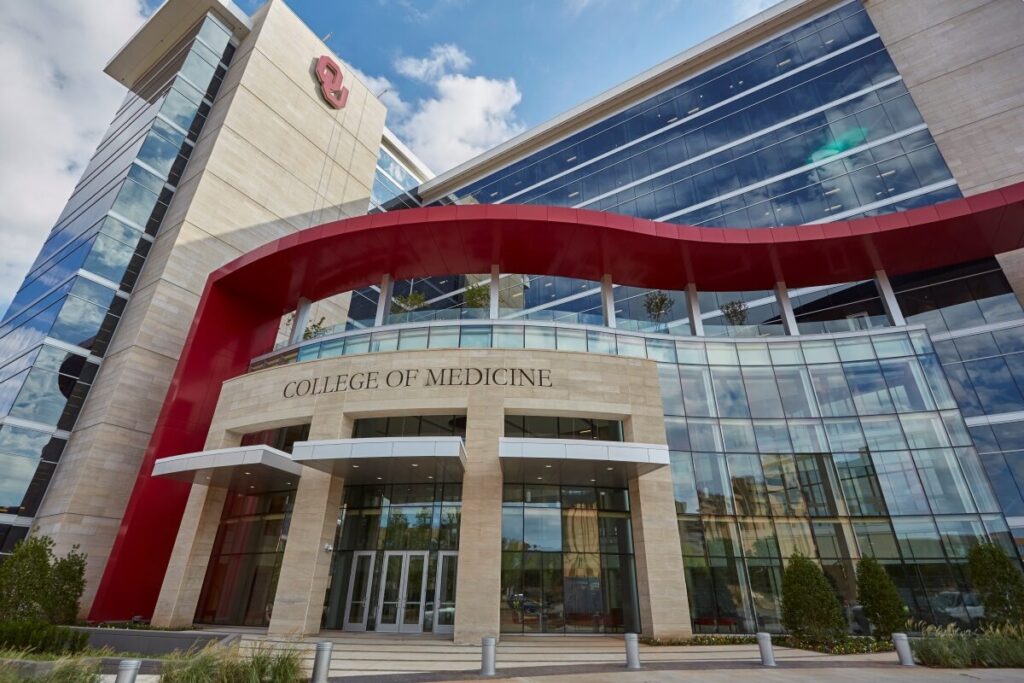
The University of Oklahoma College of Medicine is the official name of this prestigious medical school located in Oklahoma City, Oklahoma. Established in 1900, the institution operates as part of the University of Oklahoma Health Sciences Center and serves as a leading public medical school in the region.
Program Duration and Structure
The University of Oklahoma College of Medicine offers a traditional 4-year MD program following the standard structure found at most U.S. medical schools:
- Years 1-2: Pre-clinical education focused on foundational medical sciences
- Years 3-4: Clinical rotations and hands-on patient care training
The program also offers MD/PhD combined degree options for students interested in research careers, allowing them to integrate graduate-level research training with their medical education.
Location and Campus Details
Located in Oklahoma City, Oklahoma, the College of Medicine operates from an urban campus that provides students with access to diverse clinical training opportunities. The Oklahoma City campus features:
- State-of-the-art medical facilities
- Access to OU Medicine, the state’s largest academic medical center
- Urban setting with diverse patient populations
- Multiple affiliated hospitals and clinical sites
Accreditation Status
The University of Oklahoma College of Medicine is fully accredited by the Liaison Committee on Medical Education (LCME), which is the nationally recognized accrediting body for MD programs in the United States. This accreditation ensures that graduates are eligible to take the USMLE and apply for residency training programs nationwide.
Recognition and Distinctions
- Public institution serving Oklahoma and surrounding states
- Strong commitment to community-oriented medical education
- Emphasis on training physicians to serve underserved populations
- Established reputation in medical education for over 120 years
- Active involvement in biomedical research and patient care
Admission Requirements
Academic Prerequisites
Minimum Degree Requirements
Applicants must complete a bachelor’s degree from an accredited institution before matriculation. The University of Oklahoma College of Medicine accepts students with undergraduate backgrounds in arts, sciences, and humanities, encouraging diversity in academic preparation.
Required Prerequisite Courses
Based on standard medical school requirements, applicants typically need:
Basic Sciences:
- Biology: 8 credit hours with laboratory component
- General Chemistry: 8 credit hours with laboratory
- Organic Chemistry: 8 credit hours with laboratory
- Physics: 8 credit hours with laboratory
- Biochemistry: Recommended (may substitute for Organic Chemistry II)
Additional Coursework:
- Mathematics: Including statistics
- English: Composition and literature
- Behavioral and Social Sciences: 6 credit hours total (3 in Social Sciences, 3 in Behavioral Sciences)
GPA Requirements
- Median GPA: 3.88 for admitted students
- Competitive Range: Successful applicants typically maintain GPAs above 3.7
- Science GPA: Strong performance in prerequisite science courses is essential
- Both cumulative and science GPAs are evaluated in the admissions process
Standardized Testing
MCAT Requirements
- Median MCAT Score: 511 for admitted students
- Competitive Range: Most successful applicants score above 505
- Section Requirements: Balanced performance across all sections is important
- Validity Period: MCAT scores are typically valid for 3-4 years
- Retake Policy: Multiple attempts are considered, with most recent score weighted heavily
The University of Oklahoma College of Medicine considers the total MCAT score along with individual section performance to assess readiness for medical school curricula.
Extracurricular Activities & Experience Requirements
Holistic Evaluation Approach
The University of Oklahoma College of Medicine uses a holistic evaluation system that considers:
- Clinical Experience: Direct patient care or healthcare exposure
- Research Experience: Laboratory or clinical research participation
- Community Service: Volunteer work, especially in underserved communities
- Leadership Roles: Demonstrated leadership in various settings
- Shadowing: Physician shadowing experiences (50+ hours recommended)
Residency Preferences
As a public medical school, the University of Oklahoma College of Medicine gives strong preference to Oklahoma residents. According to state law, 75% of matriculated students must be Oklahoma residents, with a maximum of 25% non-resident positions available.
Application Process & Timeline
Application System
The University of Oklahoma College of Medicine participates in the American Medical College Application Service (AMCAS), the centralized application system for most U.S. medical schools.
Key Application Deadlines
- Primary Application Deadline: November 1, 2025
- Secondary Application: Automatically sent to all applicants
- Interview Period: August through December
- Final Admissions Decisions: Spring of application year
Required Application Components
Primary Application (AMCAS)
- Official transcripts from all colleges attended
- MCAT scores
- Personal statement
- Work and activities section (up to 15 experiences)
- Letters of evaluation/recommendation
Secondary Application
- School-specific essays and questions
- Automatic Distribution: Secondary applications are sent to all primary applicants
- Processing Time: Typically 2 weeks for initial review if submitted by August
Letters of Recommendation
Standard requirements typically include:
- Letters from pre-medical advisory committee (if available)
- Individual letters from science faculty
- Additional letters from research supervisors, employers, or volunteer coordinators
Interview Process
- Interview Format: Traditional panel-style interviews
- Interview Length: Approximately 1.5 hours
- Committee Size: 3 committee members per interview
- Schedule: 10 interview days total throughout the cycle
- Notification: Interview invites offered approximately 1 week in advance
- Questions: Based on AAMC Pre-med Competencies (90% of questions)
- Special Focus: Expect questions about resilience and community service
Application Statistics
- Total Applicants: Approximately 2,500 annually
- Interviews Offered: Approximately 300 candidates
- Class Size: 188 students (Class of 2027: 176 students)
Admission Statistics & Success Rates
Overall Competitiveness
The University of Oklahoma College of Medicine maintains a highly competitive admissions process, with thousands of applications competing for fewer than 200 positions annually.
Acceptance Rates and Application Volume
- Application Volume: Approximately 2,500 applicants annually
- Interview Rate: ~12% (300 interviews from 2,500 applicants)
- Class Size: 188 students
- Overall Competitiveness: Highly competitive among regional medical schools
Demographics of Admitted Students
Academic Profile
- Median GPA: 3.88
- Median MCAT: 511
- Diverse Academic Backgrounds: Students from arts, sciences, and humanities
Geographic Distribution
- Oklahoma Residents: 75% (by state law)
- Out-of-State: 25% maximum
- International Students: Case-by-case basis
- Canadian Students: Accepted on case-by-case basis
Class Composition
- Age Range: Wide range of ages accepted
- Background Diversity: Students with varied life experiences
- Undergraduate Majors: 50+ undergraduate majors represented among current students
Comparison with Peer Institutions
The University of Oklahoma College of Medicine competes with other public medical schools in the region and maintains standards comparable to similar institutions nationwide.
Tuition & Financial Information
Current Tuition Rates
2025 Academic Year Tuition
- Oklahoma Residents: $32,844 per year
- Out-of-State Students: $68,140 per year
- Significant Cost Difference: Over $35,000 annual difference between resident and non-resident tuition
Additional Fees and Costs
Beyond tuition, students should budget for:
- Student services fees
- Technology fees
- Health insurance (if not covered elsewhere)
- Laboratory and equipment fees
- Clinical rotation expenses
- Books and educational materials
- USMLE examination fees
Total Cost of Attendance
For a complete 4-year program:
- Oklahoma Residents: ~$131,376 (tuition only)
- Out-of-State Students: ~$272,560 (tuition only)
- Additional Living Expenses: Estimated $20,000-25,000 annually for housing, food, transportation, and personal expenses
Financial Aid Options
Merit-Based Aid
- Various scholarships available based on academic achievement
- Community service scholarships for students committed to underserved populations
- Research scholarships for students with strong research backgrounds
Need-Based Financial Aid
- Federal financial aid programs (FAFSA)
- Federal Direct Unsubsidized Loans
- Federal Direct PLUS Loans for graduate students
- State aid programs for Oklahoma residents
Work-Study Opportunities
- Limited work-study positions available
- Research assistantships with faculty
- Teaching assistant opportunities
Living Expenses in Oklahoma City
Oklahoma City offers a relatively affordable cost of living compared to major metropolitan areas:
- Housing: Affordable compared to coastal cities
- Transportation: Accessible public transportation and parking
- Healthcare: Access to comprehensive healthcare services
- Recreation: Cultural amenities and outdoor activities
Click To See Hundreds Of Consultants Who Can Mentor You:
Curriculum & Program Structure
Educational Philosophy
The University of Oklahoma College of Medicine follows a community-oriented medical education approach, emphasizing:
- Service to underserved populations
- Cultural competency and health equity
- Integration of basic sciences with clinical application
- Evidence-based medicine and critical thinking
Pre-Clinical Years (Years 1-2)
Curriculum Structure
- System-based approach: Integrated organ system blocks
- Teaching Methods: Combination of lectures, small group discussions, and hands-on learning
- Assessment: Mix of written examinations and practical assessments
- Research Opportunities: Early research exposure available
Major Subject Areas
- Human anatomy and physiology
- Pathology and pathophysiology
- Pharmacology
- Microbiology and immunology
- Behavioral medicine and ethics
- Clinical skills introduction
Clinical Training (Years 3-4)
Core Clinical Rotations
Students complete required rotations in:
- Internal medicine
- Surgery
- Pediatrics
- Obstetrics and gynecology
- Psychiatry
- Family medicine
- Emergency medicine
Clinical Training Sites
- OU Medicine: Primary academic medical center
- Affiliated Hospitals: Multiple hospital partnerships
- Community Clinics: Outpatient and specialty care settings
- Rural Sites: Rural health experiences available
Residency Preparation and Match Results
- Strong residency match rates for graduates
- Support for USMLE preparation and residency applications
- Career counseling and specialty exploration
- Alumni network for mentorship and guidance
Special Programs and Tracks
- MD/PhD Program: For research-oriented students
- Rural Medicine Track: Preparing physicians for rural practice
- Community Health Track: Focus on underserved populations
- Global Health Opportunities: International experiences available
Pre-Medical Preparation
Undergraduate Planning
Recommended Academic Strategy
- Major Selection: Any major acceptable, but biology and chemistry provide strong preparation
- GPA Management: Maintain strong cumulative and science GPAs
- Course Sequencing: Complete prerequisites in logical progression
- Research Participation: Engage in research throughout undergraduate years
MCAT Preparation
- Timeline: Begin serious preparation 6 months before test date
- Score Goal: Aim for 510+ to be competitive
- Section Balance: Strong performance across all sections important
- Retake Considerations: Consider retaking if significantly below median
Clinical Experience Requirements
- Direct Patient Care: CNA, EMT, hospital volunteer work
- Physician Shadowing: Minimum 50+ hours across multiple specialties
- Quality over Quantity: Meaningful experiences with reflection and learning
Research Experience
- Laboratory Research: Basic science or clinical research participation
- REU Programs: Research Experiences for Undergraduates
- Publication Goals: Publications helpful but not required
- Poster Presentations: Present research at conferences when possible
Extracurricular Planning
Leadership Development
- Student Organizations: Hold leadership positions
- Community Service: Long-term commitment to service
- Healthcare Advocacy: Participate in health policy or advocacy work
- Mentorship: Both receiving and providing mentorship
Community Engagement
Given the school’s community focus:
- Volunteer Work: Especially in underserved communities
- Cultural Competency: Experience with diverse populations
- Rural Experience: Exposure to rural healthcare challenges
- Oklahoma Connections: Understanding of Oklahoma’s healthcare needs
Application Timeline
- Junior Year: Begin MCAT preparation, continue building experiences
- Senior Year: Complete applications, interview preparation, continue coursework
- Gap Year Considerations: Use productively if taking time off
Frequently Asked Questions
Does the University of Oklahoma College of Medicine look at extracurriculars?
Yes, the University of Oklahoma College of Medicine uses a holistic evaluation approach that heavily weighs extracurricular activities including clinical experience, research, community service, leadership, and physician shadowing.
What is the University of Oklahoma College of Medicine’s average GPA and MCAT score?
The median GPA is 3.88 and the median MCAT score is 511 for admitted students. However, the admissions committee considers the full range of an applicant’s qualifications.
How competitive is the University of Oklahoma College of Medicine compared to other medical schools?
The University of Oklahoma College of Medicine is highly competitive, with approximately 2,500 applicants competing for 188 positions annually. It’s comparable to other public medical schools in the region.
Does the University of Oklahoma College of Medicine prefer in-state applicants?
Yes, by state law, 75% of matriculated students must be Oklahoma residents. This gives significant preference to in-state applicants, with only 25% of positions available to out-of-state candidates.
What makes the University of Oklahoma College of Medicine different from other medical schools?
The school emphasizes community-oriented medical education, training physicians to serve underserved populations, and provides strong clinical training through OU Medicine and affiliated healthcare systems.
What is the University of Oklahoma College of Medicine’s curriculum like?
The program follows a traditional 4-year structure with 2 years of pre-clinical education using system-based learning, followed by 2 years of clinical rotations in various specialties.
Where do University of Oklahoma College of Medicine graduates match for residency?
Graduates successfully match into residency programs across various specialties. The school provides strong support for residency preparation and has established relationships with training programs regionally and nationally.
When should I apply to the University of Oklahoma College of Medicine?
The primary application deadline is November 1st. However, it’s recommended to submit applications early in the cycle (June-August) for the best consideration.
Does the University of Oklahoma College of Medicine accept international students?
International students are considered on a case-by-case basis. Canadian students are also evaluated individually, with very limited positions available.
What clinical experience do I need for the University of Oklahoma College of Medicine?
Direct patient care experience is highly valued, such as CNA work, EMT certification, or hospital volunteering. Additionally, physician shadowing (50+ hours recommended) is important for demonstrating commitment to medicine.
Does the University of Oklahoma College of Medicine require research experience?
Research experience is not explicitly required but is highly valued and can strengthen an application significantly. The school values both basic science and clinical research experience.
How many letters of recommendation does the University of Oklahoma College of Medicine require?
The school typically requires letters from a pre-medical advisory committee if available, or individual letters from science faculty, research supervisors, and others who can attest to the applicant’s qualifications for medical school.
How much does the University of Oklahoma College of Medicine cost?
Tuition for Oklahoma residents is $32,844 per year, while out-of-state students pay $68,140 annually. Additional expenses include living costs, books, equipment, and fees.
What financial aid is available at the University of Oklahoma College of Medicine?
The school offers merit-based scholarships, need-based financial aid through federal programs, and various loan options. Oklahoma residents have access to additional state aid programs.
Does the University of Oklahoma College of Medicine offer interviews to all qualified applicants?
No, interviews are selective. Approximately 300 candidates are invited for interviews from about 2,500 applicants, making the interview invitation rate around 12%.
The University of Oklahoma College of Medicine offers an excellent medical education for students committed to serving diverse communities and addressing healthcare disparities. With strong clinical training, community focus, and reasonable costs for in-state students, it represents an outstanding choice for future physicians, particularly those interested in practicing in Oklahoma and the surrounding region.