Last updated on January 9th, 2026 at 06:27 am
Program Overview & Institution Identity
Official Program Name
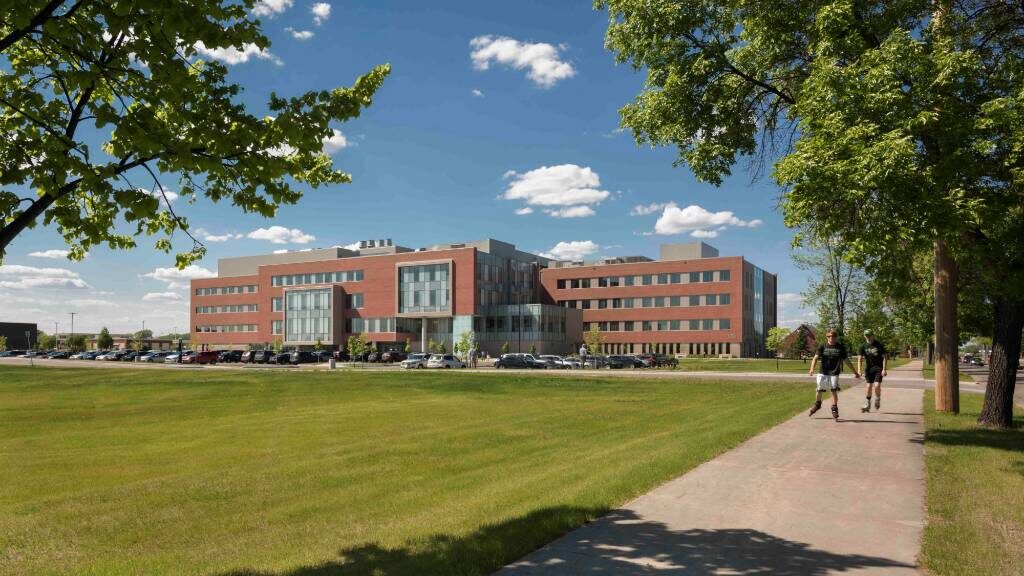
The University of North Dakota School of Medicine and Health Sciences is the only medical school in North Dakota, founded in 1905. Located in Grand Forks, North Dakota, this public institution has been training physicians to serve rural and underserved communities for over 118 years.
Program Duration & Structure
UND SMHS offers a traditional 4-year Doctor of Medicine (MD) program following the standard medical education timeline:
- Phase 1 (20 months): Academic courses and basic sciences in Grand Forks
- Phase 2 (14 months): Clinical clerkships at various North Dakota sites
- Phase 3 (12.5 months): Electives and acting internships
Location and Campus Details
The medical school is headquartered in Grand Forks, North Dakota, with clinical training sites throughout the state including:
- Grand Forks (main campus)
- Fargo
- Bismarck
- Minot
- Rural North Dakota communities through the ROME program
Accreditation Status
UND School of Medicine and Health Sciences holds full LCME (Liaison Committee on Medical Education) accreditation, granted through 2030. This accreditation ensures graduates are eligible to take the USMLE and apply for residency programs throughout the United States.
Ranking and Recognition
- Ranked among the top 10 rural medicine programs in the country
- 79% of North Dakota’s family physicians are UND SMHS graduates
- Recognized for affordability, with student debt below the 30th percentile nationally
- Known for strong primary care training and rural medicine focus
Admission Requirements
Academic Prerequisites
Minimum Degree Requirements
Applicants must complete a bachelor’s degree from an accredited college or university before beginning medical school, though they may apply before degree completion.
Required Courses
UND SMHS does not mandate specific prerequisite courses but recommends a mix of:
Natural Sciences:
- Introductory biology
- Organic and inorganic chemistry
- Physics
- Biochemistry
- Cellular and molecular biology
Behavioral Sciences:
- Psychology
- Sociology
- Behavioral biology
Humanities and Writing-Intensive Courses:
- Scientific inquiry and critical thinking courses
- Research methods and statistics
GPA Requirements
- Minimum GPA: No specific minimum stated
- Average admitted student GPA: 3.86 overall
- Average BCPM (Science) GPA: 3.84
- Competitive range: Successful applicants typically have GPAs of 3.7-3.8 or higher
Standardized Testing
MCAT Requirements
- Minimum MCAT score: 495 on the most recent exam
- Median MCAT score: 508 (2025 admission cycle)
- Average score range: 506-508 for accepted students
- Score validity: Must be from within the last 3 years as of January 1 in the application year
- Multiple attempts: Most recent score considered, but all scores reviewed for context
Test Timeline
For the November 1 application deadline, applicants should take the MCAT no later than mid-September of the application year.
Extracurricular Activities & Experience Requirements
UND SMHS uses a holistic evaluation system that considers:
- Clinical experience: Direct patient care exposure
- Research experience: Basic science, clinical, or public health research
- Community service: Volunteer work, especially in underserved communities
- Leadership experience: Demonstrated leadership in various settings
- Diversity of experiences: Exposure to different cultures and socioeconomic backgrounds
Residency Preferences
As a public institution, UND SMHS shows strong preference for:
- North Dakota residents: 54.1% of matriculants in 2025
- Regional students: Preference for upper Midwest applicants
- Rural and underserved community commitment: Strong emphasis on serving these populations
Application Process & Timeline
Application System
UND SMHS participates in AMCAS (American Medical College Application Service), accepting the standard primary application used by most US medical schools.
Application Timeline
Key Deadlines:
- May 2025: AMCAS application opens
- July 2025: Secondary applications sent to eligible applicants
- October 15, 2025: AMCAS application deadline
- October 31, 2025: Final deadline for transcripts to AMCAS
- November 1, 2025: Secondary application and all materials deadline
Interview Process:
- September 2025: Interview invitations sent on rolling basis
- Interview format: Traditional interviews (specific format varies)
- Interview invitations: Approximately 9.93% of applicants receive interviews
- January 2026: All applicants notified of final decisions
Required Documents
- Primary application: Through AMCAS
- Secondary application: School-specific essays and questions
- Official transcripts: Verified through AMCAS
- Letters of recommendation: Number and specific requirements vary
- MCAT scores: Official scores from AAMC
Application Fees
- AMCAS fee: Standard AMCAS processing fees apply
- Secondary application fee: Required upon submission of secondary application
Admission Statistics & Success Rates
Overall Acceptance Rate
4.64% acceptance rate for 2025 admission cycle, making UND School of Medicine highly competitive among medical schools.
Application Volume
- Total applicants (2025): 1,595
- Students matriculated: 74
- Class size: 74-78 students per year
Demographics of Admitted Students
By Gender:
- Men: 43%
- Women: 57%
By Residency:
- North Dakota residents: 54.1%
- Out-of-state residents: 45.9%
Academic Profile:
- Average age range: 22-27 years (accepted students range from 20-38)
- Average MCAT: 509
- Average GPA: 3.86
Acceptance Rate by Residency
- North Dakota residents: 42.54% acceptance rate
- Out-of-state applicants: 2.26% acceptance rate
This demonstrates the significant advantage for North Dakota residents in the admission process.
Interview Statistics
- Interview invitation rate: 9.93% of total applicants
- Interview timeline: September through January
- Post-interview acceptance rate: Approximately 46% of interviewed candidates are accepted
Tuition & Financial Information
Current Tuition Rates (2024-2025)
North Dakota Residents
- Tuition & Fees: $36,090 per year
- Total estimated cost of attendance: $59,312-$62,046 per year
Minnesota Residents (Reciprocity)
- Tuition & Fees: $39,525 per year
- Total estimated cost of attendance: $62,747-$65,481 per year
Out-of-State Students
- Tuition & Fees: $65,328 per year
- Total estimated cost of attendance: $88,550-$91,284 per year
Additional Costs
- Housing & Food: $12,733-$14,552 per year
- Books & Supplies: $1,200 per year
- Transportation: $2,655-$3,036 per year
- Personal Expenses: $3,033-$3,467 per year
- Health Insurance: $2,500 per year
- Program Fees: $0-$760 per year (varies by year for USMLE exams, background checks)
Total Program Cost
- North Dakota residents: Approximately $240,000 over 4 years
- Minnesota residents: Approximately $260,000 over 4 years
- Out-of-state students: Approximately $360,000 over 4 years
Financial Aid Options
Scholarships and Awards
UND SMHS provides over $1,000,000 annually in student scholarships and awards over $12,500,000 in total financial assistance.
Merit-Based Scholarships:
- Various endowed scholarships available
- Buck Zahradka Memorial Scholarship: Up to $8,500 plus housing
- Edson & Margaret Larson Foundation ROME Scholarship for rural medicine students
Application Process:
- Annual scholarship application deadline: July 15
- Awards announced in early fall
- Both merit and need-based awards available
Federal Financial Aid
- Federal Direct Loans: Standard federal loan programs available
- Work-study: Generally discouraged, especially for first-year students
Cost Comparison
UND SMHS ranks among the most affordable medical schools nationally:
- In-state tuition ranks in the 10th percentile compared to other US medical schools
- Student debt has decreased from 75th percentile to approximately 30th percentile nationally
Click To See Hundreds Of Consultants Who Can Mentor You:
Curriculum & Program Structure
Program Duration and Structure
The 4-year MD program follows an innovative structure designed to provide early clinical exposure and strong rural medicine training.
Educational Philosophy
UND SMHS emphasizes:
- Community-based medical education
- Rural and underserved population focus
- Small-group learning and mentorship
- Early clinical exposure
- Interdisciplinary healthcare training
Phase 1: Academic Courses (20 months)
Location: Grand Forks, North Dakota
Curriculum Focus:
- Anatomy, pathology, and physiology
- Basic medical sciences
- Introduction to patient care and communication
- Simulation-based clinical scenarios
- Small-group learning sessions
Teaching Methods:
- Problem-based learning components
- Hands-on laboratory work
- Early clinical skills development
- Technology integration and simulation
Phase 2: Clinical Clerkships (14 months)
Locations: Grand Forks, Fargo, Bismarck, Minot, and rural North Dakota sites
Core Clerkship Requirements (7 specialties):
- Family Medicine
- Internal Medicine
- Obstetrics/Gynecology
- Surgery
- Pediatrics
- Psychiatry
- Neurology
Clinical Pathway Options:
- Traditional Clerkships: 4-8 week rotations at home campuses
- ROME (Rural Opportunities in Medical Education): 20-28 weeks in rural primary care settings
- MILE (Minot Integrated Longitudinal Experience): 44-week integrated program
Additional Phase 2 Requirements:
- Two 2-week elective rotations
- Clinical Epidemiology course and research project
- Objective Structured Clinical Examination (OSCE)
- USMLE Step 1 preparation course
Phase 3: Electives and Acting Internships (12.5 months)
Focus: Personalized education and residency preparation
Requirements:
- 28 weeks of electives and acting internships
- At least one UND-based Acting Internship
- USMLE Step 2 preparation and exam
- Transition to Residency Course
- Patient Safety and Quality Improvement Course
Special Programs and Features
Combined Degree Programs:
- MD/PhD: Research-intensive dual degree program
- MD/MPH: Public health focus for population health careers
Unique Curriculum Features:
- ROME Program: Extensive rural medicine training
- MILE Program: Longitudinal integrated clerkship model
- Early clinical exposure: Patient contact beginning in Phase 1
- Simulation training: State-of-the-art medical simulation center
Assessment Methods
UND SMHS uses a combination of:
- Traditional examinations
- Clinical performance evaluations
- Competency-based assessments
- OSCE (Objective Structured Clinical Examination)
- National standardized testing (USMLE Steps 1 and 2)
Pre-Medical Preparation
Undergraduate Program Recommendations
Major Selection
UND SMHS does not require a specific major and encourages diversity in academic backgrounds. Successful applicants have come from:
- Traditional pre-med majors: Biology, chemistry, psychology
- Non-traditional majors: Nursing, engineering, neuroscience, computer science
- Liberal arts: Philosophy, literature, history
- Business and social sciences
The key is choosing a field where you can excel academically while completing recommended coursework.
Academic Planning Strategy
Freshman-Sophomore Years:
- Build strong foundation in basic sciences
- Maintain high GPA from the start
- Begin exploring healthcare through volunteering
Junior Year:
- Complete most prerequisite coursework
- Begin MCAT preparation
- Increase clinical exposure
- Develop research opportunities
Senior Year:
- Take MCAT (spring of junior year or fall of senior year)
- Complete AMCAS application
- Continue meaningful activities
- Consider gap year if needed for strengthening application
Clinical Experience Requirements
Types of Valued Clinical Experiences
- Direct patient care: Hospitals, clinics, nursing homes
- Rural healthcare exposure: Community health centers, rural hospitals
- Underserved populations: Free clinics, mission trips, urban health centers
- Healthcare team experience: Working alongside various healthcare professionals
Recommendations
- Quality over quantity: Sustained, meaningful experiences preferred over numerous brief exposures
- Rural emphasis: Given UND’s mission, rural healthcare experience is particularly valued
- Leadership roles: Taking initiative in healthcare settings demonstrates commitment
Research Experience
Types of Research Valued
- Basic science research: Laboratory-based biomedical research
- Clinical research: Patient-oriented studies
- Public health research: Population health and epidemiological studies
- Rural health research: Particularly relevant to UND’s mission
Research Opportunities
- Undergraduate research programs: Work with faculty at your undergraduate institution
- Summer research programs: NIH, university-sponsored programs
- Independent projects: Senior thesis or capstone research
- Publication goals: While not required, publications demonstrate sustained research commitment
Extracurricular Planning
Leadership Experience
- Healthcare-related leadership: Patient advocacy, health education programs
- Community leadership: Volunteer organizations, student government
- Academic leadership: Teaching assistantships, peer mentoring
- Professional organizations: Pre-health clubs, honor societies
Community Service
- Consistency: Long-term commitments preferred over sporadic volunteering
- Diversity: Exposure to different populations and communities
- Rural and underserved focus: Aligns with UND’s mission
- Healthcare-related service: Medical mission trips, health fairs, health education
Standardized Test Preparation
MCAT Preparation Strategy
Timeline: Begin preparation 6-12 months before test date
Study approach:
- Content review of prerequisite subjects
- Practice passages and full-length practice exams
- Consider prep courses or tutoring if needed
- Multiple attempts: Plan carefully, as UND reviews all scores
Retake Considerations
UND considers your most recent MCAT score but reviews all attempts. Consider retaking if:
- Score significantly below 506
- Individual section scores are imbalanced
- Confident you can achieve meaningful improvement
Gap Year Considerations
When Gap Years Are Beneficial
- Academic improvement needed: GPA below competitive range
- MCAT improvement required: Score below 506
- Experience deficits: Limited clinical exposure or research
- Personal readiness: Need time for maturity and life experience
Productive Gap Year Activities
- Research positions: Full-time laboratory or clinical research roles
- Clinical work: EMT, medical scribe, clinical assistant positions
- Service programs: AmeriCorps, Peace Corps, Teach for America
- Graduate coursework: Post-baccalaureate programs or graduate courses
- Rural healthcare exposure: Working in rural communities
8. Frequently Asked Questions
What is UND School of Medicine’s average GPA and MCAT score?
The average GPA for accepted students is 3.86, with a median MCAT score of 508. However, successful applicants typically range from 3.7-3.8 GPA and 506-508 MCAT scores.
Does UND require specific prerequisite courses?
UND does not mandate specific prerequisite courses but strongly recommends a foundation in natural sciences, behavioral sciences, and humanities. The focus is on building critical thinking and scientific reasoning skills rather than checking off specific course requirements.
Does UND accept retaken MCAT scores?
Yes, UND considers your most recent MCAT score but reviews all attempts for context. Scores must be within 3 years of your application year.
How competitive is UND School of Medicine compared to other medical schools?
UND is highly competitive with a 4.64% acceptance rate.