Last updated on January 9th, 2026 at 06:27 am
Program Overview & Institution Identity
Official Program Name and Institution
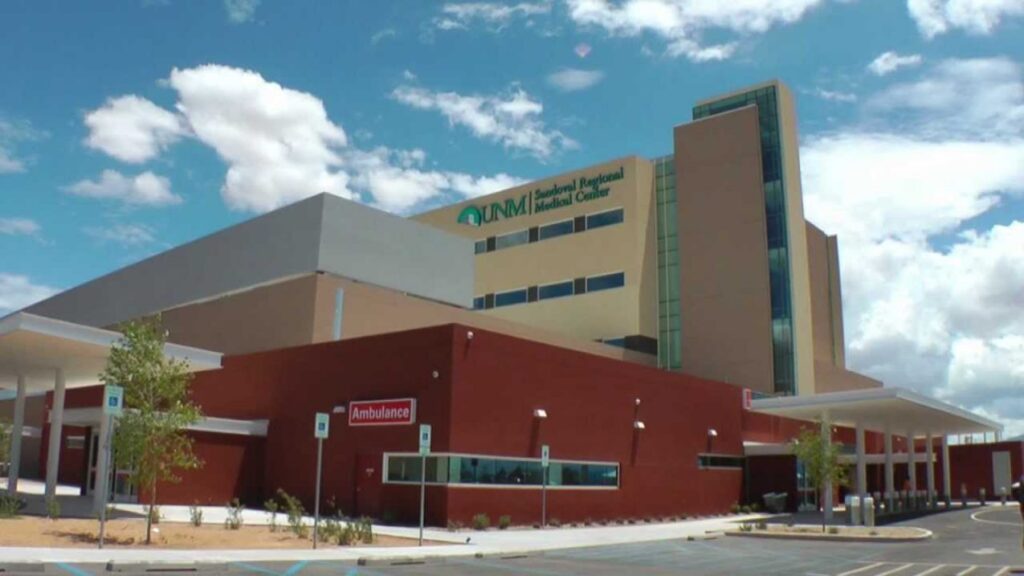
The University of New Mexico School of Medicine is the state’s premier medical education institution, located in Albuquerque, New Mexico. As a public medical school serving the health needs of New Mexico and the broader Southwest region, UNM School of Medicine has been training physicians since 1964.
Program Duration and Structure
The University of New Mexico School of Medicine offers a 4-year Doctor of Medicine (MD) program following a traditional medical education structure. The curriculum is divided into three distinct phases designed to provide comprehensive medical training and professional development.
Location and Campus Details
Campus Location: Albuquerque, New Mexico
Campus Type: Urban campus setting
Institution Type: Public medical school
The medical school is located on the University of New Mexico Health Sciences Center campus in Albuquerque, providing students access to state-of-the-art facilities and clinical training opportunities throughout New Mexico’s largest city.
Accreditation Status
The University of New Mexico School of Medicine maintains full accreditation from the Liaison Committee on Medical Education (LCME), the nationally recognized accrediting authority for medical education programs leading to the MD degree in the United States. The LCME is sponsored jointly by the Association of American Medical Colleges (AAMC) and the American Medical Association (AMA).
Recent Accreditation Timeline:
- Most recent LCME site visit: February 2018
- Current status: Full accreditation maintained
- Next scheduled site visit: February 23-25, 2026
Ranking and Recognition
While specific US News rankings vary annually, the University of New Mexico School of Medicine is recognized as a significant regional medical education institution with particular strength in serving underserved populations and rural communities.
Admission Requirements
Academic Prerequisites
Minimum Degree Requirements
- Bachelor’s degree from an accredited institution is required
- All degrees must be verified through AMCAS
- Degree programs in progress during application cycle must be completed before matriculation
Required Courses
The University of New Mexico School of Medicine requires completion of specific prerequisite courses with a letter grade of C or better (C- is not acceptable). Pass/Fail grading is not accepted for prerequisite courses.
Required Prerequisite Courses:
| Course | Laboratory Required | Duration |
|---|---|---|
| General Biology I & II | Yes | 1 academic year (2 semesters or 3 quarters) |
| General Chemistry I & II | Yes | 1 academic year (2 semesters or 3 quarters) |
| Organic Chemistry I & II | Yes | 1 academic year (2 semesters or 3 quarters) |
| General Physics I & II | No | 1 academic year (2 semesters or 3 quarters) |
| Biochemistry | No | 1 semester or 2 quarters |
Important Notes:
- Biology courses must be human-based and include corresponding laboratory components
- Acceptable biology courses include: Genetics, Cell Biology, Microbiology, Immunology, and Anatomy & Physiology
- Non-human biology courses (Zoology, Plant Ecology, etc.) are not accepted
- Biochemistry course should be at the 400 level
GPA Requirements
- Minimum cumulative GPA: 3.0
- Median admitted student GPA: 3.79
- Competitive applicants typically exceed the minimum threshold significantly
Standardized Testing
MCAT Requirements
- Minimum MCAT score: 494
- Median admitted student MCAT: 505
- MCAT validity: Current requirements follow standard AAMC guidelines
- Retake policy: Students can take the MCAT up to three times per calendar year, four times in two consecutive years, and seven times in a lifetime
MCAT Timing Recommendations:
- Regular applicants: Spring of junior year or summer before senior year
- Early Decision Program applicants: Must take by June to meet August 1 deadline
Residency and Special Admission Preferences
State Residency Requirements
The University of New Mexico School of Medicine strongly prioritizes New Mexico residents for admission. The school accepts:
- In-state residents: Primary preference
- Out-of-state students: Case-by-case basis (very limited spots)
- International students: Case-by-case basis (very limited spots)
- Canadian students: Case-by-case basis (very limited spots)
WICHE Program
Students from Western Interstate Commission for Higher Education (WICHE) states may apply through the Early Decision Program for potential reduced tuition rates.
Application Process & Timeline
Application System
The University of New Mexico School of Medicine uses the American Medical College Application Service (AMCAS) for primary applications.
AMCAS Application Fees:
- First designated school: $175
- Each additional school: $47
Application Deadlines
| Program Type | Application Deadline | Admissions Decisions |
|---|---|---|
| Early Decision Program (EDP) | August 1 | October 1 |
| MD/PhD Program | October 1 | March 15 |
| Regular Decision | November 1 | March 15 |
Important Notes:
- AMCAS verification can take 4-6 weeks
- Secondary applications are sent after primary application review
- Deadline extensions granted only for circumstances beyond applicant’s control
Required Documents
- Primary AMCAS Application
- Official transcripts (verified through AMCAS)
- MCAT scores
- Letters of recommendation
- Personal statement
- Secondary application (school-specific)
Interview Process
- Format: Online via Zoom
- Structure: Two interviews with different admissions committee members
- Duration: 30 minutes to 1 hour per interview
- Schedule: Full day commitment required
- Evaluation: Based on non-cognitive skills (interviews are conducted without access to MCAT scores or GPA)
Interview Focus Areas:
- Clinical and research experiences
- Volunteer work and community service
- Letters of recommendation content
- Personal statement
- Maturity and motivation for medicine
- Problem-solving abilities
- Communication skills
Admission Statistics & Success Rates
Overall Statistics
- First-year class size: 103 students
- Total enrollment: Approximately 439 students
- Acceptance rate: Approximately 8% (highly competitive)
Academic Profile of Admitted Students
- Median GPA: 3.79
- Median MCAT: 505
- Undergraduate major distribution: Approximately 50% biology, chemistry, or biochemistry majors
Demographics and Geographic Distribution
- In-state students: Nearly 100% of class
- Out-of-state students: Less than 1%
- International students: Minimal representation
- Gender distribution: Approximately 52% female, 48% male
- Minority representation: Approximately 40% of student body
Tuition & Financial Information
Current Tuition Rates
2024-2025 Academic Year:
- New Mexico residents: $19,718 per year
- Out-of-state students: $48,414 per year
Additional Fees and Costs
Beyond tuition, students should budget for:
- Technology fees
- Student services fees
- Health insurance (can be waived with proof of coverage)
- Books and supplies
- Laboratory and equipment fees
- Clinical rotation expenses
Total Cost of Attendance
Estimated annual costs:
- In-state total: Approximately $40,000-$45,000
- Out-of-state total: Approximately $70,000-$75,000
Four-year program total:
- In-state students: $160,000-$180,000
- Out-of-state students: $280,000-$300,000
Financial Aid Options
Merit-Based Scholarships
Scholarship for Disadvantaged Students
- Application deadline: First Friday after Labor Day
- Award amount: At least $8,000 ($4,000 fall/$4,000 spring)
- Priority given to first-generation college students from disadvantaged backgrounds
Lineberry/Firestone Scholarships
- Target: Fourth-year students
- Criteria: Academic excellence, primary care interest, financial need
- Award amounts: Lineberry ($30,000), Firestone ($5,000)
General Scholarships
- Application period: Late October
- Award range: $1,000-$2,000
- Available to non-SDS recipients
Federal Financial Aid
- Federal Direct Loans
- Graduate PLUS Loans
- Work-study opportunities (limited)
State and External Aid
- New Mexico state aid programs
- External scholarship opportunities
- Professional organization scholarships
Click To See Hundreds Of Consultants Who Can Mentor You:

Curriculum & Program Structure
Program Duration and Philosophy
The University of New Mexico School of Medicine follows a 4-year MD program structured around three distinct phases designed to integrate basic sciences with clinical medicine while emphasizing professional identity formation.
Educational Philosophy:
- Adult learning theory adaptation
- Integration of basic sciences and clinical medicine
- Early patient and community exposure
- Case-based learning approach
- Professional identity formation
- Personal and professional wellness emphasis
Three-Phase Curriculum Structure
Phase I (First 21 months)
Focus: Core basic science education and clinical skills development
- Structure: Organ system-based blocks
- Integration: Normal structure/function with pathophysiology
- Assessment: Competency exams throughout phase
- Skills: Clinical reasoning and communication skills development
- Community exposure: Early patient contact opportunities
Phase II (12 months)
Focus: Required clinical clerkships
Core Rotations:
- Family Practice
- Internal Medicine
- Neurology
- Obstetrics and Gynecology
- Pediatrics
- Psychiatry
- Surgery
Additional Elements:
- Professional identity formation continuation
- Specialized clinical skills development
- Hospital-based training
Phase III (Final phase)
Focus: Advanced clinical training and specialization
- Elective rotations
- Specialty exploration
- Residency preparation
- Advanced clinical skills
Teaching Methods
- Problem-Based Learning (PBL) components
- Case-based learning throughout curriculum
- Simulation-based training
- Technology integration
- Community-based learning opportunities
Clinical Training Sites
Primary Clinical Sites:
- University of New Mexico Hospital
- Regional medical centers throughout New Mexico
- Community-based clinical partnerships
- Rural and underserved area rotations
Geographic Distribution:
Clinical sites span across New Mexico, providing diverse training experiences in urban, rural, and frontier healthcare settings.
Special Programs and Opportunities
Combined Degree Programs
- MD/PhD: Biomedical sciences research track
- MD/MPH: Public health emphasis
- BS/MD: Accelerated pathway for qualified undergraduates
Research Opportunities
- Scholarly project requirements
- Research electives
- Faculty mentorship programs
- Summer research opportunities
Community and Rural Medicine Focus
- Rural medicine tracks
- Community health emphasis
- Underserved population training
- Public health integration
Pre-Medical Preparation
Undergraduate Program Recommendations
Academic Background
The University of New Mexico School of Medicine welcomes applicants from all undergraduate majors, though approximately 50% of students come from biology, chemistry, or biochemistry backgrounds.
Recommended Preparation:
- Strong science foundation in prerequisite areas
- Diverse academic experiences beyond sciences
- Critical thinking and problem-solving skill development
- Written and oral communication enhancement
GPA Optimization Strategies
- Excel in prerequisite science courses
- Maintain consistent academic performance
- Consider additional upper-level science courses if needed
- Seek academic support when struggling
Clinical Experience Requirements
Types of Clinical Exposure
While there are no specific hour requirements, competitive applicants typically demonstrate:
- Direct patient care experience
- Clinical observation/shadowing
- Healthcare volunteer work
- Long-term healthcare commitments
Quality vs. Quantity:
The admissions committee values meaningful, sustained clinical experiences over brief, superficial exposures.
Research Experience
Research Background Evaluation:
- Basic science research
- Clinical research
- Public health research
- Community-based participatory research
Publication Expectations:
While publications enhance applications, they are not required. The committee values research experience that demonstrates scientific thinking and commitment.
Extracurricular Activities
Valued Non-Academic Experiences
- Community service and volunteering
- Leadership roles and experiences
- Diversity and cultural competency experiences
- Professional development activities
Long-term Commitment vs. Breadth
The admissions committee prefers sustained, meaningful involvement over extensive but superficial participation in numerous activities.
Standardized Test Preparation
MCAT Preparation Strategy
Recommended Timeline:
- Begin preparation 6-12 months before test date
- Complete prerequisite courses before intensive study
- Use variety of preparation resources
- Take practice tests regularly
Retake Considerations:
- Significant score improvement potential
- Strong performance in other application areas
- Understanding of previous performance issues
Gap Year Considerations
Beneficial Gap Year Activities
- Clinical work experience
- Research positions
- Teaching or tutoring
- Community service
- Graduate coursework (if needed)
UNM School of Medicine Perspective:
The school views non-traditional timelines favorably when used productively to strengthen applications and gain meaningful experiences.
Frequently Asked Questions
What is the University of New Mexico School of Medicine’s average GPA and MCAT score?
The median GPA for admitted students is 3.79, and the median MCAT score is 505. However, the minimum requirements are a 3.0 GPA and 494 MCAT score.
Does UNM School of Medicine look at extracurriculars?
Yes, UNM uses a holistic admissions approach that considers clinical experience, research, volunteer work, leadership, and other non-academic factors significantly in their evaluation process.
Does UNM School of Medicine prefer in-state applicants?
Yes, UNM School of Medicine has a very strong preference for New Mexico residents, with nearly 100% of each class being in-state students. Out-of-state acceptance is extremely limited and handled on a case-by-case basis.
How competitive is UNM School of Medicine compared to other medical schools?
UNM School of Medicine is highly competitive with approximately an 8% acceptance rate. While the median stats may be lower than some elite schools, the strong in-state preference makes it extremely competitive for out-of-state applicants.
When should I apply to UNM School of Medicine?
Applications are due November 1st for regular decision, with Early Decision due August 1st. It’s recommended to submit applications as early as possible when AMCAS opens in May.
Does UNM School of Medicine accept international students?
UNM accepts international students on a case-by-case basis, but spots are extremely limited. International applicants should have exceptional qualifications and strong ties to New Mexico.
What clinical experience do I need for UNM School of Medicine?
While there are no specific hour requirements, competitive applicants typically have significant direct patient care experience, clinical shadowing, and healthcare volunteer work demonstrating sustained commitment to medicine.
Does UNM School of Medicine require research experience?
Research experience is not required but is highly valued. The school appreciates various types of research including basic science, clinical, and public health research that demonstrates scientific thinking.
How many letters of recommendation does UNM School of Medicine require?
UNM requires letters of recommendation as part of the AMCAS application, though specific numbers and requirements should be verified on their admissions website as requirements can change.
What is UNM School of Medicine’s curriculum like?
UNM follows a three-phase, 4-year curriculum emphasizing integration of basic sciences and clinical medicine, early patient exposure, case-based learning, and professional identity formation with strong community and rural medicine components.
Where do UNM School of Medicine graduates match for residency?
UNM graduates successfully match in various specialties, with many choosing to serve New Mexico and surrounding southwestern states. Specific match data should be requested from the admissions office.
How much does UNM School of Medicine cost?
For 2024-2025, tuition is $19,718 for New Mexico residents and $48,414 for out-of-state students. Total cost of attendance including living expenses ranges from $40,000-$45,000 for residents and $70,000-$75,000 for non-residents annually.
What financial aid is available at UNM School of Medicine?
UNM offers various scholarships including the Scholarship for Disadvantaged Students ($8,000+), Lineberry/Firestone scholarships, and general scholarships