Last updated on January 9th, 2026 at 06:27 am
Program Overview & Institution Identity
Official Program Name: University of Nebraska College of Medicine (UNMC)
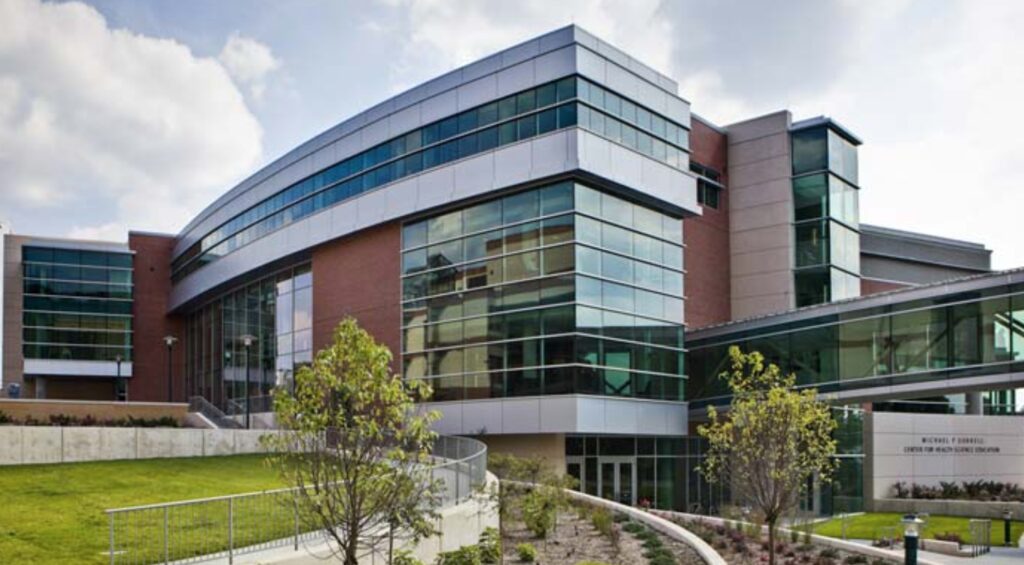
The University of Nebraska College of Medicine, located in Omaha, Nebraska, is a prestigious public medical school that has been training physicians since 1881. As part of the University of Nebraska Medical Center, UNMC operates as a public institution with an urban campus setting, serving the healthcare needs of Nebraska and the surrounding region.
Program Duration: UNMC offers a traditional 4-year MD program structured in three distinct phases:
- Phase 1: Foundations of Medicine (18 months) – Year one from August to May and year two from August to March
- Phase 2: Clinical Applications (12 months) – Core clinical rotations in six core medical disciplines
- Phase 3: Advanced Applications (12 months) – Advanced rotations and electives
Accreditation Status: The University of Nebraska College of Medicine maintains full accreditation from the Liaison Committee on Medical Education (LCME). During the 2021-2022 academic year, UNMC underwent a comprehensive self-study and site visit, receiving full accreditation status that ensures graduates are eligible for USMLE examinations and ACGME-accredited residency programs.
Location and Campus Details: The medical school is situated in Omaha, Nebraska, on the University of Nebraska Medical Center campus. As an urban campus, students have access to Nebraska Medicine, the state’s largest healthcare system, along with multiple clinical training sites throughout the region.
Ranking and Recognition: UNMC maintains a strong reputation in medical education, with particular strength in primary care training and rural medicine preparation. The school is known for its commitment to addressing healthcare disparities and training physicians who will serve Nebraska’s underserved communities.
Combined Degree Programs: UNMC offers several combined degree options including MD/MBA, MD/PhD, and MD/MPH programs, allowing students to pursue interdisciplinary training that enhances their medical education.
Admission Requirements
Academic Prerequisites
Minimum Degree Requirements: A minimum of 90 semester hours from an accredited liberal arts and sciences college is required. However, completion of a college major or undergraduate degree is strongly recommended.
Required Courses with Credit Hours:
- Biology (with lab): 8-10 semester hours – Two semesters of general biology or physiology with laboratory
- General Chemistry (with lab): 8-10 semester hours – Two semesters of general or inorganic chemistry
- Organic Chemistry (with lab): 8-10 semester hours – Complete two-semester organic chemistry course
- Physics (with lab): 8-10 semester hours – Two-semester complete physics course
- Biochemistry: 3 semester hours
- English (Literature/Writing course): 3 semester hours – Writing or literature course
- Mathematics (Introductory Calculus or Statistics): 3 semester hours
- Humanities and/or Social Sciences: 12-16 semester hours – Broad introductory courses in at least four disciplines
GPA Requirements:
While UNMC does not publish a minimum GPA requirement, successful applicants typically demonstrate strong academic performance. Based on recent admission data:
- Median GPA: 3.92
- Competitive applicants generally have GPAs of 3.7 or higher
- Both cumulative and science GPAs are evaluated
- Grade trends and course rigor are considered in the holistic review process
Standardized Testing
MCAT Requirements:
- Median MCAT Score: 513
- Competitive Range: Successful applicants typically score above the 80th percentile
- Validity Period: MCAT scores must be from tests taken within three years of application
- Section Balance: All four sections are evaluated; balanced performance across sections is preferred
- Retakes: Multiple MCAT attempts are accepted; highest scores are typically considered
Additional Testing:
UNMC does not require CASPer testing or other additional standardized assessments beyond the MCAT for the 2025-2026 application cycle.
Extracurricular Activities & Experience Requirements
Clinical Experience: While not specified with minimum hour requirements, meaningful clinical exposure is essential. UNMC values both hospital and outpatient clinical experiences that demonstrate understanding of healthcare delivery.
Research Experience: Research experience is evaluated but not mandatory. The school values diverse types of research including basic science, clinical, and public health research.
Community Service: Demonstrated commitment to community service, particularly in underserved populations, aligns with UNMC’s mission.
Leadership: Leadership experiences in various settings (academic, clinical, community, or professional) strengthen applications.
State Residency Preferences: As a public institution, UNMC shows preference for Nebraska residents, though qualified out-of-state applicants are considered. The school accepts international students and out-of-state Canadian applicants on a case-by-case basis.
Application Process & Timeline
Application System: UNMC participates in the American Medical College Application Service (AMCAS) for primary applications.
Application Deadlines:
- Early Decision Program: August 1, 2025
- Regular Decision: November 1, 2025
- Supplemental Applications: November 17, 2025
Required Documents:
- Completed AMCAS application
- Official transcripts through AMCAS
- MCAT scores
- Letters of recommendation (see specific requirements below)
- UNMC supplemental application
Letters of Recommendation:
- Required: Two letters from undergraduate faculty members, with one in the pre-medical science area
- Alternative: An official pre-medical advisory committee report fulfills the two-letter requirement
- Additional: Letters from employers, graduate program directors, or mentors are welcomed
- Deadlines: September 5, 2025 (EDP) or December 1, 2025 (Regular)
Secondary Application: Upon receipt of verified AMCAS application, candidates receive an electronic supplemental application from UNMC with school-specific questions and essays.
Interview Process:
The interview is a crucial component of UNMC’s selection process. The school emphasizes personal interaction to assess candidates’ motivation, character, and fit with the institution’s mission. Interview invitations are extended based on holistic review of academic credentials, MCAT scores, and personal attributes.
Admission Statistics & Success Rates
Overall Acceptance Rate: Based on recent data, UNMC has an acceptance rate of approximately 5.47%, making it highly competitive among regional medical schools.
Application Volume and Class Size:
- Total Applications: Approximately 2,432 applications received annually
- Interview Invitations: Around 378 applicants are invited for interviews
- Matriculated Students: 133 students per entering class
- Early Decision Program: 39 EDP applications with 21 acceptances and 18 deferrals to regular pool
Academic Statistics of Admitted Students:
- Median GPA: 3.92
- Median MCAT: 513
- GPA Range: Competitive applicants typically range from 3.7-4.0
- MCAT Range: Successful applicants generally score between 510-520
Demographics: UNMC values diversity and seeks students from various backgrounds, with particular interest in candidates committed to serving underserved populations and addressing health disparities.
Geographic Distribution: As a public institution, UNMC prioritizes Nebraska residents but considers qualified out-of-state and international applicants. Approximately 46% of students remain in Nebraska for residency training, reflecting the school’s mission to address state healthcare needs.
Tuition & Financial Information
Current Tuition Rates:
- In-State Tuition: $41,151 annually
- Out-of-State Tuition: $54,937 annually
- International Students: Same as out-of-state rates
Total Cost of Attendance (2024-2025):
- In-State Students: $71,220 annually
- Tuition & Fees: $45,045
- Living Costs: $22,000
- Books & Supplies: $2,175
- Personal Expenses: $2,000
- Out-of-State Students: $85,000 annually
Four-Year Program Costs:
- Nebraska Residents: Approximately $284,880 total
- Non-Residents: Approximately $340,000 total
Additional Fees:
- Technology fees
- Student health insurance
- Disability insurance
- Laboratory and equipment fees
- Clinical rotation fees (as applicable)
Financial Aid Options:
- Federal Aid: Eligible for federal loan programs including Direct Unsubsidized Loans, Grad PLUS loans
- Merit Scholarships: Available through UNMC Scholarship Application (deadline May 1 or 30 days after acceptance)
- Need-Based Aid: Institutional aid available based on financial need
- External Scholarships: Students encouraged to pursue outside funding opportunities
- Work-Study: Limited work-study opportunities available
Living Expenses in Omaha: The cost of living in Omaha is moderate compared to other major metropolitan areas. Students have various housing options both on and near campus, with estimated living expenses of $22,000 annually.
Click To See Hundreds Of Consultants Who Can Mentor You:

Curriculum & Program Structure
Educational Philosophy: UNMC’s curriculum integrates basic, clinical, and health systems sciences through an innovative three-phase approach that emphasizes collaborative learning, critical thinking, and practical application.
Phase 1: Foundations of Medicine (18 months):
- Organ systems-based learning blocks
- Integration of basic science, clinical, and health systems science
- Small group learning, lectures, simulation, and virtual reality
- Normal structure and function followed by pathologic manifestations
- Foundation for subsequent clinical phases
Phase 2: Clinical Applications (12 months):
- Six core clinical clerkships ranging from 6-12 weeks each
- Hospital and ambulatory clinic rotations
- Direct patient care under supervision
- Begins with Acute Care & Clinical Transitions block
- Lottery system for clerkship scheduling
Phase 3: Advanced Applications (12 months):
- Advanced clinical rotations
- Elective opportunities
- Research opportunities
- Residency preparation activities
Teaching Methods:
- Integrated organ systems approach
- Small group interactions
- Simulation-based learning
- Virtual reality applications
- Problem-based learning components
- Clinical reasoning emphasis
Clinical Training Sites:
- Nebraska Medicine (primary teaching hospital)
- Multiple affiliated hospitals throughout Nebraska
- Ambulatory clinic sites
- Rural and community-based practices
- Veterans Affairs Medical Center
Residency Preparation:
UNMC graduates demonstrate strong residency match rates. In 2025, 126 senior medical students matched to residency programs, with 46% staying in Nebraska for training. The school provides comprehensive support for residency applications and career planning.
Pre-Medical Preparation
Undergraduate Program Recommendations:
- Any major is acceptable, though strong science foundation is essential
- Complete all prerequisite courses with laboratory components
- Maintain competitive GPA throughout undergraduate career
- Balance science requirements with liberal arts education
Academic Planning:
- Begin prerequisite courses early in undergraduate career
- Plan MCAT preparation for junior year
- Consider gap year opportunities for additional experience
- Maintain consistent academic performance with upward trends preferred
Clinical Experience Planning:
- Seek meaningful patient care experiences
- Include both hospital and outpatient settings
- Document experiences thoroughly for applications
- Focus on quality over quantity of hours
Research Experience:
- Explore research opportunities early in undergraduate career
- Consider summer research programs
- Types valued: basic science, clinical, public health, health services research
- Publications helpful but not required
Extracurricular Recommendations:
- Demonstrate long-term commitment to activities
- Seek leadership roles in organizations
- Engage in community service, particularly with underserved populations
- Develop well-rounded profile beyond academics
Application Timeline Planning:
- Junior Year: Complete MCAT, maintain high GPA, seek clinical experiences
- Senior Year: Submit applications, interview preparation
- Gap Year: Enhance application with meaningful experiences if needed
Frequently Asked Questions
Does UNMC look at extracurriculars?
Yes, UNMC uses a holistic evaluation system that considers extracurricular activities including research experience, clinical exposure, community service, and leadership equally with academic credentials.
What is UNMC’s average GPA and MCAT score?
The median GPA for admitted students is 3.92, and the median MCAT score is 513. These represent competitive benchmarks for successful applicants.
How competitive is UNMC compared to other medical schools?
With an acceptance rate of approximately 5.47%, UNMC is highly competitive. It ranks among the more selective medical schools in the region.
Does UNMC prefer in-state applicants?
As a public institution, UNMC gives preference to Nebraska residents, but qualified out-of-state and international applicants are considered case-by-case.
What makes UNMC different from other medical schools?
UNMC’s three-phase curriculum integrates basic and clinical sciences from the beginning, with strong emphasis on preparing physicians for Nebraska’s healthcare needs, including rural and underserved communities.
When should I apply to UNMC?
Applications should be submitted by November 1, 2025, for the regular cycle or August 1, 2025, for the Early Decision Program. Early submission within these deadlines is recommended.
Does UNMC accept international students?
Yes, UNMC accepts international students and out-of-state Canadian applicants on a case-by-case basis.
What clinical experience do I need for UNMC?
While specific hour requirements aren’t specified, meaningful clinical exposure that demonstrates understanding of healthcare delivery is essential. Both hospital and outpatient experiences are valued.
Does UNMC require research experience?
Research experience is not mandatory but is evaluated positively. The school values diverse types of research including basic science, clinical, and public health research.
How many letters of recommendation does UNMC require?
Two letters from undergraduate faculty members are required, with one in the pre-medical science area. A pre-medical advisory committee report can fulfill this requirement.
What is UNMC’s curriculum like?
UNMC uses an innovative three-phase curriculum that integrates basic and clinical sciences through organ systems-based learning, emphasizing critical thinking and practical application.
Where do UNMC graduates match for residency?
UNMC graduates match successfully across various specialties nationwide. In 2025, 46% of graduates remained in Nebraska for residency training, with others matching at programs throughout the country.
How much does UNMC cost?
Annual tuition is $41,151 for Nebraska residents and $54,937 for out-of-state students. Total cost of attendance ranges from $71,220 to $85,000 annually.
What financial aid is available at UNMC?
UNMC offers federal loans, institutional scholarships, need-based aid, and encourages external scholarship applications. Students must complete the UNMC Scholarship Application by May 1 or within 30 days of acceptance.
Does UNMC offer interviews to all qualified applicants?
No, approximately 378 applicants are invited for interviews from about 2,432 applications received annually. Interview invitations are based on holistic review of all application components.
The University of Nebraska College of Medicine represents an excellent opportunity for aspiring physicians committed to serving diverse populations, with particular strength in preparing graduates for careers addressing rural and underserved community healthcare needs. With its innovative curriculum, strong clinical training opportunities, and commitment to Nebraska’s healthcare landscape, UNMC continues to train the next generation of skilled physicians.