Last updated on January 9th, 2026 at 06:28 am
Program Overview & Institution Identity
Official Program Name and Structure
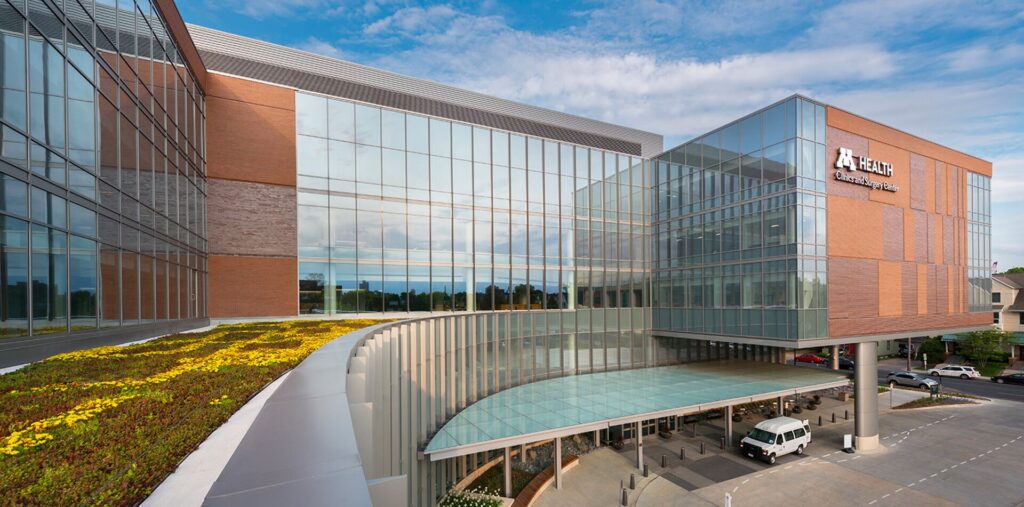
The University of Minnesota Medical School stands as one of the largest and most prestigious medical institutions in the United States. Founded in 1888, this LCME-accredited medical school has built a remarkable legacy through innovative medical education, cutting-edge research, and comprehensive patient care across three distinct campuses.
The medical school operates a traditional 4-year MD program with unique structural elements that set it apart from other medical institutions. Students can pursue their medical education at three locations:
- Twin Cities Campus (Minneapolis/Saint Paul) – The flagship location accommodating 165 MD students per class plus 10 MD/PhD students
- Duluth Campus – Specializing in rural and small-town healthcare training with 65 students per class
- CentraCare Regional Campus (St. Cloud) – A newer regional partnership focusing on community-based medical education
Location and Campus Details
Located in Minneapolis, Minnesota, the medical school’s main campus sits in the heart of the vibrant Twin Cities metropolitan area. As a public institution with an urban campus setting, students benefit from exposure to diverse patient populations and extensive clinical training opportunities across 24 hospitals and 30+ clinical training sites in the Twin Cities alone.
The school’s multi-campus approach allows students to choose from different educational environments while maintaining the same high-quality curriculum standards. The Duluth campus specifically focuses on training physicians for rural and underserved communities, while the St. Cloud regional campus provides additional opportunities for community-based medical education.
Accreditation Status
The University of Minnesota Medical School holds full accreditation from the Liaison Committee on Medical Education (LCME), the national accrediting body for MD programs in the United States and Canada. This accreditation ensures that graduates are eligible to apply for residency training programs and practice medicine throughout the United States.
The school’s LCME accreditation status was most recently reaffirmed following comprehensive review, demonstrating the institution’s continued commitment to meeting the highest standards in medical education, faculty qualifications, and student support services.
Ranking and Recognition
The University of Minnesota Medical School has earned significant recognition in national rankings:
- US News & World Report Rankings: Tier 1 in Primary Care, Tier 2 in Research (2024)
- NIH Research Funding: Ranked 24th nationally and 9th among public universities with $296+ million in NIH sponsored research (FY2023)
- Specialized Programs: The school is particularly renowned for its primary care training, rural medicine programs, and research in various medical specialties
The medical school’s reputation extends beyond rankings, with graduates consistently matching into competitive residency programs nationwide and the institution’s research contributing significantly to medical advancement globally.
Admission Requirements
Academic Prerequisites
Minimum Degree Requirements
The University of Minnesota Medical School requires all applicants to complete a bachelor’s degree from an accredited U.S.-based or Canadian college or university before matriculation. The degree must be completed by July 1 of the year students begin medical school.
Required Prerequisite Courses
Unlike many medical schools that require extensive prerequisite coursework, the University of Minnesota Medical School has streamlined its requirements to seven prerequisite courses:
Required Courses:
- Biology with lab – 1 semester/quarter, any level, focusing on general principles, cell biology, and/or physiology
- Chemistry with lab – 1 semester/quarter, any level, general or organic chemistry
- Any Level Science – 1 semester/quarter of physical or natural science (examples: biology, genetics, zoology, botany, parasitology, biochemistry, additional chemistry, pharmacology, physics)
- Any Level Science – 1 additional semester/quarter of physical or natural science
- Upper Level Science – 1 semester/quarter of upper-level physical or natural science completed at an accredited four-year college or university
- Upper Level Science – 1 additional semester/quarter of upper-level physical or natural science
- Humanities or Social Sciences (Upper Level) – 1 semester/quarter of upper-level, non-STEM coursework
This streamlined approach allows students from diverse academic backgrounds to pursue medicine while ensuring they have foundational scientific knowledge.
GPA Requirements
Academic Performance Expectations:
- Median GPA of admitted students: 3.86
- Competitive GPA range: While no minimum GPA is explicitly stated, successful applicants typically demonstrate strong academic performance with GPAs well above 3.5
- Holistic evaluation: The admissions committee considers overall GPA trends, course rigor, and improvement over time rather than focusing solely on absolute numbers
The school evaluates both overall GPA and science GPA, considering the context of the applicant’s undergraduate institution and course load.
Standardized Testing
MCAT Requirements
MCAT Score Expectations:
- Minimum MCAT requirement: 500 (this is a screening threshold for secondary application eligibility)
- Median MCAT of admitted students: 513 (Twin Cities), 507.5 (Duluth)
- Competitive score range: Most successful applicants score significantly above the minimum, with the median representing the 85th percentile nationally
MCAT Policies:
- Scores must be current and verified through AMCAS
- If retaking the MCAT, applications will be held until new scores are available
- The school considers all MCAT attempts but focuses on the highest score
Additional Testing Requirements
PREview Exam:
The University of Minnesota Medical School requires the PREview (Professional Readiness Exam), which assesses:
- Ethical decision-making
- Cultural competence
- Communication skills
- Professionalism
- Leadership potential
Applications are held until PREview scores are received and verified, making this exam essential for all applicants.
Extracurricular Activities & Experience Requirements
The University of Minnesota Medical School uses a holistic evaluation system that considers multiple non-academic factors:
Valued Experiences:
- Clinical exposure: Direct patient contact through shadowing, volunteering, or employment in healthcare settings
- Research experience: Participation in biomedical, clinical, or public health research
- Community service: Volunteer work demonstrating commitment to serving others
- Leadership roles: Evidence of leadership ability in various contexts
- Cultural competency: Experiences working with diverse populations
Residency Preferences:
- In-state preference: 78% of Twin Cities students and 92% of Duluth students are Minnesota residents
- Out-of-state acceptance: The school does accept qualified non-resident applicants, particularly those bringing diverse perspectives and experiences
Application Process & Timeline
Application System and Requirements
Primary Application (AMCAS)
The University of Minnesota Medical School participates in the American Medical College Application Service (AMCAS) for primary applications.
Key Application Details:
- Application deadline: October 1, 2025
- Application fee: $100 (paid through AMCAS)
- School codes: 003969 (Twin Cities), 002388 (Duluth)
Required Documents for Primary Application
- Official transcripts from all post-secondary institutions
- Letters of evaluation: Exactly 3 letters required (additional letters will not be considered)
- MCAT scores (minimum 500 required for secondary application invitation)
- PREview exam scores (required for all applicants)
- Work and Activities section detailing extracurricular experiences
- Personal statement describing motivation for medicine
Secondary Application Process
After meeting initial screening criteria (MCAT ≥500, PREview completion, residency status verification), eligible applicants receive secondary applications with:
- Additional essay questions specific to the University of Minnesota
- Supplemental information requests
- Secondary application fee (amount varies by year)
Interview Process
Interview Format and Logistics:
The University of Minnesota Medical School utilizes multiple interview formats depending on the campus and cycle:
- Interview invitations: Typically sent between October and February
- Interview format: Traditional panel interviews and/or Multiple Mini Interviews (MMI)
- Virtual vs. in-person options: Available depending on applicant location and circumstances
- Interview timeline: Most interviews occur between November and March
Interview Statistics:
Based on recent application cycles, approximately 15-20% of applicants who submit secondary applications receive interview invitations, with interviews being highly competitive given the school’s reputation and limited class size.
Timeline Overview
Key Application Cycle Dates:
- May-June: AMCAS application opens
- October 1: Final AMCAS submission deadline
- October-November: Secondary application invitations and submissions
- November-March: Interview season
- March-May: Acceptance notifications and waitlist activity
- April 30: Final acceptance deadline for most students
Admission Statistics & Success Rates
Overall Acceptance Rate and Competitiveness
The University of Minnesota Medical School is highly competitive with acceptance rates reflecting the caliber of applicants it attracts:
Admission Statistics (Class of 2024):
- Twin Cities Campus:
- Applications received: 2,738
- Students enrolled: 165 MD + 10 MD/PhD = 175 total
- Acceptance rate: Approximately 6-7% overall
- Duluth Campus:
- Applications received: 761
- Students enrolled: 65
- Acceptance rate: Approximately 8-9% overall
Class Size and Application Volume
Current Class Statistics:
- Total first-year class size: 240 students across all campuses
- Application trends: Applications have increased significantly over the past decade, with over 3,500 total applications for recent cycles
- Yield rate: High percentage of accepted students matriculate, indicating the school’s desirability
Demographics of Admitted Students
Academic Profile (Twin Cities Class of 2024):
- Average GPA: 3.78
- Average MCAT: 512.6
- Age distribution: Average age 25.5 years
- Gender breakdown: 58% female, 39% male, 1% other gender identity
- Geographic distribution: 78% Minnesota residents, 22% out-of-state
Duluth Campus Profile:
- Average GPA: 3.75
- Average MCAT: 507.5
- Age: Average 25.2 years
- Geographic distribution: 92% Minnesota residents
- Gender distribution: 50% male, 49% female
Waitlist Information
The University of Minnesota Medical School maintains waitlists for both campuses, with historical data showing:
- Waitlist activity: Varies significantly by year based on yield rates
- Communication: Regular updates provided to waitlisted candidates
- Timeline: Most waitlist movement occurs between May and August
Comparison with Peer Institutions
Compared to other public medical schools in the Midwest, the University of Minnesota Medical School demonstrates:
- Competitive statistics: MCAT and GPA requirements comparable to top-tier public medical schools
- Research opportunities: Higher research funding per student than many peer institutions
- Match results: Consistently strong residency placement rates across specialties
Tuition & Financial Information
Current Tuition Rates
2024-2025 Academic Year Tuition:
- Minnesota residents: $43,011 per year
- Out-of-state students: $64,016 per year
- International students: Same as out-of-state rates
Additional Fees and Expenses
Beyond tuition, students should budget for:
- Student services fees: Approximately $1,500-2,000 annually
- Technology fees: $500-800 per year
- Health insurance: $2,000-3,000 annually (if not covered by family plan)
- Books and supplies: $2,000-3,000 per year
- Clinical rotation expenses: Variable based on away rotations and travel
Total Cost of Attendance
Estimated Annual Costs (2024-2025):
- Minnesota residents: $65,000-70,000 (including living expenses)
- Out-of-state students: $85,000-90,000 (including living expenses)
4-Year Program Total Investment:
- In-state students: $260,000-280,000
- Out-of-state students: $340,000-360,000
Financial Aid Options
Merit-Based Aid
Non-Resident Tuition Scholarships:
- Twin Cities: Up to 15 scholarships annually
- Duluth: 10 scholarships annually
- Value: Equivalent to the difference between resident and non-resident tuition
- Criteria: High academic achievement, leadership, diversity, and financial need
- Renewal: Renewable annually with satisfactory academic progress
Need-Based Financial Aid
University Grants and Scholarships:
- University Grants: Based primarily on demonstrated financial need
- University of Minnesota Foundation Scholarships: Merit and need-based awards
- Departmental scholarships: Specialty-specific awards for students with particular interests
Federal Aid Programs:
- Federal Direct Loans: Up to $40,500 annually in unsubsidized loans
- Federal Direct PLUS Loans: Additional borrowing up to cost of attendance
- Work-study opportunities: Limited positions available on campus
Application Process for Financial Aid
Required Applications:
- FAFSA (Free Application for Federal Student Aid): Priority deadline March 1 (Twin Cities)
- Medical Student Scholarship Application: Required for need-based institutional aid
- CSS Profile: May be required for certain scholarships
Living Expenses in Minneapolis
Housing Options:
- On-campus housing: Limited graduate housing available
- Off-campus apartments: $800-1,500/month depending on location and amenities
- Shared housing: $600-1,000/month for room in shared house or apartment
Additional Living Costs:
- Food: $300-500/month
- Transportation: $100-200/month (public transit or parking)
- Personal expenses: $200-400/month
- Professional expenses: $500-1,000/year for conferences, licensing exams, etc.
Click To See Hundreds Of Consultants Who Can Mentor You:


Curriculum & Program Structure
Program Duration and Educational Philosophy
The University of Minnesota Medical School offers a traditional 4-year MD program with an innovative curriculum that emphasizes:
- Early clinical exposure: Patient contact begins in the first year
- Problem-based learning: Small group sessions focusing on clinical cases
- Research integration: Opportunities for scholarly work throughout all four years
- Community engagement: Strong emphasis on serving diverse populations
Educational Structure by Year
Years 1-2: Pre-Clinical Foundation
Curriculum Features:
- Pass/Fail grading system: Implemented to reduce student stress and promote collaboration
- Integrated systems approach: Courses organized by organ systems rather than traditional disciplines
- Clinical skills development: Regular patient encounters and procedural training
- Research opportunities: Encouraged participation in faculty research projects
Assessment Methods:
- Competency-based evaluation: Focus on achieving specific learning objectives
- National standardized exams: USMLE Step 1 (now Pass/Fail)
- Practical examinations: Clinical skills assessments throughout pre-clinical years
Years 3-4: Clinical Training
Core Clinical Rotations:
Students complete required rotations in:
- Internal Medicine
- Surgery
- Pediatrics
- Obstetrics and Gynecology
- Psychiatry
- Family Medicine
- Emergency Medicine
- Neurology
Clinical Training Sites:
- Twin Cities: 24 hospitals and 30+ clinical training sites
- Geographic distribution: Clinical experiences available throughout Minnesota and neighboring states
- Hospital partnerships: Strong relationships with major medical centers including University of Minnesota Medical Center, Hennepin Healthcare, and Allina Health
Special Programs and Tracks
Combined Degree Programs
The school offers several dual degree options:
- MD/PhD (Medical Scientist Training Program): Fully funded 7-8 year program
- MD/MPH: Public health focus with University of Minnesota School of Public Health
- MD/MBA: Business training through Carlson School of Management
- MD/JD: Joint program with University of Minnesota Law School
- BS/MD: Accelerated pathway for exceptional undergraduates
Rural Medicine Track (Duluth Campus)
- Rural focus: Specialized training for physicians serving rural and underserved communities
- Community partnerships: Rotations in small towns and rural hospitals
- Scholarship opportunities: Additional financial support for students committed to rural practice
Research Opportunities
Scholarly Concentration Program:
All students complete a scholarly project in areas such as:
- Basic science research: Laboratory-based investigations
- Clinical research: Patient-oriented studies
- Public health: Population-based research
- Medical education: Teaching and curriculum development
- Global health: International health initiatives