
Last updated on January 9th, 2026 at 06:28 am
Program Overview & Institution Identity
Official Program Name
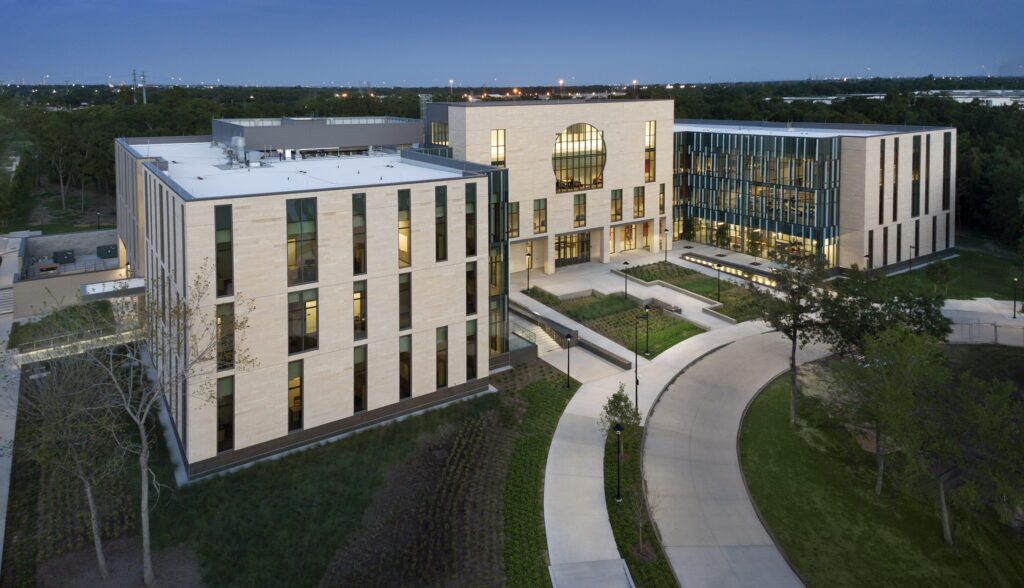
The University of Houston Tilman J. Fertitta Family College of Medicine is a public medical school established in 2014 and located in Houston, Texas. The college is part of the University of Houston System and represents one of the newest additions to Texas medical education institutions.
Program Duration & Structure
The UH Fertitta College of Medicine offers a 4-year MD program with a unique curriculum structure designed around community-centered medical education. The program emphasizes primary care training and social determinants of health, making it distinctive among Texas medical schools.
Location and Campus Details
Located on 5055 Medical Circle, Houston, Texas 77204, the college operates on an urban campus in the heart of Houston’s medical district. The strategic location provides students with access to one of the world’s largest medical centers and diverse clinical training opportunities.
Accreditation Status
The Tilman J. Fertitta Family College of Medicine holds LCME (Liaison Committee on Medical Education) accreditation, ensuring the program meets the highest standards for medical education in the United States. This accreditation guarantees that graduates are eligible to sit for USMLE examinations and apply for residency training programs.
Unique Characteristics
The college distinguishes itself through:
- Community-centered approach: Students spend one half-day weekly in primary care clinical settings throughout all four years
- Social determinants of health focus: Emphasis on addressing healthcare disparities in underserved populations
- Interprofessional teams: Students work with nursing, social work, and community health workers
- Household Centered Care (HCC): Teams make regular visits to households facing significant health challenges
Admission Requirements
Academic Prerequisites
Minimum Degree Requirements
- 90 undergraduate credit hours from an accredited university in the United States or Canada
- All prerequisites must be completed at US or Canadian institutions
- Advanced Placement (AP) credit accepted only if officially listed on transcripts with specific course titles and credit hours
Required Courses
Science Prerequisites:
- General Biology: 8 credit hours (2 hours must be laboratory)
- Advanced Biology: 3 credit hours (Junior level or higher)
- General (Inorganic) Chemistry: 8 credit hours (2 hours must be laboratory)
- Organic Chemistry: 8 credit hours (2 hours must be laboratory)
- Biochemistry: 3 credit hours
- Physics (for science majors): 8 credit hours (2 hours must be laboratory)
Non-Science Prerequisites:
- Statistics: 3 credit hours (taught in math/statistics/psychology departments)
- English Composition: 6 credit hours
Recommended Courses:
- Foreign language
- Additional biology courses: molecular biology, genetics, human physiology, immunology
GPA Requirements
- No minimum GPA requirement for application submission
- Median accepted student GPA: 3.85
- The admissions committee looks for consistent academic excellence and improvement trends
- Both overall and science GPA are considered in holistic review
Standardized Testing
MCAT Requirements
- MCAT is required for all applicants
- Test must be taken by September of the application year
- Scores cannot be more than 5 years old
- Median accepted student MCAT: 506
- No specific section score requirements, but balanced performance across all sections is valued
Extracurricular Activities & Experience Requirements
Valued Experiences
The admissions committee seeks applicants demonstrating:
- Commitment to service and community engagement
- History of effective teamwork
- Cultural and academic humility
- Capacity for academic excellence and innovative problem solving
- Evidence of maturity, conscientiousness, and resiliency
Residency Preferences
- Texas residents comprise approximately 95% of each entering class
- Texas law limits non-residents to no more than 10% of the class
- International students must be U.S. citizens or permanent residents to be considered for interviews
Application Process & Timeline
Application System
UH Fertitta College of Medicine uses TMDSAS (Texas Medical and Dental Schools Application Service) for primary applications. The school does NOT participate in AMCAS.
Key Timeline Components
1. Primary Application (TMDSAS)
Application Deadline: November 30, 2025
Required components include:
- Post-secondary academic transcripts
- MCAT scores
- Personal essays
- Minimum of three (3) letters of recommendation
- Activities and experiences descriptions
2. Secondary Application
- Invitation-based secondary applications sent to qualified candidates
- 14-day deadline from invitation timestamp
- $60 application fee (fee waivers available for qualified applicants)
- Applications reviewed for mission alignment
3. Interview Process
- Multiple Mini Interview (MMI) format commonly used
- Interview invitations sent to competitive applicants
- Both virtual and in-person options may be available
- Approximately 1.25% acceptance rate making interviews highly competitive
Early Decision Option
The college offers an Early Decision Program for applicants who commit to attending if accepted. Early Decision applicants must meet earlier deadlines and can only apply to UH Fertitta as their single choice school.
Admission Statistics & Success Rates
Overall Competitiveness
- Acceptance Rate: Approximately 1.25%
- Applications received: 4,799 (2025 entering class)
- Students matriculated: 60
- Class size: 60 students
Academic Profile of Admitted Students
- Median GPA: 3.85
- Median MCAT: 506
- Texas residents: ~95% of entering class
- Out-of-state residents: ~5% (maximum 10% by Texas law)
Comparison Data
UH Fertitta College of Medicine is among the most competitive medical schools nationally, with an acceptance rate comparable to top-tier institutions. The median MCAT score (506) is slightly below the national average (511.7), reflecting the school’s holistic admissions approach that values mission alignment and community service commitment.
Tuition & Financial Information
Current Tuition Rates (2025-2026)
| Category | Texas Resident | Non-Resident |
|---|---|---|
| Tuition & Fees | $24,268 | $37,368 |
Complete Cost of Attendance
| Category | Texas Resident | Non-Resident |
|---|---|---|
| Tuition & Fees | $24,268 | $37,368 |
| Books & Supplies | $3,500 | $3,500 |
| Room & Board | $21,250 | $21,250 |
| Transportation | $3,686 | $3,686 |
| Miscellaneous | $3,458 | $3,458 |
| Loan Fees | $452 | $452 |
| Total COA | $56,614 | $69,714 |
Four-Year Program Cost
- Texas Residents: Approximately $226,456 total program cost
- Non-Residents: Approximately $278,856 total program cost
Financial Aid Options
Internal Scholarships
- Various scholarship opportunities available to enrolled students
- Contact Office of Scholarships and Financial Aid for current opportunities
- Students in Armed Forces Health Professions Program or National Health Service Corps not eligible for additional internal scholarships
External Scholarship Opportunities
- Physicians of Tomorrow Awards (4th Year students)
- Herbert W. Nickens Medical Student Scholarship (AAMC)
- National Medical Fellowships Program (underrepresented minorities)
Federal Student Loans
- Federal Direct Unsubsidized Loans: 7.94% interest rate (2025-2026)
- Origination fees: 1.057%
- Annual borrowing limit: $42,722 for first-year students, or cost of attendance
Click To See Hundreds Of Consultants Who Can Mentor You:
Curriculum & Program Structure
Program Duration and Structure
The 4-year curriculum is divided into three distinct phases:
Phase 1: Pre-Clerkship (18 months – Years 1-2)
Built on four foundational pillars:
- Biomedical Sciences: Traditional medical science knowledge
- Physicians, Patients, and Populations (PPP): Integrated approach to patient care
- Longitudinal Primary Care (LPC): Weekly half-day clinical experiences
- Clinical Focus Sessions: Practical skill development
Phase 2: Core Clerkships (Year 2-3)
- Longitudinal Integrated Clerkship (LIC): Hybrid rotation model
- Core rotations in Internal Medicine, Surgery, Pediatrics, OB/GYN, Family Medicine, and Psychiatry
- Household Centered Care (HCC): Community-based patient care experiences
Phase 3: Advanced Clerkships (Year 4)
Required rotations include:
- Intensive Care Unit (4 weeks) – choice of medical, surgical, pediatric, or newborn ICU
- Sub-Internship (4 weeks) – choice of medicine, surgery, pediatrics, OB/GYN, psychiatry, or family medicine
- Emergency Medicine (4 weeks)
- Rural Health (4 weeks)
- Minimum 24 weeks of electives (clinical, educational, research)
- 16 weeks for Step 2 preparation, residency interviews, and vacation
Educational Philosophy and Teaching Methods
- Team-based, interactive classroom instruction
- Problem-based learning components
- Pass/fail grading for pre-clerkship courses
- Pass/fail/honors grading for clerkships
- Interprofessional education with nursing and social work students
Special Programs
- Combined BS/MD pathway available through University of Houston
- Primary care focus with emphasis on underserved populations
- Community health worker collaboration
- Social determinants of health integration
Pre-Medical Preparation
Undergraduate Program Recommendations
- No preferred major – the college values diverse academic backgrounds
- Focus on completing prerequisite courses with strong performance
- Balance science requirements with liberal arts education
- Consider courses that enhance cultural competency and communication skills
Academic Planning Strategy
- Complete prerequisites early to allow time for MCAT preparation
- Maintain consistent academic performance – avoid course overload that compromises grades
- Consider retaking courses if grades are below B- level in prerequisites
- Plan for prerequisite completion by July 1 of the entering year
Clinical Experience Requirements
- Primary care exposure highly valued given the school’s mission
- Quality of experience more important than quantity of hours
- Seek experiences in underserved communities when possible
- Document learning outcomes and patient interaction skills development
Research Experience Considerations
- Research experience valued but not required
- Community health research and health disparities studies particularly relevant
- Publications not expected but demonstrate commitment if present
- Consider research that aligns with the school’s community-focused mission
Extracurricular Planning
- Community service – long-term commitments preferred over short-term volunteering
- Leadership roles – demonstrate ability to work in teams and lead initiatives
- Cultural competency experiences – work with diverse populations
- Healthcare exposure – shadowing, clinical volunteering, healthcare employment
MCAT Preparation Timeline
- Plan 3-6 months of dedicated study time
- Take the test by September of application year
- Consider retaking if initial score is below 500
- Focus on balanced section scores rather than just total score
Frequently Asked Questions
Does UH Fertitta College of Medicine look at extracurricular activities?
Yes, extensively. The admissions committee seeks applicants with commitment to service, community engagement, teamwork, and leadership. These experiences are equally important as academic metrics in the holistic review process.
What is UH Fertitta College of Medicine’s average GPA and MCAT score?
The median GPA for accepted students is 3.85, and the median MCAT score is 506. However, the admissions process is holistic, and mission alignment is heavily weighted.
How competitive is UH Fertitta College of Medicine compared to other medical schools?
With an acceptance rate of approximately 1.25%, UH Fertitta is among the most competitive medical schools in the United States, comparable to top-tier institutions nationwide.
Does UH Fertitta College of Medicine prefer in-state applicants?
Yes, Texas law limits non-resident enrollment to maximum 10% of each class. Approximately 95% of students are Texas residents, making it significantly more competitive for out-of-state applicants.
When should I apply to UH Fertitta College of Medicine?
Submit your TMDSAS application as early as possible after it opens (typically May). The final deadline is November 30, 2025. Early submission provides advantages in rolling admissions.
Does UH Fertitta College of Medicine accept international students?
Only international students who are U.S. citizens or permanent residents are eligible for consideration and interviews.
What clinical experience do I need for UH Fertitta College of Medicine?
While specific hour requirements aren’t stated, meaningful clinical exposure is important. Primary care experiences are particularly valued given the school’s mission focus.
Does UH Fertitta College of Medicine require research experience?
Research experience is not required but can strengthen an application. Community health research and studies addressing health disparities are particularly relevant.
How many letters of recommendation does UH Fertitta College of Medicine require?
A minimum of three (3) letters of recommendation are required through TMDSAS. Include letters from science faculty, physicians, and supervisors who can speak to your mission alignment.
What is UH Fertitta College of Medicine’s curriculum like?
The 4-year curriculum emphasizes primary care, community health, and social determinants of health. Students have clinical exposure from the first year with weekly half-day primary care experiences.
Where do UH Fertitta College of Medicine graduates match for residency?
As a newer school (established 2014), comprehensive match data is still developing. The school’s focus on primary care suggests strong placement in family medicine, internal medicine, and pediatrics.
How much does UH Fertitta College of Medicine cost?
Total cost of attendance is $56,614 for Texas residents and $69,714 for non-residents annually. Four-year program costs approximately $226,456 for residents and $278,856 for non-residents.
What financial aid is available at UH Fertitta College of Medicine?
The school offers internal scholarships (details available from Financial Aid Office), federal student loans, and students can apply for external scholarships. Fee waivers are available for qualified secondary application candidates.
Does UH Fertitta College of Medicine offer interviews to all qualified applicants?
No. With over 4,700 applications for 60 spots, only a small percentage of applicants receive interview invitations. The process is highly selective from application review through interview selection.
Can I defer admission if accepted to UH Fertitta College of Medicine?
Deferral requests are evaluated case-by-case by the admissions team. There is no guaranteed deferral policy, and acceptance is at the school’s discretion.
Does UH Fertitta College of Medicine use MMI (Multiple Mini Interview) format?
Based on trends in medical school admissions and the school’s emphasis on holistic evaluation, MMI format is commonly used, though specific interview format details should be confirmed with the admissions office.
What makes UH Fertitta College of Medicine different from other Texas medical schools?
The school’s unique focus on community-centered medicine, primary care emphasis, longitudinal clinical experiences from year one, interprofessional education, and commitment to addressing health disparities in underserved populations distinguishes it from other Texas medical schools.