Last updated on January 9th, 2026 at 06:28 am
Program Overview & Institution Identity
Official Program Name & Institution Identity
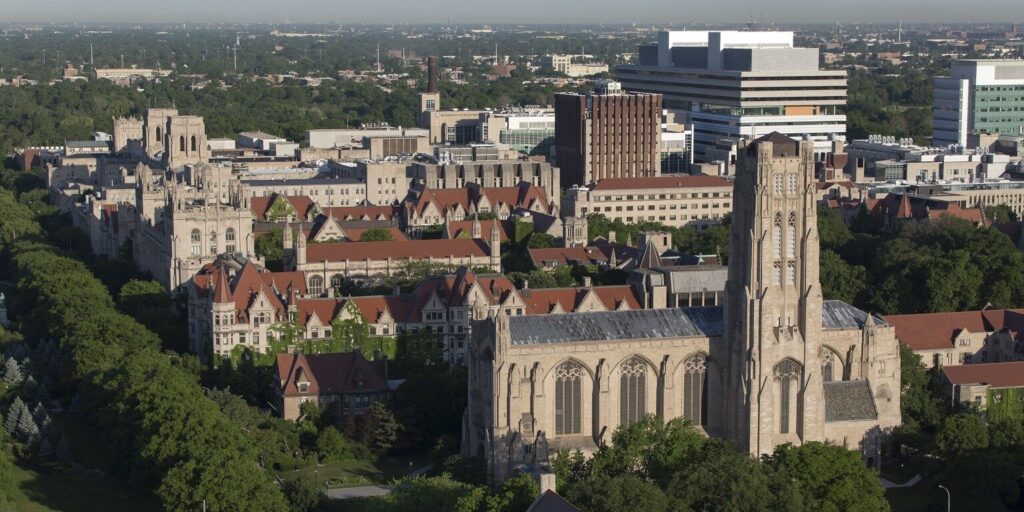
The University of Chicago Division of the Biological Sciences The Pritzker School of Medicine stands as one of America’s most prestigious medical institutions, representing a legacy of medical excellence that spans nearly a century. Since 1927, this distinguished private medical school has been dedicated to developing world-renowned research institutions and academic programs that shape the future of healthcare.
Program Duration & Structure
Pritzker offers a 4-year MD program following an innovative Phoenix Curriculum that began with the matriculating class of 2023. This groundbreaking curriculum provides students with enhanced time for self-directed learning, research scholarship, and community engagement while accelerating entry into the clinical phase. The program is structured in three distinct phases:
- Phase One: Foundation & Formation – Pre-clinical coursework with integrated basic sciences
- Phase Two: Application – Core clinical clerkships with robust ambulatory education
- Phase Three: Integration – Sub-internships, electives, and specialty exploration
The Phoenix Curriculum represents a significant departure from traditional medical education, emphasizing the relationship between basic and clinical sciences while providing protected time for scholarly pursuits through the Scholarship & Discovery research program.
Location & Campus Details
Located in the historic Hyde Park neighborhood of Chicago, Illinois, Pritzker operates as a private institution within the greater University of Chicago campus. This urban campus setting provides students with access to diverse clinical experiences throughout the South Side of Chicago, where the primary service area encompasses 12 zip codes with poverty rates more than double the state level.
The campus offers a unique blend of academic excellence and community engagement, with students leading six free clinics in diverse neighborhoods throughout Chicago. This urban setting provides unparalleled exposure to diverse patient populations and complex medical cases.
Accreditation Status
The University of Chicago Pritzker School of Medicine is fully accredited by the Liaison Committee on Medical Education (LCME), the nationally recognized accrediting authority for MD programs in the United States. This accreditation ensures that graduates are eligible to take the United States Medical Licensing Examination (USMLE) and apply for residency programs throughout the country.
LCME accreditation represents the gold standard in medical education, guaranteeing that the program meets rigorous standards for curriculum, faculty, resources, and student outcomes. This accreditation is essential for students to practice medicine in the United States and maintains international recognition for the degree.
Ranking & Recognition
Pritzker consistently ranks among the top medical schools nationally, with particular recognition for:
- Research excellence and innovation in medical education
- Diversity and inclusion initiatives, making it one of the most racially inclusive hospitals in the United States
- Strong residency match rates with graduates placing at prestigious institutions nationwide
- Pioneering curriculum development with the Phoenix Curriculum model
The school’s reputation attracts students from 52 different colleges and universities annually, with 80% of students coming from out-of-state, reflecting its national appeal and competitive standing.
Admission Requirements
Academic Prerequisites
Minimum Degree Requirements
Applicants must complete 90 credit hours using the AMCAS methodology from an accredited four-year degree-granting U.S. or Canadian college or university prior to matriculation. While a baccalaureate degree is not technically required, it is strongly preferred by the Admissions Committee.
For international students who completed a baccalaureate degree outside the U.S. or Canada, the school requires completion of at least one year of full-time coursework (predominantly in the sciences) at a U.S. or Canadian institution. Courses pursued in other English-speaking countries will also be considered on a case-by-case basis.
Required Courses & Competency-Based Requirements
Pritzker emphasizes competency-based admissions requirements rather than specific course mandates. The school focuses on the level of mastery achieved rather than the number of courses taken. Essential competencies include:
Science Foundation:
- Biology with laboratory experience
- Chemistry (general, organic, and/or biochemistry – at least one with laboratory)
- Physics with laboratory experience
- Mathematics (including statistics or biostatistics)
Liberal Arts Foundation:
- Humanities and writing-intensive courses
- Coursework emphasizing human behavior, cultural competence, and analytical thinking
- Exposure to psychology, sociology, anthropology, philosophy, ethics, and economics (encouraged but not required)
GPA Requirements
Median GPA for Accepted Students: 3.94
While there is no official minimum GPA requirement, successful applicants typically demonstrate exceptional academic performance:
- Competitive Range: 3.3 – 4.0 GPA
- National Context: Pritzker’s median GPA of 3.94 significantly exceeds the national average of 3.77 for medical school matriculants
- Academic Excellence: The high median GPA reflects the school’s commitment to academic rigor and selectivity
The Admissions Committee evaluates both overall GPA and science GPA, considering the rigor of coursework, grade trends, and academic context when making holistic admissions decisions.
Standardized Testing Requirements
MCAT Requirements
Median MCAT Score: 520
The MCAT is mandatory for all applicants, with specific policies including:
Score Requirements:
- Competitive Range: 505-528 (though most successful applicants score significantly higher)
- Median Score: 520 (compared to national average of 511.7)
- Validity Period: MCAT scores are accepted for up to three years prior to application
- Retake Policy: Students may retake if scores are more than three years old
MCAT Hold Policy:
If applicants are retaking the MCAT, Pritzker will wait for the new score if retesting is completed by September of the application year. Students must contact the admissions office to place their file on MCAT Hold.
No Additional Testing Required:
- CASPer Test: Not required (unlike many other medical schools)
- GRE: Not accepted as a substitute for the MCAT
- The school focuses exclusively on MCAT performance for standardized testing evaluation
Extracurricular Activities & Experience Requirements
Pritzker employs a holistic evaluation system that considers multiple dimensions of an applicant’s background:
Clinical Experience:
- Hands-on patient care experience strongly recommended
- Quality and depth of experiences valued over quantity of hours
- Preference for sustained, meaningful clinical encounters
- Experience in diverse healthcare settings encouraged
Research Experience:
- All MD students participate in the Scholarship & Discovery research program
- Prior research experience highly valued but not mandatory
- Basic science, clinical, or public health research all considered valuable
- Publications and presentations strengthen applications but are not required
Community Service & Leadership:
- Demonstrated commitment to serving underserved populations
- Leadership roles in healthcare, community organizations, or academic settings
- Long-term commitments preferred over scattered short-term activities
- Alignment with Pritzker’s mission of community engagement
Diversity & Life Experience:
- 40% of entering students are underrepresented in medicine
- 80% of students take gap years before medical school
- Non-traditional backgrounds and life experiences welcomed
- International perspectives valued (2% international student enrollment)
Application Process & Timeline
Application System & Requirements
Pritzker uses the American Medical College Application Service (AMCAS) for primary applications. The complete application process consists of multiple components:
Primary Application Components:
- Verified AMCAS application
- MCAT score(s)
- Official transcripts through AMCAS
- Personal statement
- Work and activities descriptions
Application Timeline:
- AMCAS Filing Period: May 31 – November 15
- AMCAS Deadline: November 15
- Early Submission Recommended: Earlier submission improves review timeline
Secondary Application Process
Universal Secondary Policy: Every applicant who submits through AMCAS receives a secondary application via email. The school does not pre-screen applications before sending secondaries.
Secondary Application Requirements:
- Application Fee: $95 (waived for AMCAS Fee Assistance Program recipients)
- Deadline: December 1
- Essay Components: Multiple essays totaling approximately 1,000+ words
- Specific Prompts Focus: Diversity in clinical environments, research interests, challenging situations, and personal experiences
Key Secondary Essay Topics (2024-2025):
- Clinical Diversity Preparedness: Experience working in diverse clinical environments (450 words max)
- Research Interests: Scholarly pursuits and career goals (550 words max)
- Challenging Situations: Problem-solving and coping skills demonstration
- Additional Essays: Values, experiences, and motivations for medicine
Letters of Recommendation
Requirements: Applicants may fulfill the recommendation requirement through either:
Option 1: At least one committee letter, composite letter, or premedical advisor’s letter
Option 2: A minimum of three individual letters
- Two letters from science faculty (if submitting individual letters)
- Additional letters from clinical supervisors, research mentors, or employers encouraged
- Quality over quantity – no maximum limit but focused, strong letters preferred
Deadline: December 1 (consistent with secondary application deadline)
Interview Process
Interview Format: Pritzker conducts interviews for competitive applicants from August through February.
Interview Schedule:
- MD Interview Days: Mondays, Tuesdays, and Thursdays
- MD/PhD (MSTP) Interviews: Select Tuesdays (MD component) and Wednesdays (MSTP component)
- Notification: Interview invitations sent via email on a rolling basis
Interview Experience:
- Traditional interview format with faculty and student interviewers
- Multiple interview stations assessing different competencies
- Campus tour and information sessions included
- Opportunity to meet current students and faculty
Virtual vs. In-Person: The school follows AAMC recommendations for virtual interviews to reduce costs and increase equity, though some components may remain in-person.
Post-Interview Process
Acceptance Notification:
- Rolling Acceptances: Beginning October 15
- Communication: Acceptances communicated through AMCAS and email
- Response Requirements: Follow AAMC protocols for acceptance management
Waitlist Process:
- Students may be placed on waitlist after interview review
- Waitlist communication continues through the summer
- Updates and additional information welcomed from waitlisted applicants
Admission Statistics & Success Rates
Overall Acceptance Rate & Competitiveness
Acceptance Rate: Approximately 1.42%
For the 2025 entering class:
- Applications Received: 6,407
- Students Matriculated: 91
- Competition Level: Among the most selective medical schools nationally
This exceptionally low acceptance rate places Pritzker among the top tier of competitive medical schools, requiring outstanding credentials across all application components.
Application Volume & Class Composition
Class Size & Demographics:
- Total Entering Class: 91 students
- MD Students: 79
- MD/PhD Students: 11
- Geographic Distribution: 80% out-of-state, 2% international
- Gap Year Experience: 80% took one or more gap years
- Institutional Diversity: Students from 52 different colleges and universities
Diversity Statistics:
- Underrepresented in Medicine: 40% of entering class
- Gender Distribution: Balanced male/female representation
- Age Range: Most students are 22-26 years old, with some non-traditional students
Academic Statistics of Admitted Students
MCAT Score Analysis:
- Median MCAT: 520
- Competitive Range: 505-528 (though most successful applicants score 515+)
- Percentile Ranking: Median score represents 97th percentile nationally
- Section Balance: Strong performance across all MCAT sections expected
GPA Statistics:
- Median GPA: 3.94
- Competitive Range: 3.3-4.0
- Academic Context: Both overall and science GPAs considered
- Grade Trends: Consistency and upward trends valued
Comparison with Peer Institutions
National Context:
- Pritzker Median MCAT (520) vs. National Average (511.7)
- Pritzker Median GPA (3.94) vs. National Average (3.77)
- Acceptance Rate (1.42%) places Pritzker among top 10 most selective
- Research Focus: Comparable to other top-tier research institutions
Regional Comparison:
Pritzker competes with other prestigious Midwest medical schools including Northwestern, Washington University, and University of Michigan, consistently maintaining competitive statistics across all metrics.
Tuition & Financial Information
Current Tuition Rates
2024-2025 Academic Year Tuition: $61,812 per year
Private Institution Advantage: As a private medical school, tuition is the same for all students regardless of residency status:
- In-State Students: $61,812
- Out-of-State Students: $61,812
- International Students: $61,812
This uniform tuition structure eliminates residency-based discrimination common at public institutions.
Total Cost of Attendance
Comprehensive Annual Costs (2025-2026):
First Year (M1 – 10.5 months):
- Direct Costs: $64,337
- Tuition: $61,812
- Student Life Fee: $1,452
- Medical Equipment: $530
- Lab Fee: $150
- Other fees: $393
- Indirect Costs: $26,960
- Housing & Food: $18,400 ($1,700/month)
- Personal Expenses: $3,500
- Transportation: $2,300
- Books & Materials: $1,200
- Loan Fees: $416
- Total Annual Cost: $91,297
- With Health Insurance: $96,295
Subsequent Years:
- M2 (9 months): $87,071-$92,069
- M3 (12 months): $113,433-$118,431
- M4 (12 months): $112,656-$117,654
Four-Year Program Total: Approximately $400,000-$425,000
Financial Aid Options
Generous Financial Support: Pritzker provides financial assistance to approximately 80% of enrolled medical students each year.
Institutional Aid:
- Scholarships: Merit and need-based awards that do not require repayment
- Institutional Loans: Low-interest loans (typically 0-5% interest) from University funds
- Alumni Support: Funding from grateful alumni, faculty, and patients
Federal Aid Options:
- Direct Unsubsidized Loans: Annual caps vary by year
- M1: $42,722
- M2: $40,500
- M3: $47,167
- M4: $47,167
- Direct GradPLUS Loans: Available for additional funding needs
- Work-Study Opportunities: Limited availability during medical school
Debt Management:
The majority of Pritzker graduates complete their degree with less than the national average in student debt, reflecting the school’s commitment to affordability and generous financial aid programs.
Living Expenses in Chicago
Hyde Park Cost of Living:
- Housing Options: On-campus and nearby off-campus housing
- Monthly Housing Budget: Approximately $1,700 (included in cost estimates)
- Transportation: Chicago public transit system provides affordable citywide access
- Food & Personal: Urban setting with diverse dining and shopping options
Financial Planning Resources:
- Budgeting Tools: University provides cost-of-living guidance
- Financial Counseling: Available through Financial Aid Office
- Emergency Funds: Available for unexpected financial hardships
Click To See Hundreds Of Consultants Who Can Mentor You:
Curriculum & Program Structure
Phoenix Curriculum Overview
The Phoenix Curriculum, launched with the Class of 2027, represents a revolutionary approach to medical education that emphasizes integration, early clinical exposure, and scholarly development.
Educational Philosophy:
- Integration of basic and clinical sciences throughout all phases
- Emphasis on self-directed learning and critical thinking
- Protected time for research and scholarly activities
- Community engagement and service learning
- Competency-based assessment rather than traditional grading
Phase One: Foundation & Formation
Duration: Approximately 18 months
Focus: Essential knowledge and skills foundation
Core Components:
- Integrated Science Courses: Biology, chemistry, physics, and mathematics concepts applied to medical contexts
- Clinical Skills Development: Patient interaction, history-taking, physical examination
- Professional Development: Medical ethics, communication, professionalism
- Community Engagement: Introduction to service learning and community health
Assessment Methods:
- Competency-based evaluations
- Practical examinations
- Integrated testing across disciplines
- Pass/fail system reduces competition and promotes collaboration
Phase Two: Application (Core Clerkships)
Duration: 12 months
Focus: Clinical application of foundational knowledge
Core Clerkships:
- Internal Medicine: 8 weeks (University of Chicago Medical Center and NorthShore)
- Surgery: 6