Last updated on January 9th, 2026 at 06:29 am
Program Overview & Institution Identity
Official Program Name
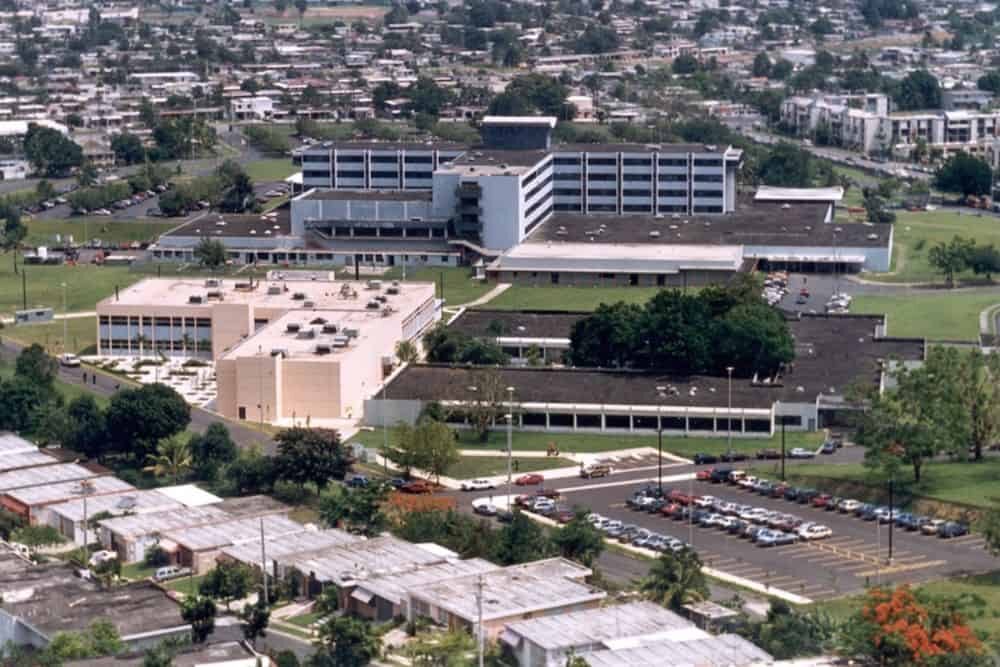
Universidad Central del Caribe School of Medicine (UCC School of Medicine) is a prestigious medical institution located in Bayamón, Puerto Rico, offering a comprehensive Doctor of Medicine (MD) degree program.
Program Duration
The Universidad Central del Caribe School of Medicine offers a 4-year MD program that incorporates a conventional medical education framework with innovative problem-based and evidence-based learning approaches. The curriculum is structured into:
- Pre-clinical Years (Years 1-2): Focus on basic sciences and clinical skills
- Clinical Years (Years 3-4): Clinical rotations and electives, with students required to complete 18 weeks of approved elective courses during the fourth year
Location and Campus Details
The school is situated in Bayamón, Puerto Rico, operating as a private institution with an urban campus setting. The UCC campus includes comprehensive facilities with learning and information resources, research centers, and the Dr. Ramon Ruiz Arnau University Hospital located on the same grounds.
Accreditation Status
Universidad Central del Caribe School of Medicine maintains full accreditation by the Liaison Committee on Medical Education (LCME), which is recognized by the U.S. Department of Education and WFME as the reliable authority for medical education program accreditation. The next accreditation visit is scheduled for 2027.
Unique Program Features
- Problem-Based and Evidence-Based Curriculum: Integration of conventional medical education with innovative learning approaches
- Bilingual Education: Students must be fully bilingual in Spanish and English
- Early Clinical Skills Learning: Sustained community-based learning through the Longitudinal Primary Care Preceptorship
- Longitudinal Curriculum: Bioethics and Humanities in Medicine throughout the program
- Objective Structured Clinical Exams (OSCEs): Eight OSCEs required throughout the first three years
- Clinical Proficiency Examination (CPX): Administered at the end of the third year
Admission Requirements
Academic Prerequisites
Minimum Degree Requirements
Applicants must complete a minimum of 90 credits at an accredited institution of higher education. While a baccalaureate degree is highly recommended, it is not strictly required.
Required Courses and Credit Hours
| Course | Credit Hours |
|---|---|
| General Biology | 8 semester hours |
| General or Inorganic Chemistry | 8 semester hours |
| Organic Chemistry | 8 semester hours |
| Physics | 8 semester hours |
| Mathematics | 6 semester hours |
| English | 9 semester hours |
| Spanish | 9 semester hours |
| Behavioral Sciences and Social Sciences* | 9 semester hours |
* Course work must be in psychology, sociology, economics, political sciences, or anthropology
Recommended Courses: Biochemistry, Genetics, Molecular & Cellular Biology
GPA Requirements
- Minimum General Academic Index: 3.00 on a 4.0 scale
- Minimum Science Index: 3.00 on a 4.0 scale
- Current Median GPA: 3.72 (based on recent admission data)
Standardized Testing
MCAT Requirements
- Minimum MCAT Score: 494 or above
- Current Median MCAT Score: 499
- Validity Period: MCAT scores must be taken within two years before application
- Latest Accepted Score: January MCAT score is the last one considered during the application cycle
Language Requirements
Students are required to be fully bilingual in Spanish and English, as the program serves Puerto Rico and Hispanic communities throughout the U.S. mainland.
Additional Requirements
- Letters of Recommendation: Minimum of two letters from science professors or a letter from the Pre-medical Committee
- Personal Statement: Required through AMCAS application
- Health-Related Experiences: Considered in the holistic evaluation process
Application Process & Timeline
Application System
Universidad Central del Caribe School of Medicine participates in the American Medical College Application Service (AMCAS). All applicants must file an AMCAS application at www.aamc.org/amcas.
Application Requirements
- AMCAS Primary Application: Complete application through AMCAS
- Secondary UCC Application: Required secondary application (accessible through the school’s website)
- Application Fee: Non-refundable processing fee of $200.00
- Official Transcripts: From each college or university attended for all undergraduate and graduate studies
- MCAT Scores: Official results from tests taken within two years
- Letters of Recommendation: Minimum of two from science professors or pre-medical committee
Application Deadline
December 30, 2025 — This is a firm deadline for all application materials.
Interview Process
Based on available data, the school conducts interviews as part of the admission process. Applicants have ranked the school in the top 36% of interviews, indicating it is moderately regarded with moderate stress levels.
Admission Statistics & Success Rates
Class Size and Acceptance Data
- First Year Class Size: 77 students
- Overall Acceptance Rate: Approximately 62% (institutional data)
- Total Enrollment: 74 students (may vary by source)
Academic Statistics of Admitted Students
- Median MCAT Score: 499
- Median GPA: 3.72
- Average MCAT (alternative source): 503
- Average GPA (alternative source): 3.43
International and Out-of-State Acceptance
- Out-of-State Students: Accepted on a case-by-case basis
- Canadian Students: Accepted on a case-by-case basis
- International Students: Accepted on a case-by-case basis
Demographics
The student body is predominantly Hispanic (94%), reflecting the school’s mission to serve Puerto Rico and Hispanic communities.
Tuition & Financial Information
Current Tuition Rates
- In-State/Resident Tuition: $41,784 per year
- Out-of-State Tuition: $53,821 per year
Total Cost of Attendance
Based on available data, the average net cost to attend Universidad Central del Caribe is approximately $8,011 per year after financial aid, though this may apply to undergraduate programs rather than medical school specifically.
Financial Aid Information
- Students Receiving Aid: 100% of students receive some form of financial aid
- Average Aid Awarded: $6,686
- Federal Financial Aid: Participation in federal loan programs
- Scholarship Opportunities: Merit-based and need-based scholarships available
Cost Comparison
UCC offers competitive tuition rates compared to other U.S. medical schools, particularly for out-of-state students, making it an attractive option for students seeking quality medical education at a lower cost.
Click To See Hundreds Of Consultants Who Can Mentor You:
Curriculum & Program Structure
Program Duration and Structure
The Universidad Central del Caribe School of Medicine operates a 4-year curriculum that incorporates both conventional medical education elements and innovative learning approaches.
Educational Philosophy
The curriculum emphasizes:
- Problem-Based Learning (PBL)
- Evidence-Based Learning
- Clinical Skills Integration: Starting from the first year
- Community-Based Learning: Through the Longitudinal Primary Care Preceptorship
- Bioethics and Humanities: Longitudinal curriculum throughout the program
Pre-Clinical Years (Years 1-2)
First Year Medical Curriculum
- Focus on normal biological processes
- Basic sciences fundamental to medicine
- Clinical Skills I: Introduction to clinical examination and patient interaction
- Integration of molecular, cellular, tissue, and organ system levels
Second Year Medical Curriculum
- Emphasis on pathological processes and diseases
- Biological and psychosocial disease components
- Clinical Skills II: Advanced clinical skills development
- Continuation of integrated basic science education
Clinical Training (Years 3-4)
Third Year Clinical Clerkships
- Six core clinical rotations
- Diagnosis and management of common health problems
- Ambulatory and inpatient clinical contexts
- Clinical Proficiency Examination (CPX) at year’s end
Fourth Year Electives
- 18 weeks of approved elective courses required
- Maximum 12 weeks in any particular specialty
- Minimum 2-week periods for each elective
- Opportunities for research and specialty exploration
Assessment Methods
- Objective Structured Clinical Exams (OSCEs): Eight required throughout first three years
- Clinical Proficiency Examination (CPX): Comprehensive evaluation at end of third year
- Competency-Based Assessment: Throughout clinical years
Hospital and Clinical Sites
- Primary Training Site: Dr. Ramon Ruiz Arnau University Hospital (on campus)
- Additional Clinical Sites: Various affiliated hospitals and clinics in Puerto Rico
Residency Preparation & Outcomes
USMLE Preparation
As an LCME-accredited institution, Universidad Central del Caribe prepares students for the United States Medical Licensing Examination (USMLE) Steps 1, 2 CK, and 2 CS.
Residency Match Information
While specific match rates are not publicly available, the school has a track record of placing graduates in residency programs. The school operates its own ACGME-accredited Internal Medicine residency program, providing pathways for its graduates.
Graduate Medical Education
UCC offers:
- Internal Medicine Residency: 1-year preliminary and 3-year categorical programs
- Full ACGME Accreditation: High pass rates on Internal Medicine boards
- Residency Director: Dr. Sarahi Rodriguez Pérez
Career Outcomes
Graduates are eligible to:
- Practice medicine in the United States
- Pursue subspecialty training
- Sit for medical board examinations
- Apply for residency programs through ERAS/MATCH
8. Pre-Medical Preparation Guidance
Undergraduate Program Planning
Recommended Majors
- Any major that allows completion of prerequisite courses
- Strong foundation in sciences while maintaining academic diversity
- Emphasis on developing critical thinking and communication skills
Academic Timeline
- Sophomore/Junior Year: Complete prerequisite courses
- Junior Year: Take MCAT (allowing for retakes if necessary)
- Senior Year: Apply to medical school
- Gap Year Considerations: Use productively for experience building
Clinical Experience Requirements
While not specified with exact hour requirements, Universidad Central del Caribe values:
- Healthcare Exposure: Clinical volunteering, shadowing, or work experience
- Community Service: Demonstrates commitment to service
- Leadership Experience: Shows potential for professional development
Research Experience
Though not mandatory, research experience is valued and can strengthen applications, particularly in:
- Biomedical sciences
- Clinical research
- Public health initiatives
- Community health projects
Language Preparation
Critical Requirement: Develop fluency in both Spanish and English before applying, as this is essential for success in the program and serving the patient population.
Frequently Asked Questions
Does Universidad Central del Caribe look at extracurriculars?
Yes, UCC uses a holistic evaluation approach that considers academic qualifications, personal traits, MCAT results, personal statements, letters of recommendation, interviews, and health-related experiences.
What is Universidad Central del Caribe’s average GPA and MCAT score?
The current median GPA is 3.72 and median MCAT score is 499, making it accessible to students with competitive but not exceptional test scores.
How competitive is Universidad Central del Caribe compared to other medical schools?
With an acceptance rate of approximately 62%, UCC is moderately competitive, making it more accessible than many U.S. medical schools while maintaining LCME accreditation standards.
Does Universidad Central del Caribe prefer Puerto Rico residents?
While the school accepts students from various backgrounds, it has a strong mission to serve Puerto Rico and Hispanic communities. The student body is 94% Hispanic.
When should I apply to Universidad Central del Caribe?
The application deadline is December 30, 2025. Start preparing your AMCAS application in early summer and submit secondary applications promptly after receiving them.
Does Universidad Central del Caribe accept international students?
Yes, international students are accepted on a case-by-case basis, along with out-of-state and Canadian students.
What clinical experience do I need for Universidad Central del Caribe?
While specific hour requirements aren’t specified, health-related experiences are considered in admissions. Focus on meaningful exposure to healthcare settings.
Does Universidad Central del Caribe require research experience?
Research experience is not mandatory but can strengthen your application. The school values diverse experiences that demonstrate commitment to medicine.
How many letters of recommendation does Universidad Central del Caribe require?
A minimum of two letters of recommendation from science professors or a letter from the Pre-medical Committee is required.
What is Universidad Central del Caribe’s curriculum like?
UCC offers a 4-year program emphasizing problem-based and evidence-based learning, early clinical skills development, and comprehensive clinical training with innovative assessment methods.
Where do Universidad Central del Caribe graduates match for residency?
While specific match data isn’t publicly available, graduates are eligible for U.S. residency programs, and the school operates its own ACGME-accredited Internal Medicine residency.
How much does Universidad Central del Caribe cost?
Annual tuition is $41,784 for in-state and $53,821 for out-of-state students, with 100% of students receiving some form of financial aid.
What financial aid is available at Universidad Central del Caribe?
UCC offers merit-based and need-based scholarships, federal loan programs, and has a high percentage of students receiving financial assistance.
Does Universidad Central del Caribe offer interviews to all qualified applicants?
The school has a selective interview process, with interviews being moderately regarded by applicants. Not all applicants receive interview invitations.
What makes Universidad Central del Caribe unique?
UCC’s distinctive features include its bilingual education model, problem-based learning curriculum, early clinical exposure, strong community focus, and mission to serve Hispanic communities while maintaining full LCME accreditation.