

Last updated on January 9th, 2026 at 06:29 am

Program Overview & Institution Identity
Official Program Name and Accreditation
Tufts University School of Medicine (TUSM), officially established in 1893, is a prestigious private medical institution located in Boston, Massachusetts. The school operates on an urban campus and has been continuously accredited by the Liaison Committee on Medical Education (LCME) since 1942, with its most recent eight-year accreditation renewal granted in 2022.
Program Duration and Structure
Tufts School of Medicine offers a traditional four-year MD program designed to graduate compassionate and highly skilled physicians. The curriculum underwent a major redesign in 2019, featuring an integrated approach that combines basic science, clinical medicine, healthcare delivery science, and personal and professional development throughout all four years.
Location and Campus Details
The medical school is situated in the heart of Boston, Massachusetts, providing students access to one of the nation’s premier healthcare ecosystems. The urban campus location offers proximity to numerous teaching hospitals and clinical sites, including Tufts Medical Center, Maine Medical Center, Newton Wellesley Hospital, and St. Elizabeth’s Medical Center.
Ranking and Recognition
According to recent rankings, Tufts University School of Medicine is ranked #41 in Best Medical Schools nationally. The school is particularly recognized for its innovative curriculum, commitment to social responsibility, and strong emphasis on healthcare systems and social determinants of health.
Distinctive Features
Tufts School of Medicine distinguishes itself through several unique characteristics:
- Integrated Curriculum: Four-year integration of basic science and clinical medicine with healthcare delivery science
- Healthcare Systems Perspective: Strong emphasis on healthcare costs, delivery systems, quality and safety
- Early Clinical Exposure: Students begin patient contact early in their medical education
- Combined Degree Programs: Offers MD/MPH and MD/PhD programs
- Maine Track: Special program allowing students to complete clinical rotations in Maine
Admission Requirements
Academic Prerequisites
Minimum Degree Requirements
Preference is given to applicants who will earn a bachelor’s degree from an accredited US college or university before medical school matriculation. All degree programs must be completed by the time of matriculation.
Required Courses
Tufts School of Medicine has specific prerequisite requirements defined in terms of both coursework and competencies:
Coursework Prerequisites:
- Biology: Full year of introductory or advanced biology coursework for science majors
- Chemistry: Two years of chemistry including at least one semester of general chemistry and one semester of organic chemistry. Biochemistry is highly recommended and may count toward the two-year total
- Physics: One semester of physics coursework for science majors (AP credit not accepted)
Competency-Based Requirements:
- Mathematics competency through calculus
- Statistics competency
- Writing competency demonstrated through English composition
GPA Requirements
While Tufts doesn’t enforce a strict minimum GPA, competitive applicants typically have:
- Median GPA of admitted students: 3.9
- Average GPA: 3.81
- Students with science GPAs below 3.5 face significant challenges in the admissions process
Standardized Testing
MCAT Requirements
- Median MCAT score: 516 (significantly above the national average of 511.7)
- Average MCAT score: 514
- Validity Period: MCAT scores must be taken within 5 years preceding enrollment, with preference given to scores within 3 years
- Multiple Scores Policy: All valid MCAT scores are considered, with attention paid to the highest total score
- Submission Deadline: MCAT scores must be received by December 30 Secondary Application deadline
Additional Testing
Currently, Tufts School of Medicine does not require CASPer testing or other additional standardized assessments beyond the MCAT.
Extracurricular Activities & Experience Requirements
Tufts employs a holistic evaluation approach that considers:
- Clinical Experience: Direct patient care or clinical exposure highly valued
- Research Experience: Both basic science and clinical research considered
- Community Service: Commitment to serving others and addressing social determinants of health
- Leadership: Demonstrated leadership abilities in various settings
- Social Responsibility: Substantial work contributing to societal good or health equity
Application Process & Timeline
Application System
Tufts School of Medicine uses the American Medical College Application Service (AMCAS) for primary applications.
Key Deadlines
- AMCAS Primary Application Deadline: November 1, 2025
- Secondary Application Deadline: December 30, 2025
- No extensions granted for these deadlines
Required Documents
- AMCAS Application: Complete primary application with verified transcripts
- MCAT Scores: Valid scores within 5-year window
- Letters of Recommendation: Required through AMCAS
- Secondary Application: School-specific supplementary application
Secondary Application Process
All applicants who submit AMCAS applications receive secondary application invitations. The secondary application includes school-specific essay questions and additional information requests.
Interview Process
- Interview Format: Traditional one-on-one interviews (some reports of MMI components)
- Interview Season: September through March
- Post-Interview Timeline: Decisions communicated within two weeks of committee review
- Possible Outcomes: Offer of admission, rejection, or deferred decision
Waitlist Process
Students may be placed on a waitlist and can be admitted at any time until class matriculation in late July. The number of students admitted from the waitlist varies significantly year to year.
Admission Statistics & Success Rates
Overall Acceptance Rate
Tufts University School of Medicine has an acceptance rate of approximately 1.42%, making it one of the most competitive medical schools in the United States.
Application Volume and Class Size
- Total Applications Received: 14,248 for the most recent entering class
- Students Matriculated: 202
- First Year Class Size: 202 students
Academic Statistics of Admitted Students
- Median GPA: 3.9
- Average GPA: 3.81
- Median MCAT: 516
- Average MCAT: 514
Demographics
- Gender Distribution: 60% female, 39% male
- Geographic Distribution: Accepts students from all states, with no preference for Massachusetts residents
Comparison to National Averages
Tufts’ admitted student statistics significantly exceed national averages:
- National average GPA: 3.77 (Tufts: 3.81)
- National average MCAT: 511.7 (Tufts: 514)
- National average acceptance rate: ~4% (Tufts: 1.42%)
Tuition & Financial Information
Current Tuition Rates
For the 2024-2025 academic year:
- Tuition and Fees: $72,686 (same for all students regardless of residency)
- Room and Board: $25,476
- Books and Supplies: $1,000
- Personal Expenses: $3,600
- Total Cost of Attendance: $102,762
Program Length Cost Analysis
- Four-Year Total Program Cost: Approximately $371,816
- Annual Cost Increase: Students should plan for moderate annual increases
Living Expenses
Boston is an expensive city, and students should budget carefully for:
- Housing: Expectation of living with roommates to manage costs
- Transportation: Access to public transportation
- Food and Personal Expenses: Higher than national averages due to urban location
Financial Aid Options
Tufts offers various financial aid options, though specific details about merit-based scholarships and need-based aid percentages weren’t available in the research. Students are encouraged to complete financial aid applications early and explore federal loan programs.
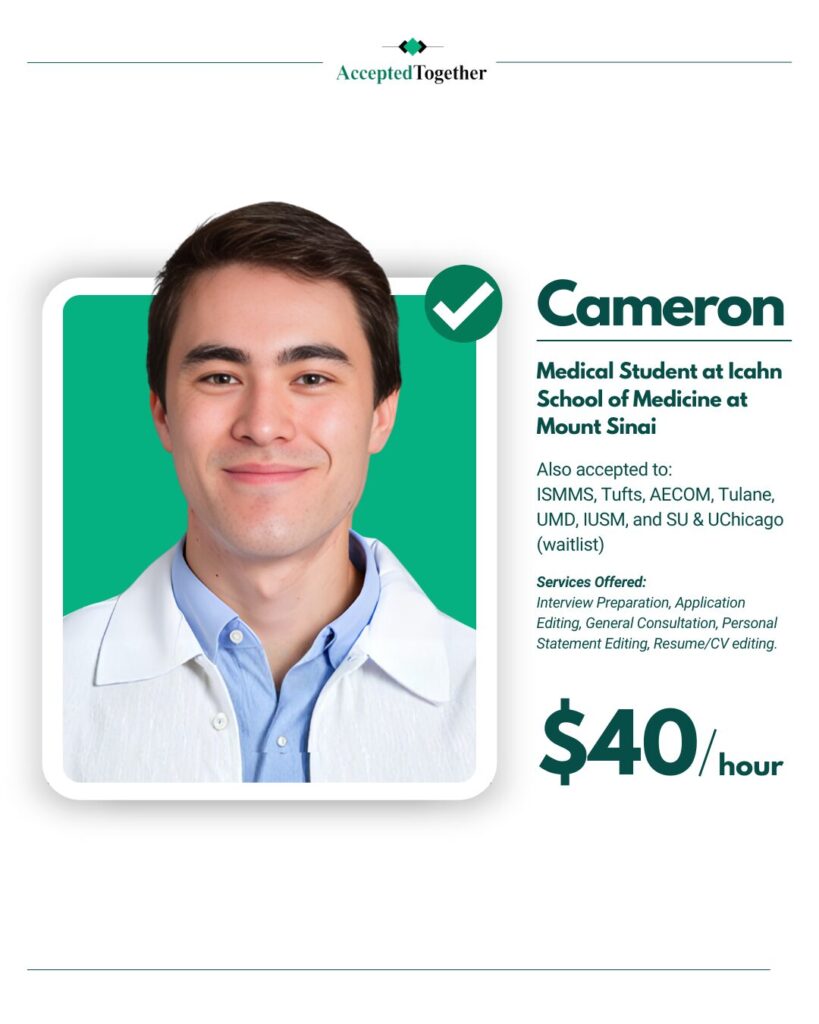
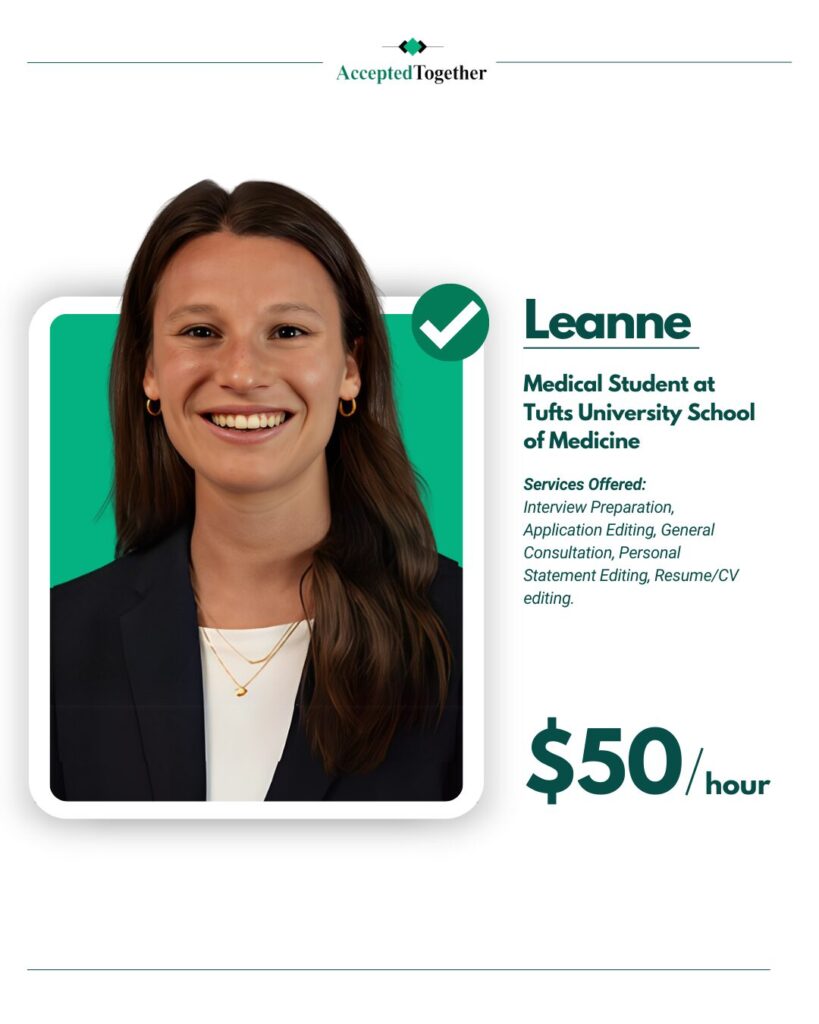
Click To See Hundreds Of Consultants Who Can Mentor You:
Curriculum & Program Structure
Program Duration and Philosophy
Tufts operates a four-year MD program with a fundamentally redesigned curriculum launched in 2019. The educational philosophy emphasizes graduating compassionate, highly skilled physicians with advanced clinical reasoning and communication skills.
Educational Approach
The curriculum features four key perspectives integrated throughout all four years:
- Healthcare Systems: Healthcare costs, delivery systems, quality and safety
- Basic Sciences: Scientific foundation of health and disease
- Clinical Medicine: Patient care and clinical skills
- Personal and Professional Development: Mindfulness, resilience, and lifelong learning
Pre-Clinical Years
- Structure: Integrated basic sciences with early clinical exposure
- Assessment: Modern evaluation methods focusing on competency development
- Research Opportunities: Available throughout pre-clinical years
Clinical Training
- Training Sites: Multiple hospital and clinical site partnerships including:
- Tufts Medical Center (primary teaching hospital)
- Maine Medical Center
- Newton Wellesley Hospital
- St. Elizabeth’s Medical Center
- Lahey Hospital and Medical Center
Special Programs
- Maine Track: Specialized program for clinical training in Maine
- Combined Degrees: MD/MPH and MD/PhD programs available
- Global Health: International rotation opportunities
- Research Opportunities: Scholarly project requirements and electives
Residency Preparation and Match Results
Tufts has strong residency match results:
- 2025 Match Statistics: 201 students matched to residencies in 24 specialties across 27 states
- Primary Care Focus: 37% matched into potential primary care specialties
- Geographic Distribution: 94 students matched in New England, with strong placements nationally
- Specialty Distribution: Strong matches across surgical specialties, internal medicine, pediatrics, and other competitive fields
Pre-Medical Preparation
Undergraduate Program Recommendations
- Major Flexibility: No preference for specific undergraduate majors
- Liberal Arts Emphasis: Strong encouragement for broad-based liberal arts education
- Science Foundation: Solid preparation in required science courses
- Language Skills: Second language knowledge strongly encouraged
Academic Planning
- Course Sequencing: Complete prerequisites with courses designated for science majors
- GPA Optimization: Target GPA significantly above 3.5, ideally approaching 3.8+
- Advanced Coursework: Biochemistry highly recommended
Clinical Experience Development
- Direct Patient Care: Essential for competitive applications
- Healthcare Exposure: Variety of clinical settings valued
- Long-term Commitment: Sustained involvement preferred over brief exposures
Research Experience
- Types Valued: Both basic science and clinical research considered
- Publication Expectations: Not required but beneficial
- Duration: Sustained research involvement preferred
Extracurricular Planning
- Social Responsibility: Demonstrate commitment to addressing social determinants of health
- Leadership Development: Show progressive leadership responsibilities
- Community Service: Long-term community engagement valued
Standardized Test Preparation
- MCAT Timeline: Plan for scores well above 510, targeting 515+
- Early Testing: Take MCAT early enough to retake if necessary
- Preparation Resources: Invest in comprehensive preparation given high score requirements
Frequently Asked Questions
What is Tufts School of Medicine’s average GPA and MCAT score?
The median GPA for admitted students is 3.9, with an average of 3.81. The median MCAT score is 516, with an average of 514. These scores are significantly above national averages.
How competitive is Tufts School of Medicine?
Tufts is extremely competitive with an acceptance rate of 1.42%, making it one of the most selective medical schools in the United States. From 14,248 applications, only 202 students matriculate.
Does Tufts look at extracurriculars?
Yes, Tufts uses a holistic evaluation approach that heavily weighs extracurricular activities, particularly those demonstrating social responsibility, clinical experience, research involvement, and leadership.
Does Tufts School of Medicine prefer in-state applicants?
No, as a private institution, Tufts does not give preference to Massachusetts residents. The tuition rate is the same for all students regardless of residency status.
What makes Tufts School of Medicine different from other medical schools?
Tufts distinguishes itself through its integrated four-year curriculum emphasizing healthcare systems, strong commitment to social responsibility, early clinical exposure, and focus on social determinants of health.
When should I apply to Tufts School of Medicine?
Submit your AMCAS application early (June-July) with a November 1 deadline. Complete the secondary application promptly after receiving the invitation, with a December 30 deadline.
Does Tufts School of Medicine accept international students?
Yes, Tufts accepts international students and out-of-state Canadian students on a case-by-case basis.
What clinical experience do I need for Tufts School of Medicine?
While there’s no specific minimum, competitive applicants typically have substantial clinical experience demonstrating direct patient care or healthcare exposure over extended periods.
Does Tufts School of Medicine require research experience?
Research experience is not explicitly required but is highly valued. Most competitive applicants have some research background, whether in basic sciences, clinical research, or public health.
How many letters of recommendation does Tufts School of Medicine require?
Letters of recommendation are required through AMCAS, though the specific number and requirements should be confirmed through the school’s official application materials.
What is Tufts School of Medicine’s curriculum like?
The curriculum features a four-year integrated approach combining basic sciences, clinical medicine, healthcare delivery science, and professional development, with early patient contact and emphasis on healthcare systems.
Where do Tufts School of Medicine graduates match for residency?
Tufts graduates match well across specialties and geography. In 2025, 201 students matched in 24 specialties across 27 states, with 37% in primary care specialties and strong representation in competitive fields.
How much does Tufts School of Medicine cost?
For 2024-2025, tuition and fees are $72,686, with total cost of attendance reaching $102,762 including living expenses. The four-year program total approaches $372,000.
What financial aid is available at Tufts School of Medicine?
Tufts offers financial aid options including need-based aid and federal loan programs. Students should complete financial aid applications early and explore all available funding sources.
Does Tufts School of Medicine offer interviews to all qualified applicants?
No, interview invitations are extended selectively based on holistic review of applications. The interview season runs from September through March, with notifications provided promptly after committee review.
This comprehensive guide provides prospective applicants with detailed information about Tufts University School of Medicine’s competitive admissions process, rigorous academic requirements, and distinctive educational approach. Given the school’s highly selective nature, applicants should ensure they meet or exceed the statistical benchmarks while demonstrating genuine commitment to medicine and social responsibility.