
Last updated on January 9th, 2026 at 06:30 am
Program Overview & Institution Identity
Official Program Name
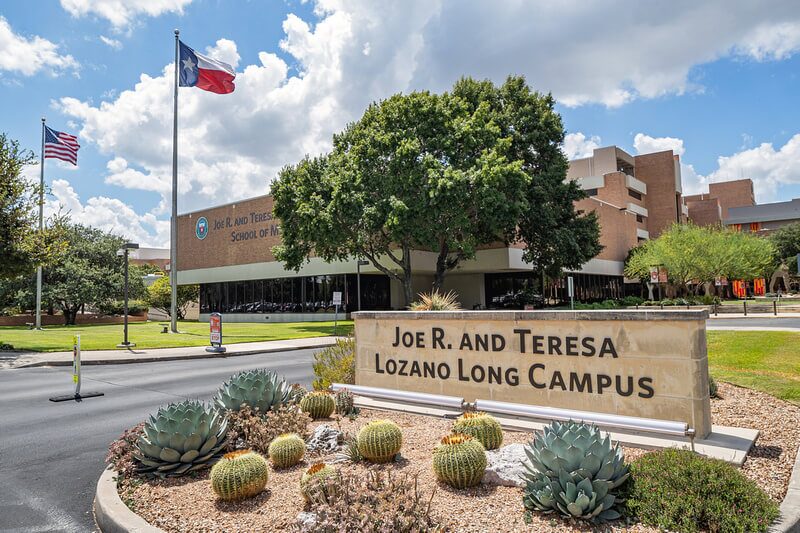
The University of Texas Health Science Center at San Antonio Joe R. and Teresa Lozano Long School of Medicine, commonly referred to as Long School of Medicine or UT Health San Antonio School of Medicine, stands as one of Texas’s premier medical education institutions.
Program Duration and Structure
The Long School of Medicine offers a traditional 4-year Doctor of Medicine (MD) program. The curriculum follows the innovative CIRCLE framework, designed around educational best practices that standardize learning outcomes while providing students opportunities to individualize their learning experience.
Location and Campus Details
Located in San Antonio, Texas, the school operates as a public institution on an urban campus. San Antonio provides an ideal setting for medical education with its diverse patient population and extensive healthcare network, offering students rich clinical experiences in a culturally vibrant city.
Accreditation Status
The Long School of Medicine is fully accredited by the Liaison Committee on Medical Education (LCME), the national accrediting authority for medical education programs leading to the MD degree. The school underwent its most recent LCME accreditation review in January 2019, maintaining its status as an accredited medical education institution.
Ranking and Recognition
The Long School of Medicine has established itself as a highly respected institution within Texas and nationally. While specific US News rankings vary annually, the school is consistently recognized for its strong primary care programs and commitment to serving underserved populations.
Admission Requirements
Academic Prerequisites
Minimum Degree Requirements
Applicants must have completed at least 90 semester credit hours from a United States or Canadian college or university. While a bachelor’s degree is strongly preferred, exceptional candidates with 90 credit hours may be considered.
Required Courses
The Long School of Medicine requires completion of specific prerequisite courses with no grade lower than a “C”:
- Biology: Two semesters of general biology with laboratory (for science majors)
- Chemistry: Two semesters of general chemistry with laboratory, plus one semester of organic chemistry with laboratory
- Physics: One semester of physics with laboratory
- Mathematics: College algebra or higher level mathematics
All prerequisite science courses must be designed for science majors and completed at accredited US or Canadian institutions.
GPA Requirements
While the school does not publish a strict minimum GPA requirement, competitive applicants typically demonstrate strong academic performance. The median GPA for accepted students is 3.95, indicating that successful candidates generally maintain GPAs well above 3.5. The school evaluates both overall GPA and science GPA when assessing academic readiness.
Standardized Testing
MCAT Requirements
All applicants must take the Medical College Admission Test (MCAT). The median MCAT score for accepted students is 519, which places successful candidates in the 98th percentile nationally. This high median score reflects the competitive nature of admissions at Long School of Medicine.
The school accepts MCAT scores that are no more than three years old at the time of application. Students who have taken the MCAT multiple times should be aware that all scores will be considered, though the highest score typically carries the most weight.
Extracurricular Activities & Experience Requirements
Holistic Evaluation Approach
The Long SOM Admissions Committee uses a comprehensive holistic review process that gives balanced consideration to experiences, attributes, and academic metrics. The committee evaluates how each candidate might contribute value as both a medical student and future physician.
Key areas of evaluation include:
- Clinical Experience: Direct patient contact through volunteering, shadowing, or employment
- Research Experience: Basic science, clinical, or public health research participation
- Community Service: Volunteer work demonstrating commitment to serving others
- Leadership: Roles demonstrating ability to guide and influence others
- Personal Attributes: Integrity, empathy, resilience, and professional maturity
Application Process & Timeline
Application System
The Long School of Medicine participates in the Texas Medical and Dental Schools Application Service (TMDSAS), not AMCAS. Texas residents have a significant advantage in the admissions process, with approximately 90% of accepted students being Texas residents.
Application Deadlines
- TMDSAS Application Deadline: November 1, 2025
- Application Review: Begins in July 2024
- Interview Invitations: Sent 2-4 weeks before scheduled interview dates
Required Documents
- Completed TMDSAS primary application
- Official transcripts from all institutions attended
- MCAT scores (sent directly through AAMC)
- Letters of recommendation (submitted through TMDSAS)
- Personal statement and essays as required by TMDSAS
Interview Process
Approximately 1,000 applicants are selected for interviews each application cycle. The school uses a traditional interview format rather than Multiple Mini Interviews (MMI).
Interview Details:
- Format: Traditional one-on-one interviews, typically lasting 30 minutes
- Style: Mix of open-file and closed-file interviews
- Questions: Focus on integrity, adaptability, cultural competence, and motivation for medicine
- Notification: Email invitations sent to LongSOM@uthscsa.edu
- Selection: Candidates choose from 3 available interview dates
Post-Interview Process
The admissions committee reviews applications continuously throughout the cycle. Acceptance notifications are sent on a rolling basis, with final decisions typically communicated by spring of the application year.
Admission Statistics & Success Rates
Overall Acceptance Rate
For the 2025 entering class, the Long School of Medicine received 5,377 applications and accepted 227 students, resulting in an acceptance rate of approximately 4.22%. This makes it one of the more competitive medical schools in Texas.
Application Volume and Class Size
- Annual Applications: Approximately 5,377
- First-Year Class Size: 227 students
- Interview Invitations: Approximately 1,000 annually
Demographics of Admitted Students
- Geographic Distribution: Approximately 90% Texas residents
- Academic Background: Diverse undergraduate majors accepted
- Age Range: Traditional and non-traditional students welcomed
Academic Statistics
- Median GPA: 3.95
- Median MCAT: 519
- Competitive Range: Students should aim for GPA above 3.7 and MCAT above 510 for competitive consideration
Tuition & Financial Information
Current Tuition Rates
For the 2025-2026 academic year:
- Texas Residents: $26,619 per year
- Out-of-State Students: $42,035 per year
- International Students: Same as out-of-state tuition
Total Cost of Attendance
The estimated total cost of attendance includes tuition, fees, books, supplies, transportation, and living expenses:
- In-State: Approximately $55,000-$60,000 annually
- Out-of-State: Approximately $70,000-$75,000 annually
Financial Aid Options
The school offers comprehensive financial aid support:
- Need-Based Aid: Federal and state grant programs
- Merit-Based Scholarships: UT Health San Antonio institutional scholarships
- Federal Loans: Stafford and Graduate PLUS loans
- Work-Study: Limited opportunities available
- External Scholarships: Students encouraged to seek outside funding
Out-of-state students may qualify for academic waivers that reduce tuition to in-state levels based on academic merit and financial need.
Click To See Hundreds Of Consultants Who Can Mentor You:


Curriculum & Program Structure
Program Duration and Structure
The Long School of Medicine offers a 4-year MD program structured around the innovative CIRCLE curriculum, which emphasizes active learning with formative checkpoints for student self-assessment.
Educational Philosophy
The curriculum integrates basic and clinical science knowledge with early clinical experiences, providing students with comprehensive understanding of disease processes and patient care management.
Preclinical Curriculum
The foundational 20-month preclinical phase emphasizes:
- Systematic knowledge acquisition
- Clinical skills development
- Thematic relationships over memorization
- Active learning methodologies
Clinical Training
The clinical phase includes:
- Core Rotations: Medicine, surgery, pediatrics, obstetrics/gynecology, psychiatry, family medicine
- Clinical Sites: University Hospital, Audie L. Murphy VA Hospital, and community partners
- Geographic Distribution: Primarily San Antonio-based with some regional opportunities
Special Programs
Combined Degree Options:
- MD/PhD: Research-intensive dual degree program
- MD/MPH: Partnership with UT School of Public Health San Antonio (starting Class of 2029)
- MD/MBA: Business administration dual degree
Residency Preparation
Recent Match Statistics (2024):
- Match Rate: 100% of students secured residency positions
- Training Location: 62% matched within Texas, 26% at UT Health San Antonio
- Primary Care: Strong placement in family medicine and internal medicine
Pre-Medical Preparation
Academic Planning
Recommended Timeline:
- Complete prerequisites during sophomore and junior years
- Take MCAT in spring of junior year or later
- Apply during senior year or gap year
Clinical Experience
Prospective students should gain substantial clinical exposure through:
- Hospital volunteering
- Physician shadowing
- Clinical research participation
- Healthcare employment
Research Experience
While not required, research experience strengthens applications:
- Basic science research preferred but not exclusive
- Clinical research opportunities valued
- Public health and community-based research considered favorably
MCAT Preparation
Given the high median score of 519, extensive MCAT preparation is essential:
- Allow 3-4 months minimum for focused study
- Consider commercial prep courses or tutoring
- Take practice exams under timed conditions
- Retake if initial score below 510
Frequently Asked Questions
Does Long School of Medicine look at extracurriculars?
Yes, the Long SOM Admissions Committee uses a holistic review process that gives balanced consideration to experiences, attributes, and academic metrics. Clinical experience, research, volunteer work, and leadership are all important components of a competitive application.
What is Long School of Medicine’s average GPA and MCAT score?
The median GPA for accepted students is 3.95, and the median MCAT score is 519. These statistics indicate that successful applicants typically demonstrate exceptional academic performance.
How competitive is Long School of Medicine compared to other medical schools?
With an acceptance rate of approximately 4.22%, Long School of Medicine is highly competitive. It’s one of the more selective public medical schools in Texas, though Texas residents have a significant advantage in admissions.
Does Long School of Medicine prefer in-state applicants?
Yes, approximately 90% of accepted students are Texas residents. Out-of-state and international students face significantly steeper competition, though the school does accept qualified non-residents.
What makes Long School of Medicine different from other medical schools?
The school’s distinctive features include:
Innovative CIRCLE curriculum emphasizing active learning
Strong clinical partnerships in diverse San Antonio
Excellent residency match rates (100%)
Collaborative learning environment with pass/fail grading system
Comprehensive mentoring programs
When should I apply to Long School of Medicine?
Applications should be submitted through TMDSAS as early as possible after the application opens in May, with the final deadline of November 1st. Earlier applications receive priority review.
Does Long School of Medicine accept international students?
Yes, international students are accepted but face the same competitive standards as out-of-state applicants. They must meet additional requirements through the Office of International Services.
What clinical experience do I need for Long School of Medicine?
While there’s no minimum hour requirement, competitive applicants typically have substantial clinical exposure through volunteer work, shadowing, or healthcare employment. Quality and depth of experience matter more than quantity.
Does Long School of Medicine require research experience?
Research experience is not required but is highly valued. The school appreciates candidates who have engaged in basic science, clinical, or public health research, though extensive publications are not expected.
How many letters of recommendation does Long School of Medicine require?
Letters of recommendation are submitted through TMDSAS according to their requirements. The school typically expects letters from science faculty, clinical supervisors, and other mentors who can speak to the applicant’s qualifications for medical school.
What is Long School of Medicine’s curriculum like?
The CIRCLE curriculum emphasizes active learning, early clinical exposure, and integration of basic and clinical sciences. The 20-month preclinical phase is followed by clinical rotations at major teaching hospitals in San Antonio.
Where do Long School of Medicine graduates match for residency?
Recent graduates achieved a 100% match rate, with 62% staying in Texas and 26% remaining at UT Health San Antonio. Graduates match across all medical specialties, with strong representation in primary care fields.
How much does Long School of Medicine cost?
Annual tuition is $26,619 for Texas residents and $42,035 for out-of-state students. Total cost of attendance including living expenses ranges from approximately $55,000-$75,000 annually depending on residency status.
What financial aid is available at Long School of Medicine?
The school offers comprehensive financial aid including need-based grants, merit-based scholarships, federal loans, and limited work-study opportunities. Out-of-state students may qualify for academic waivers to receive in-state tuition rates.
Does Long School of Medicine offer interviews to all qualified applicants?
No, approximately 1,000 applicants out of over 5,000 are selected for interviews each cycle. Interview invitations are competitive and based on holistic review of applications including academic metrics and experiences.