

Last updated on January 9th, 2026 at 06:30 am
Program Overview & Institution Identity
Official Program Name and Institution
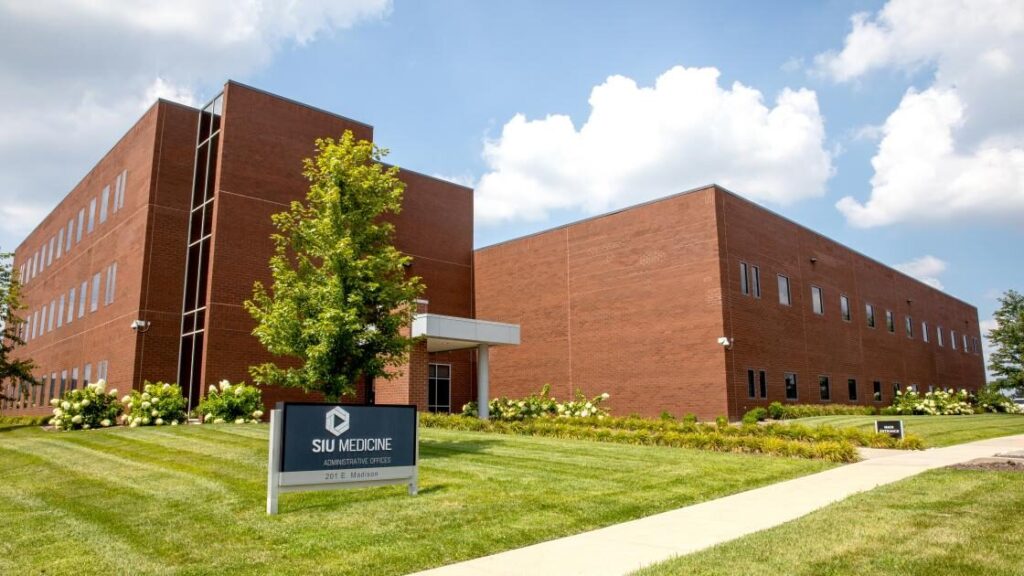
Southern Illinois University School of Medicine (SIU School of Medicine) is a fully accredited, state-supported medical institution founded in 1970 and located in Springfield, Illinois. As a public institution serving the people of central and southern Illinois, SIU School of Medicine has established itself as an innovator in medical education with a unique dual-campus structure.
Program Duration and Structure
SIU School of Medicine offers a 4-year MD program with a distinctive educational model that sets it apart from other medical schools. The program features a unique dual-campus approach:
- First Year: Students complete their first year of medical education at the Southern Illinois University Carbondale campus (975 S. Normal Ave, Carbondale, IL 62901)
- Years 2-4: Students transition to the Springfield campus for the remainder of their medical education
This structure allows students to experience both rural and urban healthcare settings, providing a comprehensive understanding of diverse healthcare environments.
Location and Campus Details
The school operates from two primary locations:
- Springfield Campus: 801 N Rutledge St, Springfield, IL 62702 (main medical campus)
- Carbondale Campus: Southern Illinois University Carbondale campus for first-year students
The Springfield campus is strategically located just blocks from major teaching hospitals, including Memorial Medical Center and HSHS St. John’s Hospital, providing excellent clinical training opportunities.
Accreditation Status
Southern Illinois University School of Medicine is fully accredited by the Liaison Committee on Medical Education (LCME), the recognized accrediting authority for MD programs in the United States. This accreditation ensures that graduates are eligible to take the USMLE examinations and apply for residency training programs throughout the United States.
Ranking and Recognition
SIU School of Medicine is particularly recognized for its:
- Strong focus on primary care and rural medicine
- Community-based medical education programs
- Innovative teaching methods including problem-based learning (PBL)
- Commitment to serving underserved populations in central and southern Illinois
The school consistently ranks well for primary care training and is known as one of Illinois’ most affordable medical schools.
Admission Requirements
Academic Prerequisites
Degree Requirements
- Bachelor’s degree from an accredited institution is required before matriculation
- Must complete a minimum of 90 semester hours of undergraduate coursework at matriculation
- Must have completed 60 credit hours in a U.S. college/university at the time of application
Required and Recommended Courses
SIU School of Medicine does not require specific prerequisite courses, making it unique among medical schools. However, to perform well on the MCAT, the school recommends:
- Two years of chemistry, including organic chemistry
- One year of physics
- One year of English composition
- One year of mathematics, including statistics
- One year of biological or life sciences
- One semester of biochemistry, cell/molecular biology, physiology, or genetics
GPA Requirements
- Minimum Overall GPA: 2.80 on a 4.0 scale (cumulative undergraduate OR last 60 hours of coursework)
- Minimum Science GPA: 2.80 on a 4.0 scale (cumulative undergraduate OR last 60 hours of science GPA)
- Competitive GPA Statistics:
- Median GPA of accepted students: 3.89
- Average GPA: 3.86
While the minimum GPA is 2.80, successful applicants typically have significantly higher GPAs, with the median being 3.89.
Standardized Testing
MCAT Requirements
- Minimum MCAT Score: 498 total score
- MCAT Validity: Scores must not be older than 2 years at the time of application
- Competitive MCAT Statistics:
- Median MCAT Score: 508
- Average MCAT Score: 507-511 (sources vary slightly)
The Admissions Committee uses the most recent MCAT scores for evaluation purposes. Students with scores significantly above the minimum threshold have better chances of acceptance.
Additional Testing
SIU School of Medicine does not require additional standardized tests such as CASPer or GRE for admission to the standard MD program.
Residency and Citizenship Requirements
- Illinois Residency: Required for admission to the standard MD program
- Exception: Out-of-state applicants are only considered for the MD/JD dual degree program
- Citizenship Requirements:
- U.S. citizen, OR
- Permanent resident visa holder, OR
- Illinois resident with Deferred Action for Childhood Arrivals (DACA) status
Extracurricular Activities & Experience Requirements
The Admissions Committee evaluates applicants holistically, looking for:
- Evidence of responsibility, maturity, integrity, and compassion
- Proper motivation for pursuing medicine
- Service orientation and community involvement
- Exploration of medicine as a career
- Good interpersonal skills
- Academic strengths
- Involvement in extracurricular activities
- Employment and volunteer experiences
Geographic Preference: The school gives preference to residents of central and southern Illinois and those from rural or inner-city areas, aligning with its mission to serve underserved populations.
Application Process & Timeline
Application System
SIU School of Medicine participates in the American Medical College Application Service (AMCAS) for primary applications. All applicants must submit their initial application through AMCAS.
Application Deadlines
- AMCAS Application Deadline: November 15, 2025
- Secondary Application Deadline: Varies (typically within 2-4 weeks of receiving secondary)
Required Documents
- AMCAS Application with all required components
- Official transcripts from all colleges and universities attended
- Letters of recommendation (number and specific requirements vary)
- MCAT scores (not older than 2 years)
- Personal statement and activities descriptions
- Secondary application (school-specific)
Application Fees
Specific fee information should be confirmed directly with the admissions office, as fees may change annually.
Interview Process
- Interview Location: Springfield campus
- Interview Selection Criteria:
- Academic strengths
- Involvement in extracurricular activities
- Employment and volunteer experiences
- Area of residence (preference for central/southern Illinois and rural/inner-city areas)
The interview format and specific details are available through the admissions office.
Secondary Applications
SIU School of Medicine requires a secondary application for qualified candidates who meet the initial screening criteria. The secondary application includes additional essays and questions specific to the school’s mission and values.
Admission Statistics & Success Rates
Overall Acceptance Rate
- Acceptance Rate: Approximately 6-13% (varies by source)
- Most Recent Data: 7.30% acceptance rate
- This makes SIU School of Medicine a highly competitive institution among Illinois medical schools
Application Volume and Class Size
- Annual Applications: Approximately 1,096 applicants (recent data)
- Students Matriculated: 80 students per year
- Target Class Size: Limited to approximately 72-80 first-year students per the school’s note
Academic Statistics of Accepted Students
- Median GPA: 3.89
- Median MCAT: 508
- Average GPA: 3.86
- Average MCAT: 507
Geographic Distribution
As a public Illinois institution with an in-state preference:
- Majority: Illinois residents, particularly from central and southern Illinois
- Rural/Urban Mix: Strong preference for applicants from underserved areas
- Out-of-State: Only accepted into the MD/JD program
Comparison to National Averages
SIU School of Medicine’s acceptance rate of 6-13% is more competitive than many state medical schools, while its MCAT and GPA requirements are competitive but accessible for well-prepared applicants.
Tuition & Financial Information
Current Tuition Rates
- In-State Tuition: $40,468 per year (as provided in data)
- Out-of-State Tuition: Not applicable (out-of-state students not accepted except for MD/JD)
- Additional Comprehensive Fee Data: $42,746 total tuition & fees (2024-2025 academic year)
Cost of Attendance Breakdown
Based on official school data for 2024-2025:
- Tuition & Fees: $42,746
- Living Costs: $15,030
- Books & Supplies: $1,600
- Personal Expenses: $3,825
- Total Cost of Attendance: $63,201 per year
Total Program Cost Analysis
- 4-Year Total Cost: Approximately $252,804 (tuition and fees only)
- 4-Year Total Cost of Attendance: Approximately $298,712 including living expenses
Financial Aid Options
SIU School of Medicine offers various financial aid options including:
- Federal student loans (Stafford, PLUS)
- Need-based financial aid
- Merit-based scholarships
- Work-study opportunities
The school is recognized as one of Illinois’ most affordable medical schools, making it an attractive option for students concerned about educational debt.
Living Expenses
Springfield, Illinois offers a relatively low cost of living compared to major metropolitan areas:
- On-campus housing: Available with estimated costs included in COA
- Off-campus housing: Affordable options near the medical campus
- Transportation: Minimal costs due to close proximity of clinical sites
Click To See Hundreds Of Consultants Who Can Mentor You:

Curriculum & Program Structure
Educational Philosophy and Teaching Methods
SIU School of Medicine is renowned for its innovative teaching methods and student-centered learning environment:
- Problem-Based Learning (PBL): Core component emphasizing active exploration of real-world medical problems
- Hands-on approach: Early integration of clinical experiences with basic science learning
- Simulation-based education: Advanced technology creating realistic clinical scenarios
- Community-based focus: Strong emphasis on community health and rural medicine
Pre-Clinical Years (Years 1-2)
Year 1 Structure:
- Location: Southern Illinois University Carbondale campus
- Focus: Basic science foundation with integrated clinical exposure
- Teaching Method: Problem-based learning with traditional lectures
Year 2 Structure:
- Location: Springfield campus
- Focus: Advanced basic sciences with increased clinical integration
- Assessment: Varies by course (specific grading policy available from school)
Clinical Training (Years 3-4)
Clinical Rotation Sites:
- Primary Teaching Hospitals:
- Memorial Medical Center (Springfield)
- HSHS St. John’s Hospital (Springfield)
- Combined Annual Volume: Over 120,000 patient visits across affiliated sites
Clinical Experience Features:
- Community-based rotations: Extensive network throughout central and southern Illinois
- Rural medicine exposure: Aligned with school’s mission
- Urban healthcare settings: Comprehensive training in Springfield area
- Specialty rotations: Full range of medical specialties available
Special Programs and Tracks
Combined Degree Programs:
- MD/JD: Medicine and Law dual degree (accepts out-of-state applicants)
- MD/MPH: Medicine and Public Health dual degree
Lincoln Scholars Program:
- Special accelerated or enhanced track with modified curriculum schedule
- Separate calendar and requirements from standard track
Research Opportunities
SIU School of Medicine is engaged in research across multiple areas:
- Cancer research
- Alzheimer’s disease research
- Audiology research
- Community health research
Students have opportunities to participate in research projects throughout their medical education.
Residency Preparation and Match Results
USMLE Performance
While specific pass rates weren’t found in the research, SIU School of Medicine graduates are eligible and prepared to take all USMLE examinations required for residency applications.
Residency Match Statistics
Based on the Class of 2025 Match Results, SIU School of Medicine graduates successfully matched across a diverse range of specialties:
Specialty Distribution:
- Primary Care Specialties: Family Medicine, Internal Medicine, Pediatrics, Medicine-Pediatrics
- Surgical Specialties: General Surgery, Orthopedic Surgery, Obstetrics-Gynecology
- Other Specialties: Emergency Medicine, Anesthesiology, Dermatology, Neurology, Psychiatry, Pathology, Physical Medicine & Rehabilitation, Ophthalmology
Geographic Distribution:
- Local/Regional: Many graduates remain in Illinois and Midwest
- National: Graduates match at programs throughout the United States
- Prestigious Programs: Recent matches include programs at Harvard, Mayo Clinic, University of Chicago, Emory University, and other top-tier institutions
Career Outcomes
Approximately 50% of SIU graduates enter primary care specialties, while the other 50% pursue other medical specialties, demonstrating the school’s success in training physicians for all areas of medicine despite its primary care focus.
Pre-Medical Preparation Guide
Undergraduate Program Recommendations
Best Majors for SIU School of Medicine:
Since the school doesn’t require specific prerequisite courses, students have flexibility in choosing undergraduate majors:
- Science majors: Biology, Chemistry, Biochemistry provide strong MCAT preparation
- Non-science majors: Welcome and valued for diversity of background
- Liberal Arts: English, History, Psychology can provide strong foundation for patient communication
Academic Planning Strategy:
- Focus on MCAT preparation courses rather than rigid prerequisites
- Maintain competitive GPA (aim for 3.7+ to be competitive)
- Take recommended courses for MCAT success
- Include statistics in mathematics coursework
Clinical Experience Requirements
While not specifically quantified, SIU School of Medicine values:
- Quality over quantity of clinical exposure
- Rural healthcare exposure (aligned with mission)
- Underserved population experiences
- Community health involvement
Research Experience
- Not required but valued as part of holistic evaluation
- Community health research particularly relevant
- Rural medicine research aligns with school mission
- Basic science research welcome but not mandatory
Extracurricular Planning
Key Areas for Application Strength:
- Community service: Especially in underserved areas
- Leadership experiences: Demonstrates maturity and responsibility
- Rural/small-town involvement: Aligns with school mission
- Healthcare exposure: Clinical volunteering, shadowing
- Long-term commitments: Shows dedication and reliability
MCAT Preparation Timeline
- Recommended Timeline: 3-6 months of dedicated preparation
- Target Score: Aim for 510+ to be competitive (median is 508)
- Retake Policy: Most recent scores used for evaluation
- Validity Period: 2 years maximum
Gap Year Considerations
Gap years can be beneficial for:
- MCAT improvement if needed
- Additional clinical experience
- Research opportunities
- Community service in underserved areas
- Rural healthcare exposure
SIU School of Medicine welcomes non-traditional applicants and views gap years positively when used productively.
Application Timeline Planning
Optimal Preparation Schedule:
- Junior Year: Complete MCAT preparation courses, begin clinical experiences
- Spring Junior Year: Take MCAT, begin AMCAS application preparation
- Summer before Senior Year: Submit AMCAS application
- Senior Year Fall: Complete secondary applications, attend interviews
- Senior Year Spring: Receive admissions decisions
Frequently Asked Questions
Does Southern Illinois University School of Medicine look at extracurriculars?
Yes, SIU School of Medicine uses a holistic evaluation process that heavily weighs extracurricular activities. The Admissions Committee specifically looks for involvement in extracurricular activities, employment and volunteer experiences, service orientation, leadership, and community involvement as key selection factors.
What is Southern Illinois University School of Medicine’s average GPA and MCAT score?
Average/Median GPA: 3.86-3.89
Average/Median MCAT: 507-508
These scores represent the median statistics for accepted students, meaning half of accepted students score above and half below these numbers.
How competitive is Southern Illinois University School of Medicine compared to other medical schools?
SIU School of Medicine is highly competitive with an acceptance rate of approximately 6-13%. While the MCAT and GPA requirements are reasonable, the low acceptance rate and preference for Illinois residents make it very competitive for admission.
Does Southern Illinois University School of Medicine prefer in-state applicants?
Yes, SIU School of Medicine only accepts Illinois residents for the standard MD program. Out-of-state applicants are only considered for the MD/JD dual degree program. The school particularly favors applicants from central and southern Illinois