

Last updated on January 9th, 2026 at 06:30 am
Program Overview & Institution Identity
Official Program Name
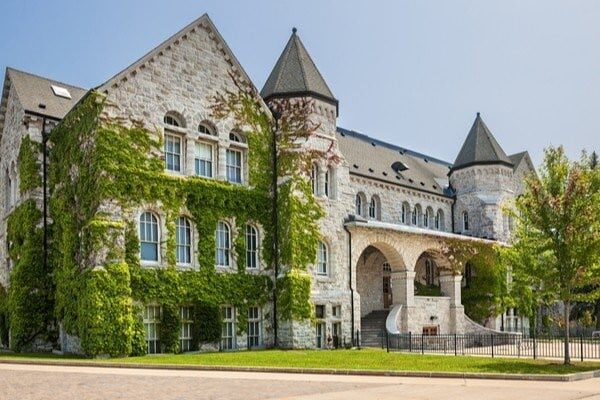
Queen’s University Faculty of Health Sciences offers a comprehensive Doctor of Medicine (MD) degree program that has established itself as one of Canada’s premier medical education institutions. Located in Kingston, Ontario, Queen’s School of Medicine has been preparing exceptional physicians and healthcare leaders for generations through its innovative curriculum and commitment to excellence.
Program Duration & Structure
The Queen’s University MD program is a 4-year comprehensive medical education program structured in sequential terms that allow students to progress from foundational scientific knowledge through clinical foundations and finally into extensive clinical engagement during a two-year clinical rotation series.
The program features two distinct pathways:
- Kingston Campus MD Program: Traditional 4-year program with capacity for approximately 118-125 students
- Queen’s-Lakeridge Health MD Family Medicine Program: Specialized 6-year program combining MD and family medicine residency with 20 seats annually
Location and Campus Details
Kingston, Ontario Campus: The main campus is situated in the historic city of Kingston, Ontario, providing students with state-of-the-art lecture theaters, clinical skills laboratories, simulation suites, and research facilities. The urban campus setting offers students access to comprehensive medical training while maintaining the close-knit learning community that Queen’s is known for.
Regional Clinical Training: Queen’s employs a unique regional clinical training model where students spend one-third to three-quarters of their clerkship outside of Kingston, gaining exposure to diverse healthcare settings across Ontario communities.
Accreditation Status
Queen’s University Faculty of Health Sciences holds full accreditation from the Committee on Accreditation of Canadian Medical Schools (CACMS), ensuring graduates meet the highest standards for medical education and are eligible for residency training and medical licensure across Canada and internationally.
Combined Degree Options
Queen’s offers several combined degree programs:
- MD/PhD Program: Integrating medical training with doctoral research
- MD/Master’s Program: Various master’s degree combinations available
- Military Medical Training Program (MMTP): Specialized pathway for Canadian Forces members
Admission Requirements
Academic Prerequisites
Minimum Degree Requirements
Queen’s University does not have strict prerequisite course requirements, offering flexibility for students from diverse academic backgrounds. Applicants must have:
- Minimum of 90 credit hours or 15 Full Course Equivalents completed by the end of the application cycle
- Bachelor’s degree or equivalent from a recognized institution
- Students may apply during their third year of undergraduate studies
GPA Requirements
- Minimum GPA: 3.0 on the OMSAS (Ontario Medical School Application Service) scale
- Competitive GPA: While the minimum is 3.0, successful applicants typically demonstrate much higher academic performance
- Average Admitted Student GPA: 3.78 (Class of 2028)
- GPA Range of Accepted Students: 3.12-4.0
The GPA calculation follows OMSAS standards, which convert grades from various institutions to a standardized 4.0 scale for fair comparison across different undergraduate programs and universities.
Standardized Testing
MCAT Requirements
Queen’s University has specific MCAT score requirements that applicants must meet:
Minimum MCAT Thresholds:
- Total Score: 500
- Biological and Biochemical Foundations of Living Systems: 125
- Chemical and Physical Foundations of Biological Systems: 125
- Psychological, Social, and Biological Foundations of Behaviour: 125
- Critical Analysis and Reasoning Skills: 125
Competitive MCAT Performance:
- Average MCAT Score (Class of 2028): 514
- Queen’s is unique among Ontario medical schools as it considers your best MCAT score rather than most recent
MCAT Validity: Queen’s accepts MCAT scores that meet their validity requirements as specified in their annual admissions cycle.
CASPer Test Requirements
Queen’s requires the CASPer (Computer-based Assessment for Sampling Personal characteristics) test as part of their holistic evaluation process. Key details:
- CASPer assesses personal and professional characteristics essential for medical practice
- The CASPer threshold is determined annually and not disclosed publicly
- Most successful candidates achieve scores in the 3rd quartile or above
- CASPer results are used in the initial screening process alongside GPA and MCAT scores
Application Process Requirements
Application System
All applications to Queen’s University Faculty of Health Sciences must be submitted through the Ontario Medical School Application Service (OMSAS). The centralized application system streamlines the process for Ontario medical schools.
Required Documents
- Official transcripts from all post-secondary institutions
- Autobiographical Sketch (ABS): Comprehensive overview of experiences including employment, volunteer work, extracurricular activities, awards, and research
- Letters of reference: As specified by OMSAS requirements
- Personal statements: Integrated within the ABS structure
- MCAT scores: Official scores sent directly to OMSAS
- CASPer results: Completed within the required timeframe
Key Application Deadlines 2025
- OMSAS Application Opens: July 10, 2025
- Application Deadline: October 1, 2025
- All supporting documents, references, and test scores must be received by the deadline
Admission Statistics & Success Rates
Overall Acceptance Rate & Competitiveness
Queen’s University Faculty of Health Sciences maintains one of the most competitive acceptance rates among Canadian medical schools:
Class of 2028 Statistics:
- Total Applications Received: 5,227
- Interview Invitations: 601 (approximately 11.5%)
- Class Size: 138 students (funded and supernumerary seats)
- Overall Acceptance Rate: Approximately 2.6%
This exceptionally low acceptance rate places Queen’s among the most selective medical schools in Canada, making thorough preparation and a competitive application essential for success.
Historical Trends
Recent application cycles show consistent competitiveness:
- Class of 2027: 5,550 applications, 512 interviews, 108 seats
- Class of 2026: 5,550 applications, 512 interviews, 108 seats
- Class of 2025: 5,781 applications, 513 interviews, 109 seats
Demographics of Admitted Students
Geographic Distribution
Class of 2028:
- Ontario: 80%
- Western Provinces and Territories: 17%
- Quebec and Eastern Provinces: 3%
Age and Educational Background
- Age Range: 20-40 years
- Average Age: 24 years
- Educational Background:
- Undergraduate degree: 64%
- Master’s degree: 30%
- PhD: 5%
Gender Distribution
- Female: 58%
- Male: 37%
- Other/Unreported: 5%
Unique Selection Process: QARS System
Qualified Applicant Randomization Selection (QARS)
Queen’s implemented the innovative QARS system starting in 2025 to promote equity and reduce systemic barriers in medical school admissions.
How QARS Works
- Initial Screening: Applicants must meet minimum GPA (3.0), MCAT (500/125 per section), and CASPer thresholds
- Lottery Selection: All qualified applicants are entered into a randomized selection process for Multiple Mini Interview (MMI) invitations
- Equal Opportunity: This system ensures that all qualified candidates have equal opportunity regardless of marginally higher scores above the threshold
Interview Process
Multiple Mini Interview (MMI):
- Queen’s uses the MMI format to assess applicants’ personal characteristics, communication skills, and ethical reasoning
- Approximately 450-550 applicants are interviewed annually across all streams
- Interview weekends typically occur in February and March
Panel Interviews: Select streams including MD/PhD and combined degree programs participate in additional panel interview components.
Tuition & Financial Information
Tuition Structure by Residency Status
Canadian Students
- Ontario Residents: Approximately $27,000-$30,000 CAD annually
- Out-of-Province Students: Similar rates to Ontario residents (Queen’s accepts out-of-province Canadian students)
- The exact tuition rates are subject to annual adjustments and should be confirmed through Queen’s official channels
International Students
Queen’s University Faculty of Health Sciences does not accept international students for the MD program. All 138 seats are reserved exclusively for Canadian citizens and permanent residents of Canada.
Additional Fees and Costs
Beyond base tuition, students should budget for:
- Technology and student service fees: $1,000-$2,000 annually
- Clinical rotation fees: May apply for certain specialized rotations
- Medical equipment and supplies: $2,000-$3,000 over four years
- Professional examination fees: Including Medical Council of Canada examinations
Total Cost of Attendance
Estimated Annual Costs (Canadian students):
- Tuition: $27,000-$30,000
- Living Expenses: $15,000-$20,000 (depending on housing choices)
- Books and Supplies: $2,000-$3,000
- Transportation: $1,000-$2,000
- Personal Expenses: $2,000-$3,000
- Total Annual Cost: $47,000-$58,000 CAD
Financial Aid Opportunities
Queen’s-Specific Financial Aid
- Medicine Admission Bursary: Need-based grants for entering students who demonstrate financial need
- Government Student Aid: Provincial and federal loan and grant programs
- External Scholarships: Various professional and community organization scholarships
Eligibility for Financial Aid
To qualify for Queen’s medical school bursaries:
- Must be Canadian citizen or permanent resident
- Demonstrate financial need based on comprehensive assessment
- Be accessing government student aid
- Have prior accumulated government student financial debt (for admission bursaries)
Click To See Hundreds Of Consultants Who Can Mentor You:
Curriculum & Program Structure
Educational Philosophy
Queen’s University Faculty of Health Sciences curriculum is designed to produce physicians with comprehensive understanding of medicine’s content and context, equipped with the knowledge, skills, and attitudes necessary for any postgraduate training program. The program emphasizes lifelong learning skills essential for effective practice in evolving healthcare environments.
Pre-Clinical Years (Years 1-2)
Year 1 Curriculum Structure
Fall Term:
- Human Structure and Function 1 (6 weeks)
- Human Structure and Function 2 (8 weeks)
- Critical Appraisal, Research and Lifelong Learning (14 weeks)
- Introduction to Physician Roles 1A (14 weeks)
- Clinical & Communication Skills 1A (14 weeks)
- Family Medicine (14 weeks)
- Population Health (14 weeks)
Winter Term:
- Introduction to Physician Roles 1B (17 weeks)
- Clinical & Communication Skills 1B (17 weeks)
- Health Determinants and Population Health continuation
- Community Week: Students participate in clinical placements with family physicians in regional Ontario sites
Teaching Methodology
Queen’s employs a hybrid learning approach combining:
- Small-group tutorials: Close interaction with faculty tutors
- Large-group interactive sessions: Traditional lectures enhanced with interactive elements
- Laboratory work: Hands-on scientific learning
- Clinical skills centers: Standardized patient encounters and procedure training
- Simulation laboratory: High-fidelity medical simulation training
Clinical Training (Years 3-4)
Clerkship Structure
The Queen’s clerkship provides extensive clinical exposure through:
- Core clinical rotations: Medicine, surgery, pediatrics, obstetrics-gynecology, psychiatry, family medicine
- Regional placements: Students spend 1/3 to 3/4 of clerkship outside Kingston
- Community-based learning: Exposure to diverse healthcare delivery models
- Elective opportunities: Allow students to explore specialty interests
Clinical Sites and Partnerships
Queen’s maintains partnerships with healthcare facilities throughout Ontario, including:
- Kingston Health Sciences Centre
- Regional hospitals across Ontario
- Community health centers
- Rural and urban clinical sites
Special Programs and Pathways
Specialized Admission Pathways
- Indigenous Student Admissions Pathway (ISAP): Dedicated support and pathway for Indigenous applicants
- Military Medical Training Program (MMTP): Up to 11 supernumerary seats for Canadian Forces members
- Socioeconomic Accountability Admissions Pathway (SAAP): 8% of MMI seats reserved for lower socioeconomic status applicants
- Black Student Application Pathway (BSAP): New comprehensive approach launching as phase two of admissions renewal
Combined Degree Programs
- MD/PhD: Integration of medical training with doctoral research
- MD/Master’s: Various master’s degree combinations available
- Queen’s-Lakeridge Health MD Family Medicine Program: 6-year program combining MD with family medicine residency
Pre-Medical Preparation
Academic Preparation Strategies
Undergraduate Program Recommendations
Queen’s University’s flexible prerequisite structure allows students from diverse academic backgrounds to apply successfully. However, strong preparation should include:
Recommended Academic Areas:
- Biological Sciences: Strong foundation in biology, biochemistry, and related fields
- Physical Sciences: Chemistry and physics provide essential background
- Social Sciences: Psychology, sociology support understanding of human behavior
- Humanities: Critical thinking and communication skills developed through liberal arts
- Research Experience: Exposure to scientific methodology and inquiry
GPA Optimization
- Maintain consistent academic excellence throughout undergraduate studies
- Focus on understanding rather than memorization
- Seek academic support when needed
- Consider course load balance to ensure quality performance
Standardized Test Preparation
MCAT Preparation Strategy
Timeline Recommendations:
- Begin preparation 6-12 months before intended test date
- Take practice tests under standardized conditions
- Focus on areas of weakness while maintaining strengths
- Consider Queen’s advantage of accepting best MCAT score
Content Areas to Master:
- Biological and biochemical foundations
- Chemical and physical foundations
- Psychological and social sciences
- Critical analysis and reasoning
CASPer Test Preparation
- Familiarize yourself with situational judgment test format
- Practice ethical reasoning scenarios
- Develop clear, concise written communication skills
- Review medical ethics and professionalism concepts
Extracurricular and Experience Development
Clinical Exposure Recommendations
Queen’s values diverse healthcare exposure:
- Hospital volunteering: Direct patient interaction experience
- Community health initiatives: Understanding healthcare delivery models
- Healthcare employment: Practical experience in medical environments
- International health experiences: Global health perspective
Research Experience
- Basic science research: Laboratory research experience
- Clinical research: Patient-oriented research projects
- Community health research: Population health and public health research
- Quality improvement projects: Healthcare systems improvement
Leadership and Community Service
- Student leadership: University clubs, student government
- Community organizations: Non-profit work and community engagement
- Advocacy work: Healthcare access and social justice initiatives
- Teaching and mentoring: Peer tutoring and educational activities
Application Timeline Planning
Optimal Application Preparation Schedule
Junior Year:
- Complete MCAT preparation and testing
- Begin developing research projects
- Establish clinical exposure experiences
- Build relationships with potential references
Senior Year/Application Year:
- Complete CASPer testing
- Finalize application materials
- Submit OMSAS application by October 1st deadline
- Continue meaningful activities while awaiting results
Frequently Asked Questions
Does Queen’s University Faculty of Health Sciences look at extracurricular activities?
Yes, Queen’s uses a holistic evaluation process that considers the Autobiographical Sketch (ABS) submitted through OMSAS. This includes employment history, volunteer activities, extracurricular involvement, awards, research experience, and leadership roles. The ABS is evaluated during the post-interview file review process.
What is Queen’s University Faculty of Health Sciences’ average GPA and MCAT score?
For the Class of 2028, the average GPA was 3.78 and the average MCAT score was 514. However, the accepted GPA range was 3.12-4.0, showing that Queen’s considers candidates across a spectrum of academic achievement when combined with strong personal characteristics.
How competitive is Queen’s University Faculty of Health Sciences compared to other medical schools?
Queen’s is among the most competitive medical schools in Canada with an acceptance rate of approximately 2.6%. With over 5,200 applications for 138 seats, it requires exceptional preparation and a strong, well-rounded application to gain admission.
Does Queen’s University Faculty of Health Sciences prefer Ontario applicants?
While Queen’s does not have official residency preferences like some medical schools, approximately 80% of admitted students are from Ontario. However, 17% come from Western provinces and territories, and 3% from Quebec and Eastern provinces, showing meaningful out-of-province representation.