Last updated on January 9th, 2026 at 06:30 am
Program Overview & Institution Identity
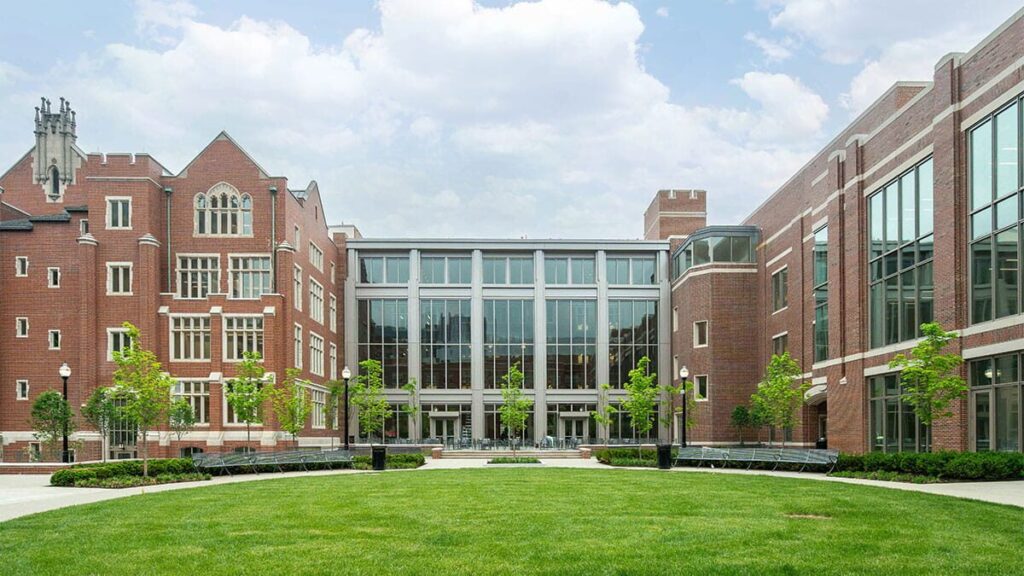
Ohio State University College of Medicine is a prestigious public medical institution located in Columbus, Ohio, serving as one of the nation’s leading medical education centers. Established in 1914, the school operates within the comprehensive Ohio State University Wexner Medical Center system.
Program Duration and Structure
The Ohio State College of Medicine offers a traditional 4-year MD program featuring the innovative “Lead.Serve.Inspire.” (LSI) curriculum. This competency-based framework integrates basic science learning with clinical application, ensuring graduates are prepared for high-caliber patient care. The program also offers specialized tracks including:
- Traditional 4-year MD program
- 3-year Primary Care Track (PCT) – accelerated program
- Community Medicine MD Track
- Multiple dual degree options: MD/PhD (MSTP), MD/MBA, MD/JD, MD/MPH
Location and Campus Details
Located in Columbus, Ohio, the medical school operates on an urban campus within one of America’s largest university systems. The Ohio State University Wexner Medical Center has been ranked among America’s “Best Hospitals” by U.S. News & World Report for 30 consecutive years, managing over 2 million patient visits annually across 8 hospitals in central Columbus.
Accreditation Status
Ohio State College of Medicine is fully accredited by the Liaison Committee on Medical Education (LCME), the nationally recognized accrediting authority for medical education programs leading to the M.D. degree in the United States and Canada. The school underwent its most recent LCME site visit in March 2022, maintaining its full accreditation status.
Rankings and Recognition
- Ranked as a Best Research Medical School by U.S. News & World Report (2023-2024)
- Among the most affordable top medical schools in the nation
- Consistently maintains USMLE Step 1 and Step 2 pass rates at or above national averages since 2002
- Average match rate exceeding 95% annually for residency placements
Admission Requirements
Academic Prerequisites
Minimum Degree Requirements: Applicants must possess a bachelor’s degree from an accredited institution prior to enrollment.
Required Courses: All prerequisite courses must be completed within ten years of enrollment:
- Biology: Two semesters or three quarters with laboratory experience
- General Chemistry: Two semesters or three quarters including laboratory work with quantitative and qualitative analysis
- Biochemistry: One semester/quarter course
- Organic Chemistry: Two semesters or three quarters including one year of laboratory experience
- Physics: Two semesters or three quarters with laboratory component
Additional Recommended Courses:
- Anatomy (one semester/quarter)
- Writing/Speech courses emphasizing communication
- Social Sciences (psychology, sociology, anthropology, economics)
- Humanities (art, music, drama, literature, languages)
- Cultural Studies focusing on diverse populations
- Ethics courses addressing moral behavior
GPA Requirements
- Minimum GPA: While no absolute minimum is specified, competitive applicants typically maintain high academic performance
- Median GPA of Accepted Students: 3.9 overall GPA
- Class GPA Statistics (2024): 3.82 overall GPA, 3.76 science GPA
- Evaluation Context: Grades are considered within the difficulty and rigor of the applicant’s major
Standardized Testing
MCAT Requirements:
- Median MCAT Score: 515 (2024 data shows 514 average)
- Validity Period: Scores accepted from tests taken within three years of application
- Retake Policy: Multiple attempts considered; highest score typically evaluated
- Competitive Range: Most successful applicants score above 510
Additional Testing:
- CASPer Test: Not explicitly required but may be considered as part of holistic evaluation
- English Proficiency: Required for non-native English speakers, may result in deferred admission for additional coursework
Extracurricular Activities & Experience Requirements
Ohio State College of Medicine employs a holistic review process evaluating:
- Research experience (99% of 2024 class participated in research)
- Clinical exposure and patient interaction
- Community service and volunteer work
- Leadership activities
- Diversity of experiences and backgrounds
State Residency Preferences:
- Ohio residents: 55% of 2024 class, with higher acceptance rates
- Out-of-state students: 45% of class, demonstrating significant opportunities for non-residents
- International students: Accepted, though specific statistics vary annually
Application Process & Timeline
Application System
Ohio State College of Medicine participates in the American Medical College Application Service (AMCAS) for primary applications.
Key Deadlines
- AMCAS Application Deadline: June (specific date varies annually)
- Secondary Application Deadline: Varies, typically 2-4 weeks after receipt
- Final Application Deadline: November 1, 2025
- Interview Period: Fall through early spring
- Match Notification: March (Match Day)
Required Documents
- Primary AMCAS Application
- Official Transcripts (verified through AMCAS)
- Letters of Recommendation: Two academic letters required from professors
- Personal Statement
- Secondary Application with school-specific essays
- MCAT Scores
Interview Process
Format: Traditional interview format with two separate interviews:
- One interview with a faculty member
- One interview with a current medical student or resident
Interview Statistics (2024):
- Total applicants: 7,634
- Ohio resident applicants: 1,186
- Non-resident applicants: 6,448
- Applicants interviewed: 700
- Total acceptances: 409
- Matriculated students: 224 (Class size: 217)
Interview Focus Areas:
- Motivation for medical career
- Understanding of medical profession and ethics
- Problem-solving and interpersonal skills
- Compassionate patient care capabilities
Post-Interview Process
Selection Process: Rolling admissions with decisions released approximately every two weeks beginning October 15. Applicants receive:
- Acceptance
- Deferral
- Rejection notifications via personal status page
Acceptance Requirements:
- $25 fee to secure position
- “Commit to Enroll” action in AMCAS
- Final official transcript verification
- Criminal background check and drug testing
Admission Statistics & Success Rates
Overall Acceptance Rate
Ohio State College of Medicine maintains an acceptance rate of approximately 6.9% overall, making it highly competitive among medical schools nationally. Broken down by residency:
- In-state (Ohio) acceptance rate: ~8%
- Out-of-state acceptance rate: ~3.9%
Application Volume and Class Size
- Total applications (2024): 7,634
- Available seats: 217 (first-year class)
- Applications per seat: Approximately 35:1 ratio
- Historical trend: Consistent high application volume with stable class size
Demographics of Admitted Students (2024 Class)
Gender Distribution:
- Women: 57%
- Men: 43%
- Other: <1%
Geographic Distribution:
- Ohio residents: 55%
- Non-residents: 45%
- Students from 30+ states represented
Age Distribution:
- Age 21-23: 129 students (majority)
- Age 24-25: 72 students
- Age 26+: 23 students
- Growth years: 36% took at least 2 gap years
Academic Background:
- Diverse majors represented: Biology, Engineering, Psychology, English, Music, and 30+ other fields
- Graduate degrees: 14 students with Master’s degrees
- First-generation college students: 11%
- Students with physician parents: 18%
- Research participation: 99%
Academic Statistics
GPA Ranges:
- Median GPA: 3.9
- Class average GPA: 3.82
- Science GPA average: 3.76
MCAT Score Distribution:
- Median MCAT: 515
- Class average: 514
- Competitive range: Most successful applicants score 510+
Waitlist Statistics
- Specific waitlist numbers not publicly disclosed
- Rolling admissions process provides ongoing opportunities
- Waitlist movement continues through summer months
Comparison Data
Ohio State College of Medicine compares favorably to:
- National averages: Higher than average MCAT and GPA requirements
- Public medical schools: Competitive with top-tier public institutions
- Regional comparison: Among most selective in Midwest region
Tuition & Financial Information
Current Tuition Rates by Residency Status
2024-2025 Academic Year:
- Ohio residents: $31,998 per year
- Out-of-state students: $56,918 per year
- International students: Same as out-of-state rate
Additional Fees
- Technology fees: Included in tuition
- Student services fees: Varies annually
- Health insurance: Required, approximately $2,000-3,000 annually
- Laboratory and equipment fees: Minimal additional costs
- Clinical rotation fees: Some specialty rotations may have additional costs
Total Cost of Attendance (2024-2025)
Ohio Residents:
- Tuition & Fees: $31,999
- Living costs: $16,471
- Books & Supplies: $4,950
- Personal Expenses: $2,307
- Total Cost of Attendance: $55,727
Out-of-State Students:
- Tuition & Fees: $56,919
- Living costs: $16,471
- Books & Supplies: $4,950
- Personal Expenses: $2,307
- Total Cost of Attendance: $80,647
Program Length Cost Analysis
4-Year Total Investment:
- Ohio residents: Approximately $268,210
- Out-of-state students: Approximately $391,668
Financial Aid Options
Federal Aid Programs:
- Direct Unsubsidized Loans
- Direct Graduate PLUS Loans
- Work-Study opportunities (limited availability)
Institutional Aid:
- Merit-based scholarships available
- Need-based financial aid
- Diversity and inclusion scholarships
External Opportunities:
- National Health Service Corps
- Military scholarships (HPSP)
- Private foundation scholarships
Living Expenses in Columbus, Ohio
Housing Options:
- On-campus graduate housing: Available but limited
- Off-campus apartments: $800-1,500/month
- Shared housing: $500-1,000/month
Cost of Living Benefits:
- Lower than national average for major metropolitan areas
- No state income tax on scholarships and fellowships
- Affordable transportation with COTA public transit system
Click To See Hundreds Of Consultants Who Can Mentor You:
Curriculum & Program Structure
Program Duration and Structure
Ohio State College of Medicine features the innovative “Lead.Serve.Inspire.” (LSI) curriculum – a four-year, competency-based program integrating basic sciences with clinical application.
Educational Philosophy and Teaching Methods
Teaching Approach:
- Early longitudinal practice-based clinical service
- Self-directed learning with multiple assessment methods
- Faculty coaching for clinical skills development
- Project-based work requiring critical thinking
- Team-based clinical problem-solving
Assessment Methods:
- Pass/fail system for pre-clinical courses
- Multiple assessment formats including standardized patients
- Continuous feedback and coaching model
Pre-Clinical Years (Years 1-2)
Curriculum Structure:
- Integrated systems-based approach
- Early clinical exposure beginning in first year
- Research opportunities embedded throughout
- Simulation-based learning in state-of-the-art facilities
Major Subject Areas:
- Foundational sciences integrated by organ system
- Patient interaction skills
- Medical ethics and professionalism
- Population health and social medicine
Clinical Training (Years 3-4)
Core Clinical Rotations:
- Internal Medicine
- Surgery
- Pediatrics
- Obstetrics & Gynecology
- Psychiatry
- Family Medicine
- Emergency Medicine
Clinical Sites:
- 8 hospitals within Ohio State Wexner Medical Center
- Community-based rotations throughout Ohio
- Specialty referral centers for complex cases
- Rural medicine opportunities
Advanced Competencies and Electives
Fourth-Year Options:
- Specialty exploration rotations
- Research electives and scholarly projects
- International rotation opportunities
- Sub-internships in chosen specialties
- Away rotations at other institutions
Special Programs
Dual Degree Programs:
- MD/PhD (MSTP): Medical Scientist Training Program
- MD/MBA: Business administration focus
- MD/JD: Legal studies integration
- MD/MPH: Public health emphasis
- Additional combined degrees available
Specialized Tracks:
- Three-Year Primary Care Track (PCT): Accelerated program
- Community Medicine Track: Focus on underserved populations
- MedPath Program: Alternative pathway for select students
Residency Preparation and Match Statistics
USMLE Performance:
- Step 1 pass rate: 96% (2023), consistently above national average
- Step 2 CK pass rate: 100% (2023-2024)
- First-time pass rates maintained above national benchmarks since 2002
Residency Match Results (2025):
- Overall match rate: >95%
- 26 specialties represented in matches
- Popular specialties: Internal Medicine, Anesthesiology, Family Medicine, Psychiatry
- Primary care matches: 65 students (approximately 33%)
- Geographic distribution: 39% in Ohio, 6% Michigan, 5% New York
- OSU Wexner Medical Center matches: 19%
Pre-Medical Preparation
Undergraduate Program Recommendations
Academic Major Selection:
- Any major acceptable – Ohio State welcomes diverse academic backgrounds
- 2024 class majors included: Biology, Engineering, Psychology, English, Music, Economics, and 30+ other fields
- Balance recommended: Strong science foundation with liberal arts exposure
Course Planning Strategy:
- Early prerequisite completion recommended
- Advanced science courses beneficial but not required
- Writing and communication courses strongly recommended
- Cultural competency coursework increasingly valued
Academic Planning Timeline
Freshman/Sophomore Years:
- Complete general chemistry and biology sequences
- Begin developing study skills and time management
- Explore healthcare through volunteering
Junior Year:
- Complete organic chemistry and physics
- Take MCAT (spring/summer recommended)
- Intensify clinical and research experiences
- Begin building relationships for recommendation letters
Senior Year/Gap Years:
- Complete remaining prerequisites
- Submit applications (June for following year entry)
- Continue meaningful experiences
- Prepare for interviews
Clinical Experience Requirements
Types of Clinical Exposure Valued:
- Direct patient interaction: Hospital volunteering, clinical assistant roles
- Healthcare delivery observation: Physician shadowing, clinic work
- Community health initiatives: Health fairs, screening programs
- Healthcare advocacy: Policy work, community organizing
Quality vs. Quantity:
- Meaningful engagement preferred over extensive hours
- Diverse experiences across healthcare settings
- Long-term commitments demonstrate dedication
- Reflection and growth from experiences essential
Research Experience Expectations
Research Participation: 99% of 2024 class had research experience
Types of Research Valued:
- Basic science research: Laboratory bench work
- Clinical research: Patient-oriented studies
- Public health research: Population-based investigations
- Social sciences research: Healthcare policy, medical education
Research Outcomes:
- Publications preferred but not required
- Presentations at conferences demonstrate scholarly engagement
- Research skills development more important than results
- Long-term projects show commitment and depth
Extracurricular Planning
Leadership Development:
- Student organization leadership
- Community project coordination
- Peer mentoring and tutoring
- Team captain roles in athletics/activities
Service and Volunteering:
- Sustained community service (multi-year commitments preferred)
- Healthcare-related volunteering
- Underserved population work
- International service experiences