Last updated on January 9th, 2026 at 06:30 am
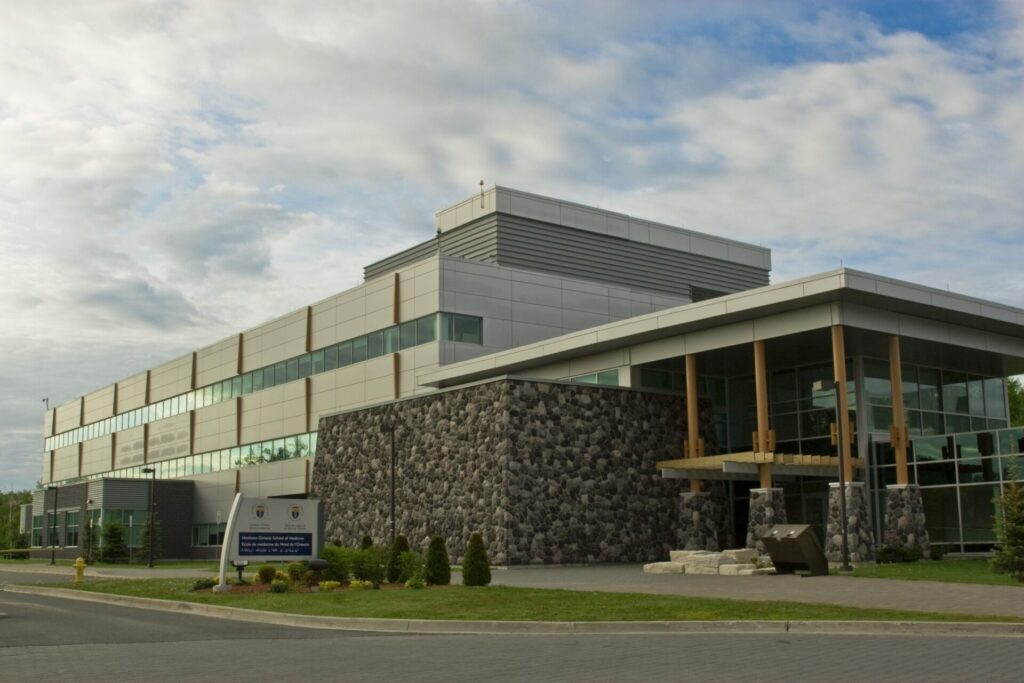
Program Overview & Institution Identity
Official Program Name & Accreditation
NOSM University (Northern Ontario School of Medicine University), established as Canada’s first independent medical university in April 2022, operates the Undergraduate Medical Education (UME) Program leading to a Medical Doctor (MD) degree. Originally founded in 2005 as a joint medical school between Lakehead University and Laurentian University, NOSM University now stands as an independent institution with a unique social accountability mandate.
The school holds accreditation from the Committee on Accreditation of Canadian Medical Schools (CACMS), which works in partnership with the Liaison Committee on Medical Education (LCME) to ensure rigorous educational standards. This accreditation ensures that NOSM University graduates are eligible for residency training anywhere in Canada and the United States.
Program Duration & Structure
NOSM University offers a 4-year MD program following a traditional medical education timeline with 8-month academic years. The program utilizes an innovative Distributed, Community-Engaged Learning (DCEL) model, which sets it apart from traditional medical schools by placing students in various Northern Ontario communities throughout their education rather than confining learning to a single campus.
Location & Campus Details
NOSM University operates with dual main campuses located in:
- Sudbury, Ontario – Urban campus serving as one of the primary educational hubs
- Thunder Bay, Ontario – Second main urban campus
However, the university’s distinctive approach means “the walls of the University are the boundaries of Northern Ontario.” Students learn across more than 90 communities throughout Northern Ontario, with partnerships involving over 500 organizations and 1,800+ clinical faculty dispersed across the region.
Ranking & Recognition
While specific rankings vary by publication, NOSM University has received significant recognition for its innovative approach to medical education:
- Recipient of the Charles Boelen International Social Accountability Award for its commitment to addressing regional health disparities
- Recognized internationally for its distributed learning model
- Known for producing graduates with strong commitment to rural, remote, Indigenous, and Francophone community practice
Admission Requirements
Academic Prerequisites
Minimum Degree Requirements
Applicants must complete four years of university undergraduate study leading to a bachelor’s degree from an accredited institution. There is no preference given to specific undergraduate majors, and NOSM University welcomes diverse academic backgrounds.
Required Courses
NOSM University requires 2 full-year course equivalents (or 4 half-year courses) in Arts, Social Sciences, and/or Humanities if the applicant’s major is in the sciences. Conversely, if an applicant’s major is in Arts, Social Sciences, or Humanities, they must complete 2 full-year course equivalents in the sciences.
GPA Requirements
- Minimum GPA: 3.00 on a 4.00 scale
- Average GPA of admitted students: 3.76 (based on recent admissions data)
- GPA Calculation: NOSM University uses a cumulative GPA that includes all courses, including supplementary education, distance education, and repeat courses
Standardized Testing
MCAT Requirements
NOSM University does not require the MCAT for admission. This makes it unique among North American medical schools. Any MCAT scores submitted as part of an application are not taken into consideration during the review process.
Additional Testing
CASPer Test: NOSM University does not require the CASPer test, unlike many other Canadian medical schools.
Extracurricular Activities & Experience Requirements
NOSM University uses a holistic evaluation system that considers various factors beyond academic performance:
- Clinical experience: Healthcare exposure in various settings
- Research experience: Basic science, clinical, or health services research
- Community service: Particularly valued if related to rural, remote, Indigenous, or Francophone communities
- Leadership experience: Demonstrated through various activities and roles
- Rural, remote, or Northern Ontario background: Factored into the “context score”
Application Process & Timeline
Application System
All applications must be submitted through the Ontario Medical School Application Service (OMSAS). NOSM University does not accept direct applications.
Application Deadlines
- OMSAS Application Opens: Mid-July
- Application Deadline: October 1, 2025 (First week of October annually)
- Application for: September 2026 admission
Required Documents
- Transcripts: All post-secondary institution transcripts
- Reference Letters: 3 reference letters required
- Personal Statement: Through OMSAS Autobiographical Sketch (ABS)
- Application Essays: Institution-specific essay questions
Application Fees
Application fees are processed through OMSAS and include both OMSAS processing fees and school-specific fees. Current fee information is available through the OMSAS website.
Interview Process
- Interview Format: Multiple Mini Interview (MMI)
- Interview Period: March to April annually
- Number of Interviews: Approximately 300-335 interviews offered each year
- Interview Invitations: Based on holistic evaluation of application materials
Admission Statistics & Success Rates
Overall Acceptance Rate
- Current Acceptance Rate: 5.3% (some sources report 4.6%)
- Class Size: 88 students per entering class (recent data shows 69-88 students depending on the year)
- Application Volume: Approximately 1,975 applications annually
Competitive Statistics
- Average GPA of Admitted Students: 3.76
- Median GPA: 3.76
- MCAT: Not applicable (not required)
Geographic Distribution
- 84% of students historically come from Northern Ontario
- Accepts out-of-province applicants: Yes, NOSM University welcomes applications from across Canada
- 95% Requirement: Effective July 2025, Ontario medical schools must reserve at least 95% of seats for students ordinarily resident in Ontario
Waitlist Information
Specific waitlist statistics are not publicly detailed, but NOSM University does maintain a waitlist system with communications provided to candidates about their status throughout the admissions cycle.
Tuition & Financial Information
Current Tuition Rates (2025-2026)
- Year 1: $24,283.62
- Tuition Fees: $23,247.00
- Ancillary Fees: $1,036.62
- Years 2-4: $24,183.62
- Tuition Fees: $23,247.00
- Ancillary Fees: $936.62
- Year 5 (if applicable): $12,536.62
- International Students: Significantly higher fees apply (historical data suggests approximately $35,000+ annually)
Total Program Cost
Total 4-Year MD Program Cost: Approximately $96,000-$97,000 for domestic students (tuition and fees only)
Additional Costs
Students should budget for:
- Books and equipment: ~$1,000 annually
- Living expenses: Variable depending on community placement
- Travel costs: Due to distributed learning model requiring travel between communities
Financial Aid Options
- Government Student Loans: Provincial programs like OSAP (Ontario Student Assistance Program)
- Merit-based scholarships: Available through the university
- Need-based financial aid: Institutional programs available
- Indigenous-specific funding: Available for qualifying Indigenous students
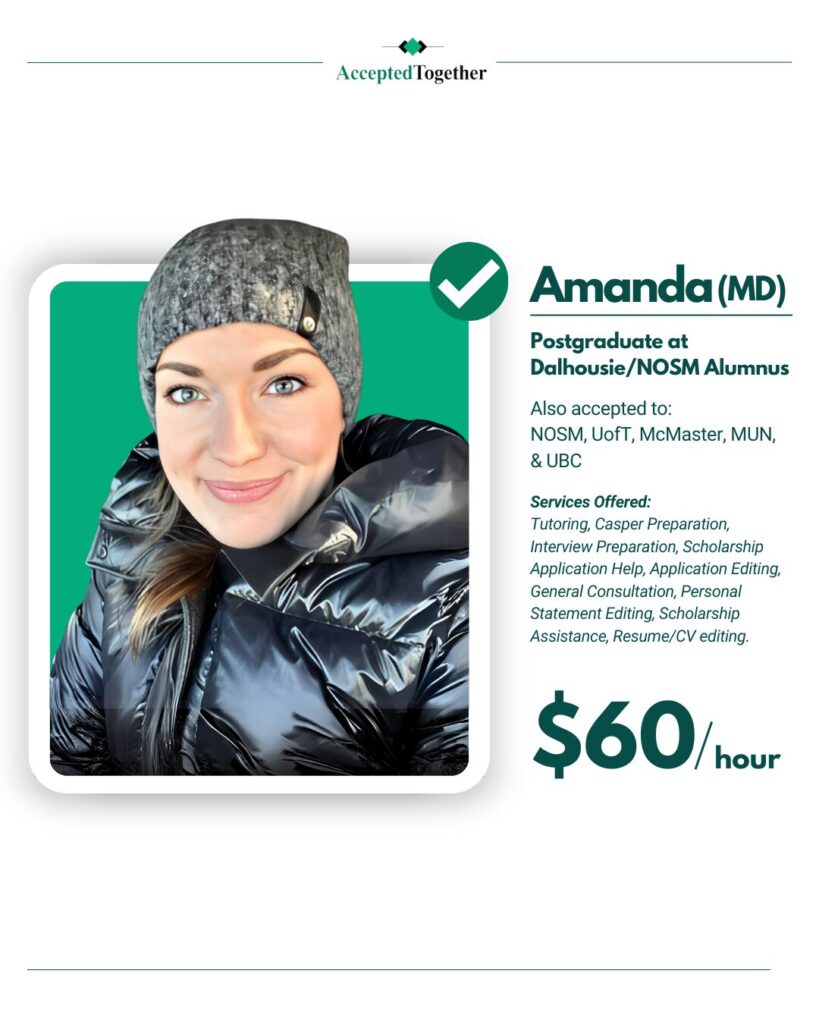
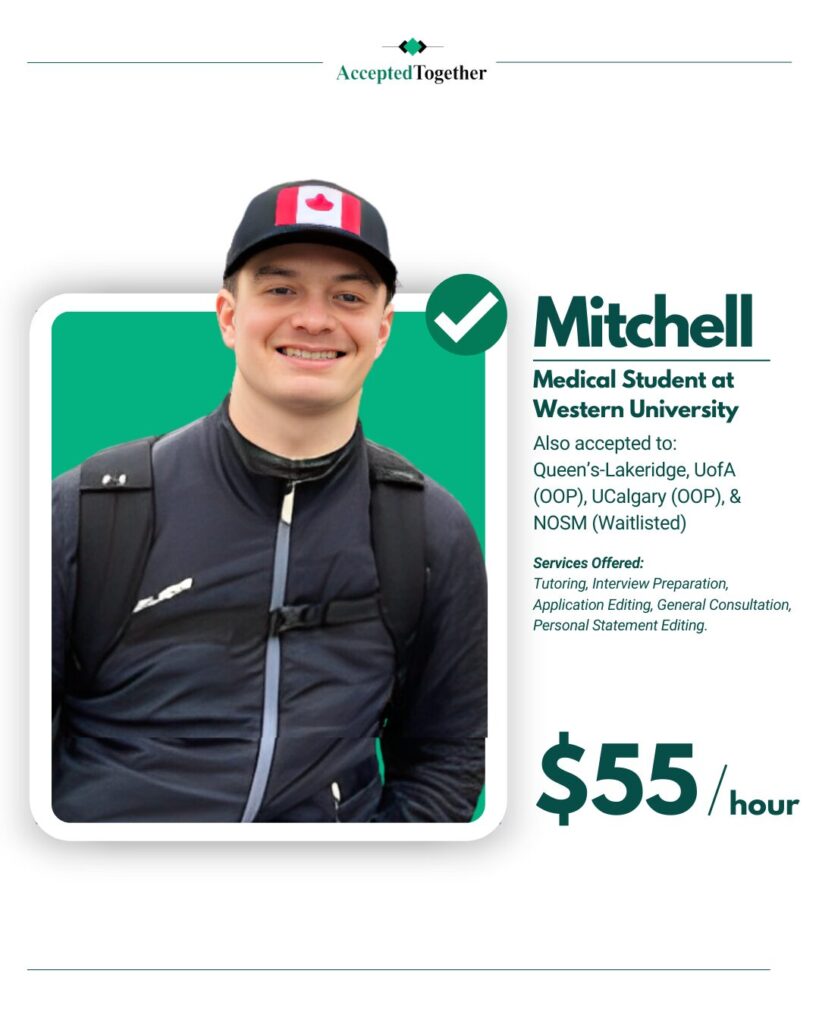
Click To See Hundreds Of Consultants Who Can Mentor You:
Curriculum & Program Structure
Program Duration and Educational Philosophy
The 4-year MD program follows NOSM University’s distinctive Distributed, Community-Engaged Learning (DCEL) model, which integrates classroom learning with extensive community-based experiences throughout Northern Ontario.
Educational Approach
NOSM University emphasizes:
- Social accountability: Training physicians to meet the needs of underserved populations
- Cultural competency: Particularly in Indigenous and Francophone health
- Rural medicine expertise: Preparing graduates for practice in diverse geographic settings
- Community engagement: Learning directly from and within communities
Pre-Clinical Years (Years 1-2)
During the first two years, students participate in three 4-week community placements in rural communities across Northern Ontario:
- Year 1: Includes a mandatory 4-week Indigenous cultural immersion experience where students live and learn in an Indigenous community following a community-designed curriculum
- Year 2: 2-month-long community placements in rural and/or remote communities to develop appreciation for rural practice
Clinical Training (Years 3-4)
The clinical years emphasize distributed learning across Northern Ontario’s healthcare facilities, including:
- Core clinical rotations: In various specialties across the region
- Extended rural exposure: Particularly in Year 3
- Hospital partnerships: Including Sudbury Regional Hospital, Thunder Bay Regional Health Sciences Centre, and numerous community hospitals
Special Programs & Streams
NOSM University offers several specialized admission streams:
- Indigenous Stream: For Indigenous applicants
- Francophone Stream: For French-speaking applicants
- Military Stream: For military personnel
- Black Stream: For Black applicants
- Mature and Graduate Degree-Holder Streams: For non-traditional applicants
Residency Preparation
NOSM University graduates have historically performed well in the Canadian Resident Matching Service (CaRMS):
- Strong match rates to preferred residency programs
- Particular success in family medicine and rural medicine specialties
- Graduates often remain in Northern Ontario for residency and practice
Pre-Medical Preparation
Undergraduate Program Recommendations
NOSM University values diverse academic backgrounds and does not prefer any specific undergraduate major. Successful applicants come from:
- Sciences (Biology, Chemistry, Physics, Health Sciences)
- Arts and Humanities
- Social Sciences
- Engineering and other technical fields
Academic Planning
- Complete 4 years of undergraduate study
- Maintain a competitive GPA (aim for 3.7+)
- Fulfill the 2 full-year course requirement outside your major area
- Consider courses that demonstrate broad intellectual curiosity
Experience Building
- Healthcare exposure: Gain experience in clinical settings, particularly in rural or underserved communities
- Community service: Engage with Northern Ontario, Indigenous, Francophone, or rural communities
- Research opportunities: While not required, research can strengthen your application
- Leadership roles: Demonstrate leadership in various contexts
- Cultural competency development: Gain experience working with diverse populations
MCAT Preparation
Not applicable – NOSM University does not require or consider MCAT scores.
Frequently Asked Questions
Does NOSM University look at extracurriculars?
Yes, NOSM University uses a holistic admissions process that heavily weighs extracurricular activities, community service, healthcare experience, leadership, and personal qualities alongside academic performance.
What is NOSM University’s average GPA and MCAT score?
The average GPA of admitted students is 3.76. NOSM University does not require the MCAT, making it unique among North American medical schools.
How competitive is NOSM University compared to other medical schools?
With an acceptance rate of approximately 5.3%, NOSM University is highly competitive, similar to other Canadian medical schools. However, its holistic admissions approach and focus on fit with the school’s mission may provide opportunities for applicants with strong community engagement.
Does NOSM University prefer in-province applicants?
While NOSM University accepts out-of-province applicants, starting in July 2025, Ontario medical schools must reserve at least 95% of seats for Ontario residents. However, NOSM’s historical data shows 84% of students come from Northern Ontario, suggesting strong regional preference.
What makes NOSM University different from other medical schools?
NOSM University’s Distributed, Community-Engaged Learning (DCEL) model is unique, with students learning across 90+ communities in Northern Ontario. The school’s social accountability mandate and focus on rural, Indigenous, and Francophone health distinguish it from traditional medical schools.
When should I apply to NOSM University?
Applications open in mid-July through OMSAS, with a deadline of October 1st for the following year’s admission. Start preparing your application materials several months before the deadline.
Does NOSM University accept international students?
NOSM University requires applicants to be Canadian citizens or permanent residents before the application deadline. International students without Canadian status are not eligible.
What clinical experience do I need for NOSM University?
While there are no specific hour requirements, NOSM University values healthcare exposure, particularly in rural, remote, Indigenous, or Francophone community settings that align with the school’s mission.
Does NOSM University require research experience?
Research experience is not required but can strengthen your application. NOSM University values diverse experiences that demonstrate your commitment to community service and healthcare.
How many letters of recommendation does NOSM University require?
NOSM University requires 3 reference letters submitted through OMSAS.
What is NOSM University’s curriculum like?
The curriculum follows a 4-year MD program with extensive community-based learning throughout Northern Ontario. Students spend significant time in rural and remote communities, gaining unique exposure to diverse healthcare settings and populations.
Where do NOSM University graduates match for residency?
NOSM University graduates have strong residency match rates, with many entering family medicine, rural medicine, and other specialties. Many graduates choose to complete residency training and practice in Northern Ontario, fulfilling the school’s social accountability mission.
How much does NOSM University cost?
The total tuition and fees for the 4-year program are approximately $96,000-$97,000 for domestic students. Additional costs include living expenses, books, equipment, and travel expenses related to the distributed learning model.
What financial aid is available at NOSM University?
Financial aid options include provincial student loan programs (like OSAP), university scholarships, need-based aid, and specialized funding for Indigenous students. The distributed learning model may also reduce some living costs compared to single-campus medical schools.
Does NOSM University offer interviews to all qualified applicants?
No, NOSM University offers approximately 300-335 interviews annually from nearly 2,000 applications. Interview invitations are based on holistic evaluation of academic and non-academic factors.