
Last updated on January 9th, 2026 at 06:30 am
Program Overview & Institution Identity
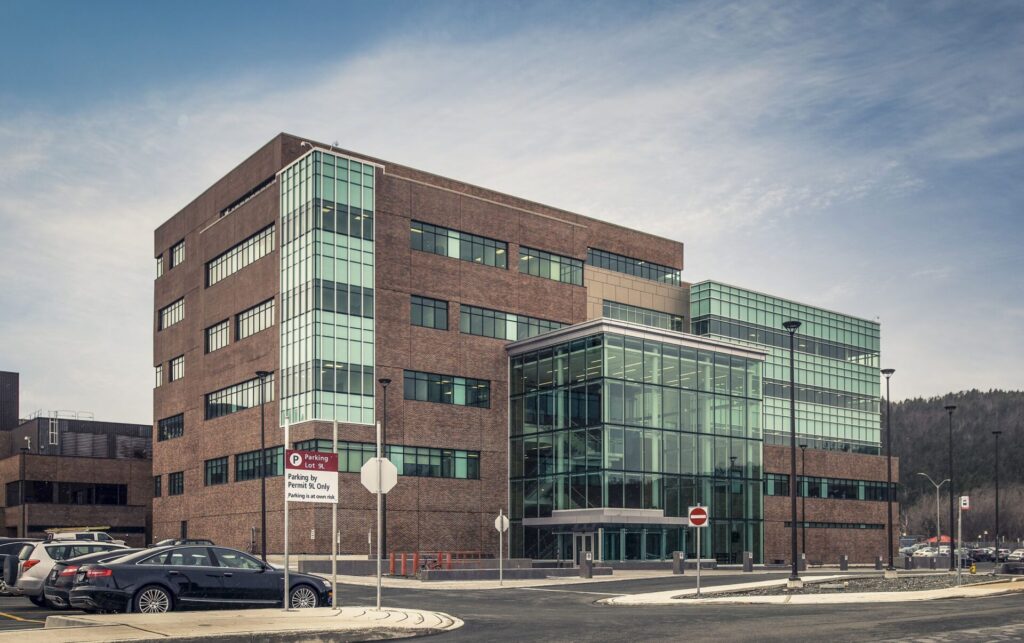
Memorial University of Newfoundland Faculty of Medicine stands as the only medical school in Newfoundland and Labrador, Canada. Located in St. John’s, NL, on an urban campus, the Faculty of Medicine has been training physicians since its establishment in 1967 when Dr. Ian Rusted was appointed as the first dean of medicine.
Program Duration & Structure
The Doctor of Medicine (MD) program is a 4-year comprehensive medical degree that provides an integrated medical education experience. Memorial University’s MD program accepts 85 learners once per year with instruction beginning in late August (recently increased from 80 to 85 students, with plans to increase to 90 by August 2025).
Accreditation Status
The MD program is fully accredited by the Committee on the Accreditation of Canadian Medical Schools (CACMS). CACMS ensures that Canadian medical faculties’ MD programs meet the quality standards expected when producing future physicians. The next full accreditation survey is scheduled for 2030.
Special Programs
Memorial offers combined degree options including:
- MD/PhD programs for students interested in physician-scientist careers
- Research opportunities integrated throughout the curriculum
Unique Features
- Community and rural medicine focus: The program provides clinical learning experiences in community and rural settings
- Early patient contact: Students engage with patients from the early stages of their medical education
- Small group teaching: Emphasis on personalized learning environments
- Integrated curriculum: Blends basic and clinical sciences with community engagement
Admission Requirements
Academic Prerequisites
Minimum Degree Requirements:
- Bachelor’s degree from a recognized university or university college before admission
- No specific undergraduate major required – applicants from diverse academic backgrounds are welcomed
Citizenship Requirements:
- Must be Canadian citizens or have Permanent Resident status in Canada
GPA Requirements:
- No minimum GPA threshold specified
- Median GPA of admitted students: 3.85
- Average GPA of admitted students is typically 85% or higher
- Holistic evaluation approach considers academic history alongside personal circumstances
Standardized Testing
MCAT Requirements:
- MCAT exam required – must be written within 5 years of the application deadline
- Median MCAT score: 505
- For the Newfoundland and Labrador pool, average MCAT scores are 505-507 total with section scores between 125-128
- Deadline for 2025-2026 cycle: Must write MCAT by August 23, 2025
- All MCAT scores must be released to Memorial University between June 25, 2025, and September 25, 2025
CASPer Test:
- CASPer exam required annually for all applicants
- Test required is CSP-10211 (also called Casper 2)
- Previous scores are NOT accepted – must take annually
- CASPer scores typically above the average metric of 0.00
Additional Requirements
Letters of Reference:
- Two letters of reference required (one must be academic)
- Must adhere to specific reference criteria established by the school
Application System:
- Uses direct Online Application System (OAS) – NOT part of OMSAS
- Applicants can monitor their application status online
Application Process & Timeline
Application System & Deadlines
Application Platform: Memorial University’s direct Online Application System (OAS)
Key Dates for 2025-2026 Cycle:
- Application opens: July 2, 2025, 9:00am NDT
- Application deadline: August 27, 2025, 11:59 PM NDT (10:29 PM EST)
- MCAT deadline: Must write by August 23, 2025
- Score release deadline: September 25, 2025
- Document deadline: August 27, 2025
Required Documents
- Unofficial transcripts from ALL post-secondary institutions attended (including exchange programs)
- High school transcripts required for NL residents who graduated from a NL high school
- AP, IB, GCSE transcripts if credits were transferred to university
- Two letters of reference (one academic)
- MCAT and CASPer scores released to Memorial University
Application Fees
- Total application fees: $255
- All fees are non-refundable
- Must be paid online by credit card
Interview Process
- Interview format: Details not specified in current cycle information
- Interviews conducted for selected candidates
- Official transcripts only required if selected for interview
Admission Statistics & Success Rates
Seat Allocation & Competition Pools
Total Seats Available: 85 (increasing to 90 in August 2025)
Total Applications: 750-800+ annually (excluding PEI pool)
Competition Pool Breakdown:
| Competition Pool | Applications | Available Seats | Competition Level |
|---|---|---|---|
| Newfoundland & Labrador | ~250 | ~73 | Moderate – ~30% acceptance rate |
| Indigenous Applicants | 10-15 | 3 | Moderate competition |
| Other Canadian Provinces | 450+ | 6 | Extremely competitive – ~1.3% acceptance rate |
| Nunavut | <5 | 1 | Low volume |
| Prince Edward Island | Unknown | 20 | Separate program at UPEI |
Competitiveness Analysis
The Other Canadian Provinces pool is extremely competitive, requiring exceptional academic credentials and well-rounded extracurricular profiles. Applicants with definitive links to Newfoundland and Labrador may receive additional consideration.
Tuition & Financial Information
Tuition Costs
Medical School Specific Costs (Annual):
- Canadian students: $14,250 CAD per year
- Out-of-province: $30,000 CAD per year (based on third-party data)
Additional Medical School Fees
Year 1 Specific Fees:
- Orientation Fee: $150
- College of Physicians and Surgeons (NL): $150
- Graduation Fee: $300
- Medical Students’ Society: $80
- Canadian Federation of Medical Students: $100
- BLS Course: $100
Annual Fees (All Years):
- Student Union fees: $199
- Recreation Fee: $207
- Health & Dental Insurance: $456
- Campus Renewal Fee: $750
- Student Services Fee: $150
Educational Materials:
- Instruments & Books (Year 1): $3,620
- Instruments & Books (Years 2-4): $485 annually
- LMCC & CaRMS Fees (Year 4): $1,375
Total Program Cost
Estimated 4-year total: $70,405 CAD (tuition and fees only)
Living expenses: Approximately $750/month for housing
Financial Aid Options
- Provincial Student Loans Programs (interest-free during studies)
- Federal loan programs for Canadian students
- Scholarships and bursaries available through the university
- Students encouraged to explore external scholarship opportunities
Click To See Hundreds Of Consultants Who Can Mentor You:
Curriculum & Program Structure
Program Overview
The 4-year MD program is structured in four phases aligned with the Medical Council of Canada Objectives and the Royal College of Physicians and Surgeons of Canada CanMEDS Framework.
Pre-Clinical Years (Phases 1, 2, and 3)
Educational Philosophy:
- Integrated curriculum blending basic and clinical sciences
- Problem-based learning and case-based approaches
- Small group discussions and tutorials
- Early clinical exposure with patient contact
Core Learning Themes:
- The Patient
- Physician Competencies
- Community Engagement
- Clinical Skills
Teaching Methods:
- Didactic lectures
- Independent learning modules
- Integrated learning sessions
- Laboratory work
- Self-directed learning
Clinical Years (Phase 4)
Clinical Training Structure:
Students participate as healthcare team members through:
- Core clinical rotations: Internal Medicine, Surgery, Obstetrics & Gynecology, Rural Family Practice, Pediatrics, Psychiatry
- Block or longitudinal integrated clerkship streams
- Entrustable Professional Activities (EPAs) framework for assessment
Clinical Sites:
- Community-based rotations
- Rural medicine experiences
- Hospital partnerships throughout Newfoundland and Labrador
Special Features
- Electives and Advanced Practice Integration courses
- Research opportunities throughout all phases
- Customized learning plans for individual students
- Seven CanMEDS competencies: Medical Expert, Communicator, Collaborator, Leader, Health Advocate, Scholar, Professional
Pre-Medical Preparation
Undergraduate Preparation
Academic Background: No preferred undergraduate major – the admissions committees evaluate:
- Grade difficulty and course level
- Course load consistency (full course load preferred)
- Academic performance trends
Recommended Approach:
- Pursue a degree in a subject area you’re passionate about
- Maintain strong academic performance
- Take challenging courses that demonstrate academic rigor
Extracurricular Experience
Memorial uses a holistic evaluation considering:
- Research experience (though not mandatory)
- Clinical exposure and healthcare-related experience
- Community service and volunteering
- Leadership roles and responsibilities
- Work experience
Test Preparation
MCAT Preparation:
- Plan to write MCAT well in advance of deadline
- Science courses provide good preparation but not mandatory
- Many non-science students score well annually
- Fee assistance available through AFMC (Association of Faculties of Medicine of Canada)
- Reduced fee of $140 USD available for qualified applicants (normal fee: $345 USD)
CASPer Preparation:
- Required annually for all applicants
- Previous scores not accepted
- Assesses personal and professional characteristics
Application Timeline Planning
Recommended Timeline:
- Junior year: Begin MCAT preparation, gain clinical experience
- Senior year: Write MCAT, complete application materials
- Summer before intended start: Submit application (due August 27)
Frequently Asked Questions
What is Memorial University Faculty of Medicine’s average GPA and MCAT score?
The median GPA for admitted students is 3.85, with most successful applicants having an 85% average or higher. The median MCAT score is 505, with section scores typically ranging from 125-128 for the Newfoundland and Labrador pool.
How competitive is Memorial University Faculty of Medicine compared to other medical schools?
Memorial is moderately competitive for NL residents (~30% acceptance rate) but extremely competitive for out-of-province applicants (~1.3% acceptance rate). The competitiveness varies significantly by applicant pool.
Does Memorial University Faculty of Medicine prefer in-province applicants?
Yes, strong preference is given to Newfoundland and Labrador residents, with approximately 73 of 85 seats reserved for NL residents. Only 6 seats are available for other Canadian provinces, making this pool extremely competitive.
Does Memorial University Faculty of Medicine look at extracurriculars?
Yes, Memorial uses a holistic evaluation approach. Strong references, work experiences, and extracurricular activities are considered, especially when academic metrics are competitive.
What makes Memorial University Faculty of Medicine different from other medical schools?
Key differentiators include:
Only medical school in Newfoundland and Labrador
Strong focus on rural and community medicine
Early patient contact in medical education
Integrated curriculum with community engagement
Small class sizes enabling personalized learning
When should I apply to Memorial University Faculty of Medicine?
Apply during the summer before your intended start year. For August 2026 admission, applications are due August 27, 2025. The application process takes almost a full year.
Does Memorial University Faculty of Medicine accept international students?
No, applicants must be Canadian citizens or have Permanent Resident status in Canada.
What clinical experience do I need for Memorial University Faculty of Medicine?
While not specified as mandatory, clinical exposure and healthcare-related experience are valued in the holistic evaluation process. The quality and reflection on experiences matter more than quantity.
Does Memorial University Faculty of Medicine require research experience?
Research experience is not mandatory but is considered positively in the holistic evaluation. Many successful applicants have diverse backgrounds without extensive research.
How many letters of recommendation does Memorial University Faculty of Medicine require?
Two letters of reference are required, with one must be academic. References must adhere to specific criteria outlined by the school.
What is Memorial University Faculty of Medicine’s curriculum like?
The curriculum features an integrated 4-year program with early clinical exposure, small group learning, and a focus on community medicine. It’s structured in four phases with emphasis on the CanMEDS competencies.
Where do Memorial University Faculty of Medicine graduates match for residency?
Graduates participate in the Canadian Residency Matching Service (CaRMS). The school provides comprehensive support through their MedCAREERS program, though specific match statistics weren’t available in current public data.
How much does Memorial University Faculty of Medicine cost?
Total estimated cost: $70,405 CAD for the 4-year program (tuition and fees only), plus living expenses of approximately $750/month. Canadian students pay $14,250 annually while out-of-province students pay higher rates.
What financial aid is available at Memorial University Faculty of Medicine?
Financial aid includes provincial and federal student loan programs, university scholarships, and external funding opportunities. The only interest-free option during studies is through Provincial Student Loan Programs.
Does Memorial University Faculty of Medicine offer interviews to all qualified applicants?
No, interviews are offered to selected candidates only based on the holistic evaluation of their application. The interview process is competitive across all applicant pools.