Last updated on January 9th, 2026 at 06:32 am
Program Overview & Institution Identity
Official Program Name & Recognition
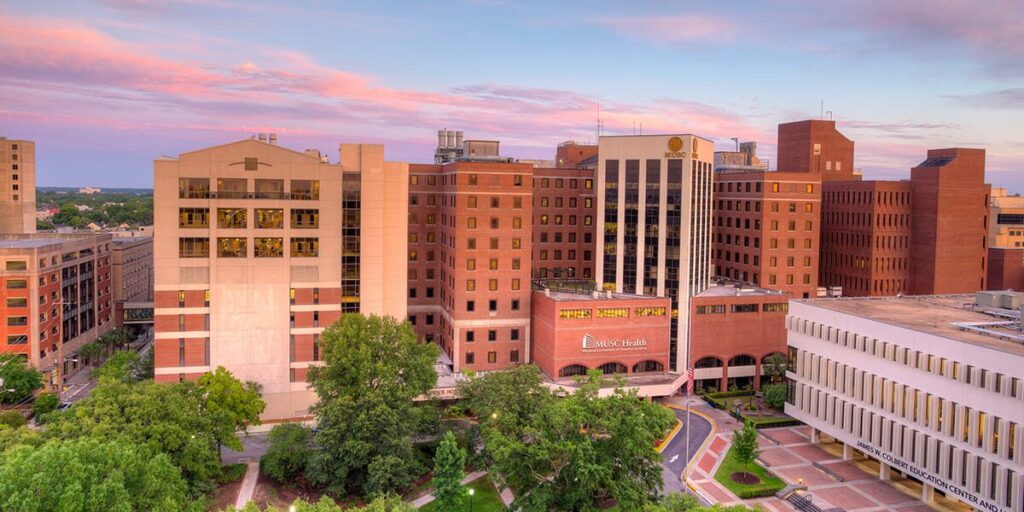
The Medical University of South Carolina College of Medicine (MUSC College of Medicine) stands as South Carolina’s premier medical school and the oldest medical school in the South, founded in 1824. Located in the historic city of Charleston, MUSC operates as the state’s only comprehensive academic health sciences center with a unique mission to serve South Carolina through education, research, and patient care.
Program Duration & Structure
MUSC College of Medicine offers a traditional 4-year MD program with innovative tracks and pathways:
- Traditional 4-Year Track: Standard medical education curriculum with 2 years of pre-clerkship instruction, 1 year of core clinical clerkships, and 1 year of advanced clinical rotations
- Accelerated 3-Year Track: Select students can complete their degree in three years and join participating MUSC residency programs
- Parallel Track at MUSC-AnMed Clinical Campus: Primary care-focused clinical curriculum for years 3 and 4 in Anderson, SC
- Combined Degree Programs: MD/PhD opportunities available
Location & Campus Details
Charleston, SC Campus: Located in downtown Charleston’s Medical District, MUSC’s urban campus provides students access to multiple clinical sites including:
- MUSC Main University Hospital (MUH)
- MUSC Ashley River Tower (ART)
- Ralph H. Johnson VA Medical Center
- Regional clinical sites throughout South Carolina
Accreditation & Rankings
- LCME Accredited: Fully accredited by the Liaison Committee on Medical Education
- US News Rankings:
- #56 in Best Medical Schools: Research (Tier 2)
- #58 in Best Medical Schools: Primary Care (Tier 3)
- #30 among public medical schools for research
- #6 in Most Graduates Practicing in Medically Underserved Areas
Admission Requirements
Academic Prerequisites
No specific prerequisite courses required, but MUSC strongly recommends applicants complete:
- Two semesters each: General Biology, General Chemistry, Organic Chemistry, General Physics, Biochemistry
- One semester each: Introductory Psychology, Introductory Sociology
- Minimum Education: Bachelor’s degree (90 semester hours minimum, 3 years of college work)
GPA Requirements
- Minimum GPA: No specific minimum stated for in-state applicants
- Out-of-State Minimum: 3.7 cumulative undergraduate GPA required
- Median Admitted GPA: 3.91 (Class of 2027: 3.82 average)
- Competitive Range: Successful applicants typically maintain GPAs well above minimum thresholds
Standardized Testing Requirements
MCAT Requirements
- Minimum Score: 500 composite score required for interview consideration
- Out-of-State Minimum: 511 MCAT score required
- Median Admitted MCAT: 511 (consistent across recent classes)
- Validity Period: Must be taken within 3 years of matriculation
- Retakes: Multiple attempts permitted; highest composite score considered
- Score Distribution: Competitive applicants typically score at or above the 80th percentile
Extracurricular Activities & Experience Requirements
MUSC employs a holistic admissions approach evaluating:
Primary Criteria
- Clinical Exposure/Shadowing: Direct patient care exposure required
- Volunteering: Community service and healthcare-related volunteer work
- Leadership: Demonstrated leadership roles and experiences
- Research: While not required, 90% of students participate in research
Personal Attributes Assessed
- Critical Thinking
- Cultural Competency
- Emotional Intelligence
- Motivation for Medicine
- Oral Communication/Social Skills
- Professional Principles
Additional Factors Considered
- Artistic and/or athletic achievements
- Connectivity to South Carolina
- Military service
- Graduate degrees/post-baccalaureate programs
- Overcoming adversity
- Rural background
- Significant academic improvement
Residency Preferences
- Strong preference for South Carolina residents
- Out-of-state applicants must demonstrate “close ties” to South Carolina including:
- Close relatives living in the state
- Previous residency history
- Academic ties to South Carolina institutions
Application Process & Timeline
Application System & Deadlines
- Primary Application: Through AMCAS (American Medical College Application Service)
- Application Period: June 15 – November 1 (preceding year of entry)
- Application Fee: $95
- Secondary Application: Invited after AMCAS verification, completed through AMCAS Applicant Gateway
- Maximum Applications: 3 lifetime attempts allowed
Required Documents
Letters of Recommendation
Submit through AMCAS Letters Service:
- Option 1: One premedical advisory committee packet
- Option 2: Three individual letters (preferred: 2 science professors + 1 non-science professor)
- Working Professionals: At least one science professor letter required; additional letters may come from work experience
Secondary Application Requirements
- Supplemental essay questions through AMCAS Applicant Gateway
- Must be completed within 2 weeks of invitation
- Required for further consideration and interview eligibility
Interview Process
Interview Statistics (Recent Class)
- Applications: 3,678 total (542 in-state, 3,136 out-of-state)
- Interviews: 389 total (320 in-state, 69 out-of-state)
- Interview Format: Traditional interview format (specific structure not detailed)
- Timeline: Interviews conducted September through March
Post-Interview Process
- Admission decisions communicated via email
- Waitlist procedures in place
- Deposit requirements for accepted students
Admission Statistics & Success Rates
Overall Acceptance Rate
- Total Acceptance Rate: Approximately 4.74%
- In-State vs Out-of-State: Significant preference for South Carolina residents
Application Volume & Class Profile
- Annual Applications: ~3,780 applications received
- Class Size: 179 students (Class of 2027)
- Matriculated Students: 165 total (154 in-state, 11 out-of-state)
Academic Statistics of Admitted Students
Class of 2027 Profile
- Average MCAT: 511
- Average GPA: 3.82
- Gender Distribution: 59% Female, 41% Male
- Diversity: 16% from underrepresented minorities
Competitive Ranges
- MCAT Range: Competitive applicants typically score 510+
- GPA Range: Successful candidates maintain 3.7+ GPA
- Out-of-State Standards: Must meet average academic thresholds (3.7 GPA, 511 MCAT minimum)
Tuition & Financial Information
Current Tuition Rates
2024-2025 Academic Year
- In-State Tuition: $40,051 per year
- Out-of-State Tuition: $69,400 per year
- Application Fee: $95
Total Cost of Attendance
Annual Expenses
- Living Costs: $21,014
- Books & Supplies: $3,838
- Personal Expenses: $2,880
- Total COA (In-State): $67,783
- Total COA (Out-of-State): $97,132
4-Year Program Total
- In-State Total: $270,793
- Out-of-State Total: $377,474
Financial Aid Opportunities
MUSC Institutional Scholarships
- Merit-based and need-based scholarships available
- Primary goal: reduce overall educational debt
- Application opens mid-January for accepted/continuing students
- Scholarship amounts vary based on endowment funding
External Funding Sources
- Federal Financial Aid: FAFSA required for all aid consideration
- Armed Forces Health Professions Scholarship Program: Full scholarships for military service commitment
- National Health Service Corps: Full tuition scholarships for underserved area service commitment
- American Medical Association Education Foundation: Merit and need-based awards
- Specialty Organization Scholarships: Various medical societies offer funding
State Programs
- South Carolina LIFE Scholarship: Merit-based for SC residents
- Palmetto Fellows Scholarship: Academic excellence awards for SC students
Click To See Hundreds Of Consultants Who Can Mentor You:
Curriculum & Program Structure
Program Overview
The MUSC MD curriculum follows an innovative approach with distinct phases:
Pre-Clerkship Phase (Years 1-2)
- Structure: Organ system-based blocks
- Approach: Integrated normal and abnormal physiology
- Teaching Methods: Engaged learning formats, problem-based learning elements
- Assessment: Pass/fail grading system
- Research Integration: 90% of students participate in faculty-mentored research
Clinical Training Phase
Immersion Phase (Year 3) – 7 Core Clerkships
- Transition to Clinical Medicine
- Internal Medicine
- Surgery
- Pediatrics
- Obstetrics & Gynecology
- Psychiatry
- Family Medicine
- Selectives and electives
Enrichment Phase (Year 4) – Advanced Training
- Required Core Courses: Advanced clinical rotations
- Externship: 4-week rotation
- Critical Care Elective: 4 weeks
- Emergency Medicine: 2 weeks over 4-week block
- Electives: 24 weeks of diverse options
- Internship 101: 2-week capstone course
- Ethics in Clinical Care: Professional development
Clinical Training Sites
Primary Locations
- MUSC Main University Hospital: Primary teaching hospital
- MUSC Ashley River Tower: Specialized care facility
- Ralph H. Johnson VA Medical Center: Veterans affairs medical center
- Regional Network: Clinical sites throughout South Carolina
Special Programs
- MUSC-AnMed Clinical Campus: Primary care track in Anderson, SC
- Rural Medicine Focus: Training in underserved areas
- Community-Based Rotations: Diverse clinical exposure
Educational Philosophy
- Holistic Patient Care: Emphasis on social determinants of health
- Cultural Competency: Diverse patient population exposure
- Interdisciplinary Collaboration: Team-based care approach
- Graduated Autonomy: Progressive independence in patient care
Pre-Medical Preparation
Academic Planning Recommendations
Undergraduate Major Selection
- No preferred major: MUSC welcomes diverse academic backgrounds
- Science Majors: Strong foundation but not required
- Non-Science Majors: Must complete recommended prerequisite courses
- Balance: Pursue genuine interests while meeting medical school expectations
Course Sequencing Strategy
- Early Foundation: Complete general chemistry and biology in first two years
- Junior Year Focus: Organic chemistry, physics, biochemistry
- Senior Year: Advanced courses, MCAT preparation
- GPA Optimization: Strategic course planning to maintain competitive GPA
Clinical Experience Development
Essential Clinical Exposure
- Physician Shadowing: Direct observation of patient care
- Clinical Volunteering: Hands-on patient interaction
- Healthcare Employment: Paid positions in medical settings
- Long-term Commitment: Sustained involvement preferred over brief exposures
Quality vs. Quantity
- Meaningful Engagement: Deep involvement more valuable than hours alone
- Diverse Settings: Exposure to different medical specialties and patient populations
- Reflection: Ability to articulate learning from experiences
Research Experience Recommendations
- High Participation Rate: 90% of MUSC students engage in research
- Types Valued: Basic science, clinical, public health, health services research
- Faculty Mentorship: Collaborative relationships with researchers
- Publication Potential: While not required, publications strengthen applications
Extracurricular Development
Leadership Opportunities
- Student Organizations: Officer positions in relevant groups
- Community Service: Sustained volunteer commitments
- Workplace Leadership: Supervisory roles in employment
- Initiative Development: Creating programs or services
Community Service Focus
- Healthcare-Related Service: Medical mission trips, health education
- Underserved Populations: Work with disadvantaged communities
- Long-term Commitment: Sustained involvement over time
- Personal Connection: Service aligned with personal values and interests
Standardized Test Preparation
MCAT Strategy
- Timing: Take after completing prerequisite courses
- Target Score: Aim for 511+ for competitive standing
- Preparation Timeline: 3-6 months of dedicated study
- Retake Considerations: Carefully evaluate score improvement potential
Study Resources
- Official AAMC Materials: Practice tests and question banks
- Commercial Prep Companies: Comprehensive review courses
- University Resources: Utilize campus testing centers and tutoring
Application Timeline Planning
Traditional Timeline
- Junior Year Spring: Begin MCAT preparation
- Junior Year Summer: Take MCAT, begin application materials
- Senior Year Fall: Submit applications, complete secondaries
- Senior Year Winter/Spring: Interview season
- Graduation: Complete degree before matriculation
Gap Year Considerations
- Productive Activities: Research, clinical work, volunteer service
- Application Timing: Apply during gap year with completed experiences
- Competitive Advantage: Additional time for experience and application refinement
Frequently Asked Questions
Does MUSC College of Medicine look at extracurriculars?
Yes, MUSC uses a holistic admissions approach that heavily weighs extracurricular activities. Beyond GPA and MCAT scores, the admissions committee evaluates clinical exposure, volunteering, leadership experience, research participation, and personal attributes essential for becoming great physicians.
What is MUSC’s average GPA and MCAT score?
The median accepted student statistics are:
GPA: 3.91 (recent data shows 3.82 average for Class of 2027)
MCAT: 511 (consistent across recent classes)
Out-of-state applicants must meet minimum thresholds of 3.7 GPA and 511 MCAT.
How competitive is MUSC compared to other medical schools?
MUSC is highly competitive with an acceptance rate of approximately 4.74%. It ranks #56 in US News Research rankings and #58 in Primary Care, placing it among top-tier medical schools nationally. The school is particularly competitive for out-of-state applicants.
Does MUSC prefer in-state applicants?
Yes, MUSC gives strong preference to South Carolina residents. Recent class composition shows 154 in-state students vs. 11 out-of-state students. Out-of-state applicants must demonstrate “close ties” to South Carolina and meet higher academic thresholds.
What makes MUSC different from other medical schools?
MUSC’s unique features include:
Oldest medical school in the South (founded 1824)
Strong focus on serving underserved populations (#6 nationally for graduates in medically underserved areas)
High research participation (90% of students)
Comprehensive health system with diverse clinical exposure
Primary care emphasis with AnMed parallel track option
When should I apply to MUSC College of Medicine?
Applications open June 15 through AMCAS, with a deadline of November 1. Early application submission is recommended as interviews are conducted from September through March on a rolling basis.
Does MUSC accept international students?
While MUSC’s policies regarding international students aren’t explicitly detailed in available information, the strong preference for South Carolina residents and requirement for “close ties” to the state suggests limited international acceptance. Contact admissions directly for specific international student policies.
What clinical experience do I need for MUSC?
Clinical exposure is a primary evaluation criteria. MUSC looks for meaningful patient care experiences through physician shadowing, clinical volunteering, or healthcare employment. Quality and depth of engagement matter more than total hours.
Does MUSC require research experience?
Research is not explicitly required, but 90% of MUSC students participate in faculty-mentored research. This high participation rate suggests research experience significantly strengthens applications, particularly for out-of-state applicants.
How many letters of recommendation does MUSC require?
MUSC requires either:
One premedical advisory committee packet, OR
Three individual letters (preferably 2 science professors + 1 non-science professor)
Letters must be submitted through AMCAS Letters Service.
What is MUSC’s curriculum like?
MUSC follows a 4-year curriculum with:
Years 1-2: Pre-clerkship phase with organ system-based blocks integrating normal and abnormal physiology
Year 3: Immersion phase with 7 core clinical clerkships
Year 4: Enrichment phase with advanced rotations, 24 weeks of electives, and capstone course
The curriculum emphasizes early research participation and diverse clinical exposure.