

Last updated on January 9th, 2026 at 06:32 am
Program Overview & Institution Identity
Official Program Name
The Medical College of Wisconsin (MCW) is a prestigious private medical institution founded in 1893, offering both Doctor of Medicine (MD) and combined degree programs. The school operates under full accreditation from the Liaison Committee on Medical Education (LCME), ensuring students receive nationally recognized medical education that meets the highest standards for medical practice preparation.
Program Duration and Structure
MCW offers flexible program options to meet diverse career goals:
- Four-Year MD Program (MCW-Milwaukee): Traditional comprehensive medical education allowing extensive clinical experience and specialty exploration
- Three-Year Accelerated MD Program (MCW-Green Bay and MCW-Central Wisconsin): Intensive program designed for students committed to primary care specialties
This flexibility allows students to choose between a large urban campus experience or smaller community-based medical education, depending on their career aspirations and preferred learning environment.
Location and Campus Details
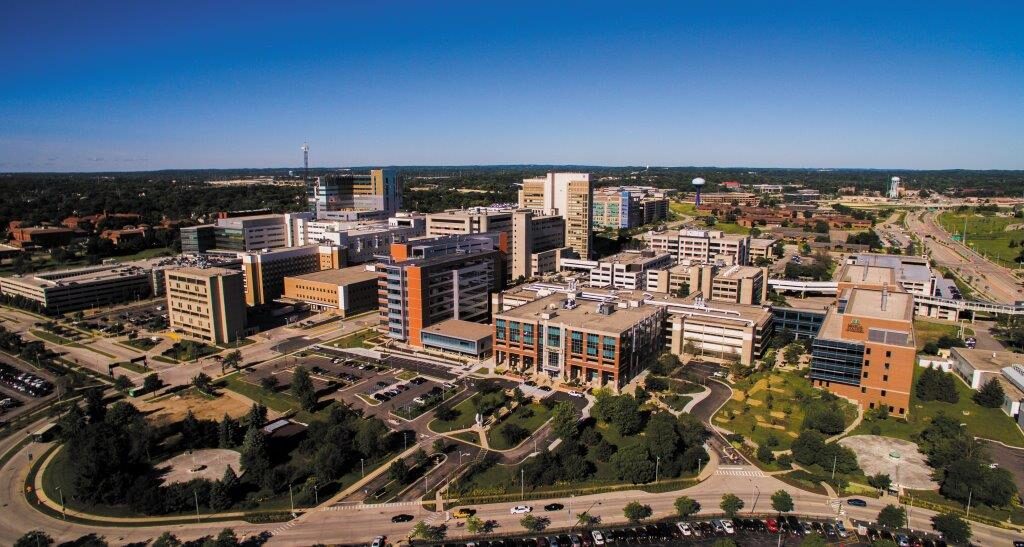
Main Campus: Milwaukee, Wisconsin – Located in the Milwaukee Regional Medical Center, providing a suburban setting with extensive clinical affiliations including Froedtert Hospital and Children’s Wisconsin.
Additional Campuses:
- MCW-Green Bay: Focused on community-based medical education
- MCW-Central Wisconsin: Emphasizing rural healthcare preparation
Accreditation Status
MCW maintains full accreditation from the LCME, which is the nationally recognized accrediting body for MD-granting institutions in the United States. This accreditation ensures graduates are eligible for medical licensure in all 50 states and can participate in the National Residency Matching Program (NRMP).
Ranking and Recognition
MCW is recognized as a leading medical institution with particular strength in primary care training and research. The school has built a 125-year reputation for producing physicians who make significant contributions to healthcare through clinical care, research, and leadership in medical education.
Admission Requirements
Academic Prerequisites
Minimum Degree Requirements
Applicants must earn a minimum of 90 undergraduate credits at a regionally accredited college or university located in the United States or Canada prior to matriculation. While a bachelor’s degree is strongly recommended and typically required, these 90 credits must include all prerequisite coursework.
Required Courses
MCW requires completion of the following prerequisite courses with specific credit hour requirements:
Science Prerequisites:
- Biology: 2 semesters (one with laboratory)
- General Chemistry: 2 semesters (both with laboratory)
- Organic Chemistry: 1 semester
- Biochemistry: 1 semester
- Physics: 2 semesters (both with laboratory)
Additional Requirements:
- Statistics or equivalent: 1 semester
- Humanities/Social Sciences intensive writing requirement: 1 semester
Important Note: All prerequisite courses must be completed prior to matriculation, though they don’t need to be finished before application submission or interviews.
GPA Requirements
- Median GPA: 3.86 for admitted students
- Competitive Range: While MCW doesn’t publish minimum GPA requirements, successful applicants typically maintain GPAs well above 3.5
- Calculation Method: MCW evaluates both overall and science GPAs, with particular attention to prerequisite course performance
Standardized Testing
MCAT Requirements
- Median MCAT Score: 511 for admitted students
- Validity Period: MCAT scores must be taken within three years of potential matriculation
- Format Requirement: Only the current MCAT format (tests taken April 2015 or later) is accepted
- Competitive Range: Successful applicants typically score in the 85th percentile or higher
CASPer Test Requirement
MCW requires completion of the Computer-based Assessment for Sampling Personal Characteristics (CASPer) exam. This assessment evaluates personal and professional characteristics including:
- Ethical reasoning
- Empathy and compassion
- Communication skills
- Professionalism
- Cultural sensitivity
CASPer scores must be received by MCW as part of a complete application.
Extracurricular Activities & Experience Requirements
MCW uses holistic admissions evaluation, considering:
Clinical Experience: Direct patient care experience demonstrating commitment to healthcare and understanding of medical practice.
Research Experience: While not mandatory, research involvement demonstrates scientific inquiry skills and commitment to advancing medical knowledge.
Community Service: Volunteer activities showing dedication to serving others and addressing community health needs.
Leadership: Evidence of leadership capabilities through various organizations, activities, or work experiences.
Diversity and Inclusion: MCW values diverse backgrounds and experiences that contribute to their mission of serving varied communities.
Application Process & Timeline
Application System
MCW participates in the American Medical College Application Service (AMCAS), the centralized application system for most U.S. medical schools.
Primary Application Timeline:
- AMCAS opens: June 1
- Application deadline: November 1 (early submission strongly recommended)
- Verification process: 4-6 weeks after submission
Required Documents
Primary Application Components (AMCAS)
- Completed AMCAS application
- Official transcripts from all institutions attended
- MCAT scores
- Work and activities descriptions
- Personal statement
- Letters of recommendation/evaluation
Secondary Application
All eligible applicants who submit verified AMCAS applications receive email invitations to complete MCW’s secondary application.
- Deadline: December 1 at 4:59 PM (CST)
- Fee: $100 (waived for AMCAS Fee Assistance Program recipients)
- Components: School-specific essays and supplemental information
Letters of Recommendation Requirements
Required Letters:
- If graduated within last 5 years: Premedical advisory committee letter OR letter packet with at least one science professor letter OR two academic letters (one from science instructor)
- If currently in/graduated from graduate program: Letter from professor or thesis advisor
Optional Letters: Up to three additional recommendation letters accepted
Submission Requirements: All letters must be signed, on letterhead, and received directly from author, university advising office, or AMCAS electronic letter service.
Interview Process
MCW conducts interviews for selected candidates, typically beginning in fall and continuing through spring. The school uses various interview formats and evaluates candidates comprehensively beyond academic metrics alone.
Application Fees
- AMCAS Primary Application: Varies by number of schools
- MCW Secondary Application: $100 (waivable with AMCAS Fee Assistance Program approval)
Admission Statistics & Success Rates
Overall Competitiveness
Medical College of Wisconsin maintains highly competitive admissions standards, reflecting its reputation as a leading medical institution.
Class Profile
- First-Year Class Size: 270 students
- International Student Acceptance: Case-by-case basis
- Canadian Student Acceptance: Out-of-state Canadian students considered case-by-case
Academic Statistics of Admitted Students
- Median MCAT Score: 511
- Median GPA: 3.86
These statistics indicate that successful applicants typically perform in the top percentiles nationally on both academic measures.
Geographic Distribution
As a private institution, MCW considers applicants from all states and, on a limited basis, international and Canadian students. The school has particular focus on serving Wisconsin communities but draws students nationally.
Tuition & Financial Information
Current Tuition Rates
2024-2025 Academic Year:
- In-State Tuition: $65,916
- Out-of-State Tuition: $69,266
- International Student Tuition: $69,266
Program Length Cost Analysis
Four-Year Program Total Costs:
- In-state students: Approximately $263,664 (tuition only)
- Out-of-state students: Approximately $277,064 (tuition only)
Three-Year Program Total Costs:
- In-state students: Approximately $197,748 (tuition only)
- Out-of-state students: Approximately $207,798 (tuition only)
Additional Fees and Expenses
Students should budget for additional costs including:
- Technology and laboratory fees
- Health insurance (if not already covered)
- Clinical rotation expenses
- Books and supplies (estimated $500 annually)
- Living expenses varying by campus location
Total Cost of Attendance
MCW provides detailed cost of attendance budgets for each campus:
- MCW-Milwaukee: Higher living costs due to urban location
- MCW-Green Bay: Moderate living expenses
- MCW-Central Wisconsin: Generally lower cost of living
Financial Aid Options
Federal Financial Aid
- Federal Direct Loans (subsidized and unsubsidized)
- Federal Graduate PLUS Loans
- Work-study opportunities
Institutional Aid
- Interest-free institutional loans: Available while enrolled, during grace periods, and through deferment periods like residency
- Interest rates: Generally 3%-9% fixed for loan life
- Eligibility: Available when federal and private funding options have been exhausted
State and External Aid
- Wisconsin Medical Society Student Loan Program: Available to Wisconsin residents in M-2, M-3, and M-4 years based on need
- Merit-based scholarships: Various opportunities based on academic achievement and other criteria
- External scholarships: MCW encourages students to pursue outside scholarship opportunities
Click To See Hundreds Of Consultants Who Can Mentor You:
Curriculum & Program Structure
Educational Philosophy
MCW’s medical education emphasizes a dynamic, multifaceted learning approach featuring:
- Classroom experiences with nationally-recognized faculty
- Early clinical exposure guided by expert mentors
- Peer-based small group interactions
- Individualized career pursuit opportunities
- “Think and act like physicians from day one” philosophy
MCWfusion™ Curriculum (Current Students)
Launched in July 2023, the MCWfusion™ Curriculum provides a phased approach ensuring comprehensive medical education through:
- Enhanced basic science and clinical integration
- Improved preparedness for clerkships during foundational sciences
- Better residency readiness from clerkship training
- Emphasis on lifelong learning skills
Discovery Curriculum (Legacy Students)
Students who entered before 2023 complete their studies under the Discovery Curriculum, which will be officially retired in 2026.
Clinical Training Structure
MCW provides extensive clinical experiences through affiliations with:
- Froedtert Hospital: Primary teaching hospital
- Children’s Wisconsin: Pediatric clinical training
- Milwaukee Regional Medical Center: Comprehensive specialty training
- Community-based clinical sites: Diverse patient populations and practice settings
Combined Degree Programs
- MD/MPH: Medicine with Master of Public Health
- MD/PhD (MSTP): Medical Scientist Training Program for physician-scientists
- Other combined degrees: Various options available based on student interests and career goals
Residency Preparation and Match Rates
MCW maintains strong residency match rates, with comprehensive support including:
- Career counseling and specialty exploration
- Residency application guidance
- Interview preparation
- Historical match data review
- Letters of recommendation coordination
Recent performance data shows:
- Step 1 First-Time Pass Rate: 97-98%
- Match Rate: 97-98% of graduating classes successfully match to PGY-1 positions
Pre-Medical Preparation
Undergraduate Program Recommendations
MCW accepts students from diverse academic backgrounds while maintaining specific prerequisite requirements. Students should:
- Complete all required science courses with laboratory components
- Maintain competitive GPAs (typically 3.5+ overall, 3.5+ science)
- Develop strong study habits and time management skills
- Engage in meaningful extracurricular activities
Clinical Experience Planning
Prospective applicants should gain clinical exposure through:
- Direct patient care roles: Hospital volunteering, clinical employment, emergency medical services
- Healthcare shadowing: Physician observation across multiple specialties
- Community health involvement: Public health initiatives, health education programs
- Quality over quantity: Sustained, meaningful engagement preferred over brief exposures
Research Experience Opportunities
While not mandatory, research involvement strengthens applications through:
- Basic science research: Laboratory-based investigation
- Clinical research: Patient-oriented studies
- Public health research: Population-based health studies
- Publication opportunities: Peer-reviewed publications demonstrate research competency
MCAT Preparation Strategy
Successful MCAT performance requires:
- Timeline planning: Allow 6-12 months for comprehensive preparation
- Practice tests: Regular full-length practice examinations
- Content review: Systematic coverage of all tested subjects
- Score goal: Target scores of 510+ for competitive consideration
- Retake considerations: MCW accepts multiple attempts; demonstrate improvement
CASPer Test Preparation
The CASPer exam evaluates personal and professional characteristics:
- Practice scenarios: Review ethical dilemmas in healthcare
- Communication skills: Clear, concise written responses
- Empathy development: Understanding diverse perspectives
- Professional behavior: Demonstrating integrity and compassion
Frequently Asked Questions
What is Medical College of Wisconsin’s average GPA and MCAT score?
The median GPA for admitted students is 3.86, and the median MCAT score is 511. These represent highly competitive statistics, placing successful applicants in approximately the top 15% nationally.
How competitive is Medical College of Wisconsin compared to other medical schools?
MCW is highly competitive, with admission statistics comparable to other well-regarded private medical schools. The combination of strong academic requirements, holistic admissions evaluation, and the requirement for CASPer testing makes it selectively competitive.
Does Medical College of Wisconsin accept international students?
Yes, MCW considers international students on a case-by-case basis. International applicants must meet all standard requirements and may face additional considerations regarding visa status and clinical training eligibility.
Does Medical College of Wisconsin prefer in-state applicants?
As a private institution, MCW does not show strong geographic preference, though it maintains particular focus on serving Wisconsin communities. Both in-state and out-of-state students are competitive, with modest tuition differences between residency categories.
When should I apply to Medical College of Wisconsin?
The AMCAS application opens June 1, with a deadline of November 1. However, early submission is strongly recommended as MCW reviews applications on a rolling basis. Submit your primary application by June-July for optimal consideration.
Does Medical College of Wisconsin require research experience?
Research experience is not mandatory but is highly valued. MCW uses holistic admissions evaluation, so research involvement can strengthen your application by demonstrating scientific inquiry skills and commitment to advancing medical knowledge.
How many letters of recommendation does Medical College of Wisconsin require?
MCW requires letters from your undergraduate institution (if graduated within 5 years) and from graduate programs (if applicable). You may submit up to three optional additional letters. All letters must be on letterhead and directly submitted.
What is Medical College of Wisconsin’s curriculum like?
MCW uses the MCWfusion™ Curriculum (launched 2023), emphasizing integrated basic science and clinical training, early clinical exposure, and comprehensive preparation for residency. The curriculum features multiple learning modalities and encourages students to “think and act like physicians from day one.”
What makes Medical College of Wisconsin different from other medical schools?
MCW offers unique flexibility with both 3-year and 4-year program options across multiple campuses, strong primary care focus, extensive clinical affiliations including Froedtert Hospital and Children’s Wisconsin, and particular emphasis on serving rural and underserved communities.
How much does Medical College of Wisconsin cost?
For 2024-2025, tuition is $65,916 for in-state students and $69,266 for out-of-state students. The 3-year programs offer significant cost savings compared to 4-year programs, with total tuition costs approximately $60,000-70,000 less.
What financial aid is available at Medical College of Wisconsin?
MCW offers federal financial aid, interest-free institutional loans, the Wisconsin Medical Society Student Loan Program for residents, and various merit-based scholarships. The school provides comprehensive financial aid counseling to help students manage educational costs.
Where do Medical College of Wisconsin graduates match for residency?
MCW maintains excellent residency match rates of 97-98%, with graduates matching across all specialties. The school provides comprehensive career services, residency advising, and match preparation support.
What clinical experience do I need for Medical College of Wisconsin?
While MCW doesn’t specify minimum clinical hours, competitive applicants typically have substantial direct patient care experience through volunteering, employment, or other healthcare roles. Quality and reflection on experiences matter more than quantity.
Does Medical College of Wisconsin look at extracurriculars?
Yes, MCW uses holistic admissions evaluation considering extracurricular activities, community service, leadership experience, and personal characteristics alongside academic achievements. The required CASPer exam specifically evaluates personal and professional qualities.
Does Medical College of Wisconsin offer interviews to all qualified applicants?
No, MCW selectively invites candidates for interviews based on comprehensive application review. Meeting minimum requirements doesn’t guarantee an interview invitation, as the school evaluates applications holistically and competitively.