

Last updated on January 9th, 2026 at 06:32 am
Program Overview & Institution Identity
Official Program Name and Duration
The Medical College of Georgia at Augusta University (MCG) is Georgia’s only public medical school, offering a comprehensive 4-year Doctor of Medicine (MD) program. Founded in 1828, MCG holds the distinction of being one of the oldest medical schools in the United States and has been continuously educating physicians for nearly 200 years.
Location and Campus Details
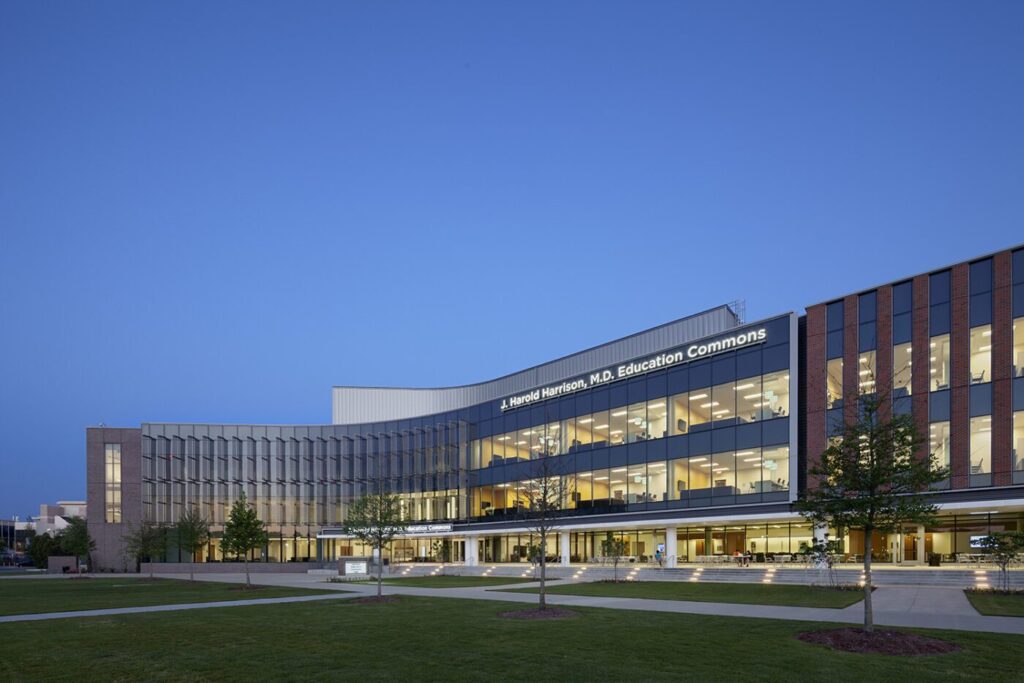
Located in Augusta, Georgia, MCG operates on an urban campus in the heart of Georgia’s second-largest city. The Health Sciences Campus provides state-of-the-art facilities including the J. Harold Harrison, MD Education Commons and modern simulation centers. Augusta’s strategic location along the Georgia-South Carolina border provides diverse clinical training opportunities.
Accreditation Status
The Medical College of Georgia is fully accredited by the Liaison Committee on Medical Education (LCME), the nationally recognized accrediting authority for MD programs in the United States. This accreditation ensures that MCG graduates are eligible to take the United States Medical Licensing Examination (USMLE) and apply for residency training programs nationwide.
Ranking and Recognition
- 83rd in Best Medical Schools nationally
- 41st among Public Medical Schools
- 7th largest medical school in the United States
- 14th oldest medical school in the United States
- Consistently achieves a 100% residency match rate, with graduates successfully placing in competitive programs nationwide
Distinctive Features
- MCG 3+ Curriculum: Competency-based, emphasizing early clinical exposure, case-based learning, and individualized educational pathways
- Combined degree programs: BS/MD, MD/PhD, MD/MBA, MD/MPH
Admission Requirements
Academic Prerequisites
Minimum Degree Requirements
Applicants must complete a bachelor’s degree from an accredited institution before matriculation. While there is no specific major requirement, students must complete all prerequisite courses with satisfactory grades.
Required Courses
- Biology: One academic year (8 credit hours) of general biology with laboratory
- Chemistry:
- One academic year (8 credit hours) of general chemistry with laboratory
- One academic year (8 credit hours) of organic chemistry with laboratory
- Physics: One academic year (8 credit hours) of general physics with laboratory
- Mathematics: College-level mathematics, including calculus (specific credit hours may vary)
- English: Two semesters (6–8 credit hours) of English composition
Additional Recommended Courses:
- Biochemistry (may substitute for Organic Chemistry II)
- Statistics
- Psychology
- Sociology
GPA Requirements
- Median GPA: 3.89
- Average overall GPA: ~3.8
- Average science GPA: ~3.7
- While there is no official minimum GPA requirement, MCG states that “applicants with GPAs less than 3.0 are not considered competitive for interview.”
Standardized Testing
MCAT Requirements
- Median MCAT: 514 (average 512)
- MCAT scores must be within three years of matriculation
- Applicants with MCAT below 496 are considered “not competitive for interview” (no official minimum)
- MCAT scores must be valid and cannot be older than 5 years from the planned enrollment year
- MCAT score deadline typically late September for the application cycle
Additional Testing
- CASPer required (Computer-Based Assessment for Sampling Personal Characteristics) as part of holistic review (ethics, professionalism, communication skills).
Extracurricular Activities & Experience Requirements
Clinical Experience
Demonstrated clinical exposure through direct patient contact (hospital/clinic volunteering, shadowing, healthcare employment). Quality and depth valued over quantity.
Community Service
Demonstrative service to the community is required, with emphasis on sustained commitment, especially in underserved settings.
Research Experience
Not required but highly valued (basic science, clinical research, or public health).
Application Process & Timeline
Application System and Deadlines
MCG participates in AMCAS. Class of 2030 timeline:
- AMCAS opens: May 1, 2025
- AMCAS submission begins: May 28, 2025
- MCG Application Deadline: November 1, 2025
Required Documents
- Primary AMCAS Application (via aamc.org/amcas)
- Secondary Application (automatically sent to qualified applicants)
- Three letters of recommendation (dated, on letterhead, and/or handwritten signatures)
- Official transcripts from all institutions
- MCAT scores (valid within three years)
- CASPer test results
Secondary Application
Automatically sent after AMCAS receipt. No additional MCG application fee beyond AMCAS. Common essay topics include:
- Career goals and interest in attending MCG
- Experience with underserved communities
- Motivation for becoming a physician
- Examples of resilience and learning from failure
- Commitment to diversity and inclusion
Interview Process
Approximately 640 applicants interviewed annually. Holistic review considers:
- Academics: MCAT, GPA, trends
- Personal attributes: CASPer, intellectual curiosity, leadership, maturity
- Experiences: Research, community service, healthcare exposure
- Other compelling factors and overall fit with MCG’s mission
Interviews are typically low-stress and mission-focused.
Admission Statistics & Success Rates
- Acceptance rate: ~9.37%
- Applications (2025 entering class): 3,244
- Seats: 304
Geographic Distribution
- ~97.7% Georgia residents; out-of-state (including Canadian) applicants are considered case-by-case and are extremely limited.
Class Demographics
- First-year class size: 304
- Median GPA: 3.89
- Median MCAT: 514
Residency Match Success
- 100% residency match rate (consistent)
- Class of 2024 highlights:
- 63% matched into primary care
- 24% remained in Georgia
- 14% matched at AUHealth/MCG or affiliates
- Popular specialties: Internal Medicine (33), Pediatrics (26), Family Medicine (13), General Surgery (17), Emergency Medicine (14), OB/GYN (17)
Tuition & Financial Information
Current Tuition Rates (2025–2026)
- In-state: $31,675
- Out-of-state: $62,767
Total 4-Year Program Cost (Tuition Only)
- In-state: ~$126,700
- Out-of-state: ~$251,068
Additional Cost Considerations
- Student fees and technology costs
- Health insurance
- Books, supplies, equipment
- Living expenses in Augusta, GA
- Clinical rotation expenses
Financial Aid Options
Office of Student Financial Aid (OSFA) supports students with:
Merit-Based Aid
- Medical College of Georgia Scholarship Committee awards
- External scholarships
Need-Based Aid
- Federal Direct Loans (Subsidized and Unsubsidized)
- Federal Work-Study (when available)
- Graduate PLUS Loans
Application
- Complete the FAFSA (as soon as possible after Oct 1)
- Additional AU financial aid forms for institutional aid
Click To See Hundreds Of Consultants Who Can Mentor You:


Curriculum & Program Structure
Program Format
4-year MD program using the MCG 3+ Curriculum, competency-based with three phases:
Pre-Clerkship Phase (Years 1–2)
- Foundational sciences with early clinical exposure
- Case-based and problem-based learning
- Modular content organization
- Assessments aligned with USMLE Step 1 preparation
Clerkship Phase (Year 3)
- Core clinical rotations across major specialties
- Statewide clinical partnerships and direct patient care under supervision
Enrichment Phase (Year 4)
- Electives tailored to career goals
- Residency preparation (applications/interviews)
- Advanced clinical experiences; options for research or international rotations
Educational Philosophy & Methods
- Early clinical exposure
- Case-/problem-based learning
- Integration of basic & clinical sciences
- Technology-enhanced simulation
- Collaborative learning
Special Programs & Tracks
- Combined degrees: BS/MD, MD/PhD, MD/MBA, MD/MPH
- Rural medicine focus with community rotations
- Primary care emphasis
- Research opportunities in all years
USMLE Performance
MCG students perform at or above national averages on Step 1 and Step 2, with high first-time pass rates.
Pre-Medical Preparation
Undergraduate Backgrounds
No preferred major. Successful applicants come from:
- Biological sciences, Chemistry/Biochemistry, Physics
- Engineering
- Liberal arts & humanities
- Business & economics
Academic Planning
Suggested sequencing:
- Year 1: Biology, General Chemistry, English composition, Mathematics
- Years 2–3: Organic Chemistry, Physics, additional sciences, Psychology, Sociology
- Senior Year: MCAT prep, Biochemistry, complete remaining requirements
GPA Strategy:
- Strong performance in prerequisites
- Consider upper-level sciences
- Balanced course loads
- Seek academic support as needed
Clinical Experience
Valued experiences include:
- Hospital volunteering (direct patient interaction)
- Physician shadowing
- Clinical research
- Healthcare employment
- Medical mission/service learning
Research Experience
Quality over quantity; demonstrate understanding of methods, critical thinking, and the ability to discuss your work. Publications/presentations are helpful but not required.
Leadership & Service
- Long-term community service (underserved focus encouraged)
- Leadership roles in organizations
- Cultural competency development
Standardized Test Preparation
MCAT:
- Begin 4–6 months before test date (ideally test Apr–May junior year)
- Retakes reported; scores must be within 3 years of matriculation
CASPer:
- Practice ethical scenarios and typed responses
- Usually completed after AMCAS submission
Gap Year Considerations
Potential benefits:
- Additional clinical experience
- Academic enhancement
- Research
- Volunteer/service programs
- Personal/professional growth
Frequently Asked Questions
What is Medical College of Georgia’s acceptance rate?
~9.37%. Over 3,200 applications for 304 seats.
What are Medical College of Georgia’s average GPA and MCAT scores?
Median GPA: 3.89; Median MCAT: 514. Applicants typically need >3.0 GPA and >496 MCAT to be considered competitive for interview.
Does Medical College of Georgia prefer in-state applicants?
Yes. 97.7% of students are Georgia residents; out-of-state spots are extremely limited (some Canadian applicants considered case-by-case).
What makes Medical College of Georgia different from other medical schools?
Historic legacy (founded 1828)
Consistent 100% match rate
MCG 3+ Curriculum with early clinical exposure
63% primary care match
Public-school affordability (in-state tuition under $32,000)
Georgia’s only public medical school
When should I apply to Medical College of Georgia?
Apply via AMCAS (opens May 1, 2025; submit starting May 28, 2025). Deadline: Nov 1, 2025. Early submission recommended.
Does Medical College of Georgia accept international students?
Applicants must be U.S. citizens or permanent residents (valid PR card). Other visa types are not eligible.
What clinical experience do I need for Medical College of Georgia?
Direct patient contact is required (volunteering, shadowing, clinical research, healthcare employment). Quality/meaning of experience matters more than hours.
Does Medical College of Georgia require research experience?
Not required, but highly valued (basic science, clinical, public health).
How many letters of recommendation does Medical College of Georgia require?
Three letters (dated, on letterhead, and/or handwritten signatures) submitted through AMCAS.
What is Medical College of Georgia’s curriculum like?
MCG 3+ Curriculum with:
Pre-Clerkship (Years 1–2) — foundational sciences, case-based learning
Clerkship (Year 3) — core rotations
Enrichment (Year 4) — electives and residency prep
Where do Medical College of Georgia graduates match for residency?
100% match; strong placement in Internal Medicine, Pediatrics, Family Medicine, Surgery, Emergency Medicine, OB/GYN; 24% remain in Georgia; 63% match into primary care.
How much does Medical College of Georgia cost?
2025–2026 tuition: $31,675 in-state; $62,767 out-of-state. 4-year tuition only: ~$127k (in-state) to ~$251k (out-of-state) plus living/fees.