

Last updated on January 9th, 2026 at 06:32 am
Program Overview & Institution Identity
Official Program Name and Institution Details
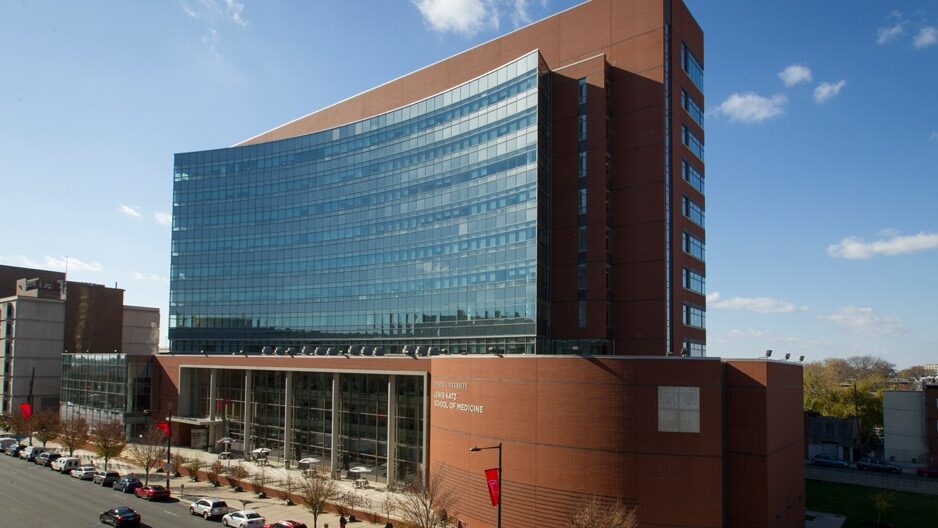
The Lewis Katz School of Medicine at Temple University is a prestigious private medical institution located in Philadelphia, Pennsylvania. As part of Temple University, the school operates on an urban campus that provides students with extensive clinical learning opportunities in one of America’s major metropolitan areas.
Program Duration and Structure
Lewis Katz School of Medicine offers a traditional 4-year MD program following a phased curriculum approach. The school implemented a restructured medical student curriculum in the 2020-2021 academic year, reflecting current national priorities in undergraduate medical education and established best practices for learner engagement.
The program follows a 3-phase structure over four years:
- Phase 1: Pre-clinical foundation with organ systems-based learning
- Phase 2: Clinical clerkships with core rotations
- Phase 3: Advanced clinical training and electives
Location and Campus Details
Located in Philadelphia, PA, students benefit from:
- Urban campus setting with access to diverse patient populations
- Temple University Health System clinical sites
- Multiple hospital partnerships throughout Philadelphia and surrounding areas
- Easy access to major medical centers and specialty hospitals
Accreditation Status
Lewis Katz School of Medicine is fully accredited by the Liaison Committee on Medical Education (LCME). The school received a full eight-year accreditation from the LCME in 2017 and has been accredited for over eight decades, having attained accreditation prior to the establishment of the LCME in 1942. The school is preparing for its Spring 2025 re-accreditation site visit.
Combined Degree Programs
The school offers several dual degree options:
- MD/MBA: Medical Doctor/Master of Business Administration
- BS/MD: Bachelor of Science/Medical Doctor (accelerated pathway)
- MD/PhD: Medical Doctor/Doctor of Philosophy (research-focused)
Admission Requirements
Academic Prerequisites
Minimum Degree Requirements
Candidates must complete a bachelor’s degree from a regionally accredited college or university before matriculation. The school does not require any particular major, allowing students to pursue diverse academic backgrounds.
Required Prerequisite Courses
Core Science Requirements (with laboratory components):
- Biology: 1 year (2 semesters) with lab
- General Chemistry: 1 year (2 semesters) with lab
- Organic Chemistry: 1 year (2 semesters) with lab
- Physics: 1 year (2 semesters) with lab
Additional Requirements:
- Humanities: 6 semester hours
- English/Writing: 2 semesters (writing-intensive courses accepted)
- Mathematics: 2 semesters of college-level math
- Social Sciences: Psychology and Sociology recommended
GPA Requirements
- Median GPA of admitted students: 3.83
- Competitive range: Students typically have GPAs of 3.79 or higher
- The school evaluates both overall GPA and science GPA in admissions decisions
- No specific minimum GPA stated, but competitive applicants generally exceed 3.7
Standardized Testing Requirements
MCAT Requirements
- MCAT scores are required for all applicants
- Median MCAT score: 513
- Competitive range: Most successful applicants score 512 or higher
- Score validity: MCAT scores must be no more than 3 years old
- Retake policy: Multiple attempts considered; highest score typically used
CASPer Test Requirement
Lewis Katz School of Medicine requires the CASPer (Computer-Based Assessment for Sampling Personal Characteristics) test. This situational judgment test assesses:
- Personal and professional characteristics
- Ethical reasoning
- Communication skills
- Interpersonal abilities
Extracurricular Activities & Experience Requirements
The school conducts holistic review considering:
- Clinical experience: Medical-related experience strongly valued
- Research activities: Considered but not required
- Community service: Demonstrates commitment to service
- Leadership experience: Shows ability to guide and influence others
- Work experience: Any meaningful employment
- Extracurricular activities: Diverse interests and commitments
Residency and Citizenship Requirements
Temple considers applications from:
- U.S. citizens
- Permanent residents with valid status
- Refugee/asylee status holders with USCIS documentation
- Does not accept international students without permanent status
Application Process & Timeline
Application System and Deadlines
Primary Application:
- Submit through AMCAS (American Medical College Application Service)
- Application deadline: December 15, 2025
- Transcript deadline: December 29, 2025
Secondary Application:
- Deadline: January 15, 2026
- Application fee: $100 (waived for AAMC Fee Assistance Program recipients)
Required Documents
Complete application includes:
- Verified AMCAS application
- Temple supplemental application
- Application fee (if not waived)
- CASPer test results
- Required letters of recommendation
- Official transcripts through AMCAS
Letters of Recommendation
- Required but specific number not specified
- Should come from academic and professional sources
- Science faculty recommendations preferred
- Clinical experience supervisors valuable
Interview Process
Interview Format and Timeline:
- Interview season: September through April
- Interview style: Traditional, non-stress interviews
- Campus-specific: Applicants interviewed at their selected campus
- Interview day includes:
- Welcome presentation
- Curriculum overview
- Clinical and extracurricular opportunities discussion
- Campus tour
Interview Evaluation Criteria:
- Strong interpersonal skills
- Ability to listen and consider other perspectives
- Self-confidence
- Compassion
- Social consciousness
Admission Statistics & Success Rates
Overall Acceptance Rate
- Acceptance rate: Approximately 5% (highly competitive)
- Class size: 221 first-year students
- Total enrollment: 834 medical students across all years
Application Volume and Competition
- Thousands of applications received annually
- Moderately competitive classification based on academic standards
- Strong preference for candidates demonstrating commitment to medicine
Academic Statistics of Admitted Students
GPA Statistics:
- Median GPA: 3.83
- Competitive range: 3.75–4.0
- Average undergraduate GPA: 3.68
MCAT Statistics:
- Median MCAT: 513
- Competitive range: 510–518
- Average score: 512
Geographic and Demographic Distribution
- Accepts out-of-state students: Yes
- Out-of-state friendly: Very friendly to non-residents
- In-state preference: Moderate preference for Pennsylvania residents
- Diverse student body representing multiple states and backgrounds
Tuition & Financial Information
Current Tuition Rates
2025-2026 Academic Year:
- In-state tuition: $58,693
- Out-of-state tuition: $62,157
- Difference: $3,464 higher for out-of-state students
Additional Fees and Costs
Estimated additional expenses:
- Technology fees
- Student services fees
- Health insurance (if not covered by other plan)
- Laboratory and equipment fees
- Clinical rotation expenses
- Books and materials: Estimated additional costs apply
Total Cost of Attendance
4-year program total estimated costs:
- In-state: Approximately $240,000–260,000
- Out-of-state: Approximately $250,000–270,000
- Living expenses in Philadelphia add approximately $15,000–20,000 annually
Financial Aid Options
University-Based Aid:
- Merit-based scholarships: Limited number available
- Need-based scholarships: For students with extreme financial need
- Renewable awards: Most scholarships renewable for all four years
Federal Financial Aid:
- Direct Unsubsidized Loans: Primary funding source
- GradPLUS Loans: Supplemental federal loans
- FAFSA required: Complete by March 1st for optimal consideration
- School code: 003371
Service-Based Programs:
- National Health Service Corps (NHSC): Service commitment required
- Health Professions Scholarship Program: Military scholarships
- Coverage includes tuition, fees, and living stipend
External Resources:
- Private scholarships from organizations
- State-based aid programs
- Professional organization scholarships
Click To See Hundreds Of Consultants Who Can Mentor You:

Curriculum & Program Structure
Program Duration and Educational Philosophy
The 4-year MD program emphasizes:
- Phased learning approach: Systematic progression through medical education
- Organ systems integration: Combining normal function with disease states
- Active learning: Flipped classroom, simulation, case-based discussion
- Clinical integration: Early clinical exposure through Doctoring course
Pre-Clinical Education (Phases 1)
Curriculum Features:
- Single-pass organ systems model: Integrating structure, function, and pathology
- Doctoring course: Runs throughout Phase 1
- Clinical skills training:
- Patient interviewing
- Physical examination techniques
- Point-of-care ultrasound
- Social determinants of health
- Patient safety and quality improvement
Learning Methods:
- Active learning modalities
- Flipped classroom approach
- Simulation-based training
- Case-based discussions
- Self-directed learning opportunities
Clinical Training (Phase 2)
Core Clinical Rotations:
- Transition to Phase 2 course: Preparation for clinical responsibilities
- Core clerkships: All major medical specialties
- Intersession courses: Specialty-specific preparation
- Electronic health record training: Practical EHR skills
- Healthcare team communication: Professional collaboration skills
Clinical Learning Sites:
- Temple University Hospital (Main Campus): Level I trauma center
- Temple University Hospital – Episcopal Campus: Behavioral health focus
- Temple University Hospital – Jeanes Campus: Community hospital setting
- Multiple affiliated hospitals throughout Philadelphia region
Advanced Training (Phase 3)
- Elective opportunities: Specialty exploration
- Scholarly project requirement: Research or quality improvement
- Capstone course: Preparation for residency
- Transition to Residency: Final preparation course
Residency Preparation and Match Rates
2025 Match Results:
Top Specialties:
- Internal Medicine: 41 graduates
- Surgery: 21 graduates
- Family Medicine: 17 graduates
- Pediatrics: 16 graduates
- Emergency Medicine: 13 graduates
- Anesthesiology: 12 graduates
Match Success:
- Strong match rates across all specialties
- 40% pursue primary care specialties
- Graduates match at university hospitals and major affiliates nationwide
- Coast-to-coast residency placements
Top Residency Institutions:
- Temple University Hospital: 23 graduates
- Thomas Jefferson University: 7 graduates
- University of Maryland Medical Center: 6 graduates
- Children’s Hospital of Philadelphia: 4 graduates
- Penn State Hershey Medical Center: 4 graduates
Pre-Medical Preparation Recommendations
Undergraduate Academic Planning
Major Selection:
- No specific major required: Choose based on academic strengths and interests
- Science majors: Biology, Chemistry, Biochemistry common
- Non-science majors: Welcome and encouraged
- Honors programs: Consider honors-level prerequisite courses
Course Sequencing Strategy:
- Year 1: General Chemistry and Biology foundations
- Year 2: Organic Chemistry, upper-level biology, social sciences
- Year 3: Physics, Biochemistry, MCAT preparation
- Year 4: Complete remaining requirements, apply to medical school
MCAT Preparation Timeline
- Optimal timing: Spring of junior year or later
- Preparation period: 3–6 months of dedicated study
- Content areas: All prerequisite subjects tested
- Retake considerations: Plan carefully; schools see all scores
Clinical Experience Development
Essential Components:
- Direct patient contact: Volunteering in healthcare settings
- Clinical shadowing: Observing physicians in various specialties
- Healthcare employment: CNA, EMT, medical assistant roles
- Long-term commitment: Sustained involvement preferred over scattered experiences
Research Experience
- Not required but considered: Valuable for application
- Types valued: Basic science, clinical, public health research
- Duration: Meaningful involvement over brief exposures
- Outcomes: Publications helpful but not essential
Extracurricular Development
Leadership Opportunities:
- Student organization leadership
- Community organization involvement
- Healthcare-related initiatives
- Academic tutoring or teaching
Community Service:
- Sustained commitment: Long-term involvement preferred
- Healthcare-related service: Medical missions, health education
- Underserved populations: Working with vulnerable communities
- Non-medical service: Diverse community involvement
Application Timeline Planning
Junior Year:
- Complete MCAT preparation and testing
- Strengthen clinical and research experiences
- Build relationships with recommendation writers
- Begin AMCAS application preparation
Senior Year:
- Submit AMCAS application by June
- Complete secondary applications promptly
- Participate in interviews
- Maintain academic performance
Frequently Asked Questions
Does Lewis Katz School of Medicine look at extracurriculars?
Yes, the school conducts holistic review that heavily weighs extracurricular activities including clinical experience, research, community service, leadership, and work experience. These non-academic factors are essential components of the admissions evaluation.
What is Lewis Katz School of Medicine’s average GPA and MCAT score?
The median GPA for admitted students is 3.83, and the median MCAT score is 513. Competitive applicants typically have GPAs of 3.75 or higher and MCAT scores of 510 or above.
How competitive is Lewis Katz School of Medicine compared to other medical schools?
With an acceptance rate of approximately 5%, Lewis Katz School of Medicine is highly competitive. It’s classified as “moderately competitive” among medical schools, requiring strong academic credentials and comprehensive extracurricular involvement.
Does Lewis Katz School of Medicine prefer in-state applicants?
While the school shows moderate preference for Pennsylvania residents with lower in-state tuition, it is very friendly to out-of-state applicants and accepts students from across the United States.
What makes Lewis Katz School of Medicine different from other medical schools?
Key distinctions include its urban Philadelphia location providing diverse clinical experiences, strong emphasis on serving underserved populations, robust clinical training through Temple University Health System, and excellent match rates to competitive residency programs.
When should I apply to Lewis Katz School of Medicine?
Submit your AMCAS application by the December 15th deadline, with secondary applications due January 15th. Begin preparation during junior year, take the MCAT by spring of junior year, and submit applications early in the cycle for optimal consideration.
Does Lewis Katz School of Medicine accept international students?
No, the school only accepts U.S. citizens, permanent residents, and individuals with refugee/asylee status through USCIS. International students without permanent U.S. status are not eligible.
What clinical experience do I need for Lewis Katz School of Medicine?
While specific requirements aren’t stated, meaningful clinical experience is highly valued. This includes direct patient contact through volunteering, shadowing physicians, and healthcare employment. Long-term commitment and depth of experience are preferred over brief exposures.
Does Lewis Katz School of Medicine require research experience?
Research experience is considered but not required. Many successful applicants have research backgrounds, but it’s not mandatory. The school values diverse experiences and backgrounds in its holistic review process.
How many letters of recommendation does Lewis Katz School of Medicine require?
The school requires letters of recommendation but doesn’t specify an exact number. Recommendations should come from academic and professional sources, with science faculty and clinical supervisors being particularly valuable.
What is Lewis Katz School of Medicine’s curriculum like?
The 4-year program uses a 3-phase approach: Phase 1 focuses on organ systems integration with clinical skills; Phase 2 emphasizes core clinical clerkships with transition courses; Phase 3 includes advanced training, electives, and residency preparation. The curriculum emphasizes active learning, early clinical exposure, and practical skills development.
Where do Lewis Katz School of Medicine graduates match for residency?
Graduates successfully match across all specialties with 40% pursuing primary care. Top specialties include Internal Medicine (41), Surgery (21), Family Medicine (17), and Pediatrics (16). Graduates match at prestigious institutions nationwide including Temple University Hospital, Thomas Jefferson University, and Children’s Hospital of Philadelphia.