
Last updated on January 9th, 2026 at 06:33 am
Program Overview & Institution Identity
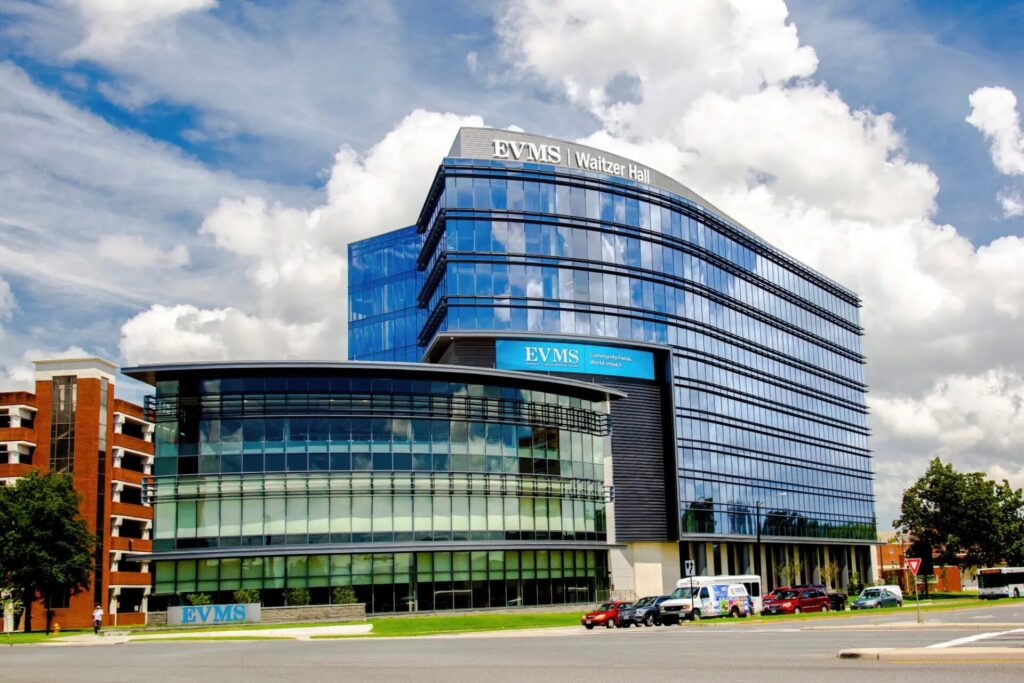
Eastern Virginia Medical School at Old Dominion University is a prestigious public medical institution located in Norfolk, Virginia. Founded in 1973, EVMS is recognized as one of the most community-oriented schools of medicine in the United States, with a clear vision to be “recognized as the most community-oriented school of medicine and health professions in the nation.”
Program Duration and Structure
The Eastern Virginia Medical School MD program follows a traditional 4-year curriculum structure, featuring the innovative CareForward Curriculum (CFC). The school has recently implemented CFC-2.0, which enhances learning through integration and innovation while developing caring, compassionate, and clinically proficient physicians.
Location and Campus Details
Eastern Virginia Medical School is strategically located in Norfolk, Virginia, in the heart of the Hampton Roads region. The urban campus provides students with access to diverse clinical experiences within a dynamic metropolitan area. The school operates on a compact campus in the Ghent neighborhood, adjacent to major medical facilities including Sentara Norfolk General Hospital, the region’s only Level I trauma center.
Accreditation Status
Eastern Virginia Medical School is fully accredited by the Liaison Committee on Medical Education (LCME), the national accrediting body for medical education programs in the United States and Canada. This accreditation ensures that EVMS meets the highest standards for medical education and that graduates are eligible for licensure and residency training nationwide.
Ranking and Recognition
While specific US News rankings vary annually, Eastern Virginia Medical School consistently maintains its reputation for excellence in medical education. The school is particularly recognized for:
- Community-oriented medical education
- Strong primary care training programs
- High USMLE pass rates that regularly exceed national averages
- Excellent residency match rates
- Commitment to addressing healthcare disparities in underserved communities
Admission Requirements
Academic Prerequisites
Minimum Degree Requirements: Applicants to Eastern Virginia Medical School must hold a bachelor’s degree from an accredited college or university before matriculation. The degree must be completed prior to enrollment, not just enrollment in a degree program.
Required Courses: EVMS requires completion of specific prerequisite courses, all with associated laboratory components:
- Biology: One year (typically 8 credit hours) with laboratory
- Chemistry: One year (typically 8 credit hours) with laboratory
- Organic Chemistry: One year (typically 8 credit hours) with laboratory
- Physics: One year (typically 8 credit hours) with laboratory
Students are expected to achieve a grade of B or better in these prerequisite courses to remain competitive for admission.
GPA Requirements:
- Minimum GPA: While EVMS doesn’t publish a strict minimum GPA, competitive applicants typically maintain strong academic records
- Median GPA: The median GPA for admitted students is 3.82
- Competitive Range: Successful applicants generally have GPAs of 3.5 or higher
- Both science GPA and cumulative GPA are evaluated holistically as part of the application review process
Standardized Testing
MCAT Requirements:
- The MCAT is required for all applicants to Eastern Virginia Medical School
- Median MCAT Score: Admitted students have a median MCAT score of 513
- Score Validity: MCAT scores must be from no more than two years prior to the date of application
- Retake Policy: For applicants who have retaken the exam, the best set of scores is weighted most heavily, so there is no advantage in withholding scores
- Competitive Range: While no minimum score is published, competitive applicants typically score 510 or higher
Additional Testing:
Eastern Virginia Medical School does not require the CASPer test, making the application process more streamlined compared to many other medical schools.
Extracurricular Activities & Experience Requirements
Holistic Evaluation Approach: EVMS uses a comprehensive evaluation system that considers multiple aspects of an applicant’s background beyond academic metrics:
Clinical Experience: While not specifying minimum hours, EVMS highly values substantial clinical exposure that demonstrates:
- Understanding of the medical profession
- Direct patient interaction experience
- Commitment to healthcare service
Research Experience: Though not mandatory, research experience is valued and can strengthen an application, particularly:
- Basic science research
- Clinical research
- Community health research
- Public health initiatives
Community Service and Volunteering: Given EVMS’s community-oriented mission, significant volunteer work is highly regarded, especially:
- Healthcare-related volunteering
- Community service addressing health disparities
- Long-term commitments demonstrating sustained impact
Leadership Experience: EVMS seeks students who have demonstrated leadership potential through various roles and activities.
Application Process & Timeline
Application System
Eastern Virginia Medical School participates in the American Medical College Application Service (AMCAS). All applicants must submit their primary application through AMCAS before being considered for a secondary application.
Application Deadlines
- AMCAS Primary Application Deadline: Must be submitted by November 15
- Secondary Application Deadline: November 1, 2025 (for the current cycle)
- Early Decision Program: Available with deadline of August 1
- Early Decision II: October 1 deadline
Required Documents
Primary Application Requirements:
- Completed AMCAS application
- Official transcripts from all attended institutions
- MCAT scores
- Letters of recommendation/evaluation
- Personal statement
- Work and activities descriptions
Secondary Application Requirements:
- Secondary Application Fee: $100 (waived for FAP recipients)
- Essay Prompts (2,000 characters each):
- Briefly describe your exposure to medicine
- What do you think you will like best about being a physician?
- What do you think you will like least about being a physician?
- Describe yourself and your medical career as you see it ten years from now
- Please indicate your reasons for applying to EVMS
- Optional diversity essay addressing personal experiences with diverse communities
- Optional essay discussing how race has personally affected your life
Interview Process
Interview Format: Eastern Virginia Medical School typically conducts traditional panel interviews rather than Multiple Mini Interviews (MMI). The interview format includes:
- Interview Style: Usually group format with 2-3 interviewers
- Duration: Typically 30-45 minutes per interview session
- Format: Open-file interviews where interviewers have access to your application materials
- Interview Day Activities: Campus tour, student presentations, faculty presentations, and lunch with current students
Interview Statistics:
- Interview invitations are typically sent from October through February
- The interview process is generally described as moderately stressful
- Students report that interviews focus on both academic preparation and personal qualities
- Virtual interview options may be available depending on circumstances
Admission Statistics & Success Rates
Overall Competitiveness
Acceptance Rate: Eastern Virginia Medical School has an acceptance rate of approximately 13%, making it moderately competitive among medical schools nationally.
Application Volume:
- EVMS receives several thousand applications annually for approximately 151 first-year positions
- The school maintains selective admission standards while seeking diverse, well-qualified candidates
Class Demographics
Class Size: Each entering class consists of 151 students, providing an intimate learning environment with strong faculty-student ratios.
Geographic Distribution:
- In-State Priority: As a Virginia public institution, EVMS gives preference to Virginia residents, particularly those from the Hampton Roads region
- Out-of-State Acceptance: EVMS does accept out-of-state students with strong credentials who align with the school’s mission
- Approximately 30% of students come from out-of-state
Academic Profile of Admitted Students:
- Median MCAT: 513 (approximately 85th percentile)
- Median GPA: 3.82
- Age Range: Students represent diverse age ranges, including both traditional and non-traditional applicants
- Undergraduate Majors: Students come from varied academic backgrounds, though science majors predominate
Waitlist Information
Eastern Virginia Medical School typically maintains a waitlist for qualified candidates who cannot be immediately accepted. Waitlisted applicants may:
- Submit updates on new experiences or achievements
- Be considered throughout the admission cycle as spots become available
- Expect communication about waitlist status updates periodically
Tuition & Financial Information
Tuition and Fees
Current Tuition Rates:
- In-State Tuition: $39,577 per year for Virginia residents
- Out-of-State Tuition: $61,253 per year for non-Virginia residents
- Additional Fees: Approximately $1,420 in student fees, technology fees, and other mandatory charges
Total Cost of Attendance
Estimated Annual Costs:
- Tuition and Fees: $39,577 (in-state) / $61,253 (out-of-state)
- Living Expenses: Estimated $15,000-20,000 annually for housing, meals, and personal expenses
- Books and Supplies: Approximately $1,000-1,500 per year
- Transportation: Varies based on individual circumstances
- Health Insurance: Required for all students (cost varies if not covered by family plan)
Total Program Cost:
- 4-Year In-State Total: Approximately $158,308 in tuition alone
- 4-Year Out-of-State Total: Approximately $245,012 in tuition alone
- Total Cost of Attendance: $200,000-250,000 (in-state) / $280,000-320,000 (out-of-state) over four years
Financial Aid Options
Federal Financial Aid:
- EVMS participates in federal loan programs including Direct Unsubsidized Loans and Grad PLUS loans
- Students must complete the FAFSA using EVMS’s federal Title IV code: 010338
Institutional Aid:
- Merit-based scholarships available based on academic achievement and personal qualities
- Need-based assistance programs for students demonstrating financial need
- Diversity scholarships supporting students from underrepresented backgrounds
External Funding:
- Students are encouraged to pursue outside scholarships and grants
- Military health professions scholarships available for qualifying students
- State-specific loan forgiveness programs for Virginia residents
Financial Aid Process:
- Applications available through Academic Works portal starting in February
- New students receive portal access after accepting admission
- Both merit and need-based aid require annual applications
Click To See Hundreds Of Consultants Who Can Mentor You:
Curriculum & Program Structure
CareForward Curriculum (CFC-2.0)
Eastern Virginia Medical School’s CareForward Curriculum represents an innovative approach to medical education designed to develop caring, compassionate, and clinically proficient physicians. The recently updated CFC-2.0 includes several key improvements:
Enhanced Clinical Integration:
- Earlier introduction to clinical experiences
- Increased time for clinical skill development throughout the curriculum
- Enhanced vertical integration across all phases of the MD program
Optimized Timeline:
- Accelerated pre-clerkship phase through refined content delivery
- Earlier start to clinical clerkships
- Additional time for elective rotations in the fourth year
- Dedicated preparation time for both USMLE Step 1 and Step 2
Pre-Clinical Years (Years 1-2)
Educational Philosophy:
- Integration of basic science and clinical concepts from the beginning
- Problem-based learning components
- Small group learning experiences
- Early patient exposure through clinical correlations
Assessment Methods:
- Grading System: Honors/High Pass/Pass/Fail system that fosters collaborative learning
- NBME Examinations: Use of retired NBME questions to prepare students for board examinations
- Continuous Assessment: Regular feedback and formative assessments throughout pre-clinical training
Key Features:
- Few mandatory lectures, allowing flexibility in learning styles
- Standardized Patient (SP) encounters for clinical skills development
- Ultrasound training integrated into curriculum
- Research opportunities available during pre-clinical years
Clinical Years (Years 3-4)
Core Clinical Rotations: Students complete required clerkships in:
- Internal Medicine
- Surgery
- Pediatrics
- Obstetrics and Gynecology
- Psychiatry
- Family Medicine
- Emergency Medicine
Clinical Training Sites:
- Primary Affiliation: Sentara Norfolk General Hospital (Level I trauma center)
- Additional Sites: Multiple Sentara Healthcare System hospitals and clinics
- Community-Based Rotations: Various community healthcare settings throughout Hampton Roads
- Geographic Distribution: Clinical sites primarily within the Hampton Roads region
Fourth-Year Electives:
- Extensive elective catalog with diverse specialty options
- Research electives and scholarly project opportunities
- Community-based and rural medicine rotations
- International rotation possibilities
- Sub-internships in areas of career interest
Special Programs
Combined Degree Options:
- BS/MD Program: Early assurance pathway for exceptional undergraduates
- MD/MPH: Dual degree program with Old Dominion University focusing on public health
- MD/MBA: Business administration dual degree option with the College of William and Mary
Technology and Innovation
Simulation-Based Learning: State-of-the-art simulation facilities for procedural training and clinical scenario practice
Technology Integration: Modern learning management systems and educational technologies support flexible, self-directed learning
Pre-Medical Preparation
Academic Planning
Optimal Course Sequencing:
For students planning to apply to Eastern Virginia Medical School, consider this timeline:
- Freshman/Sophomore Years: Complete basic science prerequisites (biology, chemistry, physics)
- Junior Year: Organic chemistry, advanced sciences, begin MCAT preparation
- Senior Year or Gap Year: Take MCAT, apply to medical school, pursue additional experiences
Major Selection:
EVMS welcomes students from diverse academic backgrounds. While science majors are common, students from humanities, social sciences, and other fields are equally encouraged to apply if they complete prerequisites and demonstrate commitment to medicine.
GPA Optimization Strategies:
- Maintain consistent performance across all courses, not just prerequisites
- Retake courses if necessary to improve prerequisite grades to B or better
- Consider course load balance to ensure adequate time for learning and retention
Clinical Experience Development
Types of Valued Clinical Exposure:
- Hospital Volunteering: Direct patient interaction and healthcare environment exposure
- Clinical Research: Experience in medical research settings
- Medical Missions: Domestic or international healthcare service opportunities
- Healthcare Employment: Positions such as medical scribe, clinical assistant, or EMT
- Shadowing: Observing physicians in various specialties and settings
Quality vs. Quantity:
Eastern Virginia Medical School values depth and commitment over simply accumulating hours. Long-term commitments that show progression and increasing responsibility are particularly valued.
Research Experience
Types of Research Valued by EVMS:
- Community Health Research: Aligns with EVMS’s community-oriented mission
- Clinical Research: Hospital or clinic-based investigations
- Basic Science Research: Laboratory-based investigations
- Public Health Research: Population health and health policy studies
- Healthcare Disparities Research: Studies addressing healthcare access and quality
Research Opportunities:
- Undergraduate research programs at your current institution
- Summer research programs at medical schools
- NIH and other federal research opportunities
- Community health organizations and local hospitals
Extracurricular Development
Community Service:
Given EVMS’s mission, sustained community service is highly valued:
- Healthcare-Related Service: Free clinics, health fairs, health education programs
- Underserved Populations: Work with disadvantaged or marginalized communities
- Long-term Commitments: Sustained involvement showing dedication and impact
Leadership Development:
- Student organization leadership positions
- Community organization leadership roles
- Peer tutoring and mentoring programs
- Initiative creation and management
Standardized Test Preparation
MCAT Preparation Strategy:
- Timeline: Begin preparation 6-12 months before test date
- Study Schedule: Consistent daily study, full-length practice tests
- Resources: Utilize high-quality prep materials and consider prep courses if needed
- Retake Considerations: EVMS considers your best scores, so retaking can be beneficial if significant improvement is expected
Test Timing:
- Take the MCAT in spring of junior year for traditional applicants
- Allow time for retake if necessary before application deadlines
- Ensure scores will be available before AMCAS application submission
Frequently Asked Questions
What is EVMS’s average GPA and MCAT score?
The median GPA for admitted students is 3.82, and the median MCAT score is 513. While these represent typical admitted student profiles, EVMS uses holistic admissions review, so students with slightly lower stats but strong overall applications may still be competitive.
Does EVMS require the CASPer test?
No, Eastern Virginia Medical School does not require the CASPer test, simplifying the application process compared to schools that do require this additional assessment.
How many letters of recommendation does EVMS require?
EVMS follows standard AMCAS requirements for letters of evaluation. Most applicants submit a pre-health committee letter or individual letters from science faculty, non-science faculty, and healthcare professionals or research mentors.