
Last updated on January 9th, 2026 at 06:33 am
Program Overview & Institution Identity
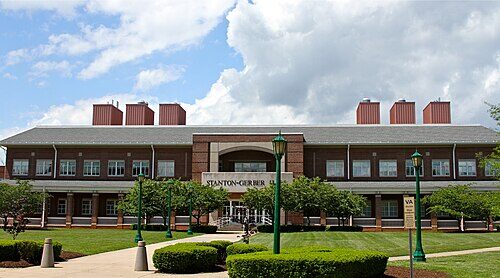
East Tennessee State University James H. Quillen College of Medicine stands as a premier medical institution in Johnson City, Tennessee, specifically designed to address the healthcare needs of rural and underserved communities. Located on an urban campus in Northeast Tennessee, Quillen College of Medicine operates as a state-supported public institution with a clear mission: training physicians who will serve where they are needed most.
Program Duration and Structure
The Quillen College of Medicine offers a 4-year MD program following the traditional medical education structure. The curriculum utilizes the innovative TRAILS (Team-based Rural Applied Integrated Learning System), which integrates basic and clinical sciences with early clinical experiences, state-of-the-art interprofessional training, and multiple service learning opportunities.
Combined Degree Options
Students can pursue MD/MBA and MD/MPH dual degree programs, allowing for comprehensive training that extends beyond traditional medical education to include business administration or public health expertise.
Location and Campus Details
Situated in Johnson City, Tennessee, the medical school serves the Appalachian region with a strong emphasis on rural healthcare delivery. The campus provides access to 3,000 patient beds through affiliated hospitals, ensuring robust clinical training opportunities despite its focus on rural medicine.
Accreditation Status
East Tennessee State University James H. Quillen College of Medicine holds full accreditation from the Liaison Committee on Medical Education (LCME), the nationally recognized accrediting authority for medical education programs leading to the MD degree in U.S. and Canadian medical schools. This accreditation ensures that graduates are eligible to sit for USMLE examinations and participate in residency matching programs.
Ranking and Recognition
Quillen College of Medicine has achieved exceptional recognition in several key areas:
- Top 16 nationally for Primary Care according to U.S. News & World Report 2025 rankings
- #2 nationally for graduates serving in medically underserved areas
- Tier 1 institution designation, placing it among the nation’s elite medical schools
- #1 in Tennessee for primary care education
Admission Requirements
Academic Prerequisites
Minimum Degree Requirements:
- Completion of a minimum of 90 semester hours of coursework from a regionally accredited U.S. community college, college, or university
- While not explicitly required, preference is given to applicants who have received at least a baccalaureate level degree
Required Courses:
Quillen takes a unique approach to prerequisites, recommending rather than requiring specific courses. The following are highly recommended courses:
- Biochemistry
- Communications
- General Biology
- General Chemistry
- Organic Chemistry
- Anatomy
- Physics
- Psychology
- Rhetoric, Logic
- Sociology
GPA Requirements:
- Median GPA: 3.87 for accepted students
- 2025 Entering Class Averages:
- BCPM (Bio, Chem, Physics, Math) GPA: 3.70
- All Other GPA: 3.86
- Total GPA: 3.77
- 2024 Entering Class Averages:
- BCPM GPA: 3.70
- All Other GPA: 3.88
- Total GPA: 3.78
Standardized Testing
MCAT Requirements:
- Median MCAT Score: 511
- 2025 Entering Class Average: 509 (75th percentile)
- 2024 Entering Class Average: 510 (74th percentile)
- Minimum Competitive Score: Applications with MCAT scores below 497 will not be deemed competitive for further consideration
- Score Validity: MCAT scores must be from within the previous three calendar years
- For 2026 Entering Class: Competitive scores accepted from January 2022 through September 2025
Additional Testing Requirements:
- CASPer Test: All applicants progressing to the secondary application stage are required to take the Acuity Insights CASPer exam
- Important Note: Beginning with the 2025-2026 application cycle, the Duet exam is no longer required
- Early scheduling is advised with a four-week turnaround expected for score reporting
Extracurricular Activities & Experience Requirements
Citizenship Requirements:
- U.S. Citizenship or Permanent Resident visa required
Holistic Evaluation Approach:
The Quillen College of Medicine Admissions Committee evaluates the “whole person,” considering:
- Demonstrated academic achievement
- MCAT scores
- Letters of recommendation (when requested)
- Pertinent extracurricular research and work experience
- Evidence of non-scholastic accomplishment
- Clinically related experience demonstrating motivation for medical practice
- Experience should be both varied and extensive
Preference Categories:
- Primary Preference: Tennessee residents
- Secondary Preferences:
- TBR defined border counties residents
- Applicants from contiguous Appalachian areas
- Active duty military personnel and honorably discharged veterans
Application Process & Timeline
Application System
Quillen College of Medicine participates in the AMCAS (American Medical College Application Service) system for primary applications.
Key Application Deadlines and Timeline
| Milestone | Date |
|---|---|
| Application Period Opens | June 1, 2025 |
| Early Decision Program Deadline | August 1, 2025 |
| Regular Application Deadline | November 15, 2025 |
| Early Decision Notifications | October 1, 2025 |
| Final MCAT Administration | September 2025 |
| Interview Period | September 2025 – February 2026 |
| Decision Notifications | October 15, 2025 – July 2026 |
| Plan to Enroll Required | February 19, 2026 |
| Narrow to Three Schools | April 15, 2026 |
| Commit to Enroll Available | April 30, 2026 |
| Final Commit to Enroll | June 12, 2026 |
| Orientation Begins | July 20, 2026 |
Required Documents
- Primary AMCAS Application: Must be submitted by November 15
- Secondary Application: Sent to competitive applicants with 7-day completion requirement
- Official Transcripts: Through AMCAS verification
- Letters of Recommendation: Required when requested for secondary applicants
- CASPer Test Results: Required for interview consideration
Application Fees
- AMCAS primary application fee (standard rates apply)
- Secondary application fee required within 7 days of request
Interview Process
- Format: Not specified, but interviews are conducted September through February
- Invitation Statistics:
- 2025: 410 interviews from 4,009 applications
- 2024: 353 interviews from 3,017 applications
- Timeline: Interview invitations sent based on completed secondary applications and CASPer scores
Admission Statistics & Success Rates
Overall Acceptance Rates and Application Volume
2025 Entering Class Statistics:
- Total Applications: 4,009
- Total Acceptances Offered: 169
- Overall Acceptance Rate: Approximately 4.2%
- Final Class Size: 78 students
- Yield Rate: 46.2% (78 enrolled from 169 accepted)
2024 Entering Class Statistics:
- Total Applications: 3,017
- Total Acceptances Offered: 153
- Overall Acceptance Rate: Approximately 5.1%
- Final Class Size: 78 students
Geographic Distribution
Residency Preference Impact (2025):
- In-State Applications: 626 (15.6% of total)
- In-State Acceptances: 138 (81.7% of total acceptances)
- In-State Acceptance Rate: 22.0%
- Out-of-State Applications: 3,383 (84.4% of total)
- Out-of-State Acceptances: 31 (18.3% of total acceptances)
- Out-of-State Acceptance Rate: 0.9%
Final Enrolled Class (2025):
- Tennessee Residents: 65 students (83.3%)
- Out-of-State Students: 13 students (16.7%)
Academic Statistics of Admitted Students
MCAT Score Ranges:
- Median Score: 511
- Recent Class Averages: 509-510
- Competitive Range: 497+ (minimum threshold)
GPA Ranges:
- Median GPA: 3.87
- Science GPA Average: 3.70
- Non-Science GPA Average: 3.86-3.88
- Total GPA Average: 3.77-3.78
Historical Trends (2021-2025)
- Application Volume Trend: Fluctuating between 3,017-4,009 applications
- Acceptance Rate Trend: 1.94%-5.1%, showing increased competitiveness in recent years
- Class Size: Consistently maintained at 78 students
Tuition & Financial Information
Current Tuition Rates (2024-2025)
Tennessee Residents:
- In-State Tuition: $38,794 per year
Out-of-State Students:
- Out-of-State Tuition: $49,738 per year
- Special Out-of-State Categories: Certain qualified out-of-state applicants may receive in-state tuition plus 30%
Total Cost of Attendance
Based on the tuition rates and typical medical school expenses, estimated annual costs include:
- Tuition (as listed above)
- Living expenses in Johnson City, TN
- Health insurance (required)
- Books and equipment
- Transportation
- Personal expenses
4-Year Program Cost Analysis
Tennessee Residents: Approximately $155,176 total tuition over four years
Out-of-State Students: Approximately $198,952 total tuition over four years
Financial Aid Options
Federal Financial Aid:
- FAFSA Required: Students must complete the Free Application for Federal Student Aid
- Federal Loan Programs: Available to eligible students
- School Code: 003487
Institutional Scholarships:
- Institutional scholarship applications available
- Need-based assistance programs
- Merit-based recognition awards
External Scholarship Opportunities:
- Tennessee Medical Education Fund (TMEF):
- Need-based scholarships ranging from $2,000-$10,000 per year
- Requirements: Tennessee residency, U.S. citizenship, TMA membership
- Funds distributed directly to the medical school
- East Tennessee Foundation Scholarships:
- Multiple opportunities available
- Application period: December 15 – March 15
- AAMC Scholarships:
- Various national scholarship programs
- Including the Darrell G. Kirch, MD Scholarship for underrepresented minorities
Veterans Benefits:
- Military service benefits accepted
- VA education benefits processed
- Dedicated veterans support services
Living Expenses in Johnson City, TN
Johnson City offers a relatively affordable cost of living compared to major metropolitan areas, making it an attractive location for medical students managing educational debt.
Click To See Hundreds Of Consultants Who Can Mentor You:
Curriculum & Program Structure
Program Duration and Educational Philosophy
East Tennessee State University James H. Quillen College of Medicine offers a 4-year MD program built around the innovative TRAILS (Team-based Rural Applied Integrated Learning System) curriculum. This approach integrates basic and clinical sciences while emphasizing early clinical experiences, interprofessional training, and community service opportunities.
Vision of the Quillen Physician
Graduates of ETSU Quillen College of Medicine are trained to become:
Skilled Clinicians:
- Exhibit excellent clinical and diagnostic skills
- Apply critical thinking and evidence-based principles
Compassionate Physicians:
- Use patient-centered principles and shared decision-making
- Navigate patients through healthcare systems effectively
Servant Leaders:
- Prioritize overall well-being of patients and colleagues
- Advocate for those disadvantaged by current healthcare systems
Effective Collaborators:
- Work collaboratively in interprofessional care settings
- Respect unique contributions of all team members
Lifelong Learners:
- Continuously learn throughout their careers
- Critically evaluate evolving medical information
Curriculum Structure
Pre-Clinical Years (Years 1-2):
- Integration of basic and clinical sciences
- Early patient contact beginning in first semester
- Team-based learning approaches
- Problem-based learning components
- State-of-the-art simulation training
Clinical Training (Years 3-4):
- Core clinical rotations
- Access to 3,000 patient beds through affiliated hospitals
- Rural and community-based clinical experiences
- Specialty elective opportunities
Educational Methodology
Core Teaching Approaches:
- Application-focused: Learning environments that engage students in active application of knowledge
- Inquiry-driven: Emphasis on critical thinking and evidence-based practice
- Patient-centered: Focus on improving patient care with consideration of social and cultural contexts
- Interprofessional: Training alongside other healthcare professionals
Curriculum Threads
Cross-cutting themes woven throughout the four-year program:
- Evidence-Based Decision Making & Clinical Epidemiology
- Ethics, Professionalism, & Professional Identity
- Communication, Compassion, & Collaborative Care
- Healthcare Quality & Patient Safety
- Health Care Systems & the Business of Medicine
- Patient Care
- Societal Issues (including nutrition, health literacy, substance abuse)
Special Programs and Tracks
Rural Primary Care Track:
- Dedicated pathway for students interested in rural medicine
- Enhanced rural clinical experiences
- Community-based training opportunities
Global Health Opportunities:
- International rotation options
- Global health electives
- Service learning in international settings
Research Opportunities:
- Scholarly project requirements
- Faculty-mentored research experiences
- Integration of research methodology into curriculum
Assessment Methods
- Competency-based evaluations
- Integration of formative and summative assessments
- Clinical skills assessments
- OSCE (Objective Structured Clinical Examinations)
Pre-Medical Preparation
Undergraduate Program Recommendations
Academic Background Flexibility:
Quillen College of Medicine values diverse academic backgrounds. While science preparation is important, the school encourages broad educational experiences that develop critical thinking, cultural awareness, and communication skills.
Recommended Course Strategy:
- Complete the highly recommended courses: Biology, Chemistry, Organic Chemistry, Physics, Biochemistry
- Include behavioral and social sciences: Psychology, Sociology
- Develop communication skills through courses in Rhetoric, Logic, Communications
- Pursue coursework in humanities, literature, and fine arts
Academic Planning for Success
GPA Optimization:
- Aim for a total GPA above 3.77 (current median for accepted students)
- Pay special attention to science GPA, with accepted students averaging 3.70
- Consider academic workload management to maintain consistent performance
Course Sequencing:
- Complete foundational sciences early to allow for MCAT preparation
- Build in opportunities for academic challenges that demonstrate intellectual rigor
- Consider taking biochemistry before the MCAT, as it’s heavily tested
Clinical Experience Development
Types of Valued Clinical Exposure:
- Hospital volunteering
- Clinical research participation
- Medical scribe positions
- EMT/paramedic experience
- Healthcare facility internships
- Medical mission trips
Quality Over Quantity:
- Demonstrate sustained commitment to clinical environments
- Seek experiences that provide patient interaction
- Document learning outcomes and personal growth from clinical exposures
Research Experience Expectations
Research Opportunities:
Quillen values research experience but doesn’t mandate specific requirements. Beneficial research areas include:
- Basic science research
- Clinical research
- Public health research
- Community health research
- Healthcare delivery research
Research Outcomes:
- Publications are valued but not required
- Conference presentations demonstrate engagement
- Research methodology understanding is important
- Long-term research relationships show commitment
Extracurricular Planning Strategy
Community Service:
- Demonstrate commitment to serving others
- Show understanding of healthcare disparities
- Engage in sustained volunteer efforts
- Focus on underserved populations when possible
Leadership Development:
- Hold leadership positions in organizations
- Demonstrate ability to work with diverse groups
- Show initiative in problem-solving
- Document leadership growth over time
Standardized Test Preparation
MCAT Strategy:
- Target score of 511+ to be competitive (current median)
- Minimum threshold of 497 for consideration
- Plan adequate preparation time (3-6 months minimum)
- Consider taking the test by spring of application year
Retake Considerations:
- Quillen accepts scores within three years
- Significant score improvement may warrant retake
- Consider application timeline when planning retakes
Gap Year Considerations
Beneficial Gap Year Activities:
- Service opportunities (Peace Corps, AmeriCorps)
- Research positions
- Clinical work experience
- Graduate coursework to strengthen academic profile